
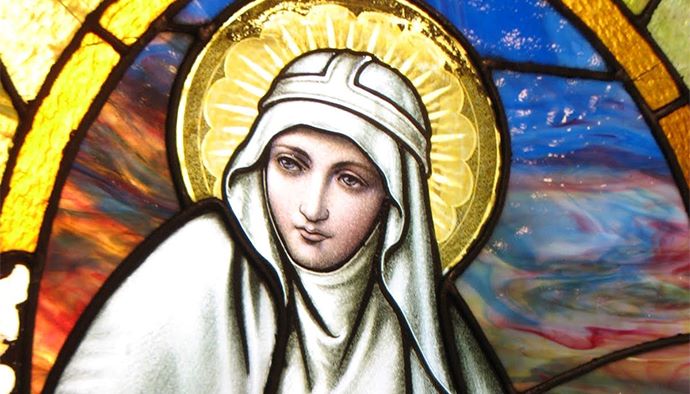
Mystic, Reformer, Founder, Patroness of Europe


Saint Bridget of Sweden (also spelled Birgitta Birgersdotter) is one of the greatest female mystics in Christian history. A wife, mother of eight children, noblewoman, pilgrim, visionary, reformer, and founder of a religious order, she lived a remarkable life that bridged the worlds of family, politics, and deep contemplative spirituality. Her extraordinary mystical revelations profoundly influenced medieval Christianity and continue to inspire believers today.
Recognized as one of the six Patron Saints of Europe, Saint Bridget demonstrated that holiness is possible in every state of life. She lived faithfully as a wife and mother before embracing the religious life after the death of her husband. Her life reminds Christians that sanctity is achieved not by one’s circumstances but by complete surrender to God’s will.
Her feast is celebrated on 23 July in the Roman Catholic Church.
Early Life
Saint Bridget was born in 1303 at Finsta Castle in Uppland, Sweden. She belonged to one of Sweden’s most distinguished noble families.
Her father, Birger Persson, was a respected statesman and provincial governor known for his deep Christian faith. Her mother, Ingeborg Bengtsdotter, also belonged to an influential noble family and was remembered for her charity and piety.
From childhood Bridget exhibited remarkable religious devotion. Tradition says that at the age of seven she experienced her first vision of the Blessed Virgin Mary, who placed a golden crown upon her head. Shortly afterward she reportedly received visions of Christ crucified, experiences that deeply shaped her spirituality.
Unlike many children of noble birth, Bridget preferred prayer, acts of charity, and meditation on Christ’s Passion rather than worldly pleasures.
Marriage and Family Life
At the age of approximately thirteen, Bridget married Ulf Gudmarsson, a Swedish nobleman.
Their marriage lasted nearly thirty years and is remembered as one of the great examples of Christian married life in the Middle Ages.
Together they had eight children, among them:
- Saint Catherine of Sweden
- Karl
- Birger
- Bengt
- Gudmar
- Martha
- Ingeborg
- Cecilia
Their daughter Catherine would later become a saint herself and assist Bridget in many of her later works.
Although wealthy, Bridget and Ulf practiced remarkable generosity toward the poor. They built hospitals, supported monasteries, welcomed pilgrims, and devoted significant resources to charitable works.
Their marriage was characterized by mutual respect, prayer, and increasing spiritual commitment.
Pilgrimage to Santiago de Compostela
One of the defining moments of their married life was a pilgrimage to Santiago de Compostela in Spain.
The journey was dangerous and physically demanding, taking many months.
During this pilgrimage Ulf became seriously ill. Bridget prayed fervently for his recovery, believing she received heavenly assurance that God still had work for them to accomplish.
After returning home, Ulf entered a Cistercian monastery where he prepared spiritually for death. He died peacefully around 1344.
His death transformed Bridget’s life forever.
Widowhood and Total Consecration
After Ulf’s death, Bridget gave away much of her wealth and devoted herself completely to prayer, penance, and service.
She chose a life of simplicity while remaining active in public affairs.
During this period her mystical experiences became increasingly frequent.
She believed Christ, the Blessed Virgin Mary, angels, and numerous saints communicated with her through visions and revelations.
These revelations eventually became one of Christianity’s most influential mystical works.
Mystical Revelations
Bridget’s revelations were carefully recorded by her confessors in Latin.
These writings later became known as the Revelationes (Heavenly Revelations).
The revelations include:
- Conversations with Jesus Christ
- Messages from the Blessed Virgin Mary
- Teachings on Heaven and Hell
- Calls to repentance
- Instructions for Church reform
- Reflections on Christ’s Passion
- Prophecies concerning nations and rulers
- Spiritual guidance for Christians
Her visions emphasized:
- God’s mercy
- Christ’s suffering
- The importance of repentance
- Love for the Eucharist
- Devotion to Mary
- Fidelity to the Church
Unlike sensational prophecy, Bridget’s revelations consistently called people to deeper conversion and holiness.
The Fifteen Prayers of Saint Bridget
Among the devotions associated with Saint Bridget are the famous Fifteen Prayers, meditations on the Passion of Christ.
These prayers contemplate:
- Christ’s wounds
- His suffering
- His love for humanity
- The salvation won through the Cross
For centuries Christians throughout the world have prayed these devotions during Lent and throughout the year.
Although historical scholarship debates the precise origins of every version in circulation, the prayers remain widely cherished as meditations on the Passion of Christ.
Founder of the Bridgettine Order
Christ revealed to Bridget plans for a new religious community.
This became the Order of the Most Holy Savior, commonly called the Bridgettines.
Its principal monastery was established at Vadstena Abbey in Sweden.
The order had distinctive characteristics:
- Double monasteries for monks and nuns
- An abbess governing the community
- Strong emphasis on liturgical prayer
- Scripture study
- Charity
- Hospitality
- Contemplation of Christ’s Passion
The Bridgettine Order spread throughout Europe and remains active today.
Mission to Reform the Church
Bridget believed God had entrusted her with a mission to call both Church leaders and political rulers to holiness.
She wrote boldly to:
- Kings
- Queens
- Bishops
- Cardinals
- The Pope
She urged:
- Moral reform
- Justice
- Peace
- Simplicity
- Holiness
- Return to Gospel values
Her fearless willingness to address powerful figures made her one of the most influential women of medieval Europe.
Years in Rome
Around 1350 Bridget moved permanently to Rome.
She hoped to persuade the Pope to return from Avignon to Rome.
While in Rome she devoted herself to:
- Prayer
- Pilgrimage
- Caring for the poor
- Spiritual direction
- Recording revelations
She became widely respected for her holiness despite occasionally facing criticism and misunderstanding.
Pilgrimage to the Holy Land
Late in life Bridget fulfilled her lifelong dream of visiting the Holy Land.
She traveled with her daughter Catherine.
During this pilgrimage she prayed at:
- Bethlehem
- Nazareth
- Jerusalem
- Mount of Olives
- Calvary
- The Holy Sepulchre
Her meditations at Bethlehem inspired one of the most beloved traditions of Christian art.
She described the Nativity as she believed it had been revealed to her:
- Mary kneeling in prayer
- The Christ Child emitting brilliant light
- Joseph standing in reverent wonder
This vision profoundly influenced later Christian depictions of Christmas.
Death
While returning from the Holy Land, Bridget became ill.
She died in Rome on 23 July 1373.
Her daughter Catherine arranged for her body to be transported back to Sweden.
She was buried at Vadstena Abbey.
The monastery quickly became one of Europe’s great pilgrimage centers.
Canonization
Saint Bridget was canonized by Pope Boniface IX in 1391, only eighteen years after her death.
Her widespread reputation for holiness, miracles, and profound spiritual writings contributed to her rapid canonization.
Patron Saint of Europe
In 1999, Pope John Paul II proclaimed Saint Bridget one of the Patron Saints of Europe, together with:
- Saint Catherine of Siena
- Saint Teresa Benedicta of the Cross (Edith Stein)
Her life symbolized the Christian roots of European civilization and the important role of women in the Church’s history.
Spirituality of Saint Bridget
Several themes characterize Bridget’s spirituality.
Love for Christ Crucified
She constantly meditated on Christ’s Passion, believing believers should never forget the price of redemption.
Eucharistic Devotion
The Holy Eucharist occupied the center of her spiritual life.
She encouraged frequent participation in the liturgy and deep reverence before the Blessed Sacrament.
Devotion to Mary
The Blessed Virgin frequently appeared in Bridget’s visions.
Mary is portrayed as:
- Mother of Mercy
- Queen of Heaven
- Teacher of humility
- Guide toward Christ
Call to Conversion
Her revelations repeatedly emphasize repentance rather than condemnation.
She believed God’s mercy always remains available for the truly repentant sinner.
Holiness in Family Life
Long before entering religious life, Bridget lived faithfully as wife and mother.
Her life demonstrates that marriage itself is a path to sanctity.
Miracles Associated with Saint Bridget
Many miracles have been attributed to her intercession through the centuries.
Among them are reports of:
- Physical healings
- Safe childbirth
- Protection during travel
- Spiritual conversions
- Assistance in family difficulties
- Peace in troubled homes
Her intercession is especially sought by:
- Married couples
- Widows
- Mothers
- Pilgrims
- Europe
- Those discerning religious vocations
Legacy
Saint Bridget’s influence extends far beyond medieval Sweden.
Her legacy includes:
- One of Christianity’s greatest collections of mystical writings
- The Bridgettine religious order
- Contributions to Christian art, especially Nativity imagery
- Inspiration for Church renewal
- A model of holy family life
- A witness to courageous truth-speaking
- Enduring devotion to Christ’s Passion
Her writings have influenced saints, theologians, artists, and countless ordinary believers for over six centuries.
Lessons from Saint Bridget’s Life
Modern Christians can draw many lessons from her witness:
- Holiness begins in ordinary family life.
- Prayer transforms every vocation.
- Charity should accompany wealth and influence.
- Courage is necessary when speaking the truth.
- Suffering can become a path to deeper union with Christ.
- The Church is renewed through holiness rather than criticism alone.
- Christ’s Passion remains the source of Christian hope.
- God’s call may unfold gradually throughout life.
Famous Quotes Attributed to Saint Bridget
“There is no sinner so great that God cannot forgive, provided there is true repentance.”
“Love Me as I have loved you.”
“The way to Heaven is opened through humility.”
These sayings reflect the principal themes of her spirituality: mercy, humility, repentance, and complete trust in Christ.
Prayer to Saint Bridget of Sweden
O glorious Saint Bridget,
faithful wife, loving mother, humble widow, and devoted servant of Christ, obtain for us the grace to seek God’s will in every stage of our lives. Teach us to love Jesus crucified with all our hearts, to cherish the Holy Eucharist, to honor the Blessed Virgin Mary, and to serve the poor with generosity. Intercede for families, for the Church, and for all who seek peace and holiness. May your example inspire us to live with courage, humility, and unwavering faith until we reach the joy of eternal life. Through Christ our Lord. Amen.
Conclusion
Saint Bridget of Sweden stands among the most remarkable saints of the Middle Ages. Her life united contemplation and action, family responsibilities and mystical prayer, charity and prophetic courage. She spoke fearlessly to kings and popes while remaining deeply humble before God. As a wife, mother, widow, religious founder, mystic, and Patroness of Europe, she continues to remind the faithful that every vocation can become a path to sanctity when lived in loving obedience to Christ. More than six centuries after her death, her witness to prayer, repentance, and the transforming power of God’s mercy continues to inspire Christians throughout the world.
Leave a Reply