
Introduction
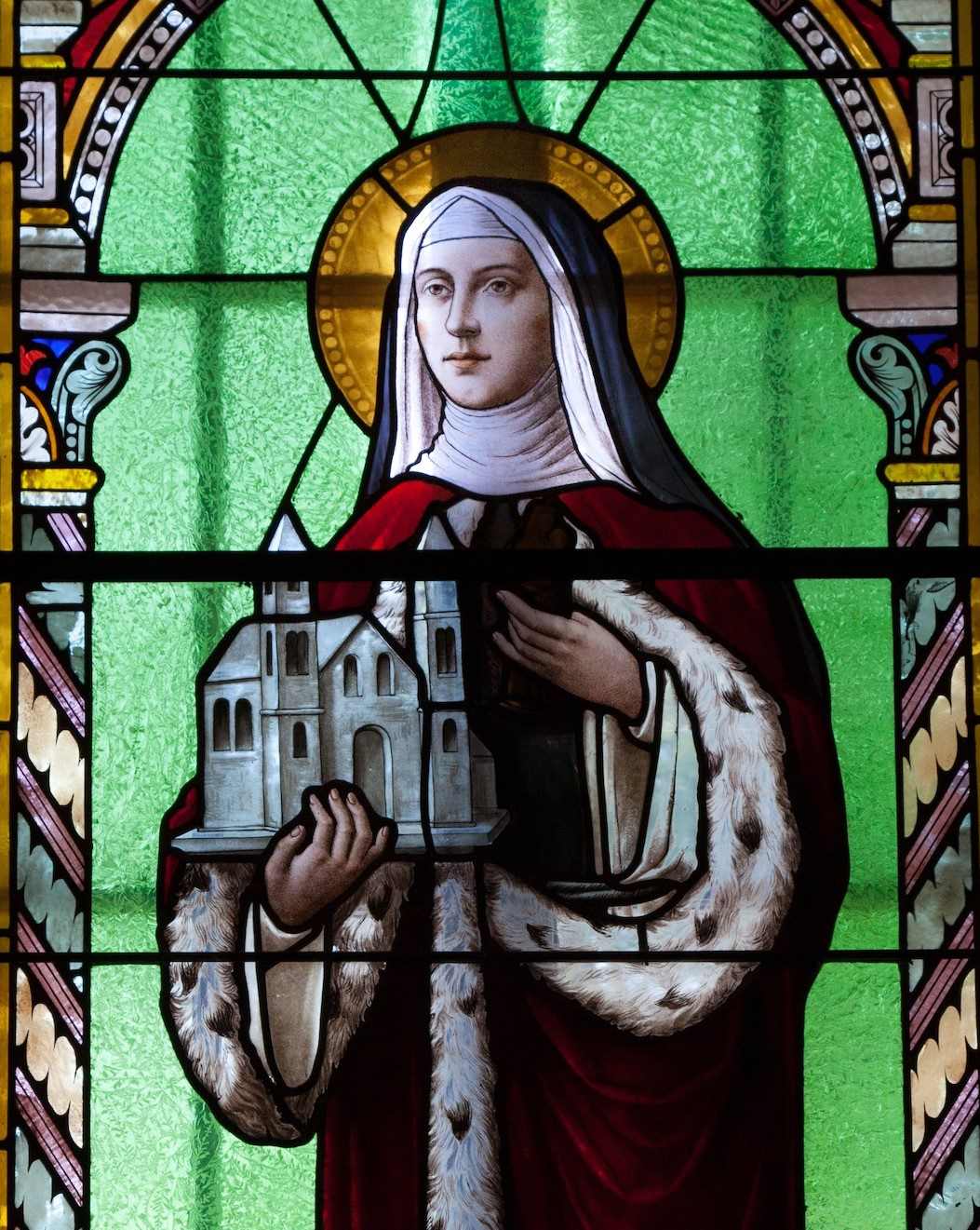
Saint Hedwig of Andechs (1174–1243), also known as Saint Hedwig of Silesia, was a duchess renowned for her deep faith, extraordinary generosity toward the poor, and unwavering commitment to Christian charity. Born into a noble Bavarian family, she became the Duchess of Silesia through her marriage to Henry I the Bearded. Although she lived amid the privileges and responsibilities of aristocratic life, Hedwig chose to make her position an instrument of service to God and others.
Her life was marked by prayer, penance, humility, and compassion for the suffering. She supported monasteries, cared for the sick, helped people experiencing poverty, and devoted herself to those who were often neglected by society. After the death of her husband, she spent her remaining years at the Cistercian monastery of Trebnitz, which she had helped establish.
Canonized in 1267 by Pope Clement IV, Saint Hedwig remains an inspiring example of Christian holiness expressed through family responsibilities, public service, and selfless love. Her feast is celebrated on October 16 in the Roman Catholic calendar.
1. Early Life and Family Background
Saint Hedwig was born in 1174 at Andechs, in Bavaria, in present-day Germany. She belonged to the influential House of Andechs, a noble family connected with several European royal and princely houses.
From an early age, Hedwig received a religious education that nurtured her love for prayer and the Christian faith. According to traditional accounts, she was educated at the Benedictine monastery of Kitzingen, where she developed a strong appreciation for Scripture, prayer, and religious discipline.
In medieval Europe, marriages among noble families frequently served political and territorial purposes. Hedwig was married at a young age to Henry I, who later became Duke of Silesia. Through this marriage, she entered a life of considerable responsibility and influence.
Although her noble background offered her material security and social prestige, Hedwig gradually came to understand her position as an opportunity to serve God. Her faith would shape the way she approached family life, public responsibilities, and the needs of the poor.
2. Marriage and Life as Duchess of Silesia
Hedwig’s marriage to Henry I brought her into the political and social life of Silesia, a historical region largely associated with present-day southwestern Poland. Henry became Duke of Silesia in 1202, and Hedwig shared in the responsibilities of his position.
The couple had seven children, though several died young. Their family experienced the joys and burdens common to medieval noble households, including bereavement, political uncertainty, and the demands of governing a territory.
Hedwig took her responsibilities as wife and mother seriously. She supported her family while maintaining a deep commitment to prayer and charitable service. Rather than separating her spiritual life from her domestic duties, she sought to make everyday responsibilities part of her journey toward holiness.
Her marriage also became a partnership in supporting religious foundations and charitable institutions. Through their patronage, Hedwig and Henry contributed to the development of religious life in Silesia.
Tradition also associates the couple with a commitment to continence later in their marriage. This decision reflected their growing desire to devote themselves more fully to spiritual life while continuing to fulfil their responsibilities.
Hedwig’s example demonstrates that holiness can grow within marriage and family life. Faithfulness, sacrifice, patience, and concern for others are essential elements of Christian discipleship.
3. A Heart Filled with Love for the Poor
One of the most remarkable aspects of Saint Hedwig’s life was her concern for people living in poverty. Despite her elevated position, she refused to regard the poor as distant or insignificant. She recognized their dignity and sought to respond to their needs with practical generosity.
Historical accounts describe her support for hospitals, her care for the sick, and her particular concern for women suffering from leprosy. She used her resources to assist people who lacked the means to obtain adequate care.
Her charity was not simply an expression of noble generosity. It flowed from her Christian conviction that love of God must be demonstrated through love of neighbour.
The Gospel of Matthew teaches that Christ identifies himself with the hungry, the sick, the stranger, and the imprisoned (Matthew 25:31–46). Hedwig’s life gives concrete expression to this teaching. She understood that service to those who suffer is an essential dimension of Christian faith.
She also demonstrated that charity requires personal involvement. Giving material assistance is important, but genuine compassion also demands respect, tenderness, and a willingness to stand beside those who experience hardship.
In a world where poverty and social exclusion continue to affect countless people, Saint Hedwig remains a powerful model of practical Christian love.
4. Humility and a Life of Penance
Although Hedwig belonged to a wealthy and influential family, she cultivated a spirit of humility and simplicity. Traditional accounts describe her commitment to fasting, prayer, and personal penance.
She understood that earthly possessions, honours, and privileges are temporary. What matters ultimately is one’s relationship with God and one’s willingness to live according to the Gospel.
Her spiritual discipline did not mean neglecting her responsibilities. Instead, prayer and penance helped her approach those responsibilities with greater generosity and self-control.
Hedwig’s humility was particularly evident in her concern for people who occupied a lower social position. She sought to overcome the distance that ordinarily separated medieval nobility from the poor and suffering.
Her example challenges Christians to examine their attitudes toward wealth, power, and social status. Education, professional success, authority, and material resources can become instruments of good when they are used in the service of others.
True greatness, in the Christian understanding, is not measured by the number of people who serve us but by our willingness to serve them.
5. The Foundation of the Monastery at Trebnitz
One of the most enduring contributions of Saint Hedwig was her support for the Cistercian monastery at Trebnitz, near present-day Trzebnica in Poland.
The monastery was founded in 1202 through the initiative of Duke Henry I, with Hedwig’s encouragement and support. The first nuns arrived from Bamberg in 1203. It became an important centre of religious life in Silesia and was the first Cistercian house for women in the region.
Hedwig played a significant role in supporting the monastery and its mission. She recognized the value of religious communities in promoting prayer, spiritual formation, and service to society.
Her daughter Gertrude eventually entered the monastery and later became its abbess. The monastery thus became closely connected with Hedwig’s family and spiritual legacy.
The foundation at Trebnitz reflected a broader vision of Christian service. The Church’s mission involved not only the celebration of the sacraments and the formation of religious communities but also concern for the social and spiritual well-being of the people.
Trebnitz later became a major centre of devotion to Saint Hedwig. Her association with the monastery remains an important part of her historical and spiritual legacy.
6. Faith Amid Suffering and Family Trials
Saint Hedwig’s life was not free from suffering. She experienced the deaths of family members and lived through political conflicts that threatened the stability of her household and territory.
In 1227, her husband was seriously wounded during a violent political incident. Hedwig hastened to his side to care for him. Later, when Henry was taken captive during another political conflict, she intervened on his behalf.
These events illustrate her courage and her devotion to her family. Her faith did not make her indifferent to danger or suffering. Rather, it strengthened her willingness to act with determination and compassion.
Hedwig also experienced the grief of losing loved ones. Her son Henry II died in battle against Mongol forces in 1241, two years after the death of her husband. Such losses must have brought profound sorrow.
Nevertheless, she continued to devote herself to prayer and charitable service. Her example reminds us that Christian holiness does not mean living without pain. It means remaining faithful to God and loving toward others even when life brings disappointment, grief, or uncertainty.
For those who experience bereavement, family difficulties, or anxiety about the future, Saint Hedwig’s life offers a message of hope. Suffering can deepen our compassion and teach us to depend more completely on God’s grace.
7. Widowhood and Her Final Years
Duke Henry I died in 1238. Following his death, Hedwig went to live at the Cistercian monastery of Trebnitz, where her daughter Gertrude was abbess.
Although she adopted a simple way of life associated with the Cistercian community, Hedwig was not formally professed as a Cistercian nun. This distinction allowed her to retain the freedom to use her resources for charitable purposes.
Her remaining years were marked by prayer, penance, and service. She turned increasingly away from worldly honours and devoted herself to the spiritual life.
Hedwig’s decision to spend her final years at Trebnitz reflected her desire for greater simplicity and closer communion with God. Yet her spirituality remained deeply connected to the needs of others.
She died at Trebnitz on October 15, 1243. Her life had united the responsibilities of family, the duties of public life, and the demands of Christian charity.
Her memory is celebrated on October 16 in the Roman Catholic Church.
8. Canonization and Veneration
Devotion to Hedwig grew after her death. People remembered her as a woman whose generosity, humility, and faith had made a lasting impression on the region.
On March 26, 1267, Pope Clement IV canonized her, formally recognizing her holiness. She became widely venerated in Silesia, Poland, Germany, and other parts of Central Europe.
Her tomb at Trebnitz developed into an important destination for pilgrims. She came to be honoured as the patroness of Silesia and as a model of Christian charity and responsible leadership.
Saint Hedwig’s legacy is not based merely on her noble birth or political connections. It rests on the way she used her position and resources to serve others.
Her life demonstrates that holiness can transform every dimension of human existence. Family relationships, public responsibilities, material possessions, and personal suffering can all become occasions for growing in faith and love.
9. Spiritual Lessons from Saint Hedwig
9.1. Use Wealth and Influence to Serve Others
Saint Hedwig teaches that material possessions and positions of authority are responsibilities entrusted to us. They should be used to relieve suffering, promote justice, and assist those who are vulnerable.
Christians who possess wealth, education, professional influence, or leadership responsibilities can follow her example by placing their gifts at the service of the common good.
9.2. Recognize Christ in the Poor
Hedwig’s devotion to the needy reflects the teaching of Jesus in Matthew 25:31–46. Christ identifies himself with those who are hungry, sick, imprisoned, or neglected.
Her example invites us to move beyond sympathy and perform concrete acts of mercy. Visiting the sick, feeding the hungry, supporting struggling families, and respecting the dignity of every person are meaningful expressions of Christian faith.
9.3. Practise Humility in Everyday Life
Hedwig’s simplicity reminds us that true greatness does not depend on status or recognition. Humility enables us to listen to others, admit our limitations, and place the needs of others before our desire for praise.
9.4. Remain Faithful Amid Suffering
Her experiences of bereavement and family difficulties show that sorrow need not destroy faith. With God’s grace, suffering can deepen compassion, strengthen perseverance, and lead us toward a more profound trust in divine providence.
9.5. Unite Prayer with Practical Service
Saint Hedwig’s charitable activities were nourished by prayer. Her life illustrates the importance of combining contemplation with practical service.
Prayer opens the heart to God’s presence, while charitable action allows God’s love to become visible in the world. A mature Christian life requires both.
9.6. Make Family Life a Path to Holiness
As a wife, mother, and duchess, Hedwig fulfilled important responsibilities before spending her final years in a monastery.
Her example encourages families to cultivate faith, forgiveness, generosity, and mutual support. The ordinary duties of family life can become a path to holiness when they are undertaken with love and responsibility.
9.7. Exercise Leadership with Compassion
Hedwig’s life challenges those who hold positions of authority to recognize leadership as a form of service. Whether in government, education, business, family life, or the Church, authority should protect human dignity and promote the well-being of others.
Leadership becomes truly Christian when it is guided by justice, humility, and compassion.
10. Saint Hedwig and the Christian Call to Charity
The life of Saint Hedwig offers a powerful witness to the Christian understanding of wealth, authority, and responsibility.
She did not measure her life merely by political influence, material possessions, or social status. Instead, she sought to make these gifts serve a greater purpose.
Her example remains relevant today, when poverty, inequality, loneliness, and social exclusion continue to affect people in every society. Christians are called to support those in need, defend human dignity, help families facing difficulties, and contribute to the common good.
Her witness also reminds us that charitable service need not always involve great resources. Every person can practise generosity through time, attention, encouragement, hospitality, and small acts of kindness.
A visit to someone who is lonely, a meal offered to a hungry person, support for a struggling family, or a word of comfort to someone in grief can become an expression of Christ’s love.
Saint Hedwig shows us that holiness is not limited to extraordinary spiritual experiences. It is expressed through daily acts of love, sacrifice, justice, and service.
11. Prayer to Saint Hedwig
Saint Hedwig of Andechs, faithful servant of God and compassionate friend of the poor, intercede for us before the throne of divine mercy.
Teach us to use our blessings generously, to recognize Christ in those who suffer, and to serve others with humility and love.
Pray for families facing difficulties, comfort those who mourn, strengthen those who struggle with poverty, and guide those who carry the responsibilities of leadership.
Help us to remain faithful in times of suffering and generous in times of abundance. May your example inspire us to pray sincerely, act compassionately, and place our gifts at the service of God and our neighbour.
Obtain for us the grace to grow in holiness, persevere in faith, and follow Jesus Christ with undivided hearts.
Saint Hedwig, woman of faith and charity, pray for us, that we may serve Christ faithfully in this life and share in the joy of his heavenly kingdom.
Amen.
Conclusion
Saint Hedwig of Andechs stands as a remarkable example of holiness expressed through charity, humility, prayer, and responsible leadership. Born into nobility, she chose to make her privileges serve the poor and suffering. As a wife and mother, she embraced her family responsibilities; as a duchess, she supported religious life and charitable works; and in widowhood, she devoted herself more fully to prayer and simplicity.
Canonized in 1267, she continues to inspire Christians to unite faith with practical love. Her life reminds us that wealth and authority acquire their deepest meaning when they are placed at the service of others.
On her feast day, October 16, the faithful are invited to seek her intercession and renew their commitment to serve Christ in the poor, practise humility in daily life, and transform their blessings into opportunities for love.
Saint Hedwig of Andechs, pray for us!
References and Further Reading
- The Catholic Encyclopedia, “St. Hedwig.” A detailed historical account of her life, charitable works, family, and canonization.
https://www.newadvent.org/cathen/07189a.htm - The Catholic Encyclopedia, “Trebnitz.” Historical information about the Cistercian monastery founded with the support of Hedwig and her husband.
https://www.newadvent.org/cathen/15029a.htm - Encyclopaedia Britannica, “Saint Hedwig.” Further historical and biographical information about Hedwig of Silesia.
- Catholic Online, “St. Hedwig.” A biographical account of her life and religious legacy.
https://www.catholic.org/encyclopedia/view.php?id=5602 - The Holy Bible.
- Matthew 25:31–46 — Christ’s identification with the poor and suffering.
- Luke 6:38 — Generosity and giving.
- James 2:14–17 — Faith expressed through works of charity.
Feast-Day Meditation: October 16 — Lord, Teach Me to Love Like Saint Hedwig
As I celebrate the feast of Saint Hedwig of Andechs, I pause in the presence of God and look into my own heart. Saint Hedwig had wealth, influence, and many responsibilities, yet she never allowed these things to distance her from the poor and suffering. She reminds me that what truly matters in God’s eyes is not what I possess, but how much I love.
Lord Jesus, when I look at my own life, I realize how easily I become absorbed in my worries, plans, and personal needs. Sometimes I fail to notice the person who is lonely, the family struggling silently, or the suffering heart waiting for a little kindness. I may pray to you with my lips, yet overlook you in the people you place along my path.
Today, through the example of Saint Hedwig, you invite me to love more sincerely. Teach me to recognize your face in the poor, your presence in the sick, and your voice in those who need comfort. Free my heart from selfishness, pride, and indifference. Help me to share not only what I have, but also my time, attention, understanding, and love.
Saint Hedwig did not wait for perfect circumstances to serve you. She allowed her faith to shape the way she lived and cared for others. Lord, give me that same generous spirit. When I am comfortable, remind me of those who are in need. When I am busy, help me make room for compassion. When I am hurt or discouraged, teach me not to close my heart to others.
May I never forget your words: “Whatever you did for one of these least brothers of mine, you did for me” (Matthew 25:40). Let these words become a living prayer in my heart and a guide for my daily actions.
My Prayer Today
Lord Jesus, I place my heart in your hands. Make it gentle, generous, and compassionate. Through the intercession of Saint Hedwig, help me to use every blessing you have given me for your glory and the good of others. Show me someone I can encourage, someone I can help, and someone I can love more deeply today. May my life become a quiet reflection of your goodness.
Saint Hedwig of Andechs, pray for me, that I may learn to love without counting the cost, serve without seeking recognition, and give without expecting anything in return. May I discover the joy of finding Christ in every person I meet.
Amen.
A Moment of Personal Reflection
Let me quietly ask myself today: Lord, who needs my love at this moment? What am I holding back that I could share? Where are you inviting me to become more compassionate?
I will carry these questions into my day, trusting that even the smallest act of love, offered with a sincere heart, can become a beautiful gift to God.
Leave a Reply