
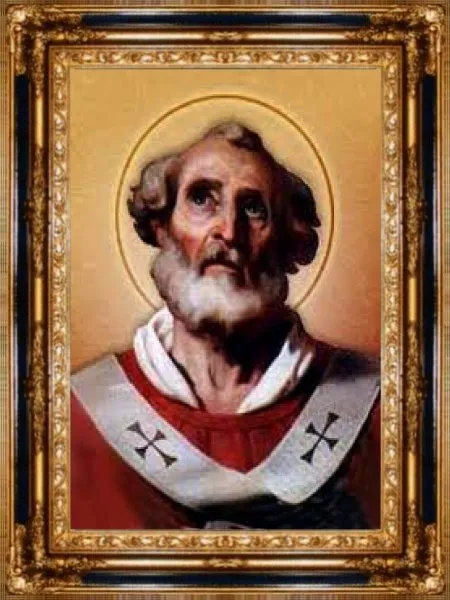
The history of the Catholic Church has been shaped by holy men and women who devoted their lives to preserving the faith and fostering unity among God’s people. Among these remarkable figures stands Saint Hormisdas, a pope whose wisdom, patience, and steadfast leadership helped heal one of the most significant divisions in the early Church. Remembered as a champion of unity and orthodoxy, Saint Hormisdas guided the Church through a period of theological controversy and ecclesiastical conflict, leaving a legacy that continues to inspire Christians today.
Early Life and Family
Saint Hormisdas was born around 450 AD in Frosinone (Frusino), Italy, into a respected and wealthy Christian family. Unlike many later popes, Hormisdas was married before entering the clergy. He and his wife had a son who would later become Pope Silverius, making Hormisdas one of the few popes known to have been the father of another pope. After the death of his wife, he dedicated himself entirely to the service of the Church and entered the clergy.
As a deacon under Pope Symmachus, Hormisdas gained a reputation for wisdom, administrative ability, and personal holiness. He played an important role in supporting Pope Symmachus during internal disputes that troubled the Church at the time. His integrity and leadership qualities made him a natural choice to succeed Symmachus as Bishop of Rome.
Election to the Papacy
Hormisdas was elected Pope on July 20, 514, becoming the 52nd successor of Saint Peter. His pontificate began during a difficult period marked by divisions within Christianity and tensions between the Churches of the East and West.
The greatest challenge facing the new pope was the Acacian Schism, a division that had separated Rome and Constantinople since 484. The dispute arose from disagreements regarding Christological doctrine and ecclesiastical authority. For more than three decades, communion between the Eastern and Western Churches had been broken, causing confusion and weakening Christian unity.
The Acacian Schism
The Acacian Schism originated during the controversy surrounding the teachings of the Council of Chalcedon (451), which affirmed that Jesus Christ possesses both a divine and a human nature united in one Person. Some Eastern Christians opposed this teaching, while others sought compromise formulas that Rome regarded as insufficiently orthodox. These disagreements eventually led to a formal break between Rome and Constantinople.
When Hormisdas became pope, he recognized that restoring unity required both fidelity to truth and pastoral patience. Rather than pursuing confrontation, he engaged in careful negotiations with political and religious leaders in the Eastern Empire.
The Formula of Hormisdas
One of the most significant achievements of Saint Hormisdas was the formulation of the document known as the Formula of Hormisdas. This profession of faith reaffirmed the teachings of the Council of Chalcedon and emphasized the importance of maintaining unity with the Apostolic See of Rome.
After years of diplomatic efforts and theological discussions, circumstances changed with the accession of the Byzantine Emperor Justin I, who favored reconciliation with Rome. Through the cooperation of the emperor, Eastern bishops, and the Patriarch of Constantinople, the Formula of Hormisdas was accepted.
On March 28, 519, the Acacian Schism officially ended, and communion between Rome and Constantinople was restored. The reunion marked one of the greatest diplomatic and ecclesiastical successes of the early papacy. After thirty-five years of separation, the Eastern and Western Churches were once again united.
A Pope of Peace and Reconciliation
Saint Hormisdas understood that unity is one of Christ’s greatest gifts to His Church. His leadership was characterized not by force but by patience, prayer, and perseverance. He sought reconciliation without compromising essential truths of the faith.
In addition to healing the Acacian Schism, he worked to resolve other disputes within the Church and welcomed groups that had previously been separated from full communion. His efforts strengthened the Church and provided a model for future generations confronting division and controversy.
His pontificate demonstrated that authentic unity is built upon truth, charity, and mutual respect.
Personal Holiness
Beyond his achievements as a church leader, Hormisdas was known for his personal virtue. Contemporary accounts describe him as a man of prayer, humility, and deep faith. He approached his responsibilities with a pastoral heart, seeking always the good of the Church and the salvation of souls.
Despite his important position, he remained focused on serving Christ rather than seeking personal glory. His life reflected the qualities of a true shepherd who places the welfare of the flock above his own interests.
Death and Canonization
Saint Hormisdas died in Rome on August 6, 523, after serving as pope for nearly nine years. His death marked the end of a pontificate that had restored peace and strengthened the unity of the Christian world.
Because he lived during the early centuries of Christianity, he was recognized as a saint through the ancient tradition of popular veneration rather than through the formal canonization processes used today. Both the Catholic Church and several Eastern Christian traditions honor him as a saint.
Lessons from Saint Hormisdas
1. Unity Is Worth Pursuing
Saint Hormisdas dedicated years of effort to healing divisions within the Church. His example reminds us that Christian unity requires patience, dialogue, and commitment.
2. Truth and Charity Must Go Together
He never sacrificed doctrinal truth for the sake of peace, yet he always pursued reconciliation with charity and respect.
3. Leadership Is Service
Hormisdas exercised authority as a servant of God’s people. His life demonstrates that authentic leadership is rooted in humility.
4. Perseverance Bears Fruit
The Acacian Schism lasted more than three decades, yet Hormisdas never abandoned hope. His persistence eventually brought about one of the greatest reconciliations in Church history.
Relevance for Today
In a world often divided by political, cultural, and religious conflicts, Saint Hormisdas offers a timely example. His life teaches that unity does not mean ignoring differences but working patiently to overcome them through truth, prayer, and mutual understanding.
His witness is especially important for Christians seeking greater communion among believers and deeper fidelity to the teachings of Christ.
Conclusion
Saint Hormisdas stands among the great popes of the early Church. Through wisdom, diplomacy, and unwavering faith, he healed a schism that had divided Christians for decades and strengthened the bonds between East and West. His life demonstrates that holiness and leadership are inseparable when grounded in humility and trust in God.
More than fifteen centuries after his death, Saint Hormisdas continues to inspire believers with his commitment to truth, unity, and peace. His legacy reminds us that the Church flourishes when her members work together in faith and charity under the guidance of Christ.
May Saint Hormisdas intercede for us, that we may become instruments of unity, reconciliation, and faithful witness in the world today.
Feast Day: August 6
Papacy: 514–523 AD
Known For: Ending the Acacian Schism and restoring communion between the Churches of Rome and Constantinople.
Leave a Reply