
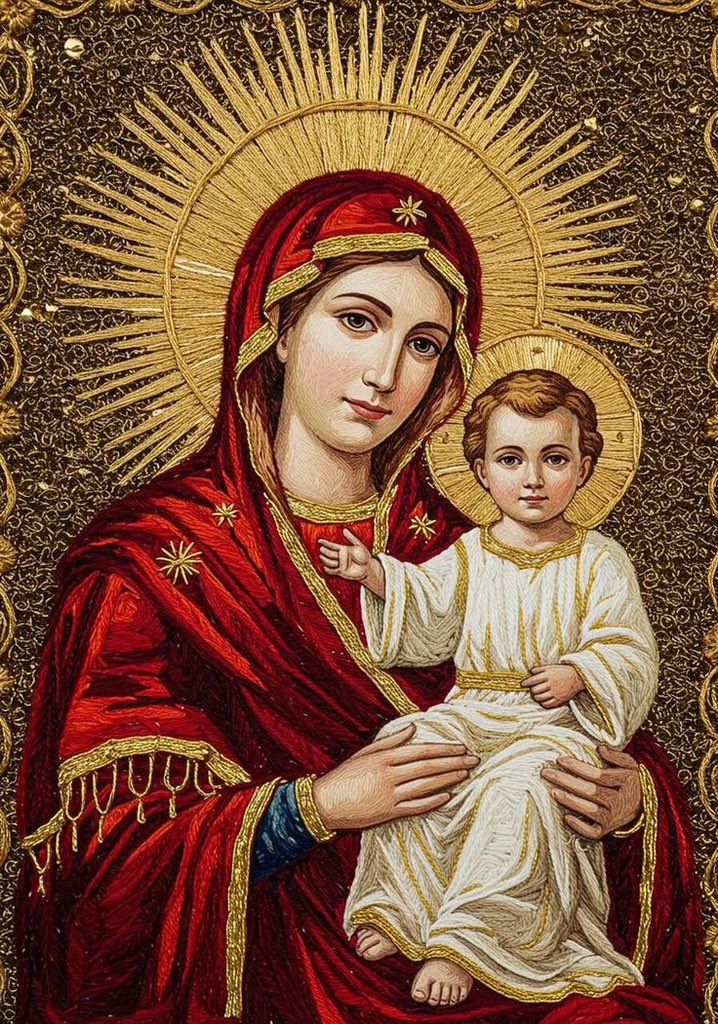
“Henceforth all generations will call me blessed.” — Luke 1:48
The Blessed Virgin Mary occupies a unique and irreplaceable place in the life of the Catholic Church. As the Mother of Jesus Christ, she has been honored by countless titles throughout Christian history. These titles are not merely poetic expressions of affection; they are windows into the Church’s understanding of Mary’s role in the mystery of salvation. They reflect centuries of theological reflection, biblical interpretation, liturgical prayer, popular devotion, and extraordinary events associated with her intercession.
Some titles emphasize Mary’s role in God’s plan of salvation. Others commemorate Marian apparitions, while many arise from local traditions, artistic symbolism, and the heartfelt devotion of the faithful. Together, they reveal the richness and universality of Marian devotion across cultures and centuries.
Let us explore some of the most beloved and meaningful titles of the Blessed Virgin Mary.
I. Dogmatic and Theological Titles
These titles arise from the Church’s official teaching and theological reflection on Mary’s unique relationship with Jesus Christ and the Church.
1. Theotokos (“God-bearer” or “Mother of God”)
Perhaps the most fundamental Marian title is Theotokos, a Greek word meaning “God-bearer” or “Mother of God.”
This title was solemnly affirmed at the Council of Ephesus in 431 AD in response to debates concerning the identity of Jesus Christ. The Church proclaimed that Jesus is one divine Person with both a human and divine nature. Since Mary gave birth to Jesus, who is truly God, she is rightly called the Mother of God.
This title does not suggest that Mary existed before God or created God’s divine nature. Rather, it safeguards the truth that the child born of Mary is truly God incarnate.
The title remains central in both the Eastern and Western Churches.
2. Immaculate Conception
One of the most misunderstood Marian titles is Immaculate Conception.
This title refers not to the conception of Jesus but to Mary’s own conception. The Church teaches that from the first moment of her existence, Mary was preserved from original sin through the merits of Jesus Christ.
This doctrine was solemnly defined by Pope Pius IX in 1854.
The dogma beautifully illustrates God’s prevenient grace preparing Mary to become the worthy Mother of the Savior.
3. Queen of Heaven
Since Jesus Christ is the King of Kings, His mother is honored as the Queen of Heaven.
The title draws inspiration from the Old Testament tradition where the mother of the king held a place of honor as the Queen Mother (Gebirah). Mary’s queenship is not one of political authority but of maternal love and intercession.
She reigns alongside her Son as a servant Queen, constantly leading souls to Christ.
4. Mother of the Church
During the Second Vatican Council, Pope St. Paul VI officially proclaimed Mary as Mother of the Church in 1964.
This title recognizes Mary’s spiritual motherhood over all Christians.
At the foot of the Cross, Jesus entrusted His beloved disciple to Mary:
“Woman, behold your son… Behold your mother.” (John 19:26-27)
The Church sees in this moment Mary’s maternal care extending to all believers.
5. Co-Redemptrix
Among the more debated Marian titles is Co-Redemptrix.
The prefix co- comes from the Latin cum, meaning “with,” not “equal.”
The title emphasizes Mary’s unique cooperation with God’s plan of salvation through:
- Her free consent at the Annunciation
- Her lifelong participation in Christ’s mission
- Her suffering united with Jesus beneath the Cross
The Catholic Church has not defined “Co-Redemptrix” as a dogma, and recent popes have generally preferred other expressions that clearly preserve Christ as the sole Redeemer. Nevertheless, the title has a long history in theological discussion and private devotion.
II. Titles from Major Marian Apparitions
Throughout history, the Blessed Virgin Mary has been associated with numerous reported apparitions. Many have received ecclesiastical approval and inspired widespread devotion.
6. Our Lady of Guadalupe (Mexico, 1531)
Among the world’s most beloved Marian titles is Our Lady of Guadalupe.
In 1531, Mary is believed to have appeared to St. Juan Diego near present-day Mexico City.
The miraculous image imprinted upon Juan Diego’s tilma remains one of Christianity’s greatest mysteries and has inspired millions of conversions.
She is the Patroness of the Americas and a powerful symbol of God’s love for all peoples.
7. Our Lady of Lourdes (France, 1858)
In the small town of Lourdes, France, Mary appeared eighteen times to St. Bernadette Soubirous.
During one apparition she identified herself by saying:
“I am the Immaculate Conception.”
The spring discovered at Lourdes has become one of the world’s most important pilgrimage sites, associated with countless reported healings and spiritual conversions.
8. Our Lady of Fatima (Portugal, 1917)
The apparitions at Fatima are among the most influential Marian events of modern times.
Mary appeared to three shepherd children:
- Lucia dos Santos
- Francisco Marto
- Jacinta Marto
Her messages emphasized:
- Prayer
- Repentance
- Conversion
- Peace
- The Rosary
The “Secrets of Fatima” have generated worldwide interest for over a century.
9. Our Lady of Perpetual Help
This title originates from a revered Byzantine icon depicting Mary holding the Child Jesus while pointing Him toward humanity.
The image reminds Christians that Mary continually intercedes for those who seek her assistance.
Millions pray the Novena to Our Lady of Perpetual Help every week.
10. Our Lady of La Salette (France, 1846)
Mary appeared to two shepherd children in the French Alps.
Her message centered on:
- Conversion
- Reconciliation
- Respect for the Lord’s Day
- Prayer
- Penance
The shrine remains an important place of pilgrimage.
III. Poetic and Symbolic Titles
Many Marian titles arise from Scripture, liturgy, medieval spirituality, and Christian poetry.
11. Star of the Sea (Stella Maris)
One of Mary’s oldest titles is Star of the Sea.
Like the North Star guiding sailors across dangerous waters, Mary guides Christians safely toward Christ amid the storms of life.
This title has long been especially cherished by sailors and coastal communities.
12. Mystical Rose
The rose has long symbolized beauty, purity, and divine love.
Calling Mary the Mystical Rose celebrates:
- Her holiness
- Her spiritual beauty
- Her perfect cooperation with God’s grace
The title appears in the Litany of Loreto.
13. Tower of Ivory
Drawn from imagery in the Song of Solomon, the Tower of Ivory symbolizes:
- Strength
- Purity
- Beauty
- Integrity
Like an ivory tower untouched by corruption, Mary remained entirely dedicated to God.
14. Morning Star
The morning star appears just before sunrise.
Mary is called the Morning Star because she announces the coming of Christ, the true Light of the World.
Her life always points beyond herself to Jesus.
15. Undug Well of Remission’s Waters
This beautiful medieval title portrays Mary as a pure and inexhaustible fountain through whom God’s grace reaches humanity.
Although rarely used today, it reflects medieval Christian devotion and allegorical spirituality, emphasizing Mary’s place within God’s saving plan.
IV. Regional and Unique Titles
Different nations have developed unique Marian devotions reflecting local history, miracles, and cultural traditions.
16. Our Lady of Caysasay (Philippines)
This beloved Marian devotion originated in Batangas, Philippines.
Many miracles have been attributed to Mary’s intercession through the image of Our Lady of Caysasay, making it an important pilgrimage destination.
17. Our Lady of Kibeho (Rwanda, 1981)
Mary reportedly appeared to several students in Kibeho, Rwanda.
The apparitions emphasized:
- Prayer
- Conversion
- Repentance
- Compassion
The visions included sobering warnings of violence and suffering that many later associated with the 1994 Rwandan genocide.
Kibeho remains the only Vatican-approved Marian apparition site in Africa.
18. Our Lady of the Hens (Italy)
One of Italy’s most unusual Marian titles comes from a local tradition in which hens were said to have uncovered and protected a hidden statue of Mary.
The devotion symbolizes God’s providence working through even the humblest of creatures.
19. Mary, Untier of Knots
Originating in Germany and now popular worldwide, this devotion depicts Mary gently untying knots in a ribbon.
The knots symbolize:
- Family conflicts
- Personal struggles
- Sin
- Anxiety
- Broken relationships
Countless believers invoke Mary under this title when seeking solutions to life’s seemingly impossible situations.
20. Atom-Bombed Mary (Japan)
Among the most moving modern Marian images is a statue that survived the atomic bombing of Hiroshima.
Often called Atom-Bombed Mary, the damaged statue has become a powerful symbol of:
- Peace
- Hope
- Forgiveness
- The triumph of faith amid destruction
It reminds humanity of the urgent need for reconciliation and the dignity of every human life.
V. Liturgical and Artistic Titles
Many Marian invocations come from the Church’s liturgy and sacred art, especially the Litany of Loreto, one of the most cherished Marian prayers.
Seat of Wisdom
This title portrays Mary as the throne upon which Divine Wisdom—Jesus Christ—rests.
Medieval artists frequently depicted Mary holding the Christ Child as the eternal Wisdom of God.
She invites believers not merely to admire wisdom but to welcome Christ Himself.
Refuge of Sinners
Found in the Litany of Loreto, this title reminds us that Mary lovingly intercedes for those seeking God’s mercy.
She welcomes repentant sinners and continually leads them to her Son, who alone forgives sins.
Health of the Sick
For centuries Christians have invoked Mary as Health of the Sick, especially during times of plague, epidemic, and personal illness.
This title does not imply that Mary replaces Christ, the Divine Physician, but recognizes her maternal intercession for the sick in body, mind, and spirit.
During recent global pandemics, countless Catholics turned to her under this cherished title for comfort and hope.
The Richness of Marian Devotion
The many titles of the Blessed Virgin Mary do not divide her into different personalities or roles. Rather, each title reveals another facet of the one woman whom God chose to be the Mother of His Son.
Whether she is honored as Theotokos, Queen of Heaven, Our Lady of Guadalupe, Star of the Sea, or Refuge of Sinners, every authentic Marian devotion has one purpose: to lead believers closer to Jesus Christ.
As St. Louis de Montfort beautifully observed, devotion to Mary never ends with Mary herself. Like the moon reflecting the light of the sun, Mary reflects the glory of Christ. Every genuine Marian title points beyond itself to the mystery of the Incarnation and the saving work of her Son.
Conclusion
For over two thousand years, Christians across every continent have lovingly addressed Mary with titles born of Scripture, theology, history, art, liturgy, and personal experience. These names express the Church’s gratitude for the woman who freely responded to God’s call with the words, “Let it be done to me according to your word.” (Luke 1:38)
Each title invites us to contemplate a different aspect of Mary’s vocation: as Mother of God, Mother of the Church, Queen of Heaven, compassionate intercessor, and faithful disciple. Together they form a beautiful tapestry of faith that spans cultures and centuries.
In honoring Mary through these titles, the Church fulfills her own prophetic words:
“From now on all generations will call me blessed.” (Luke 1:48)
May the Blessed Virgin Mary, under all her holy titles, continue to lead us ever more faithfully to her Son, Jesus Christ, our Lord and Savior.
Leave a Reply