
Introduction
The Feast of All Souls, observed on November 2 in the Latin Catholic Church, is a special day of prayer and remembrance for all the faithful departed. On this day, the Church remembers those who have died and offers prayers for them, especially for the souls undergoing purification before entering the fullness of heavenly glory.
The day is marked by the celebration of the Holy Eucharist, prayers for the dead, visits to cemeteries, and acts of remembrance for family members, friends, and all those who have gone before us in faith.
All Souls’ Day is not simply a day of mourning. It is a celebration rooted in Christian hope. The Church acknowledges the pain of separation caused by death, but she also proclaims that death does not have the final word. Through the death and Resurrection of Jesus Christ, believers are given the hope of eternal life.
For Catholics, remembering the dead is an expression of love that continues beyond the grave. We pray for those who have died because we believe in the communion of saints, the mercy of God, and the promise that all things will ultimately be brought to fulfilment in Christ.
All Souls’ Day invites us to remember our departed loved ones with gratitude, entrust them to God’s mercy, and prepare our own hearts for the day when we shall stand before Him.
1. What Is the Feast of All Souls?
The Feast of All Souls, also called All Souls’ Day or the Commemoration of All the Faithful Departed, is observed annually on November 2 in the Latin Catholic liturgical calendar.
On this day, the Church prays for all the faithful who have died, particularly those who are being purified and prepared for the fullness of communion with God.
Unlike All Saints’ Day, which celebrates those who have attained heavenly glory, All Souls’ Day emphasises the Church’s prayer for the departed.
Catholics believe that death does not destroy the spiritual bonds uniting the members of Christ’s Body. Those who have died remain within the communion of the Church, and the faithful on earth can assist the departed through prayer and, especially, the offering of the Holy Eucharist.
The Catechism of the Catholic Church teaches that the Church has honoured the memory of the dead and offered prayers for them from the earliest centuries of Christianity (CCC 958).
This practice is not merely a custom inherited from previous generations. It expresses a profound conviction that love, prayer, and communion in Christ reach beyond the boundaries of earthly life.
2. Biblical Foundations of Praying for the Dead
The Catholic practice of praying for the dead is rooted in the biblical understanding of God’s mercy, the resurrection of the dead, and the communion of God’s people.
The Prayer for the Dead in 2 Maccabees
One of the clearest biblical foundations for prayer for the dead appears in 2 Maccabees 12:38–46.
The passage describes Judas Maccabeus and his companions discovering that some of the fallen Jewish soldiers had been carrying objects associated with idolatry. Judas and his companions prayed for the deceased and collected money to send to Jerusalem for a sacrifice on their behalf.
The sacred author praises this action because Judas acted with faith in the resurrection and the possibility that the departed could benefit from prayer.
The passage concludes with a statement that it was a holy and pious thought to pray for the dead so that they might be released from their sins (2 Maccabees 12:46).
For Catholics, this passage provides an important scriptural foundation for prayer for the departed.
It should be noted that 2 Maccabees is part of the Catholic Old Testament canon, although it is not included in the Jewish or most Protestant biblical canons.
God Is the God of the Living
In Matthew 22:23–33, Jesus responds to a question about the resurrection by declaring that God is not the God of the dead but of the living.
This teaching reveals that life in relationship with God is not extinguished by physical death. God remains faithful to His covenant, and the resurrection is central to Christian hope.
The passage does not directly describe purgatory, but it supports the Christian conviction that death must be understood in the light of God’s power and the promise of resurrection.
Christ Has Conquered Death
In John 11:25–26, Jesus declares to Martha:
“I am the resurrection and the life.”
These words stand at the heart of Christian hope. Jesus does not promise that His followers will never experience physical death. Rather, He promises that death cannot separate them from the life He gives.
At the tomb of Lazarus, Jesus weeps with those who mourn. His tears reveal that grief is not opposed to faith. Even while trusting in the resurrection, Christians may feel the deep pain of losing someone they love.
The Feast of All Souls holds these two realities together: the sorrow of separation and the hope of life in Christ.
Nothing Can Separate Us from the Love of God
Romans 8:38–39 proclaims that neither death nor life can separate us from the love of God in Christ Jesus our Lord.
This passage offers comfort to those grieving the death of loved ones. It reminds us that God’s love is greater than every power that threatens human life.
While the passage does not provide a detailed explanation of the condition of the departed, it assures Christians that the love of God remains the foundation of their hope.
The Resurrection of the Dead
In 1 Corinthians 15, Saint Paul presents the Resurrection of Jesus as the foundation of Christian faith and the guarantee of the future resurrection of the dead.
Christ is the firstfruits of those who have died. Because He has risen, death is not the final destiny of those who belong to Him.
All Souls’ Day invites us to look at death through the light of Easter. The grave is real, grief is real, and separation is painful, but the Resurrection of Christ opens the way to eternal life.
3. What Is Purgatory?
The Feast of All Souls is closely associated with the Catholic doctrine of purgatory.
Purgatory is the final purification of those who die in God’s grace and friendship but are not yet perfectly purified to enter the holiness of heaven.
The Catechism of the Catholic Church explains:
“All who die in God’s grace and friendship, but still imperfectly purified, are indeed assured of their eternal salvation” (CCC 1030).
Purgatory is not a second opportunity for salvation after death. Nor is it a place where the fate of the soul remains uncertain between heaven and hell.
Those who undergo this purification already belong to God and are assured of eternal salvation. Their purification prepares them to enter fully into the holiness and joy of heaven.
Why Is Purification Necessary?
God calls every person to holiness. Yet even when our sins are forgiven, the effects of sin may remain in our hearts.
We may continue to struggle with selfishness, unhealthy attachments, pride, resentment, or disordered desires. These wounds reveal that our hearts need to be transformed by God’s grace.
Nothing impure can enter the fullness of God’s heavenly presence (Revelation 21:27). The final purification of those who die in God’s friendship brings them to the holiness necessary for perfect communion with Him.
Catholic teaching understands purgatory as a work of God’s mercy, not a rejection of His love.
Is Purgatory a Punishment?
Purgatory involves purification, but it should not be imagined simply as a punishment imposed by an angry God.
It is better understood within the mystery of God’s holiness and love. A person who genuinely loves God desires to be freed from everything that prevents complete union with Him.
The purification of the departed is therefore directed towards the fulfilment of their relationship with God.
The Church does not define the precise nature, duration, or experience of purgatory in terms of earthly time or physical conditions. Popular images of purgatory should not be confused with the essential doctrine taught by the Church.
Can Our Prayers Help the Souls in Purgatory?
Yes. The Catholic Church teaches that the faithful departed undergoing purification can be assisted by the prayers and good works of the living, especially through the offering of the Eucharistic sacrifice.
The Catechism states that the Church has offered prayers, almsgiving, indulgences, and works of penance for the dead (CCC 1032).
When we pray for the departed, we entrust them to God’s mercy and participate in the spiritual solidarity of the Church.
We do not know the particular state of any individual soul, and we should not presume to judge the eternal destiny of others. Instead, we pray with confidence in God’s justice, holiness, and infinite mercy.
4. The History of All Souls’ Day
The practice of praying for the dead is much older than the establishment of All Souls’ Day as an annual observance on November 2.
Prayer for the Dead in the Early Church
From the earliest centuries, Christians remembered the dead in their prayers and Eucharistic celebrations.
Inscriptions in ancient Christian burial places, early liturgical traditions, and writings of the Church Fathers provide evidence of this practice.
Christians believed that those who had died in Christ remained members of His Body. Remembering the departed was therefore a natural expression of the Church’s faith in the resurrection and the communion of saints.
The Eucharist was especially important because it is the central act of Christian worship and the memorial of Christ’s saving death and Resurrection.
The Influence of Monastic Communities
During the Middle Ages, monasteries played an important role in developing regular prayers for the dead.
Monastic communities often maintained lists of deceased members, benefactors, and relatives for whom the monks prayed. They celebrated anniversaries of death and offered Masses for the departed.
These practices helped establish a more organised pattern of communal remembrance.
Saint Odilo of Cluny
A significant milestone occurred in the late tenth and early eleventh centuries through Saint Odilo, the abbot of Cluny in France.
Traditionally, Saint Odilo directed the monasteries associated with Cluny to observe a special commemoration of all the faithful departed on November 2, the day after All Saints’ Day.
The observance is generally associated with the year 998, although its precise development and spread took place over time.
The Cluniac monasteries helped popularise the practice, and it gradually spread throughout the Western Church.
The Universal Development of the Feast
Over the following centuries, November 2 became widely established as the date for commemorating all the faithful departed in the Latin Church.
The placement of All Souls’ Day immediately after All Saints’ Day expresses the relationship between the two celebrations.
On November 1, the Church rejoices in the saints who have attained heavenly glory. On November 2, she prays for the faithful departed who are still undergoing purification.
Together, the celebrations express the Catholic belief that the Church on earth, the souls undergoing purification, and the saints in heaven remain united in Christ.
5. The Communion of Saints: The Church Beyond Death
The Apostles’ Creed professes belief in the Communion of Saints. This doctrine is central to understanding All Souls’ Day.
The Church teaches that all who belong to Christ are united in Him, even though they experience different conditions after death.
The Church on Earth
The faithful on earth are often described as the pilgrim Church. We are still growing in faith, learning to love, repenting of our sins, and journeying towards eternal life.
We support one another through prayer, the sacraments, works of charity, and the sharing of spiritual gifts.
The Souls Undergoing Purification
Those who die in God’s grace but still need purification are united with Christ and are assured of salvation.
The faithful on earth can pray for them, offer the Eucharist on their behalf, and perform works of charity and penance for their spiritual benefit.
The Saints in Heaven
The saints already share the glory of God. They intercede for the Church on earth and remain united with all those who belong to Christ.
The Catechism explains these three dimensions of the Church’s communion in CCC 954.
The Feast of All Souls expresses the loving responsibility of the faithful towards those who have died. We do not abandon our departed brothers and sisters. We remember them in prayer and entrust them to the mercy of God.
6. Why Do Catholics Celebrate Mass for the Dead?
The Holy Eucharist holds a central place in Catholic prayer for the departed.
At Mass, the Church celebrates the saving sacrifice of Jesus Christ, who offered Himself for the salvation of the world. The Eucharist is not another sacrifice independent of Calvary; it is the sacramental celebration of the one sacrifice of Christ.
When a Mass is offered for the dead, the Church asks God to apply the fruits of Christ’s saving work to the departed.
The practice expresses several important truths.
First, salvation comes through Jesus Christ. We cannot save ourselves or earn eternal life independently of God’s grace.
Second, the Eucharist is the heart of the Church’s prayer. It unites the faithful with Christ and with one another.
Third, the Church’s love extends to those who have died. The faithful departed remain part of the communion of saints, and the Church continues to remember them in her worship.
Fourth, praying for the dead helps the living develop a more Christian understanding of death. It encourages us to live with eternity in view and to place our trust in God’s mercy.
On All Souls’ Day, Catholics are encouraged to participate in Holy Mass and pray for their deceased family members, friends, benefactors, and all the faithful departed.
7. All Saints’ Day and All Souls’ Day: The Difference
Although these celebrations occur on consecutive days, their principal emphases are different.
November 1: All Saints’ Day
The Solemnity of All Saints honours all those who have attained heavenly glory, including the countless saints whose names are unknown to us.
It is a celebration of holiness, heavenly joy, and the fulfilment of God’s saving work in His people.
November 2: All Souls’ Day
The Commemoration of All the Faithful Departed focuses on prayer for those who have died.
The Church especially prays for the souls undergoing purification before entering the fullness of heaven.
The two days should not be understood as separate communities without a relationship to one another. Both belong to the mystery of the Communion of Saints.
All Saints’ Day reminds us of the destination towards which we are journeying. All Souls’ Day reminds us of our responsibility to pray for those who have gone before us.
Together, they invite us to live in hope, charity, and readiness for eternal life.
8. How Is All Souls’ Day Celebrated?
All Souls’ Day is observed through prayer, liturgy, remembrance, and acts of charity.
Holy Mass for the Faithful Departed
The celebration of the Eucharist is the most important liturgical expression of the day.
The faithful may offer Mass intentions for deceased parents, grandparents, relatives, friends, priests, religious, benefactors, and all those who have died without anyone to remember them.
The Church also prays for the departed who have no one to pray for them.
Visiting Cemeteries
Many Catholics visit cemeteries on All Souls’ Day or during the surrounding days.
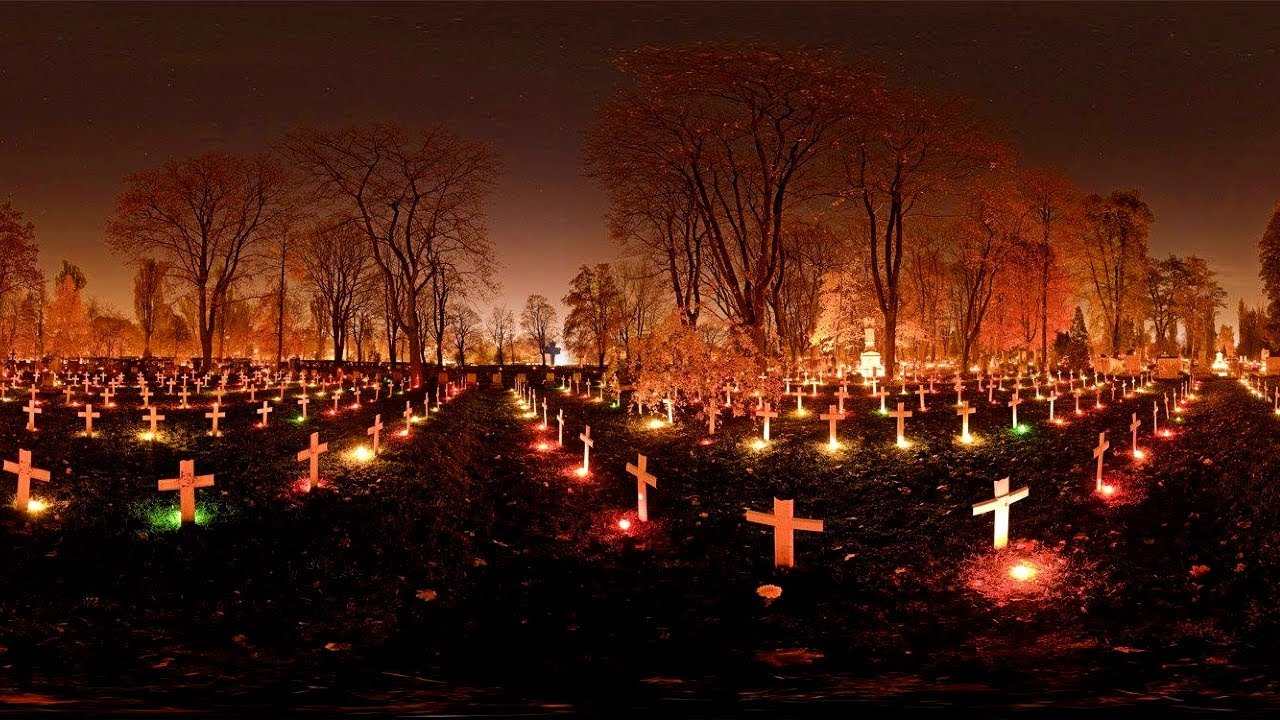
They clean and decorate graves, place flowers, light candles where customary, and pray for the deceased.
These practices express respect for the human body and the Christian hope of resurrection. The body is not merely a temporary possession to be discarded without dignity; it has been created by God and is destined for resurrection.
A visit to a cemetery can become an opportunity for prayer, gratitude, reconciliation, and reflection on the meaning of life.
Praying the Rosary
Families and parish communities may pray the Rosary for the departed, especially the Sorrowful Mysteries, which lead the faithful to meditate on the suffering and death of Jesus.
The Rosary can be offered for deceased relatives and for all souls in need of prayer.
The Divine Mercy Chaplet
Some Catholics pray the Chaplet of Divine Mercy for the faithful departed, entrusting them to the mercy of Jesus Christ.
This devotion emphasises confidence in God’s compassion and the saving power of Christ’s Passion.
Remembering the Deceased by Name
All Souls’ Day can be a particularly meaningful time for families to remember deceased members by name.
Parents can tell children stories about grandparents and other relatives who have died. Families can gather to pray, share memories, and give thanks for the love and sacrifices of previous generations.
Remembering the departed in this way keeps alive a sense of gratitude and belonging while directing the family towards the hope of eternal life.
Works of Charity
The Church has traditionally encouraged almsgiving and works of charity in connection with prayer for the dead.
Helping the poor, visiting the sick, comforting the bereaved, and supporting those who are lonely can become acts of Christian love offered to God.
Such works do not replace the need for grace. They express the faith and charity through which Christians respond to God’s love.
9. All Souls’ Day in Kerala and the Syro-Malabar Catholic Tradition
All Souls’ Day holds particular significance for many Catholic families in Kerala, where remembrance of the departed is closely connected with family life, parish worship, and the Christian understanding of death.
The Syro-Malabar Church, rooted in the Saint Thomas Christian tradition, shares the Catholic belief in the Communion of Saints, the resurrection of the dead, and prayer for the faithful departed.
Its liturgical life follows the East Syriac tradition, with its own calendar, prayers, and customs. Although the underlying Catholic faith is shared with the Latin Church, the precise liturgical observance should be understood according to the Syro-Malabar Church’s own calendar and ecclesiastical directions.
Praying for Departed Family Members
In many Kerala Catholic families, November becomes a special time to remember deceased parents, grandparents, relatives, and benefactors.
Families may arrange Mass intentions, visit family graves, offer prayers at home, and participate in parish services for the departed.
These traditions express the conviction that the bonds of Christian love are not destroyed by death.
The Importance of the Family Tomb
In many communities, the family tomb is an important symbol of continuity between generations.
Visiting the tomb allows younger members of the family to learn about their ancestors and remember the sacrifices through which earlier generations nurtured their faith.
The Christian meaning of this remembrance extends beyond preserving family history. It is an expression of hope in the resurrection and of trust in God’s promise of eternal life.
Remembering Priests and Religious
All Souls’ Day is also an opportunity to pray for deceased priests, religious sisters, religious brothers, catechists, missionaries, and other people who served the Church.
Their ministry and witness may have touched many lives, often through sacrifices that were never publicly recognised.
The faithful can remember them with gratitude and entrust them to God’s mercy.
A Pastoral Reminder
In Kerala, local customs differ among parishes, dioceses, and ecclesial traditions. The faithful should follow the official directions of their own parish and Church authorities regarding Mass schedules, cemetery services, and indulgences.
The most important element is sincere prayer, especially the offering of the Eucharist for the faithful departed.
10. Indulgences for the Faithful Departed
The Catholic Church encourages the faithful to obtain indulgences for the departed under the conditions established by the Church.
An indulgence is the remission before God of the temporal punishment due to sins whose guilt has already been forgiven. It is not the forgiveness of sin itself, nor does it replace repentance or the sacrament of Reconciliation.
The Church teaches that indulgences can be applied to the faithful departed by way of suffrage, entrusting their benefit to God’s mercy.
Visiting a Cemetery
The Church grants a plenary indulgence applicable only to the souls in purgatory to the faithful who devoutly visit a cemetery and pray, even mentally, for the departed, under the applicable conditions.
This plenary indulgence is ordinarily available each day from November 1 through November 8. The faithful should consult the current Enchiridion of Indulgences and official Church guidance for the precise norms and conditions.
Visiting a Church or Oratory on All Souls’ Day
A plenary indulgence applicable only to the souls in purgatory may also be obtained by the faithful who devoutly visit a church or oratory on November 2 and recite an Our Father and the Creed, subject to the prescribed conditions.
The Usual Conditions for a Plenary Indulgence
The ordinary conditions include:
- Sacramental confession, within the period prescribed by the Church.
- Reception of Holy Communion.
- Prayer for the intentions of the Supreme Pontiff.
- Complete detachment from all sin, including venial sin.
- Fulfilment of the particular work to which the indulgence is attached.
If this complete interior disposition is lacking, or if all the required conditions are not fulfilled, the indulgence may be partial rather than plenary, according to the Church’s norms.
One sacramental confession can ordinarily suffice for several plenary indulgences, while Holy Communion and prayer for the Pope’s intentions are ordinarily required for each indulgence.
The faithful should remember that indulgences are not a mechanical means of securing salvation. They belong to the Church’s ministry of grace and express the spiritual solidarity of Christ’s faithful.
11. How Should Christians Understand Death?
Death is one of the most profound mysteries of human existence. Even people who believe firmly in the resurrection may experience fear, sadness, and uncertainty when a loved one dies.
Christian faith does not demand that we pretend death is painless.
Jesus Himself wept at the tomb of Lazarus. His tears reveal that grief is a natural expression of love.
The Christian response to death therefore contains both sorrow and hope.
Death Reminds Us of Our Human Fragility
Our earthly life is precious but temporary. We cannot control every circumstance, and we do not know the length of our earthly journey.
Remembering death can help us evaluate our priorities. It encourages us to reconcile with others, forgive those who have hurt us, care for our families, and devote ourselves to what truly matters.
Death Invites Us to Live in Readiness
Jesus repeatedly calls His disciples to remain watchful and faithful.
Readiness for death does not mean living in fear. It means living each day in friendship with God, practising charity, repenting of sin, and placing our hope in Christ.
A Christian prepares for eternal life by learning to love God and neighbour in the present.
Death Does Not Destroy Christian Hope
The Resurrection of Jesus transforms the Christian understanding of death.
Death remains an enemy, but it is an enemy whose ultimate power has been defeated by Christ.
The faithful departed are entrusted to the God who created them, loves them, and desires their salvation.
This hope allows Christians to mourn without despair and remember their loved ones with gratitude.
12. Consolation for Those Who Have Lost Loved Ones
All Souls’ Day can be especially painful for those who have recently lost a parent, spouse, child, sibling, friend, or another person dear to them.
The passing of a loved one can leave an emptiness that words cannot adequately express.
A familiar voice is no longer heard. A place at the table remains empty. Important occasions arrive without the person who once made them special. Memories may bring both consolation and tears.
The Church does not ask grieving people to forget their loved ones or suppress their sadness.
Instead, she invites them to bring their sorrow to Christ.
Grief Is Not a Lack of Faith
Sometimes people feel guilty because they continue to grieve even though they believe in the Resurrection.
Yet Christian hope does not eliminate human sorrow. Faith and grief can exist together.
Jesus Himself wept for Lazarus, even though He knew that He was about to raise him from the dead.
It is possible to trust in eternal life and still long deeply for the presence of someone we love.
Entrust Your Loved Ones to God’s Mercy
We cannot change the past or bring back the earthly presence of those who have died. But we can continue to love them through prayer and remembrance.
We can offer Masses for them, entrust them to God’s mercy, and give thanks for the goodness they brought into our lives.
We should avoid claiming certainty about the eternal destiny of a particular person. That judgment belongs to God alone. Our responsibility is to pray, hope, and trust in His perfect justice and mercy.
Allow Memories to Become Gratitude
Remembering a deceased loved one can also become an act of thanksgiving.
Give thanks for the lessons they taught you, the sacrifices they made, the moments of happiness you shared, and the ways their lives helped shape your own.
If the relationship was complicated or painful, grief may include unresolved feelings. Bring these honestly before God and seek healing through prayer, compassionate support, and, when needed, professional assistance.
God’s grace can accompany us even through the most difficult experiences of loss.
Keep Living in Love
One of the most beautiful ways to honour those who have died is to continue the good they began.
If they were generous, practise generosity. If they valued prayer, deepen your prayer life. If they cared for the poor, serve those in need. If they taught you forgiveness, seek reconciliation.
In this way, remembrance becomes a living witness to love.
13. Lessons We Can Learn from All Souls’ Day
Life Is a Gift
Every day is an opportunity to love, serve, forgive, and grow closer to God.
All Souls’ Day reminds us not to postpone the good we can do today.
Love Is Stronger Than Forgetfulness
Prayer for the departed expresses a love that continues even when physical presence has ended.
We may no longer be able to speak with our loved ones, but we can remember them before God.
Humility Is Essential
None of us can fully judge another person’s relationship with God or the state of another soul.
The Feast of All Souls invites us to humility and trust. We entrust the dead to God’s mercy and examine our own lives honestly.
Prayer Is an Act of Charity
Praying for the departed is a spiritual work of mercy. It reminds us that Christian charity includes those who can no longer repay our kindness.
Eternal Life Should Shape Our Priorities
Earthly achievements, possessions, and recognition cannot replace communion with God.
Remembering death encourages us to invest our lives in faith, hope, charity, and the service of others.
14. Practical Ways to Observe All Souls’ Day
The following practices can help families and individuals observe the day meaningfully.
- Attend Holy Mass. Offer the Eucharist for deceased relatives, friends, benefactors, and all the faithful departed.
- Pray for the dead by name. Remember those who have died in your family, parish, and community.
- Visit a cemetery. Where possible, visit the graves of loved ones, pray for them, and care for their resting places.
- Pray the Rosary or Divine Mercy Chaplet. Offer these prayers for the departed, entrusting them to God’s mercy.
- Read Scripture together. Reflect on John 11:25–26, Romans 8:38–39, or 1 Corinthians 15.
- Teach children about the resurrection. Help them understand that Christians remember the dead with love and hope.
- Perform an act of charity. Help a bereaved family, visit someone who is lonely, or support a person in need.
- Reconcile with the living. If a relationship needs healing, take a step towards forgiveness and peace wherever it is safe and appropriate.
- Pray for those who have no one to remember them. Include unknown and forgotten departed souls in your intentions.
- Examine your own life. Ask how you can live more faithfully in preparation for the day when you meet the Lord.
15. A Spiritual Reflection: Remembering the Departed with Hope
All Souls’ Day invites us to pause in the middle of our busy lives and remember those who have gone before us.
Perhaps you remember your father, who worked hard to provide for the family. Perhaps you remember your mother, whose prayers and sacrifices shaped your childhood. Perhaps you think of a grandparent who taught you to trust God, a friend who stood beside you during difficult times, or someone whose presence made your life more beautiful.
Some memories bring smiles. Others bring tears.
There may be people whose absence still hurts deeply, even after many years. There may be words you wish you had spoken, apologies you wish you had offered, or moments you wish you could experience once again.
Bring these memories to Jesus.
At the tomb of Lazarus, Jesus did not stand apart from human sorrow. He entered into it. He wept with those who mourned, and He revealed that He is the Resurrection and the Life.
This is the heart of Christian hope. We do not remember our departed loved ones because we believe death has conquered them forever. We remember them because we entrust them to the Lord who conquered death.
The Feast of All Souls also asks us to look at our own lives. One day, we too will leave behind our possessions, achievements, responsibilities, and earthly relationships. What will remain is our relationship with God and the love we have allowed His grace to form within us.
Therefore, let us not wait until death reminds us of the importance of love. Let us forgive today, express gratitude today, care for our families today, and reach out to those who need us today.
May the memory of those who have died make us more compassionate towards those who are living. May our prayers for the departed deepen our trust in God’s mercy. And may the promise of eternal life help us walk through sorrow with hope.
Conclusion
The Feast of All Souls is a solemn expression of the Catholic Church’s faith in the Communion of Saints, the mercy of God, and the promise of eternal life.
Through prayer, the Eucharist, visits to cemeteries, and acts of remembrance, the faithful entrust their departed loved ones to God. These practices express the conviction that death does not destroy the spiritual bonds established in Christ.
The day also reminds us of the importance of living faithfully. Our earthly life is a gift, and every moment offers an opportunity to grow in love, seek forgiveness, and serve others.
As we remember those who have died, let us pray with humility and hope. Let us avoid judging their eternal destiny and instead place them in the hands of the God who knows every heart.
May the Lord grant eternal rest to the faithful departed, comfort those who mourn, and strengthen all of us in our journey towards the heavenly Kingdom.
A Prayer for All Souls’ Day
Merciful and loving Father, we entrust to You all the faithful departed, especially our parents, grandparents, relatives, friends, priests, religious, benefactors, and all those who have touched our lives.
You know each of them by name. You know their joys and sorrows, their struggles and sacrifices, their virtues and weaknesses. In Your infinite mercy, receive them into Your loving care and bring them to the fullness of eternal life.
Lord Jesus, You are the Resurrection and the Life. Strengthen our hope in Your victory over death. For those who are undergoing purification, we offer our prayers and the Holy Eucharist, trusting in the saving power of Your sacrifice.
Remember those who died alone, those who have been forgotten, those whose graves are unknown, and those for whom no one prays. May Your light shine upon them, and may Your mercy embrace them.
Comfort all who mourn. Be near to those who feel the pain of separation, those who struggle with unanswered questions, and those who find anniversaries and family celebrations difficult because a loved one is no longer present.
Teach us to cherish the gift of life, to forgive generously, to love sincerely, and to prepare our hearts to meet You. May the memory of the departed inspire us to live with greater faith, hope, and charity.
When our own earthly pilgrimage comes to an end, receive us into Your Kingdom and unite us with all Your saints in the eternal joy of Your presence.
We ask this through Jesus Christ, our Lord. Amen.
Eternal rest grant unto them, O Lord, and let perpetual light shine upon them. May the souls of all the faithful departed, through the mercy of God, rest in peace. Amen.
References and Further Reading
Biblical References
- 2 Maccabees 12:38–46 — Prayer and sacrifice offered for the dead.
- John 11:17–27 — Jesus, the Resurrection and the Life.
- Matthew 22:23–33 — Jesus’ teaching on the resurrection of the dead.
- Romans 8:31–39 — Nothing can separate us from the love of God.
- 1 Corinthians 15:12–58 — The Resurrection of Christ and the resurrection of the dead.
- Wisdom 3:1–9 — The souls of the righteous are in the hand of God.
- Revelation 21:1–7 — The new heaven and the new earth.
Catechism of the Catholic Church
- Catechism of the Catholic Church — Official Vatican text
- CCC 954 — The three states of the Church.
- CCC 958 — Communion with the dead.
- CCC 1030–1032 — The doctrine of purgatory and prayers for the dead.
- CCC 1680–1690 — Christian funerals and the meaning of death.
- CCC 1471–1479 — The doctrine of indulgences.
Official Catholic Resources
- The Holy See — Vatican
- United States Conference of Catholic Bishops
- The Catholic Encyclopedia — All Souls’ Day, New Advent
- The Catholic Encyclopedia — Purgatory, New Advent
Suggested Further Reading
- Lumen Gentium, Chapter VII: The Eschatological Nature of the Pilgrim Church and Its Union with the Church in Heaven.
- Spe Salvi by Pope Benedict XVI — On Christian hope and eternal life.
- Enchiridion of Indulgences — The Church’s official norms concerning indulgences and their application.
- The official liturgical calendar and pastoral directives of the Syro-Malabar Church for the observance of the faithful departed.
Leave a Reply