
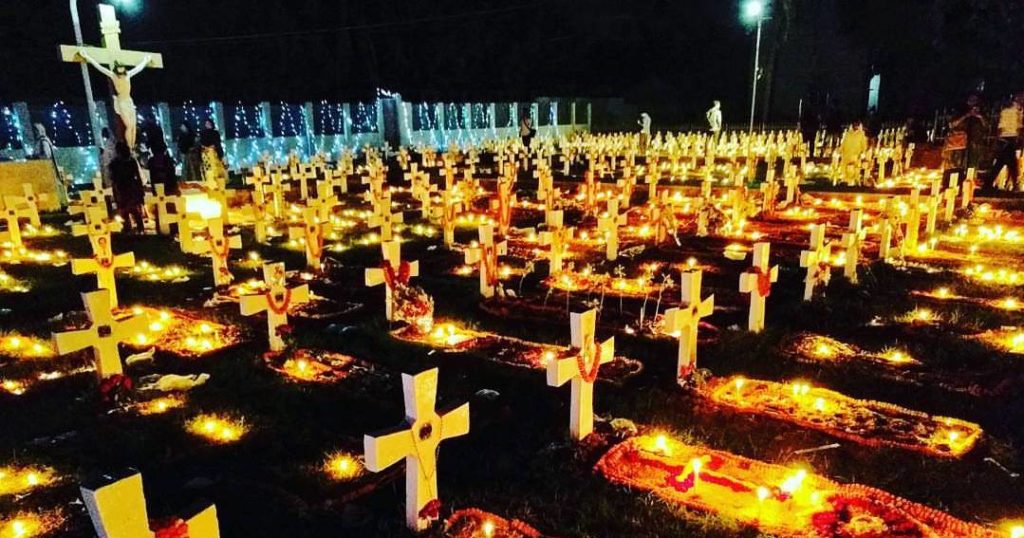
Yesterday, on All Saints’ Day, the Church rejoiced in the glory of those who already see God face to face. Today, on All Souls’ Day, she remembers the faithful departed who died in God’s friendship but still need to be purified before entering the fullness of his presence. This is not a feast of despair. It is a day of hope and of love that continues beyond death.
We remember those we have loved our parents, grandparents, relatives, friends, and all who have gone before us. We remember their lives, their sacrifices, their goodness, and the love they shared with us.
But our remembrance is more than simply recalling the past. As Catholics, we believe that death does not end our relationship with those who have died. Our communion in Christ continues beyond the grave. This is why we pray for the dead, offer the Eucharist for them, and entrust them to the mercy and love of God.
The Church teaches that some people die in God’s grace and friendship but are not yet fully purified to enter the joy of heaven.
Think of a person coming home after a long, difficult journey. They are welcomed and loved; yet the journey has left them weary, dusty, and in need of care. The welcome is real, but so is the need to be made ready.
As the Catechism teaches, those who die in God’s grace and friendship are assured of eternal salvation, but they still need purification. This final purification is what the Church calls Purgatory.
Purgatory is not a second chance at salvation, nor is it a place of hopelessness. It is the final purification of those who belong to God and are destined for heaven. The Church entrusts the details of this mystery to God rather than encouraging speculation about exactly how that purification feels or unfolds.
This matters because forgiveness and healing are related, but they are not identical.
We can understand this through a simple example. Imagine someone who has been forgiven for damaging a valuable object. The forgiveness restores the relationship, but the damage may still need to be repaired. In a similar way, even when our sins are forgiven, their consequences and attachments may still need purification.
Sin wounds our relationship with God and with others. Even after forgiveness, the effects of sin can remain in our hearts. We may still carry selfishness, pride, resentment, unhealthy attachments, or a lack of love. God’s grace heals and purifies us so that we may become fully ready to stand in his presence.
This is why the Church has always prayed for the dead. In the Second Book of Maccabees, we read that Judas Maccabeus offered prayers and sacrifices for the deceased, because he believed in the resurrection and understood that it was a holy and noble thing to pray for the dead (2 Maccabees 12:44–46).
Our faith teaches us that the Church is not limited to those who are alive on earth. The Church includes the faithful on earth, the souls undergoing purification, and the saints who already enjoy the glory of heaven. Together, we form the Communion of Saints.
Death does not destroy this communion because we are united in Christ. Our loved ones may no longer be physically present with us, but our relationship with them is not simply erased. We remain united through the love of Christ.
This is why our prayers for the departed are so important. The Church encourages us to pray for them, offer Masses for them, give alms, perform works of charity, and offer indulgences for their benefit.
Among all these prayers and offerings, the Eucharistic sacrifice holds a special place. When we offer Mass for the deceased, we place them before the Lord in the most powerful prayer of the Church. We ask Christ, who conquered sin and death through his sacrifice, to bring them into the fullness of eternal life.
Think about the people who have died in your family. Perhaps your parents sacrificed much for you. Perhaps a grandparent taught you to pray. Perhaps a friend supported you during a difficult time. We remember them with gratitude, but we should also remember them in prayer.
Flowers, photographs, monuments, and visits to the cemetery are meaningful expressions of remembrance. But one of the greatest gifts we can offer our departed loved ones is our prayer, especially the offering of the Holy Mass.
Our love for them should not end with remembering what they did for us. It should continue through prayer and entrustment to God’s mercy.
While today we pray for the dead, the Church also invites us to reflect on our own lives. All Souls’ Day reminds us that death is certain, even though we do not know when it will come.
We sometimes live as though we have unlimited time. We postpone prayer, forgiveness, reconciliation, conversion, and the things that truly matter. We may say, “I will become more serious about my faith later. I will forgive that person later. I will return to God later.”
But the Gospel reminds us to remain ready.
Jesus tells the parable of the ten virgins. Five were wise because they were prepared for the bridegroom’s arrival, while five were foolish because they were not ready (Matthew 25:1–13). The message is clear: we must live each day with our hearts prepared to meet the Lord.
The best preparation for a holy death is to live a holy life.
This does not mean that we must live in fear or become anxious about death. Rather, it means that we should take our Christian life seriously. We should seek forgiveness when we sin, receive the sacraments, practice charity, forgive others, and grow in love for God and neighbor.
Finally, All Souls’ Day is not simply a day of mourning. It is a day of Christian hope.
We grieve because we have lost people we love. We feel the emptiness of their absence. We remember conversations, celebrations, sacrifices, and moments that can never be repeated in exactly the same way. Our Christian faith does not ask us to deny the pain of death.
But our sorrow is not without hope.
St. Paul reminds us that if we have died with Christ, we believe that we shall also live with him (Romans 6:8). The Resurrection of Jesus changes the meaning of death. Death is no longer the final word. Christ has passed through death and opened the way to eternal life.
The Book of Revelation gives us a beautiful promise:
“He will wipe every tear from their eyes, and there shall be no more death or mourning, wailing or pain” (Revelation 21:4).
This is the future God promises to those who belong to him. Our hope is founded on the death and Resurrection of Jesus Christ.
Therefore, when we remember our departed loved ones, we do so with faith. We entrust them to God’s mercy, pray for their purification, and hope that one day we will share with them the eternal joy of heaven.
Dear brothers and sisters, All Souls’ Day gives us three important responsibilities.
First, let us pray for our departed loved ones.
Second, let us prepare ourselves for eternal life.
Third, let us remain people of hope.
May our prayers assist the faithful departed, may God’s grace purify our own hearts, and may the Lord gather us all together one day in the joy of his eternal Kingdom.
✍ Fr Tojan Abraham MCBS, Memphis, USA
Leave a Reply