
The Heart of Our Faith – Love of God and Neighbor | Matthew 22:34–40
One of the tasks we all face in life is learning to distinguish what is more important from what is less important. We often ask ourselves what should be at the center of our lives and what can move toward the margins.
That question matters in our faith, too. We want to understand which beliefs are essential and how the different parts of our faith fit together. From its earliest days, the Church found it necessary to express its core beliefs in the creeds, which we profess every Sunday.
In the time of Jesus, the Jewish people also sought to identify the heart of their faith. Jewish tradition counted 613 commandments in the Law, and teachers often discussed which commandments were the greatest. This concern lies behind the question put to Jesus in today’s Gospel: “Teacher, which commandment in the law is the greatest?”
The question comes after others have tried to trap Jesus. The Pharisees have seen the Sadducees silenced, but they gather again and send one of their own to test him. Matthew tells us that this question is meant as a test. Yet Jesus does not answer with a trap of his own. He gives an answer that reaches beyond the question and gathers the whole life of faith into two commands: love God and love your neighbor.
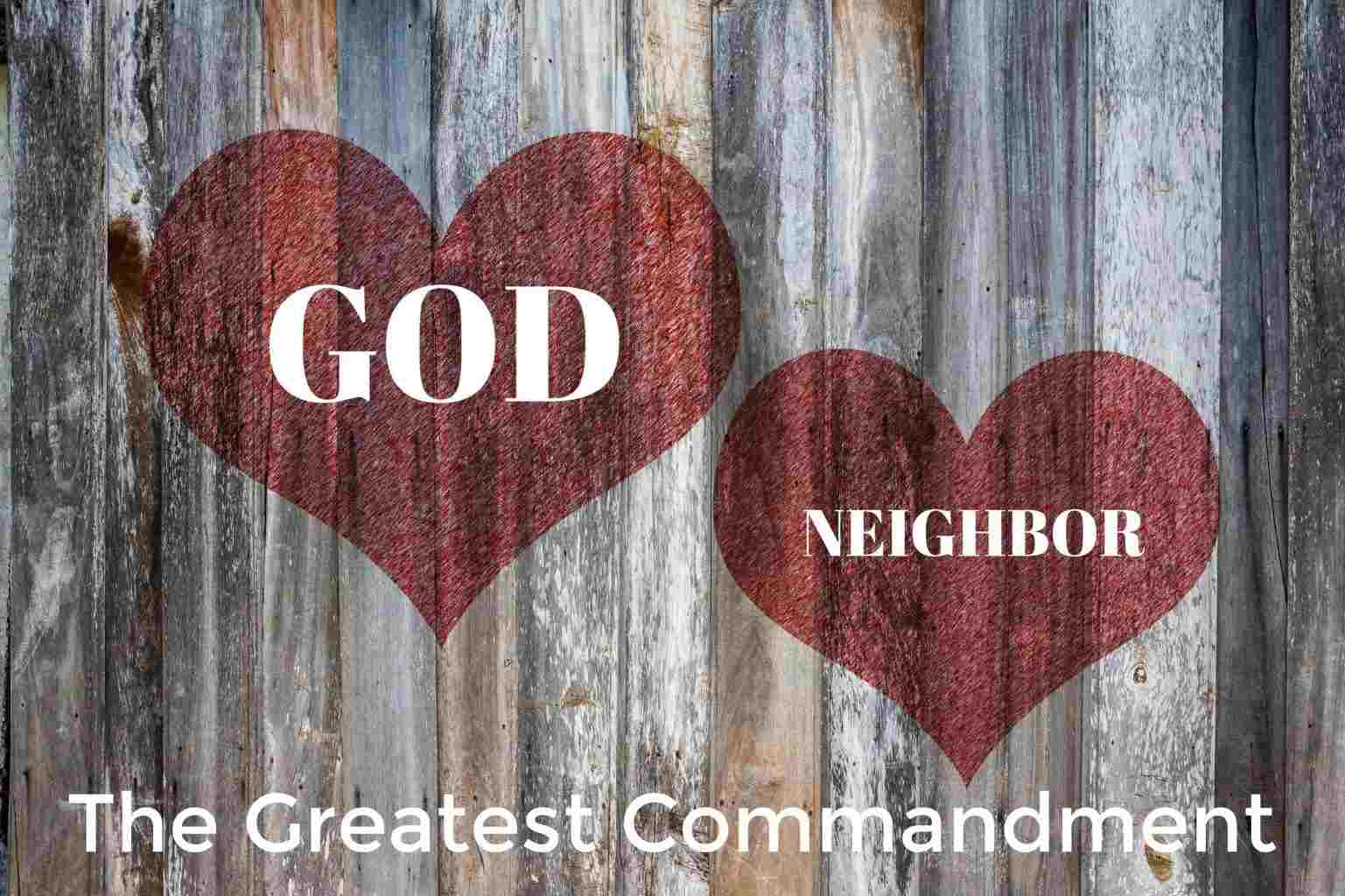
Jesus says: “You shall love the Lord, your God, with all your heart, with all your soul, and with all your mind.” And then: “You shall love your neighbor as yourself.”
In these two commandments, Jesus reveals the heart of our faith. Everything we believe, everything we celebrate in the Eucharist, and everything we do as Christians must ultimately lead us to love God above all things and to express that love through the way we treat our neighbor.
As Jesus says, “The whole law and the prophets depend on these two commandments.”
That word “depend” gives us a striking image. The commandments are not a pile of unrelated rules, as though faith were a list we keep in one hand while we live the rest of our lives somewhere else. Jesus shows us the heart that holds them together. The Catechism teaches that we must interpret the Ten Commandments in light of this twofold, yet single, commandment of love. (CCC 2055)
Love does not make the commandments unnecessary. It shows us their purpose: to turn us away from harm and lead us toward faithful love of God and neighbor.
Jesus begins with love of God: “with all your heart, with all your soul, and with all your mind.” Those words might make us think that loving God means always feeling a certain way. But Jesus calls for more than a passing emotion.
To love God with our whole heart is to let God matter more than anything else. To love God with our whole soul is to place our lives in God’s hands. To love God with our whole mind is to give our thoughts, judgment, and attention to what is true and good.
That love touches ordinary choices. It matters when we decide whether to tell the truth, whether to forgive, how we use our time, and what we choose to remember. It matters when resentment occupies our thoughts, or when we give our best attention to everything except God.
We do not love God with our whole being by pretending we never struggle. We love God by continually turning our heart, life, and mind back toward him.
Then Jesus gives us the second commandment: “You shall love your neighbor as yourself.” Love of neighbor does not replace love of God. Jesus says the second commandment is like the first. The two belong together.
St. John Chrysostom observes that Jesus’ answer also addresses the hostility behind the question. A man comes to test Jesus, and Jesus responds with a command that leaves no room for envy or hatred. He does not merely settle an argument. He invites the questioner and all of us to examine the spirit with which we approach one another.
And who is our neighbor? Not only the person who is easy to like, who agrees with us, or who belongs to our circle. St. Leo the Great teaches that this command embraces everyone, friend or enemy, because we share a common human nature.
That makes the command concrete. It includes the person we overlook, the difficult conversation we would rather avoid, the person whose choices trouble us, and the person with whom we disagree. Love does not mean approving every action or pretending that harm is harmless. It means refusing to treat another person as disposable. It means seeking that person’s good with honesty and compassion.
The words “as yourself” invite us to consider what we genuinely desire for ourselves. We want patience when we fail, to be heard when we speak, and help when we are in need. Jesus calls us to extend that same regard to others.
Sometimes love looks like a kind word. Sometimes it means giving someone our attention instead of rushing past. Sometimes it means telling the truth, setting a necessary boundary, or correcting an injustice. The form of love can change, but its purpose remains the same: to seek the good of the other person.
To love God with everything and to love every neighbor can seem like an impossible task. But Jesus does not ask us to accomplish it all in one dramatic gesture. We learn to live these commandments through the next decision in front of us.
Whom can I listen to today? What resentment can I begin to surrender? Where am I being asked to act fairly, speak kindly, or offer practical help? How can I turn some part of my day toward God instead of letting it be ruled by distraction or self-interest?
The question in the Gospel came from someone who wanted to test Jesus. But Jesus’ answer was not wasted. In another Gospel account, the man responds wisely, and Jesus tells him that he is not far from the kingdom of God.
Even a question asked with imperfect motives can become the beginning of a change of heart. We do not need to wait until our faith is flawless before we listen to Christ. We can begin where we are and ask him to teach us how to love.
So when the day feels crowded with duties, arguments, and worries, return to the heart of the Gospel: love God with your whole self, and love your neighbor as yourself.
The first commandment roots our love in the One who gives us life. The second allows that love to take flesh in the way we treat people. Together, they show us not only what matters most, but how our whole lives can become an offering of love.
✍ Fr. Tojan Abraham MCBS
Leave a Reply