
Introduction
Saint John of Capistrano was a fifteenth-century Franciscan friar, renowned preacher, reformer, and missionary whose life was marked by extraordinary zeal for the Gospel. Born in Italy in 1386, he became one of the most influential Catholic preachers of his age, travelling extensively throughout Europe to proclaim the Christian faith, encourage religious renewal, and strengthen communities during a period of political instability and spiritual challenges.
A member of the Order of Friars Minor, John was deeply influenced by the spirituality of Saint Francis of Assisi and the reforming vision of Saint Bernardine of Siena. He devoted himself to prayer, penance, preaching, and the renewal of religious life. His eloquence attracted large crowds, while his missionary journeys brought him into contact with people from many regions and social backgrounds.
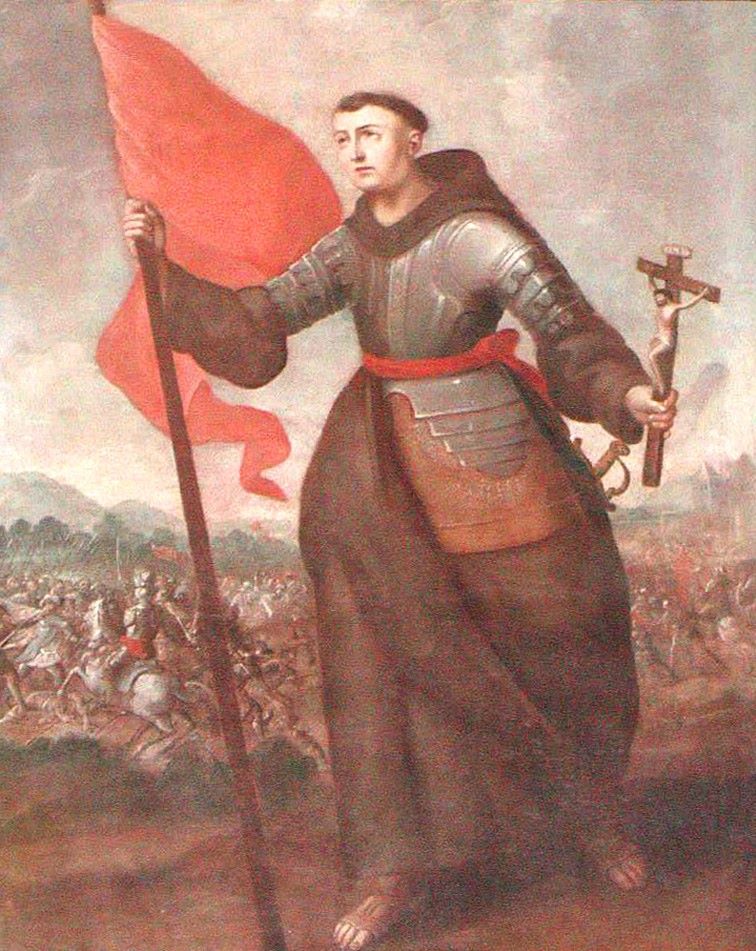
Saint John is particularly remembered for his role in encouraging the Christian forces during the defence of Belgrade in 1456, when an Ottoman army besieged the strategically important city. Although he was already an elderly man, he accompanied the Christian forces, encouraged the defenders, and became a symbol of courage and perseverance.
His life also reflects the complexities of fifteenth-century religious history. His preaching was shaped by the intense religious and political tensions of his age, including attitudes towards non-Christians that require careful historical consideration today.
Canonized by Pope Alexander VIII in 1690, Saint John of Capistrano is commemorated in the Catholic Church on 23 October. His life invites Christians to consider the relationship between zeal for the Gospel, personal holiness, courage, and the responsibility to proclaim the faith with wisdom and charity.
1. Early Life and Family Background
John was born on 24 June 1386 in Capestrano, a town in the Kingdom of Naples, in present-day Italy. His name, John of Capistrano, derives from the place of his birth.
His father is commonly described as having German origins, although the details of his family background are not fully established. John grew up during a period when Italy was divided among competing political powers, and conflicts between rulers frequently affected ordinary people.
From an early age, John demonstrated considerable intellectual ability. He pursued studies in law and eventually became known for his legal knowledge and administrative competence.
His education prepared him for a career in public life, where intelligence, eloquence, and political judgment were highly valued. At this stage, there was little indication that he would eventually become one of the most celebrated Franciscan preachers of the fifteenth century.
Yet the experiences of public responsibility, political uncertainty, and personal suffering would eventually lead him towards a profound spiritual transformation.
2. A Career in Law and Public Service
John studied law at the University of Perugia and established himself as a capable jurist.
He later entered public service and became involved in the administration of Perugia, an important Italian city. In 1412, he was appointed governor of the city under the authority of King Ladislaus of Naples.
His responsibilities required administrative skill, diplomatic judgment, and the ability to deal with competing political interests.
However, the political environment was unstable. Rivalries between Italian cities and powerful families frequently resulted in conflict, imprisonment, and changes of government.
In 1416, John was imprisoned during a political struggle involving Perugia. His experience of captivity became a turning point in his life.
The circumstances of his imprisonment and the precise details of his conversion are presented differently in later biographical accounts. Nevertheless, his subsequent decision to abandon his legal and political career and enter religious life is well established.
His experience illustrates how periods of personal crisis can lead individuals to reconsider their priorities and discover a new direction in life.
For John, the transition from public office to religious life marked the beginning of a vocation centred on prayer, penance, preaching, and service to the Church.
3. Conversion and Entrance into the Franciscan Order
After his release from captivity, John turned increasingly towards spiritual reflection and religious commitment.
He decided to enter the Order of Friars Minor, the Franciscan religious order founded by Saint Francis of Assisi. He became a Franciscan around 1416 and embraced a life of poverty, obedience, prayer, and apostolic service.
His decision represented a dramatic change of direction. He left behind the prospects of a successful career in law and administration to dedicate himself to Christ through religious life.
The Franciscan tradition emphasizes the imitation of Jesus Christ, particularly through humility, simplicity, poverty, fraternity, and service to others.
John embraced these ideals with remarkable intensity. He pursued a disciplined spiritual life and became increasingly involved in the reform of religious communities.
He was also deeply influenced by Saint Bernardine of Siena, one of the most celebrated Franciscan preachers of the period. Bernardine’s devotion to the Holy Name of Jesus and his commitment to reform helped shape John’s spirituality and preaching.
Under this influence, John developed into a gifted preacher who combined theological learning, moral exhortation, and practical calls to Christian renewal.
4. A Franciscan Reformer
During the fifteenth century, many religious communities were concerned about the need to renew the observance of their original rules and spiritual ideals.
Within the Franciscan Order, reform movements sought to recover the simplicity, poverty, and evangelical fervour associated with Saint Francis.
John became an important advocate of the Observant reform, which emphasized a stricter observance of the Franciscan Rule.
He encouraged religious communities to renew their commitment to prayer, poverty, discipline, and apostolic service. He also worked to strengthen the formation of friars and promote a more authentic expression of Franciscan spirituality.
His reforming activity was not limited to criticism or administrative decisions. He sought to persuade religious men and women to deepen their personal relationship with God and allow that relationship to shape their conduct.
John’s life demonstrates that genuine reform in the Church requires more than organizational changes. It also requires conversion of heart, fidelity to the Gospel, and a willingness to examine one’s own life before seeking to correct others.
His work contributed to the expansion and influence of the Observant Franciscans throughout Europe.
5. Saint John of Capistrano as a Preacher
John became famous for his preaching, which attracted large crowds in cities and towns throughout Europe.
His sermons addressed repentance, conversion, the commandments of God, the importance of prayer, and the need to reform Christian life. He frequently challenged people to abandon destructive habits and return sincerely to the Gospel.
At a time when printed books were not yet widely accessible to ordinary people, public preaching played an essential role in religious education. A gifted preacher could influence entire communities through direct oral communication.
John’s reputation was strengthened by his extensive travels and the enthusiasm of those who attended his sermons.
He preached in various regions of Italy and travelled to other European lands, including territories in Central Europe. His missionary activity brought him into contact with different political and cultural environments.
His preaching often addressed public moral concerns, including corruption, injustice, violence, and religious indifference.
His Preaching Style
John’s preaching combined intellectual preparation with intense conviction. He believed that the proclamation of the Gospel should call people to a real change of life.
He did not regard preaching as merely the delivery of religious information. It was an invitation to conversion, reconciliation with God, and renewed commitment to Christian discipleship.
His example remains relevant to priests, deacons, catechists, and all who proclaim the Gospel. Effective preaching requires a knowledge of Scripture and the faith, but it also demands personal integrity, prayer, courage, and genuine concern for the spiritual welfare of others.
At the same time, the forcefulness of John’s preaching must be understood within the religious culture of his period, when public religious exhortation could be severe and polemical.
His lasting contribution is best appreciated by recognizing both his zeal for reform and the need for all Christian proclamation to remain faithful to truth, justice, and charity.
6. Missionary Journeys Across Europe
John’s missionary work extended far beyond his birthplace.
He travelled through numerous European regions, preaching to clergy, religious communities, rulers, soldiers, and ordinary people. His journeys were undertaken in an age when travel was difficult and frequently dangerous.
He often visited places experiencing political tension, religious uncertainty, or social unrest. His preaching sought to strengthen Catholic faith and encourage moral reform.
John also participated in efforts to address divisions within the Church and to strengthen ecclesiastical discipline.
His missionary activity reflected a conviction that the Gospel was not intended for a single nation or social group. The Church was called to proclaim Christ throughout the world.
However, his understanding of mission was shaped by the circumstances of fifteenth-century Europe, including the conflicts between Christian and Muslim powers and the religious divisions of the period.
A balanced appreciation of his missionary life therefore requires attention both to his dedication to preaching and to the historical attitudes that influenced his approach to religious difference.
7. Saint John of Capistrano and the Defence of Belgrade
One of the most famous episodes in John’s life occurred in 1456, during the Ottoman siege of Belgrade.
Belgrade occupied a strategically important position on the frontier between Ottoman territories and the Christian kingdoms of Central Europe. The Ottoman ruler Sultan Mehmed II sought to capture the city as part of his wider military expansion.
The defence was associated especially with John Hunyadi, a Hungarian military commander, and other Christian forces who gathered to resist the Ottoman army.
John of Capistrano, by then nearly seventy years old, became involved in encouraging support for the defence. He preached widely, urged people to take the threat seriously, and helped mobilize Christian volunteers.
His role was primarily spiritual and motivational rather than that of a professional military commander.
He accompanied the forces and encouraged the defenders through prayer, preaching, and personal presence. Contemporary and later accounts describe his determination to strengthen the morale of those facing the siege.
The Battle of Belgrade
The Ottoman siege culminated in fighting in July 1456. The defenders, supported by forces led by Hunyadi and volunteers gathered from different regions, resisted the assault.
The Christian victory at Belgrade was a significant event in the history of Central Europe. It delayed Ottoman expansion into the region, although it did not end Ottoman power or subsequent conflicts.
John’s participation made him a celebrated figure in Christian Europe. His courage and willingness to accompany the defenders despite his advanced age became central to his reputation.
His example demonstrates how spiritual leadership can strengthen people facing danger and uncertainty.
Nevertheless, the battle must also be understood as a historical military conflict involving political interests, competing empires, and human suffering. Its religious significance to Christian Europe should not obscure the wider historical complexity of Ottoman-European relations.
8. The Final Years and Death of Saint John of Capistrano
Following the events at Belgrade, John remained in the region, continuing his religious work.
The campaign had exposed him to difficult conditions, and he was already elderly. He died on 23 October 1456 at Ilok, in present-day Croatia, a few months after the defence of Belgrade.
His death was followed by a growing devotion to his memory. Many Christians regarded him as a courageous preacher and a man who had devoted his life to the renewal of faith.
His reputation spread through Franciscan communities and throughout Central Europe.
The circumstances of his final months strengthened the association between his name and the defence of Belgrade, although his importance as a Franciscan preacher and reformer had been established long before the battle.
His life had moved from legal and political service to religious conversion, from the discipline of the monastery to the public mission of preaching, and from local responsibilities to an influence extending across Europe.
9. Canonization and Liturgical Commemoration
John of Capistrano’s reputation for holiness continued after his death.
He was canonized by Pope Alexander VIII in 1690. His liturgical commemoration is celebrated on 23 October, the anniversary of his death.
He is honoured particularly in Franciscan communities and in places associated with his preaching and missionary work.
His historical reputation rests on several major contributions:
- His commitment to Franciscan reform.
- His extensive preaching and missionary journeys.
- His encouragement of religious renewal among clergy and laity.
- His role in mobilizing support for the defence of Belgrade in 1456.
- His example of perseverance and dedication despite advanced age.
Saint John of Capistrano remains a significant figure in the history of the Franciscan movement and the religious life of fifteenth-century Europe.
10. Saint John of Capistrano and the Holy Name of Jesus
The devotion to the Holy Name of Jesus was an important feature of Franciscan spirituality during John’s lifetime.
Saint Bernardine of Siena had popularized devotion to the Holy Name, encouraging Christians to honour the name of Jesus as a reminder of the Saviour’s presence and saving power.
John continued this tradition through his preaching and pastoral work.
The devotion is rooted in Scripture. Philippians 2:9–11 proclaims that God exalted Christ and bestowed upon Him the name above every name, so that every knee should bend at the name of Jesus.
For Christians, reverence for the Holy Name is not simply a matter of repeating a word. It expresses faith in the person of Jesus Christ and recognition of His saving work.
The name of Jesus becomes a source of prayer, trust, and spiritual renewal.
John’s example encourages believers to place Christ at the centre of their daily lives and to remember that Christian preaching and service must ultimately lead people towards Him.
11. Historical Context and the Limits of His Legacy
Saint John of Capistrano lived in a period when religious identity, political authority, and military conflict were closely connected.
His preaching and reforming activity took place within a society where Christian rulers frequently sought religious unity and where conflicts with Muslim powers were interpreted through strongly religious frameworks.
John’s role in mobilizing Christian resistance to the Ottoman siege of Belgrade formed a major part of his historical reputation.
However, some aspects of his preaching and public activity also reflected the prejudices and polemical attitudes of his time. Historical accounts associate him with severe anti-Jewish measures and hostility towards Jewish communities.
These aspects should not be ignored when presenting his life. A responsible historical account acknowledges both his dedication to religious reform and the harm associated with certain attitudes and actions of the period.
The Catholic understanding of sainthood does not require treating every historical action of a canonized person as a model for imitation. Saints remain human beings whose lives must be understood within their historical circumstances, while their virtues are discerned in the light of the Gospel.
For contemporary Christians, John’s life offers an opportunity to reflect on the importance of reform, missionary courage, and fidelity to Christ, while also recognizing the continuing obligation to uphold the dignity of every human person.
Christian zeal must never become an excuse for hatred, coercion, or contempt for others. The Gospel calls believers to proclaim the truth with charity and to recognize that every person is created in the image of God.
12. The Spiritual Virtues of Saint John of Capistrano
A. Courage
John demonstrated courage by leaving behind a promising public career to embrace religious life. Later, he continued preaching and encouraging others even when travel was dangerous and political circumstances were unstable.
His courage was not merely physical bravery. It also involved the willingness to make difficult decisions in response to his understanding of God’s call.
Christians today can imitate this virtue by standing for truth, defending the vulnerable, and remaining faithful to their responsibilities even when doing so is unpopular.
B. Zeal for the Gospel
John dedicated much of his life to preaching and encouraging conversion.
His example reminds Christians that the Gospel is not meant to remain a private possession. Faith should shape our words, choices, relationships, and service to others.
Every baptized person shares in the Church’s missionary responsibility according to his or her vocation.
C. Perseverance
John continued his ministry into old age. His participation in the events surrounding Belgrade demonstrated his determination to serve despite physical limitations.
His example encourages believers not to assume that age, weakness, or difficult circumstances make their lives spiritually unproductive.
Perseverance may take different forms at different stages of life. For some, it involves public ministry; for others, it means faithful prayer, patient care for family members, or quiet service to those in need.
D. Discipline and Prayer
John’s Franciscan formation emphasized prayer, penance, obedience, and simplicity.
These practices supported his demanding apostolic work and helped shape his spiritual identity.
His life reminds us that effective service requires an interior foundation. Without prayer and self-discipline, religious activity can become driven by ambition, anger, or the desire for recognition.
E. Commitment to Reform
John believed that the Church’s mission required continual renewal.
His work within the Franciscan movement reminds us that reform begins with conversion of heart and a return to the essentials of the Gospel.
Christian communities must be willing to examine their lives, correct abuses, strengthen formation, and renew their commitment to prayer and charity.
F. Responsible Zeal
John’s life also invites reflection on the need to guide religious enthusiasm through humility and charity.
A desire to defend the faith must never become a justification for contempt towards people of other religions or backgrounds.
The example of Jesus teaches Christians to proclaim truth courageously while respecting human dignity and rejecting hatred.
13. Saint John of Capistrano and the Mission of the Church Today
The life of Saint John of Capistrano offers several lessons for the Church in the contemporary world.
First, his preaching reminds us of the continuing need for clear and faithful proclamation of the Gospel. In a world filled with competing ideas and distractions, Christians are called to communicate their faith with conviction and understanding.
Second, his commitment to Franciscan reform reminds us that renewal must begin within the Church herself. Priests, religious, and laypeople are called to examine their own lives and seek greater fidelity to Christ.
Third, his missionary journeys show the importance of making the Gospel accessible to people in different places and circumstances. Mission requires preparation, perseverance, and a willingness to encounter people where they are.
Finally, his historical limitations remind us that Christian mission must always be guided by the love of Christ. Evangelization is not the imposition of faith through coercion or hostility. It is the proclamation of the truth through witness, service, dialogue, and an invitation to conversion.
The Church’s mission is fulfilled most faithfully when her members combine doctrinal clarity with humility, courage with compassion, and zeal with respect for the dignity of every person.
14. Spiritual Lessons from Saint John of Capistrano
1. God Can Give a New Direction to Our Lives
John began his adult life as a lawyer and public official. After a period of crisis, he embraced a very different vocation.
His life reminds us that our past does not necessarily determine our future. God can lead us towards new responsibilities and new forms of service when we remain open to His grace.
2. Use Your Gifts in the Service of God
John’s education, legal knowledge, eloquence, and organizational abilities became instruments of his religious mission.
Every person possesses gifts that can be used for the good of others. Intellectual ability, professional skill, artistic talent, and practical competence can all become forms of Christian service when offered to God.
3. Do Not Give Up Because of Age or Weakness
John continued his work well into old age.
His example challenges the belief that usefulness depends only on physical strength or youthful energy. Prayer, wisdom, encouragement, and faithful presence can remain powerful forms of service throughout life.
4. Renew Your Faith Continually
John’s commitment to Franciscan reform reminds us that Christian life requires continual conversion.
We must regularly examine our conscience, return to prayer, seek reconciliation, and renew our commitment to the Gospel.
5. Let Zeal Be Guided by Charity
John’s historical context reminds modern Christians that enthusiasm for religion must be purified by the Gospel’s command to love one’s neighbour.
Authentic Christian witness requires courage without hatred, conviction without arrogance, and fidelity to truth without denying the dignity of others.
15. A Personal Spiritual Reflection
The life of Saint John of Capistrano reminds us that God can transform a person’s direction and use ordinary human gifts for a greater purpose.
John had the education and ability to pursue a successful career in public life. Yet a period of imprisonment and personal crisis led him to reconsider what mattered most. He eventually embraced Franciscan life and devoted himself to preaching, prayer, and the renewal of faith.
His journey invites us to reflect on the turning points in our own lives. Sometimes disappointment, failure, illness, or an unexpected change can become an occasion for deeper discernment. Such experiences are not automatically signs that God is calling us in a particular direction, but they can encourage us to pray more sincerely and reconsider our priorities.
John’s preaching also reminds us that faith must influence the way we live. It is not enough to speak about God; we must allow the Gospel to shape our conduct, our relationships, and our service.
At the same time, his historical limitations invite us to examine the quality of our own religious zeal. Do our convictions lead us towards greater love, patience, humility, and respect for others? Or do we allow our beliefs to become instruments of anger and division?
The example of Jesus gives us the answer. Truth and charity must remain united.
Saint John of Capistrano encourages us to serve God with courage, use our talents generously, and remain faithful to our vocation throughout every season of life. His story reminds us that a life dedicated to Christ can bear fruit in ways we may never have imagined.
May his example inspire us to seek continual conversion and to proclaim the Gospel through both our words and our actions.
16. Prayer to Saint John of Capistrano
Saint John of Capistrano, faithful Franciscan preacher and servant of the Gospel, you dedicated your life to prayer, religious renewal, and the proclamation of Jesus Christ.
Pray for us, that we may have the courage to follow God’s call and the humility to recognize where our lives need conversion.
Help us to use our talents wisely, remain faithful to our responsibilities, and persevere in serving the Lord even when we face difficulties.
Intercede for priests, religious, missionaries, catechists, and all who proclaim the Gospel. May they be strengthened by prayer, guided by the Holy Spirit, and inspired by genuine love for the people entrusted to their care.
Pray for young people discerning their vocation, for those who are searching for a new direction in life, and for everyone who feels discouraged by past failures or present struggles.
Teach us to defend the truth with courage and charity, to respect the dignity of every person, and to work for peace and reconciliation.
May we follow Jesus Christ with faithful hearts and use our lives for the glory of God and the good of our neighbours.
Saint John of Capistrano, pray for us.
Amen.
Conclusion
Saint John of Capistrano was a remarkable Franciscan preacher, reformer, and missionary whose life extended from the world of law and public administration to the demanding work of religious renewal.
His conversion, commitment to Franciscan spirituality, extensive missionary journeys, and role in encouraging the defenders of Belgrade made him one of the most prominent Catholic figures of the fifteenth century.
His life teaches us the importance of courage, perseverance, prayer, and the responsible use of our gifts in the service of God. His work for religious reform reminds us that the Church must continually return to the Gospel and renew her commitment to holiness.
At the same time, a careful reading of his life requires us to recognize the historical prejudices associated with certain aspects of his preaching and public activity. His legacy is best approached with historical honesty and a commitment to the Gospel’s call to truth, justice, and charity.
May Saint John of Capistrano inspire us to serve Christ wholeheartedly, remain faithful in times of difficulty, and proclaim the Gospel with courage and love.
Saint John of Capistrano, pray for us!
References and Further Reading
Historical and Ecclesiastical Sources
- Saint John of Capistrano, The Catholic Encyclopedia, New Advent.
https://www.newadvent.org/cathen/08452a.htm - Saint John of Capistrano, Encyclopaedia Britannica.
https://www.britannica.com/biography/Saint-John-of-Capistrano - Saint John of Capistrano, Franciscan Media.
https://www.franciscanmedia.org/saint-of-the-day/saint-john-of-capistrano/ - Saint John of Capistrano and the Franciscan Tradition, Franciscan sources and historical studies.
https://ofm.org/ - The Franciscan Order: History and Spirituality, Order of Friars Minor.
https://www.ofm.org/
Biblical References for Reflection
- Matthew 28:19–20 — The Great Commission and the call to proclaim the Gospel.
- Mark 16:15 — Go into all the world and proclaim the Gospel.
- Philippians 2:9–11 — The exaltation of the Holy Name of Jesus.
- 2 Timothy 4:1–5 — Proclaim the word with patience and perseverance.
- Romans 12:1–2 — Offer your lives to God and be transformed by the renewal of your minds.
- 1 Corinthians 9:16–23 — The responsibility of proclaiming the Gospel.
- 2 Corinthians 5:17–20 — The ministry of reconciliation.
- Ephesians 6:10–18 — Spiritual strength and the armour of God.
- Micah 6:8 — Practise justice, love mercy, and walk humbly with God.
These passages provide a scriptural foundation for reflecting on missionary zeal, conversion, perseverance, and the responsibility to proclaim Christ with courage and charity.
Leave a Reply