
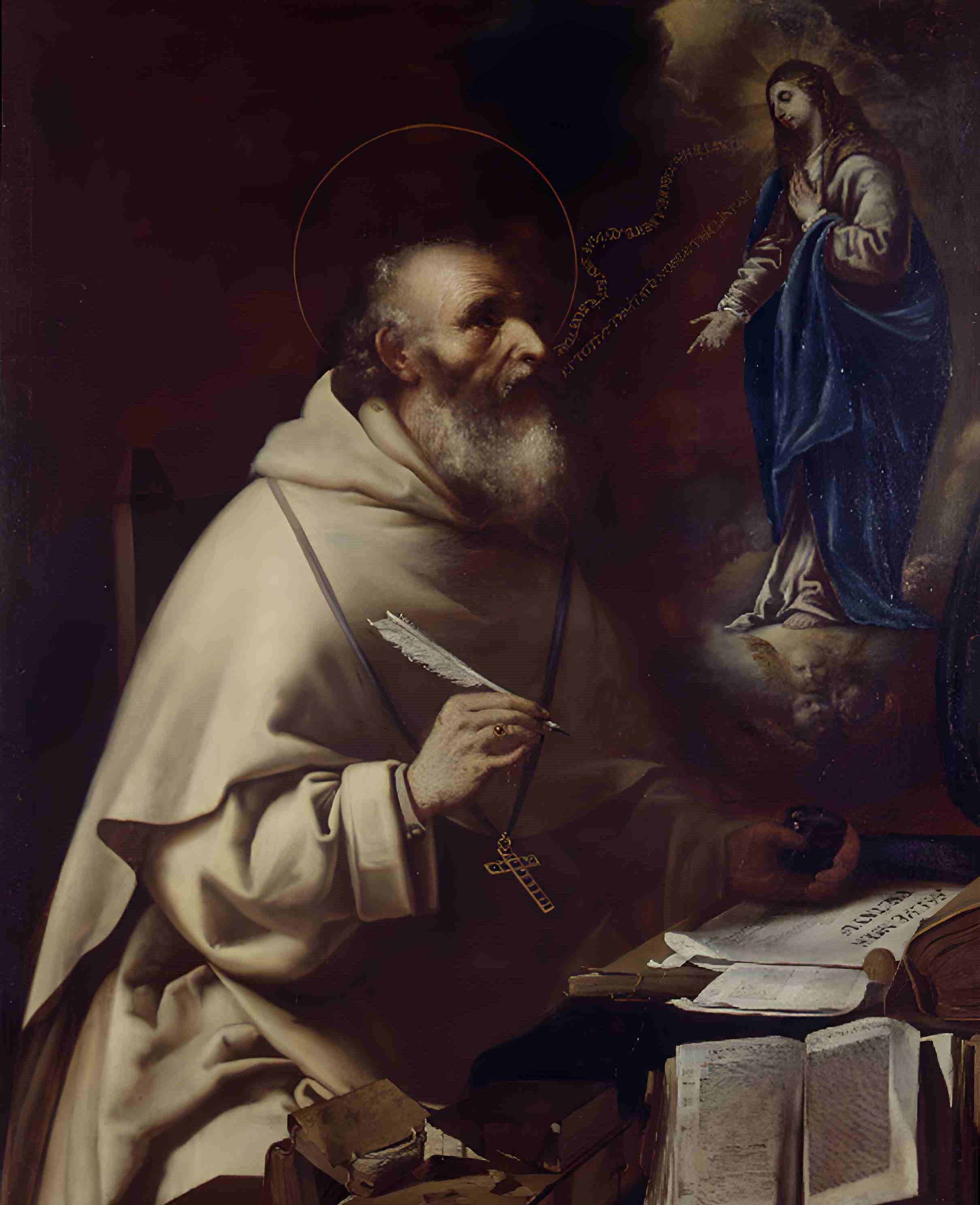
Bishop, Doctor of the Church, Patron of Scientists and Philosophers
The Church celebrates the feast of Saint Albert the Great on November 15. He was one of the greatest scholars of the medieval Church, a Dominican friar, an outstanding theologian, a philosopher, a scientist, and a bishop. His remarkable contribution to theology and natural science earned him the title Albertus Magnus, meaning Albert the Great. He is also known as the Universal Doctor because of the extraordinary breadth of his knowledge.
Saint Albert demonstrated that faith and reason are not enemies but gifts from God that lead humanity towards truth. Through his life, he showed that the sincere pursuit of knowledge can become a path to holiness when it is guided by humility, wisdom, and love of God.
Early Life and Education
Saint Albert was born around 1200 in Lauingen, a town in Swabia, in present-day Germany. He belonged to a family of some social standing. From his childhood, he showed an exceptional interest in learning and the natural world.
As a young man, he pursued his education in various centres of learning in Europe. During his studies, he became increasingly attracted to the religious life. He eventually encountered the Dominican Order, founded by Saint Dominic, which combined a life of prayer and community with preaching, teaching, and intellectual formation.
Despite opposition from some members of his family, Albert decided to join the Dominican Order around 1223. His decision marked the beginning of a life dedicated to God through prayer, study, teaching, and service.
A Dominican Friar Dedicated to Truth
After entering the Dominican Order, Albert continued his theological and philosophical studies. He was ordained a priest and eventually became one of the most respected teachers of his time.
He taught in several important European centres, including Paris and Cologne. His lectures attracted students from different parts of Europe because of his remarkable ability to explain complicated subjects with clarity and depth.
Albert believed that the study of creation could lead the human mind towards the Creator. He explored philosophy, theology, mathematics, astronomy, biology, chemistry, physics, and medicine. He was particularly interested in understanding the natural world through observation and careful investigation.
At a time when many scholars were debating the relationship between Christian theology and ancient philosophy, Albert made an extraordinary contribution by studying and explaining the works of Aristotle. He helped introduce Aristotelian philosophy into Christian intellectual life while carefully distinguishing philosophical conclusions from the truths of divine revelation.
For Albert, genuine knowledge was never a threat to faith. Rather, reason and revelation were two different but harmonious ways through which human beings could approach the truth.
Teacher of Saint Thomas Aquinas
One of the most significant aspects of Saint Albert’s life was his relationship with Saint Thomas Aquinas, who became his most famous student.
Albert recognized Thomas’s exceptional intellectual abilities and encouraged him to develop his gifts. When some students misunderstood Thomas’s quiet and reserved personality, Albert defended him and recognized the greatness of his mind.
Albert and Thomas worked together in the Dominican intellectual tradition, seeking to explain the Christian faith through philosophy and theology. Thomas Aquinas later became one of the greatest theologians in the history of the Church, and much of his intellectual formation was shaped by Albert’s teaching.
Their relationship remains a beautiful example of the importance of teachers who recognize, encourage, and develop the gifts of their students. Albert did not feel threatened by the brilliance of his pupil. Instead, he rejoiced in the growth of another servant of truth.
His Contributions to Science and Philosophy
Saint Albert was extraordinary because his intellectual interests extended far beyond theology. He studied the natural sciences with remarkable dedication and contributed to the development of medieval scientific knowledge.
His writings covered subjects such as:
- Biology and Zoology: He carefully studied animals, their behaviour, reproduction, and physical characteristics.
- Botany: He investigated plants, their growth, medicinal properties, and relationship with the environment.
- Chemistry: He explored minerals, metals, and various natural substances.
- Astronomy: He studied the heavens and the movements of celestial bodies.
- Physics: He examined questions concerning motion, matter, and the physical world.
- Philosophy: He explained the works of Aristotle and explored questions about knowledge, existence, nature, and the human soul.
- Theology: He wrote extensively about God, creation, faith, morality, and the spiritual life.
Albert did not simply repeat the opinions of earlier thinkers. He valued observation and direct investigation. He believed that nature should be studied carefully rather than understood merely through speculation.
Although some of his scientific conclusions reflected the limitations of medieval knowledge, his commitment to observation and intellectual inquiry was remarkable for his time.
His approach reminds us that the natural world is worthy of careful study because it is God’s creation.
Bishop of Regensburg
In 1260, Albert was appointed Bishop of Regensburg in Germany. This appointment brought him from the academic world into a demanding pastoral responsibility.
As bishop, he worked to address difficulties within the diocese and promote peace and spiritual renewal. He was particularly concerned about the needs of the poor and the proper administration of Church affairs.
However, Albert never abandoned his Dominican spirit of simplicity and dedication. He did not seek worldly prestige or comfort. He preferred a humble life devoted to prayer, study, and service.
After serving as bishop for approximately two years, he resigned in 1262 and returned to the Dominican way of life.
He continued teaching, preaching, writing, and participating in the intellectual and pastoral activities of the Church.
A Man of Prayer and Humility
Despite his extraordinary intelligence, Saint Albert understood that human knowledge has its limitations. He recognized that the mysteries of God cannot be fully understood through human reasoning alone.
His scholarship was deeply rooted in prayer. He believed that the pursuit of truth must be accompanied by purity of heart, humility, and a sincere desire to serve God.
Albert’s life challenges the idea that intellectual achievement and holiness belong to separate worlds. He demonstrated that a person can be deeply engaged in scientific investigation and philosophical reasoning while remaining firmly committed to prayer and Christian discipleship.
He also understood that knowledge should never become an instrument of pride. Education and intelligence are gifts entrusted to us by God, and they should be used for the benefit of humanity.
His Final Years and Death
During the final years of his life, Albert continued his intellectual and spiritual work despite advancing age and declining strength.
He remained active in the Dominican community and continued to teach and write. His dedication to learning and the Church never diminished.
Saint Albert the Great died on November 15, 1280, in Cologne, Germany. He was approximately eighty years old.
His death marked the end of an extraordinary earthly journey, but his writings, teachings, and example continued to influence generations of philosophers, theologians, scientists, and Christian educators.
Canonization and Recognition as a Doctor of the Church
Although Albert was widely respected for centuries after his death, his formal canonization took place much later.
Pope Pius XI canonized him on December 16, 1931, and declared him a Doctor of the Universal Church. The title recognized his outstanding contribution to Christian theology and intellectual life.
In 1941, Pope Pius XII proclaimed him the patron saint of those who cultivate the natural sciences.
Today, Saint Albert the Great is remembered as a powerful example of the harmony between faith and reason. His feast is celebrated on November 15, the anniversary of his death.
Spiritual Lessons from Saint Albert the Great
The life of Saint Albert offers several important lessons for Christians today.
1. Faith and reason belong together.
Albert teaches us that scientific discoveries and intellectual inquiry need not weaken our faith. When properly understood, the study of creation can deepen our appreciation of the Creator. Christians should never be afraid of genuine knowledge and honest investigation.
2. Knowledge must be accompanied by humility.
Albert possessed extraordinary intellectual gifts, yet he remained a humble servant of God. His life reminds us that education and intelligence are valuable only when they are guided by goodness, humility, and love.
3. Teachers have a sacred responsibility.
His relationship with Saint Thomas Aquinas demonstrates the importance of good teachers. Albert recognized the potential of his student and encouraged him to become what God had called him to be. Teachers are called not merely to transfer information but to discover and nurture the gifts entrusted to their students.
4. Creation reveals the greatness of God.
Albert studied animals, plants, minerals, and the heavens because he believed that creation reflects the wisdom of its Creator. His example encourages us to respect nature and appreciate the beauty and order of the universe.
5. Use your talents in the service of others.
Albert’s life was not dedicated to personal recognition. He used his intellectual abilities for the service of the Church and humanity. Every talent, whether academic, artistic, scientific, or practical, can become an instrument of God’s love.
Relevance of Saint Albert the Great Today
In today’s world, scientific discoveries, technological developments, and philosophical questions influence almost every aspect of human life. Sometimes people imagine that science and religion are necessarily opposed to each other.
Saint Albert the Great offers a different vision. He reminds us that truth cannot contradict truth. Scientific investigation seeks to understand the workings of creation, while faith helps us understand its ultimate meaning and purpose.
His life is particularly inspiring for students, teachers, researchers, scientists, philosophers, and all those who dedicate themselves to learning. He encourages young people to pursue education with enthusiasm while remaining rooted in moral values and spiritual wisdom.
For Catholic educators, Albert is a reminder that intellectual formation and spiritual formation should go hand in hand. A truly educated person is not simply someone who possesses information but someone who uses knowledge wisely and responsibly.
Prayer to Saint Albert the Great
Saint Albert the Great, faithful servant of God and lover of truth, you dedicated your life to the pursuit of wisdom and the service of the Church. Through your example, you showed that faith and reason can walk together in harmony.
Pray for students, teachers, scientists, researchers, and all those who seek knowledge. Obtain for them the grace of intellectual honesty, perseverance, humility, and wisdom.
Help us to use our talents not for personal glory but for the greater good of humanity. Teach us to recognize the presence of God in the beauty of creation and to seek the truth with sincere hearts.
May our knowledge lead us closer to God, our wisdom make us more compassionate, and our learning inspire us to serve others.
Saint Albert the Great, pray for us. Amen.
Conclusion
Saint Albert the Great stands as one of the most remarkable intellectual and spiritual figures in the history of the Catholic Church. His extraordinary achievements in theology, philosophy, and natural science demonstrate the richness of a mind devoted to truth and a heart dedicated to God.
He reminds us that holiness does not require us to abandon our intellectual gifts. Rather, we are called to place every ability at the service of God and humanity.
His friendship with Saint Thomas Aquinas, his commitment to scientific investigation, his humility as a Dominican friar, and his faithful service as a bishop continue to inspire generations.
On his feast day, November 15, let us ask for his intercession, especially for students, teachers, scientists, and all those engaged in the pursuit of knowledge.
May we, like Saint Albert the Great, never cease seeking truth, never become proud of our knowledge, and never forget that all genuine wisdom ultimately leads us to God.
References and Further Reading
- Pius XI, In Thomae Aquinatis, Apostolic Letter, 1923.
- Pope Pius XI, Deus Scientiarum Dominus, 1931.
- Pope Pius XI, Studiorum Ducem, 1923.
- Catholic Encyclopedia, “St. Albertus Magnus.”
- Encyclopaedia Britannica, “Albertus Magnus.”
- Albertus Magnus, On Animals.
- Albertus Magnus, On Minerals.
- Albertus Magnus, Summa Theologiae.
Leave a Reply