
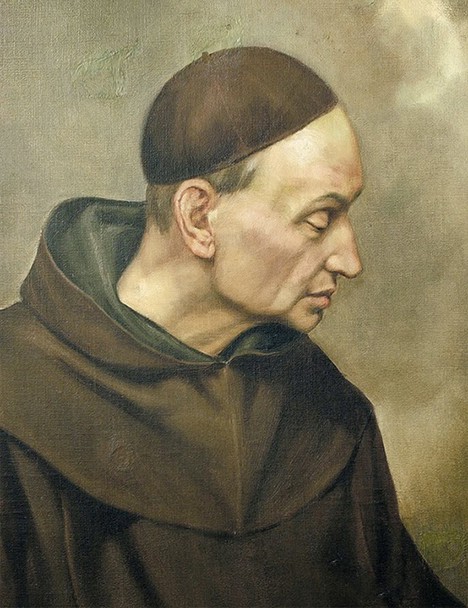
Discalced Carmelite Priest, Confessor and Spiritual Director
The Catholic Church celebrates the feast of Saint Raphael Kalinowski on November 19. He was a Polish Carmelite priest whose life was marked by extraordinary faith, perseverance, charity, and devotion to prayer. Born Joseph Kalinowski, he experienced many difficulties, including political oppression, imprisonment, and ten years of forced labour in Siberia. Yet, instead of allowing suffering to destroy his faith, he transformed his hardships into opportunities to serve God and others.
After years of military service and political involvement, he discovered his vocation to religious life and became a Discalced Carmelite. He dedicated himself to restoring the Carmelite Order in Poland and became widely respected as a confessor and spiritual director.
His life teaches us that conversion is always possible, suffering can deepen our relationship with God, and holiness can emerge even from the most difficult circumstances.
Early Life and Education
Saint Raphael Kalinowski was born as Joseph Kalinowski on September 1, 1835, in Vilnius, then part of the Russian Empire and today the capital of Lithuania. He was born into a Catholic family of Polish heritage. His father, Andrew Kalinowski, was a respected mathematics professor and educator.
Joseph received a strong education and demonstrated exceptional intellectual abilities from an early age. He was particularly interested in mathematics, science, and engineering.
He continued his studies at the Institute for Nobles in Vilnius and later pursued agricultural and engineering studies. Eventually, he joined the Academy of Military Engineering in Saint Petersburg, Russia, where he graduated as an engineer.
His academic abilities earned him a position as a lecturer in mathematics. He also worked on important railway and engineering projects.
Although he was successful in his professional career, Joseph gradually became aware that worldly achievements alone could not satisfy the deepest desires of his heart.
Political Involvement and the Polish Uprising
During the nineteenth century, Poland experienced political oppression and foreign domination. Many Polish people longed for national independence and freedom.
In 1863, an uprising against Russian rule broke out. Joseph sympathized with the suffering of his people and decided to leave his position in the Russian military.
He joined the Polish resistance movement and accepted an important leadership responsibility as Minister of War for the Vilnius region. However, he accepted the position with the condition that he would not have to impose death sentences or participate in executions.
His decision reflected his concern for human life and his desire to prevent unnecessary bloodshed.
The uprising was eventually suppressed, and Joseph was arrested by Russian authorities on March 24, 1864. He was condemned to death, but his sentence was later commuted to ten years of forced labour in Siberia.
This marked the beginning of one of the most difficult periods of his life.
Ten Years of Suffering in Siberia
Joseph was sent to Siberia, where he endured severe conditions, physical exhaustion, loneliness, hunger, and separation from his family.
The journey itself was extremely difficult, taking several months. The prisoners faced harsh weather and exhausting travel conditions.
Yet, Joseph did not surrender to despair. His faith gradually became the centre of his life.
He carried his religious convictions into the prison camps and became a source of encouragement for his fellow prisoners. He helped them spiritually and materially whenever possible, sharing whatever little he possessed.
He encouraged them to pray, remain hopeful, and trust in God’s providence.
His experience in Siberia transformed him deeply. Suffering taught him compassion, patience, and a greater appreciation of the spiritual life.
He discovered that even in places of darkness and hopelessness, the presence of God could bring peace and strength.
In 1874, after years of forced labour and exile, he regained his freedom, although he was not permitted to return to his homeland.
His experience in Siberia became a decisive turning point in his spiritual journey.
A New Chapter: Tutor to a Young Prince
After his release, Joseph eventually settled in Paris, where he worked as a tutor to Prince Augustus Czartoryski.
The young prince belonged to a distinguished Polish family. Joseph’s responsibility was to guide his education and personal development.
During this period, Joseph’s spiritual influence helped the young prince discern his vocation to religious life.
Augustus eventually joined the Salesian Congregation, founded by Saint John Bosco, and became known as Blessed Augustus Czartoryski.
Joseph’s influence on the young prince demonstrates his ability to guide others towards God through patience, wisdom, and personal example.
However, Joseph himself was also moving towards a deeper response to God’s call.
Entering the Discalced Carmelite Order
For many years, Joseph had felt an attraction towards religious life. His experiences of suffering, prayer, and service gradually prepared him to respond more fully to God’s call.
On July 15, 1877, at the age of forty-one, he entered the Discalced Carmelite monastery at Graz, Austria.
He received the religious name Raphael of Saint Joseph and began a new life devoted to prayer, contemplation, community life, and service to the Church.
The decision was significant. Joseph had already experienced a successful career as an engineer, military officer, and educator. Yet he willingly left behind the security and recognition of his former life to embrace the simplicity of religious life.
He continued his philosophical and theological formation in Hungary and made his solemn religious profession in 1881.
On January 15, 1882, he was ordained a priest at Czerna, near Kraków, Poland.
From that moment, his life became increasingly dedicated to the spiritual welfare of others.
Restoring the Carmelite Order in Poland
One of Saint Raphael’s most important contributions was the restoration and renewal of the Discalced Carmelite Order in Poland.
At that time, the Carmelite communities in Poland had experienced considerable difficulties because of political oppression and restrictions on religious life.
Raphael worked tirelessly to strengthen the Order, establish religious communities, and encourage vocations.
He helped establish a Carmelite presence at Wadowice and contributed significantly to the formation of Carmelite friars and sisters.
His work was not limited to administration or institutional development. He was deeply concerned about the spiritual growth of religious men and women.
He encouraged his fellow Carmelites to remain faithful to the spirit of Saint Teresa of Ávila and Saint John of the Cross, particularly through prayer, contemplation, self-discipline, and complete trust in God.
He believed that the renewal of religious life must begin with a genuine renewal of the heart.
A Dedicated Confessor and Spiritual Director
Saint Raphael became particularly famous for his ministry as a confessor and spiritual director.
People from different backgrounds came to him seeking spiritual guidance, encouragement, and reconciliation with God.
He spent long hours in the confessional, patiently listening to those who came to him with troubled consciences and wounded hearts.
He never treated the sacrament of Reconciliation as a mere religious obligation. He understood it as an encounter with the mercy and healing love of Jesus Christ.
He was especially compassionate towards those who struggled with sin, discouragement, and spiritual difficulties.
His experience of suffering had taught him to understand human weakness. Consequently, he approached others with patience rather than condemnation.
His ministry reminds us that a priest’s greatest service is to help people encounter the merciful heart of Christ.
Devotion to Prayer and the Blessed Virgin Mary
As a Carmelite, Saint Raphael placed prayer at the centre of his life.
He deeply valued silence, contemplation, and the spiritual discipline of the Carmelite tradition. He understood that a fruitful apostolate must grow from an intimate relationship with God.
His spirituality was also marked by a profound devotion to the Blessed Virgin Mary, particularly under the title of Our Lady of Mount Carmel.
He encouraged others to develop a personal relationship with Mary and to imitate her faithfulness, humility, and complete surrender to God’s will.
He also worked for Christian unity. He desired reconciliation among Christians and believed that genuine love, prayer, and mutual understanding were essential for overcoming divisions within the Church.
His concern for unity extended beyond institutional boundaries. He was respected as a spiritual guide by people from different Christian traditions.
His Final Years and Death
During his final years, Saint Raphael continued his responsibilities within the Carmelite Order despite increasing physical weakness.
He remained devoted to prayer, spiritual direction, the formation of religious communities, and the sacramental ministry of the Church.
His dedication was extraordinary. Even when his health declined, he continued to serve others as far as his strength permitted.
He died on November 15, 1907, at the Carmelite monastery in Wadowice, Poland, at the age of seventy-two.
His death was deeply mourned, and his reputation for holiness continued to grow. Many people regarded him as a spiritual father whose life had been a powerful testimony to Christian charity and perseverance.
Beatification and Canonization
The process for his beatification began in the Archdiocese of Kraków during the twentieth century.
Pope Saint John Paul II beatified Raphael Kalinowski on June 22, 1983, in Kraków, Poland.
Following the recognition of a miraculous healing attributed to his intercession, the cause for his canonization proceeded.
On November 17, 1991, Pope Saint John Paul II canonized him in Saint Peter’s Basilica in Rome.
He became one of the most inspiring Carmelite saints of modern times and is particularly remembered for his charity towards prisoners, his dedication to the sacrament of Reconciliation, and his commitment to the renewal of religious life.
His liturgical feast is generally celebrated on November 19 in the Carmelite calendar, although some local calendars commemorate him on November 15, the anniversary of his death.
Spiritual Lessons from Saint Raphael Kalinowski
The life of Saint Raphael offers several important lessons for Christians today.
1. It is never too late to respond to God’s call.
Joseph Kalinowski entered the Carmelite Order at the age of forty-one. His life reminds us that God can call us to a new beginning at any stage of life. Our past experiences, mistakes, and disappointments do not prevent us from becoming holy.
2. Suffering can become a path to holiness.
His years in Siberia were filled with hardship, but they deepened his faith and compassion. He discovered that suffering need not lead to bitterness. When united with Christ, even painful experiences can become opportunities for spiritual growth.
3. Compassion is the true expression of faith.
During his imprisonment, Raphael shared his limited resources with other prisoners. He did not think only about his own survival. His example teaches us that genuine faith must express itself through love, generosity, and concern for others.
4. The sacrament of Reconciliation reveals God’s mercy.
His long hours in the confessional demonstrate the importance of the ministry of forgiveness. He reminds priests to be patient and compassionate and encourages all Christians never to lose hope in God’s mercy.
5. Prayer must be the foundation of Christian life.
Raphael’s Carmelite spirituality teaches us that prayer is not an escape from responsibility. Rather, it gives us the strength to fulfil our responsibilities with love and faithfulness.
6. Work for unity and reconciliation.
He dedicated himself to promoting unity among Christians. His life encourages us to overcome divisions, forgive one another, and become instruments of peace.
Relevance of Saint Raphael Kalinowski Today
The life of Saint Raphael is particularly relevant in a world where many people experience uncertainty, suffering, political conflict, loneliness, and loss of hope.
His experience reminds us that even the most painful circumstances cannot separate us from God’s love.
For those who feel that they have wasted years of their lives, his conversion offers encouragement. For those who suffer injustice or imprisonment, his years in Siberia provide an example of courage and perseverance. For priests and religious, his dedication to prayer and the sacrament of Reconciliation offers a model of pastoral service.
He also inspires young people to discover their vocation and place their talents at the service of God.
Above all, Saint Raphael teaches us that holiness is not determined by the circumstances of our lives but by the faithfulness with which we respond to God’s grace.
Prayer to Saint Raphael Kalinowski
Saint Raphael Kalinowski, faithful servant of God and devoted son of Our Lady of Mount Carmel, you endured suffering, imprisonment, and exile with extraordinary patience and trust in divine providence.
Pray for all those who are experiencing hardship, loneliness, injustice, and uncertainty. Obtain for us the grace to remain faithful to God even during the darkest moments of life.
Pray especially for priests, religious, spiritual directors, and all those who dedicate themselves to the ministry of reconciliation. May they become instruments of God’s mercy and healing.
Intercede for those who have lost hope, those who are struggling with their faith, and those who are searching for their true vocation.
Teach us to love prayer, forgive generously, serve others selflessly, and trust in God’s plan for our lives.
Saint Raphael Kalinowski, faithful son of Carmel, pray for us. Amen.
Conclusion
Saint Raphael Kalinowski’s life is a remarkable testimony to the transforming power of God’s grace. From an engineer and military officer to a prisoner in Siberia, and finally to a Carmelite priest and spiritual father, his journey was filled with unexpected turns.
He teaches us that no suffering is wasted when it is offered to God, no past is beyond the reach of divine mercy, and no stage of life is too late for conversion.
His life invites us to discover God in prayer, serve others with compassion, and remain faithful even when the road becomes difficult.
May the example of Saint Raphael Kalinowski inspire us to become people of prayer, forgiveness, reconciliation, and unwavering hope.
References and Further Reading
- Holy See, Raphael Kalinowski, O.C.D. (1835–1907), Biography for the Canonization, 1991.
- Discalced Carmelites, Saint Raphael Kalinowski.
- Carmelite Proper of the Liturgy of the Hours, Memorial of Saint Raphael Kalinowski.
- Szczepan Praskiewicz, OCD, Saint Raphael Kalinowski: An Introduction to His Life and Spirituality.
- Loyola Press, Saint Raphael Kalinowski.
Sources for further reading:
- Vatican biography of Saint Raphael Kalinowski
- Discalced Carmelite biography
- Carmelite liturgical biography and prayer
Leave a Reply