
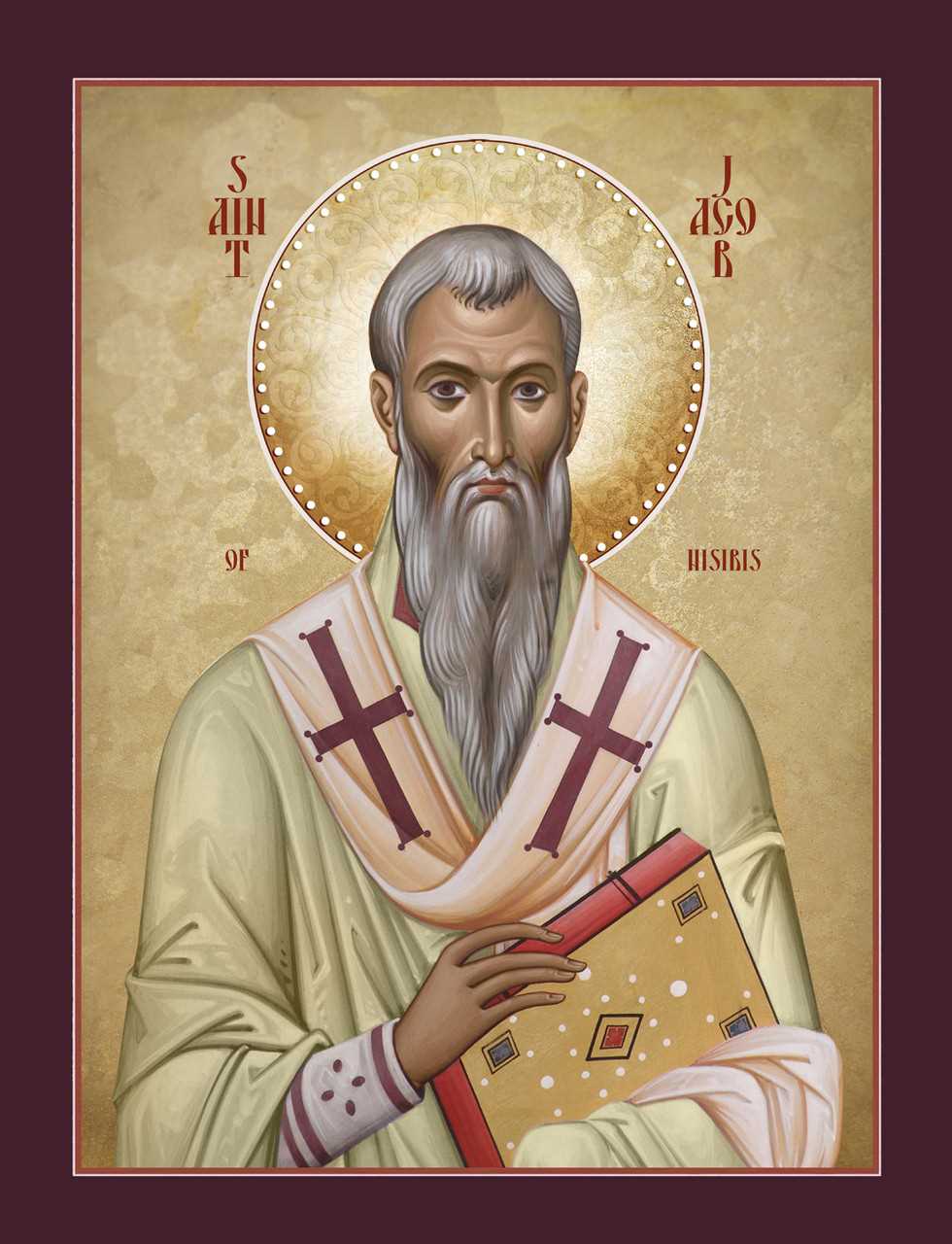
Saint Jacob of Nisibis (also known as Mar Jacob, Jacob of Nisibin, or Jacob of Nisibis) ranks among the greatest saints of the Syriac Christian tradition. Revered as a bishop, monk, hermit, miracle worker, and defender of the Christian faith, he played a pivotal role during one of the most challenging periods in the early Church. Living in the fourth century, he witnessed the transition of Christianity from persecution to imperial recognition under Emperor Constantine the Great.
Jacob’s life was characterized by profound holiness, ascetic discipline, unwavering courage, and extraordinary miracles. His influence extended far beyond his episcopal city of Nisibis, inspiring generations of Christians throughout Mesopotamia, Syria, Armenia, and Persia. Today he is venerated by the Catholic Church, the Eastern Orthodox Church, the Oriental Orthodox Churches, and especially the Syriac Churches.
Early Life
Very little historical information survives concerning Jacob’s childhood. Most traditions place his birth around AD 270 in the region of Nisibis, an important city of ancient Mesopotamia (modern Nusaybin in southeastern Turkey, near the Syrian border).
He grew up during the final decades of Roman persecution against Christians. Even as a young man, Jacob displayed an extraordinary desire for holiness. Rather than pursuing wealth or public recognition, he withdrew into the mountains to dedicate himself entirely to prayer and fasting.
Like many early Syrian ascetics, Jacob embraced a life of simplicity:
- Constant prayer
- Severe fasting
- Solitude
- Manual labor
- Meditation on Scripture
These years in the wilderness prepared him for the greater mission God had planned.
Life as a Hermit
Jacob became one of the most respected hermits of Mesopotamia. The deserts and mountains of Syria and Mesopotamia were already producing great saints who sought intimacy with God through lives of sacrifice.
Stories describe him wearing simple garments, eating little, sleeping on the ground, and spending long hours in contemplation.
People soon recognized his holiness. Pilgrims travelled great distances seeking:
- spiritual guidance
- healing
- prayer
- advice
- blessings
His reputation spread throughout the East long before he became bishop.
The Famous Story of Noah’s Ark
One of the most celebrated traditions surrounding Saint Jacob concerns Noah’s Ark.
According to ancient Syriac sources, Jacob wished to verify the biblical account of the Ark resting on Mount Ararat.
Filled with faith, he climbed the mountain intending to reach the Ark itself.
The ascent proved impossible because of the extreme conditions. Exhausted, Jacob fell asleep while praying.
During his sleep, an angel appeared and told him that God accepted his faith but did not desire him to continue climbing.
When he awoke, he found beside him a piece of timber believed to have come from Noah’s Ark.
The wood was brought back as a sacred relic.
Whether understood literally or symbolically, the story reflects Jacob’s profound desire to seek God’s truth and his intimate relationship with divine providence.
Appointment as Bishop of Nisibis
Around AD 308, Jacob was chosen as the first known Bishop of Nisibis.
Nisibis occupied a strategic location between the Roman Empire and the Persian Empire. It served as:
- a commercial center
- military fortress
- intellectual hub
- important Christian city
As bishop, Jacob combined pastoral care with missionary zeal.
His ministry included:
- preaching the Gospel
- defending orthodox doctrine
- caring for the poor
- encouraging monks
- educating clergy
- building churches
- strengthening Christian communities
He quickly became one of the most respected bishops in the East.
Founder of the School of Nisibis
Saint Jacob established one of Christianity’s earliest theological institutions: the School of Nisibis.
Although it reached its greatest fame in later centuries under figures such as Saint Ephrem, its foundations were laid during Jacob’s episcopate.
The school emphasized:
- Sacred Scripture
- Theology
- Biblical languages
- Hymnody
- Moral formation
- Pastoral ministry
It became one of the greatest centers of Christian learning in the Syriac-speaking world.
Saint Ephrem the Syrian and Jacob
One of the greatest blessings of Jacob’s ministry was his relationship with Saint Ephrem the Syrian.
Jacob recognized Ephrem’s extraordinary gifts while he was still young.
Under Jacob’s guidance:
- Ephrem became a teacher.
- He assisted in the theological school.
- He developed into one of Christianity’s greatest hymn writers.
Later generations often remembered Jacob and Ephrem together because of their combined influence upon Syriac Christianity.
Defender of Orthodoxy
The fourth century witnessed the rise of Arianism, which denied the full divinity of Jesus Christ.
This controversy threatened to divide the Church.
Jacob firmly defended the apostolic teaching that Christ is truly God and truly man.
His unwavering commitment to orthodox faith earned him great respect among bishops throughout the Roman Empire.
The First Council of Nicaea (AD 325)
Saint Jacob participated in the historic First Council of Nicaea convened by Emperor Constantine.
The council addressed the Arian controversy and produced the Nicene Creed.
Jacob stood with those bishops who affirmed that Christ is:
“Begotten, not made, consubstantial with the Father.”
His participation demonstrates the esteem in which he was held throughout the Christian world.
The Siege of Nisibis
Perhaps the most famous episode in Jacob’s life concerns the siege of Nisibis.
The Persian king Shapur II repeatedly attacked the city.
When military strength seemed insufficient, the people turned to their bishop.
Jacob encouraged:
- fasting
- repentance
- prayer
- trust in God
According to tradition, he prayed continuously for the city’s protection.
Ancient accounts relate remarkable events:
- floods disrupted Persian forces,
- insects swarmed the enemy camp,
- panic spread among the attackers,
- the city remained unconquered.
Christians believed these victories resulted from God’s intervention through the prayers of Saint Jacob.
Miracles
Many miracles are attributed to Saint Jacob.
Healing the Sick
He healed numerous individuals suffering from serious illnesses.
Many sought his prayers with complete confidence in God’s power.
Raising the Dead
Some ancient traditions attribute the raising of the dead to his intercession.
Although difficult to verify historically, these accounts reflect the immense faith people placed in him.
Multiplication of Food
Several stories describe miraculous provisions for hungry people during times of scarcity.
These miracles echo the Gospel accounts of Christ feeding the multitudes.
Miracles Against Injustice
Jacob also confronted injustice.
Some traditions recount how dishonest individuals were corrected through miraculous interventions that led them to repentance.
His Spirituality
Jacob embodied the spirituality of the early Syriac Church.
Its principal characteristics included:
Humility
Despite becoming bishop, he continued living simply.
Prayer
Prayer remained the center of his daily life.
Charity
He served widows, orphans, travelers, and the poor.
Asceticism
Fasting and self-denial strengthened his dependence upon God.
Love of Scripture
The Bible shaped every aspect of his preaching and ministry.
Relationship with the Poor
Jacob believed every Christian should care for those in need.
He encouraged wealthy citizens to:
- feed the hungry
- shelter strangers
- support widows
- assist orphans
- care for prisoners
His episcopate became known for generous charitable works.
Final Years
Jacob continued serving faithfully until approximately AD 338.
Before his death he had become one of the most admired bishops of the Eastern Church.
His passing was mourned throughout Mesopotamia.
Saint Ephrem later honored his memory through writings celebrating his holiness and pastoral leadership.
Relics
Various traditions preserve accounts of Jacob’s relics. His principal shrine was historically associated with Nisibis, where he served as bishop. Over the centuries, portions of his relics were reportedly translated to other churches in the Syriac world as devotion to him spread. As with many fourth-century saints, the precise history of every relic is difficult to verify because of wars, invasions, and the changing political landscape of Mesopotamia.
Legacy
Saint Jacob’s influence has endured for over seventeen centuries.
His legacy includes:
- Founding the Church of Nisibis.
- Helping establish the School of Nisibis.
- Guiding Saint Ephrem the Syrian.
- Defending Nicene orthodoxy.
- Inspiring Syriac monasticism.
- Protecting his people during times of war.
- Leaving an example of pastoral holiness and courageous leadership.
His life illustrates how contemplation and active ministry can be united in faithful service to Christ.
Feast Day
Saint Jacob of Nisibis is commemorated on different dates in various Christian traditions:
- July 15 in the Roman Martyrology (Catholic Church).
- Other Eastern Churches, including Syriac and Orthodox traditions, may celebrate his feast on different dates according to their liturgical calendars.
Patronage
Although not universally designated as the patron of a particular profession or place, Saint Jacob is especially invoked as a patron and intercessor for:
- bishops and pastors,
- theologians and teachers,
- students of Sacred Scripture,
- the Syriac Christian tradition,
- those seeking steadfast faith during persecution,
- communities praying for peace in times of conflict.
Lessons from the Life of Saint Jacob
Saint Jacob’s life offers enduring spiritual lessons for Christians today:
- Seek God before seeking success. His years of solitude prepared him for fruitful leadership.
- Prayer is a source of strength. During the siege of Nisibis, he turned first to God rather than relying solely on human power.
- Defend the truth with charity. He upheld the faith at a time of doctrinal confusion while remaining a compassionate shepherd.
- Invest in future generations. By mentoring Saint Ephrem and establishing a center of learning, he ensured that the faith would continue to flourish.
- Serve the poor with generosity. His ministry united contemplation with practical charity.
A Prayer to Saint Jacob of Nisibis
O glorious Saint Jacob of Nisibis,
faithful bishop, courageous defender of the true faith, and humble servant of Christ, pray for us. Obtain for us the grace to remain steadfast in our faith, devoted in prayer, generous toward the poor, and faithful in every trial. Inspire bishops, priests, religious, and all the faithful to proclaim the Gospel with courage and compassion. Through your powerful intercession, may our homes, families, and communities be protected by God’s mercy and strengthened in hope. We ask this through Jesus Christ our Lord. Amen.
Conclusion
Saint Jacob of Nisibis stands as one of the brightest lights of the fourth-century Church. From the solitude of the mountains to the episcopal throne of Nisibis, he demonstrated that true greatness is found in humility, prayer, and unwavering fidelity to Christ. His defense of the Nicene faith, his pastoral care during times of war, his mentorship of Saint Ephrem, and his enduring witness to holiness continue to inspire Christians across traditions. More than seventeen centuries after his death, the memory of Mar Jacob reminds believers that faith rooted in prayer can transform both individuals and entire communities.
Leave a Reply