
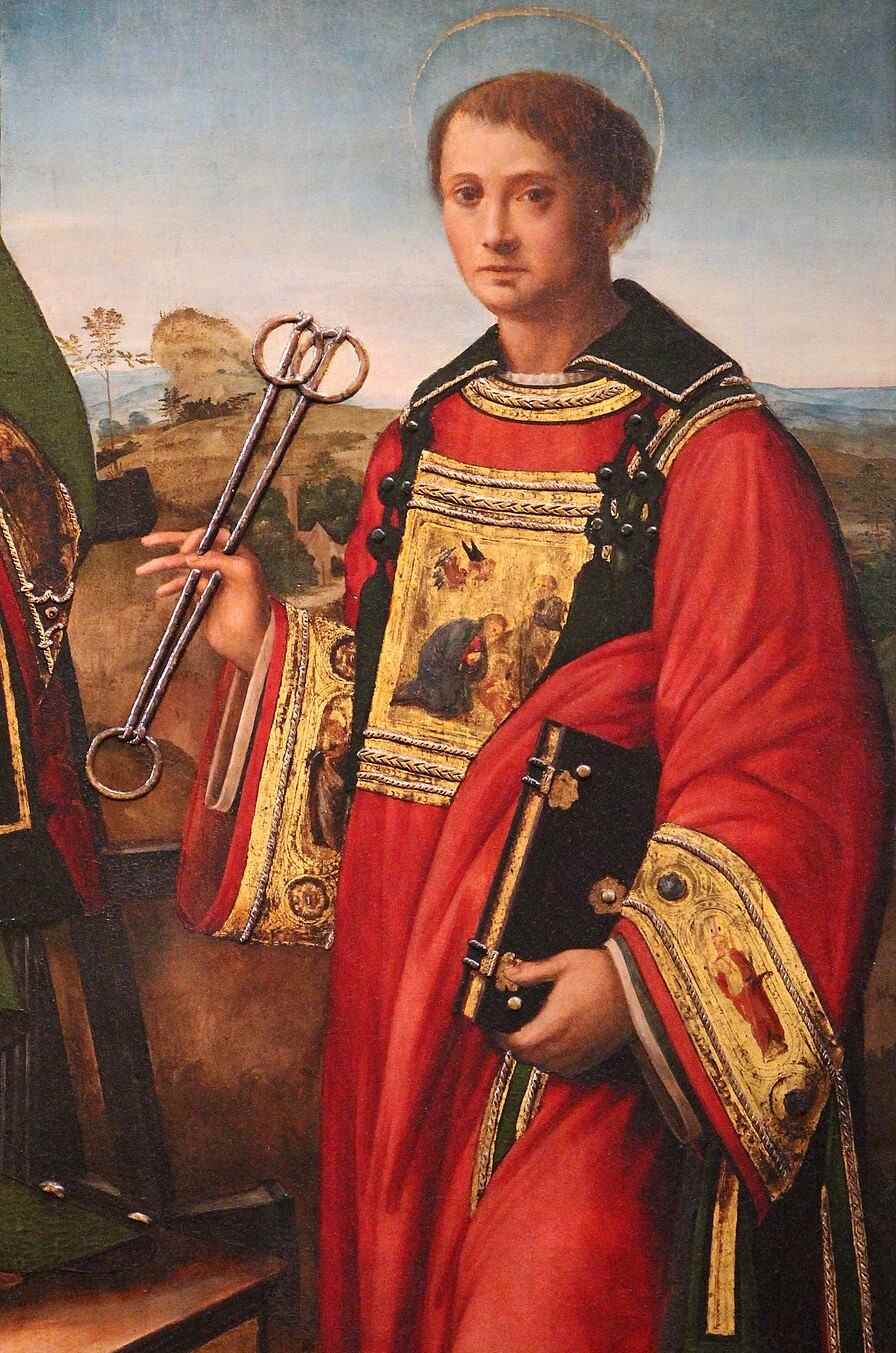
Patron Saint of Prisoners, Captives and Those in Chains
Feast Day: 6 November
Saint Leonard of Noblac is one of the most beloved saints of the early medieval Christian tradition. Remembered especially as the patron saint of prisoners, captives, and those who suffer imprisonment, he is honoured for his compassion, deep faith, and concern for people deprived of their freedom. His life and devotion have inspired generations of Christians to pray for prisoners, advocate for justice, and bring hope to those who experience suffering and isolation.
Although many details of his life come to us through medieval traditions and legends, his enduring popularity reveals the powerful Christian message associated with his name: no human being should be abandoned, and the mercy of God can reach even those who find themselves behind prison walls.
Early Life and Christian Formation
Saint Leonard is traditionally believed to have been born in the fifth century into a noble Frankish family in Gaul, in the region of present-day France. According to tradition, he lived during the reign of King Clovis I, who played an important role in the establishment of Christianity among the Franks.
Leonard was raised in a Christian environment and received a religious formation that encouraged him to seek holiness and serve God. Medieval accounts associate him with Saint Remigius, the Bishop of Reims, who is traditionally credited with baptising King Clovis.
Leonard was offered opportunities for honour and advancement at the royal court. However, the attractions of worldly recognition did not satisfy his spiritual aspirations. He desired a life devoted to prayer, simplicity, and service to God.
Rather than seeking influence and wealth, he chose to dedicate himself to the Gospel and the service of others.
His Encounter with King Clovis
According to the traditional account, Leonard enjoyed the favour of King Clovis because of his noble birth, Christian character, and wisdom. The king respected his holiness and offered him opportunities to remain at court.
One famous tradition recounts that Leonard requested permission to visit prisoners and intercede for those who were unjustly detained. He was particularly concerned about people who had been imprisoned without proper justice or who were forgotten by society.
The king reportedly granted him the privilege of requesting the release of prisoners whom he considered worthy of mercy.
This tradition became central to Leonard’s reputation. He was remembered not simply as a holy hermit but as a man who used whatever influence he possessed to bring freedom and hope to those in captivity.
His concern for prisoners reflected the teaching of Jesus Christ:
“I was in prison and you visited me.” (Matthew 25:36)
For Leonard, caring for prisoners was a concrete expression of love for Christ himself.
A Life of Prayer and Solitude
Leonard eventually withdrew from the attractions of the royal court and chose a life of solitude and prayer. According to tradition, he settled in the forest of Limousin, in the region of Aquitaine in present-day France.
He established a hermitage in a place that later became known as Noblac, near the present-day town of Saint-Léonard-de-Noblat.
There, Leonard devoted himself to prayer, penance, contemplation, and the service of people who came seeking his spiritual guidance.
His life was marked by simplicity and detachment from worldly possessions. He believed that true greatness was not found in political power or social position but in surrendering oneself to God.
His reputation for holiness gradually spread throughout the surrounding region. People came to him seeking prayer, counsel, and assistance. Among those who approached him were prisoners and their families, who hoped for his intercession and encouragement.
The Tradition of the Queen’s Deliverance
One of the best-known stories associated with Saint Leonard concerns the queen of the Franks.
According to medieval tradition, the queen experienced a difficult childbirth while travelling through the region. Leonard prayed for her, and she safely delivered her child.
In gratitude for his prayers, the king offered him wealth and honours. Leonard, however, refused to accept worldly rewards for his spiritual service.
Instead, he requested a portion of land where he could establish a monastery and continue his life of prayer.
The king granted his request. Leonard established a religious community, and the place became associated with his name.
The story is part of the traditional account of his life rather than independently established historical fact. Nevertheless, it reflects the qualities for which Leonard became celebrated: humility, generosity, prayerfulness, and complete dedication to God.
Saint Leonard and His Love for Prisoners
The most distinctive aspect of Saint Leonard’s devotion is his association with prisoners and captives.
In medieval Christian tradition, he became especially popular among people who were imprisoned, enslaved, captured in war, or separated from their families.
Many stories describe prisoners being miraculously released through his intercession. He was also invoked by people who faced unjust imprisonment and by families who longed for the safe return of loved ones held in captivity.
His popularity grew throughout France and eventually spread across Europe.
Saint Leonard’s devotion reminds Christians that imprisonment does not deprive a person of human dignity. A prisoner remains a person loved by God and worthy of compassion, justice, and respect.
His example also challenges society to remember those who are easily forgotten: prisoners, the abandoned, the oppressed, and people who have no voice.
The Gospel calls every Christian to recognise Christ in those who suffer and to respond with practical love.
The Founding of Noblac Monastery
The place where Leonard established his religious community gradually became known as Noblac, near Limoges in the historical region of Limousin, France. A settlement developed around the monastery and eventually became the town of Saint-Léonard-de-Noblat.
The monastery became an important centre of Christian devotion and pilgrimage. People travelled there to pray at the saint’s tomb and seek his intercession.
During the eleventh and twelfth centuries, devotion to Saint Leonard spread considerably throughout Western Europe. His name became particularly popular among pilgrims, soldiers, prisoners, and people facing difficult circumstances.
One notable historical event associated with his growing popularity was the pilgrimage of Bohemond I of Antioch, who visited Noblac in 1103 after gaining his freedom from captivity. His visit helped strengthen Saint Leonard’s reputation as a heavenly protector of prisoners.
His Death and Veneration
According to tradition, Saint Leonard died around the year 559. He was remembered by the people who had experienced his spiritual guidance and charitable service.
His tomb at Noblac gradually became a significant pilgrimage destination. Numerous miracles and extraordinary favours were attributed to his intercession, particularly the liberation of captives and assistance to women experiencing difficult childbirth.
By the medieval period, devotion to Saint Leonard had spread throughout France, England, Germany, Italy, Spain, Belgium, and other European countries.
His veneration became especially strong among people who experienced imprisonment and oppression. Churches, chapels, and religious institutions were dedicated to him, and his name became associated with freedom, mercy, and hope.
Historical Note: Tradition and Historical Evidence
It is important to distinguish between the historical evidence concerning Saint Leonard and the traditional stories associated with his life.
The earliest known written account of his life dates from approximately the eleventh century, several centuries after the period in which he is traditionally believed to have lived. Consequently, historians cannot independently establish many details of his biography, including his precise relationship with King Clovis and the circumstances surrounding the foundation of Noblac.
The Catholic Encyclopedia also acknowledges the uncertainty surrounding his early biography. Nevertheless, his widespread veneration from the eleventh century onwards is historically well documented.
The enduring devotion to Saint Leonard is itself an important part of Christian history. His memory became a powerful expression of the Church’s concern for prisoners, captives, and people suffering from injustice.
Patronage and Symbols of Saint Leonard
Saint Leonard is traditionally invoked as the patron saint of:
- Prisoners and those unjustly imprisoned.
- Captives and prisoners of war.
- People suffering oppression and injustice.
- Women in labour and expectant mothers.
- Horses and certain farm animals.
He is particularly associated with prisoners because of the traditional accounts of his efforts to secure their release.
Symbols in Christian Art
Saint Leonard is commonly represented wearing the habit of a monk or abbot. His traditional symbols include:
- Chains and shackles: Representing prisoners whom he helped and his association with liberation.
- A crozier: Symbolising his traditional association with monastic leadership.
- A book: Representing prayer, Christian teaching, and wisdom.
- Prisoners at his feet: Illustrating his compassion for captives and those seeking freedom.
These symbols remind Christians that holiness is expressed not only through prayer but also through compassion and practical service.
Spiritual Lessons from the Life of Saint Leonard
1. Remember Those Who Are Forgotten
Saint Leonard’s traditional concern for prisoners reminds us that people who are separated from society must never be forgotten.
Prisoners, refugees, victims of injustice, and those abandoned by their families all deserve human dignity and Christian compassion.
Jesus identifies himself with those who are imprisoned and calls his followers to visit and care for them (Matthew 25:36).
2. Use Our Influence to Help Others
According to tradition, Leonard used his relationship with the king to obtain freedom for prisoners.
His example teaches us that whatever position, authority, education, or influence we possess should become an instrument of service.
Christian greatness is not measured by how much power we exercise over others but by how much good we accomplish for them.
3. Choose God Above Worldly Recognition
Leonard’s decision to leave the royal court and embrace a life of solitude reminds us that worldly honours cannot satisfy the deepest desires of the human heart.
His life encourages us to seek God above wealth, prestige, and personal recognition.
4. Believe in the Power of Prayer
The traditions surrounding Saint Leonard repeatedly associate him with prayer and the liberation of those in distress.
His example encourages us to bring our difficulties before God with confidence. Even when circumstances seem impossible, prayer gives us the strength to hope and persevere.
5. Respect the Dignity of Every Human Person
The spiritual legacy of Saint Leonard challenges us to look beyond a person’s past, circumstances, or social position.
Every human being is created in the image and likeness of God. No person should be deprived of dignity, compassion, or the possibility of conversion and a new beginning.
The Continuing Relevance of Saint Leonard
Saint Leonard’s devotion remains meaningful in the modern world.
Even today, countless people experience imprisonment, human trafficking, unjust detention, war, persecution, and separation from their families. Many prisoners struggle with loneliness, despair, and the fear of being forgotten.
His example invites Christians to pray for prisoners, support efforts towards justice and rehabilitation, comfort their families, and defend the dignity of every person.
He also reminds us that there are forms of imprisonment that do not involve physical chains. Addiction, hatred, guilt, fear, unforgiveness, and destructive habits can become invisible prisons.
The Christian message of freedom is ultimately rooted in Jesus Christ, who came to proclaim liberty to captives and freedom to the oppressed (Luke 4:18).
Saint Leonard’s life encourages us to become instruments of that freedom through prayer, forgiveness, mercy, and love.
Prayer to Saint Leonard of Noblac
Saint Leonard, faithful servant of God and compassionate friend of those in captivity, intercede for us before the throne of Almighty God.
Pray especially for prisoners, captives, victims of injustice, and all those who suffer because of oppression and violence. Remember those who are imprisoned far away from their families and those who have lost hope of ever experiencing freedom.
Pray for people trapped in addiction, fear, hatred, guilt, and despair. May the Lord break every chain that prevents them from living in the freedom of His children.
Intercede for expectant mothers, those facing difficult childbirth, and families who are going through anxiety and uncertainty.
Teach us to be compassionate towards the forgotten, courageous in defending the innocent, and generous in serving those who suffer.
May we never become indifferent to the pain of others. Through your prayers, may we discover the true freedom that comes from Jesus Christ.
Saint Leonard of Noblac, pray for us. Amen.
A Reflection for the Feast of Saint Leonard
The feast of Saint Leonard invites us to reflect on the meaning of freedom.
We often think of freedom as the ability to go wherever we wish, make our own decisions, and live without restrictions. Yet there are many people who appear free outwardly but remain imprisoned inwardly. Some are imprisoned by resentment, others by fear, guilt, jealousy, addictions, or painful memories.
Saint Leonard reminds us that God desires freedom for every human person. He calls us to become people who release others from the chains of hatred through forgiveness, from the chains of despair through encouragement, and from the chains of loneliness through love.
Perhaps the most beautiful lesson of his life is that we should never forget those whom the world forgets.
As we celebrate his feast, let us ask ourselves: Is there someone whom I have forgotten? Is there someone waiting for my forgiveness, encouragement, or help? Can I become an instrument of freedom and hope for another person?
May Saint Leonard teach us to recognise Christ in those who suffer and to bring the healing love of God wherever human beings experience captivity and pain.
True Christian freedom is not simply freedom from chains; it is freedom to love, forgive, serve, and belong entirely to God.
References and Further Reading
1. Poncelet, Albert. St. Leonard of Limousin. The Catholic Encyclopedia, Volume 9, 1910.
https://www.newadvent.org/cathen/09178b.htm
2. Vatican State. November 6: Saint Leonard of Noblac, Hermit.
https://www.vaticanstate.va/en/component/content/article/november-6-saint-leonard-of-noblac-hermit.html
3. Archdiocese of Baltimore. St. Leonard of Noblac.
https://www.archbalt.org/st-leonard-of-noblac/
4. Acta Sanctorum, November, Volume III, pp. 139–209. Traditional hagiographical sources concerning Saint Leonard.
Biblical References for Meditation: Matthew 25:34–40; Luke 4:16–21; John 8:31–36; Galatians 5:1; Hebrews 13:3.
Saint Leonard of Noblac – Feast Day: November 6.
Leave a Reply