
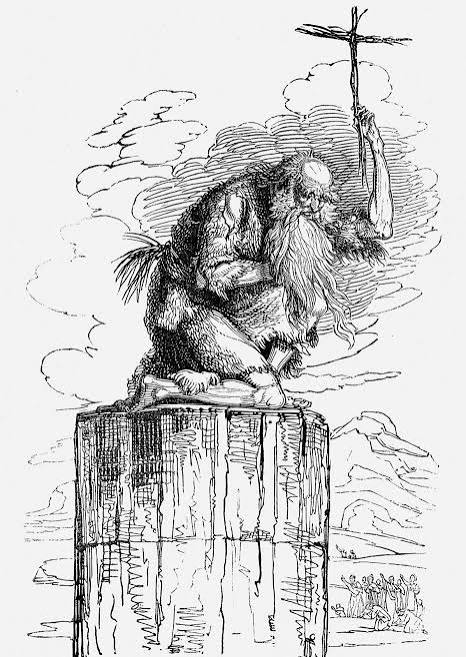
The Pillar Saint Who Inspired the Christian World
Feast Day: July 27 (Roman Martyrology and many Western calendars)
Also Honored: Varying dates in several Eastern Christian traditions
Born: c. AD 390
Died: September 2, AD 459
Venerated In: Catholic Church, Eastern Orthodox Church, Oriental Orthodox Churches, Anglican Communion, and several Eastern Christian traditions
Patronage: Shepherds, ascetics, and those seeking perseverance in prayer and penance
Introduction
Among the many saints of the early Church, Saint Simeon Stylites stands out as one of the most extraordinary. Renowned for spending nearly 37 years atop a stone pillar in the Syrian desert, he became a powerful symbol of radical devotion to God. His unusual lifestyle earned him the title “Stylites,” derived from the Greek word stylos, meaning pillar.
To modern readers, Simeon’s life may seem astonishing, even incomprehensible. Yet for Christians of the fifth century, his extreme asceticism testified to an unwavering desire to detach himself from worldly distractions and devote every moment to prayer, repentance, and communion with God. From the summit of his pillar, he preached, counseled pilgrims, encouraged rulers, and became one of the most influential holy men of late antiquity.
His legacy transformed Christian monasticism and inspired generations of ascetics throughout the Byzantine world.
Early Life


Saint Simeon was born around AD 390 in Sisan, a village in northern Syria (modern-day Turkey near the Syrian border). His parents were simple shepherds who raised him in the Christian faith.
As a child, Simeon tended sheep, spending long hours in the fields. These quiet moments in nature nurtured a contemplative spirit that would later define his vocation.
At about the age of thirteen, while attending church during the season of Lent, he heard the Beatitudes proclaimed from the Gospel of Matthew:
“Blessed are the pure in heart, for they shall see God.”
These words pierced his heart. Determined to pursue holiness, he sought guidance from experienced monks and soon entered a nearby monastery.
Life in the Monastery
From the beginning, Simeon embraced monastic life with extraordinary zeal.
He devoted himself to:
- Constant prayer
- Fasting
- Meditation on Scripture
- Manual labor
- Silence
- Acts of penance
His austerity quickly surpassed that of his fellow monks.
Tradition recounts that he sometimes fasted for the entire forty days of Lent, taking neither food nor drink except the Holy Eucharist. On one occasion, he reportedly wore a rope tightly around his waist until it cut deeply into his flesh. When the abbot discovered this, he ordered the rope removed and urged Simeon to practice moderation.
Although the monks admired his sincerity, they found his severe asceticism difficult to imitate. Eventually, they asked him to leave the monastery, believing his practices might discourage or unsettle others.
Seeking Solitude
After leaving the monastery, Simeon withdrew to a rocky hillside where he lived in prayer and solitude.
People soon learned of the holy hermit and began visiting him for:
- Spiritual guidance
- Healing prayers
- Advice
- Reconciliation
- Blessings
As the crowds grew larger, Simeon sought a way to preserve silence without withdrawing entirely from those seeking his counsel.
His remarkable solution would make him famous throughout the Christian world.
The Pillar


Around AD 423, Simeon climbed onto a short stone pillar to pray.
As visitors continued to increase, progressively taller pillars were constructed.
The final pillar measured approximately 15–18 meters (50–60 feet) high.
At its summit was a tiny platform, barely large enough for standing, sitting, sleeping, and praying.
From this elevated place Simeon lived for nearly thirty-seven years.
Contrary to popular imagination, he was not entirely isolated.
A ladder allowed disciples to bring him food and receive messages. Visitors gathered below to hear his preaching or request prayers.
Daily Life on the Pillar
Life atop the pillar was disciplined and demanding.
His daily routine included:
- Prayer before sunrise
- Recitation of the Psalms
- Meditation on Scripture
- Preaching to pilgrims
- Counseling bishops and clergy
- Receiving visitors
- Interceding for the sick
- Offering blessings
Eyewitnesses describe him repeatedly bowing in prayer—sometimes hundreds or even thousands of times during a single day.
His pillar became a visible witness to the Gospel, attracting people from across the Roman Empire.
Counselor to Emperors and Bishops
Although removed from ordinary society, Simeon’s influence extended throughout the Christian world.
He corresponded with:
- Emperors
- Patriarchs
- Bishops
- Monks
- Pilgrims
- Civil leaders
His advice was sought on theological disputes, moral questions, and matters affecting both Church and society.
He encouraged:
- Peace
- Charity
- Orthodoxy
- Care for the poor
- Fidelity to Christ
Several emperors reportedly requested his prayers and respected his counsel.
Defender of the Faith
The fifth century was marked by intense theological debates concerning the nature of Christ.
Simeon firmly supported the teachings affirmed by the Council of Chalcedon (AD 451), which proclaimed that Jesus Christ is one divine Person with two complete natures—fully God and fully man.
His public witness strengthened many believers during a time of doctrinal controversy.
Miracles and Reputation
Many miracles were attributed to Simeon’s intercession during his lifetime.
Pilgrims reported:
- Physical healings
- Deliverance from illness
- Conversions
- Reconciled families
- Spiritual renewal
While historians distinguish between documented facts and later devotional traditions, there is no doubt that Simeon’s reputation for holiness spread throughout the Christian world.
People traveled from:
- Syria
- Palestine
- Egypt
- Asia Minor
- Persia
- Armenia
- Rome
to seek his blessing.
Death of Saint Simeon
After decades upon the pillar, Simeon died peacefully in AD 459, likely while at prayer.
When disciples realized he had not moved for some time, they climbed the pillar and discovered that he had died.
His death was mourned throughout the Eastern Roman Empire.
His body was carried with great honor to Antioch, where vast crowds gathered to venerate him.
The Great Basilica of Qalat Siman
Soon after Simeon’s death, Emperor Zeno ordered the construction of a magnificent pilgrimage complex around the site of the pillar.
Known today as Qalat Siman (“Fortress of Simeon”), it became one of the greatest pilgrimage destinations of the Byzantine world.
The complex included:
- Four basilicas
- Monastic buildings
- Pilgrim accommodations
- Baptistery
- Processional courtyards
Although now in ruins, it remains one of the most impressive surviving monuments of early Christian architecture and is recognized as part of the UNESCO World Heritage–listed “Ancient Villages of Northern Syria.”
Spiritual Lessons from Saint Simeon
1. God Deserves Our Whole Heart
Simeon’s life reminds Christians that God should occupy first place in every aspect of life.
2. Prayer Is Essential
Though few are called to his extraordinary lifestyle, all Christians are invited to cultivate regular and faithful prayer.
3. Detachment Leads to Freedom
Simeon renounced comfort not because creation is evil, but to free his heart from anything that could distract him from loving God.
4. Holiness Attracts Others
People journeyed thousands of miles not because Simeon sought fame, but because authentic holiness naturally draws others toward Christ.
5. Witness Can Take Many Forms
Simeon’s unusual vocation reminds believers that God calls different people to different paths of sanctity. While his ascetic practices are not models to imitate literally, his wholehearted commitment to God remains universally inspiring.
Patronage
Saint Simeon Stylites is invoked by:
- Shepherds
- Hermits
- Monastics
- Those seeking perseverance
- Christians striving for deeper prayer and self-discipline
His life particularly inspires those pursuing contemplative vocations.
Prayer to Saint Simeon Stylites
O glorious Saint Simeon Stylites,
you sought God with an undivided heart and dedicated your life to prayer, penance, and faithful witness.Help us to place Christ above every earthly attachment and to seek holiness in our daily lives.
Obtain for us the grace of perseverance in prayer, courage in times of trial, and humility in all that we do.
Inspire us to live lives that draw others to the love of God, and intercede for all who seek strength in their spiritual journey.
Through your prayers, may we remain steadfast in faith and one day rejoice with you in the eternal presence of our Lord.
Amen.
Inspiring Quotes
“The highest place is not the top of a pillar but a heart lifted to God.”
“Prayer raises the soul higher than any tower ever built.”
“True greatness is measured not by earthly success but by faithfulness to Christ.”
Legacy
Saint Simeon Stylites pioneered a distinctive form of Christian asceticism that inspired many later “stylites”—holy men and women who likewise lived atop pillars in the Byzantine East. More importantly, his life demonstrated that authentic holiness can influence the world even from a place of solitude. From emperors to peasants, countless people were encouraged by his prayers, wisdom, and unwavering witness to the Gospel.
His example continues to challenge Christians to seek deeper prayer, greater simplicity, and complete trust in God, while remembering that sanctity is ultimately measured not by extraordinary practices but by extraordinary love.
Timeline
| Year | Event |
|---|---|
| c. 390 | Born in Sisan, Syria |
| c. 403 | Entered a monastery |
| c. 423 | Began living atop a pillar |
| 451 | Supported the teachings of the Council of Chalcedon |
| 459 | Died after nearly 37 years on the pillar |
| Late 5th century | Great Basilica of Qalat Siman built around his pillar |
Leave a Reply