
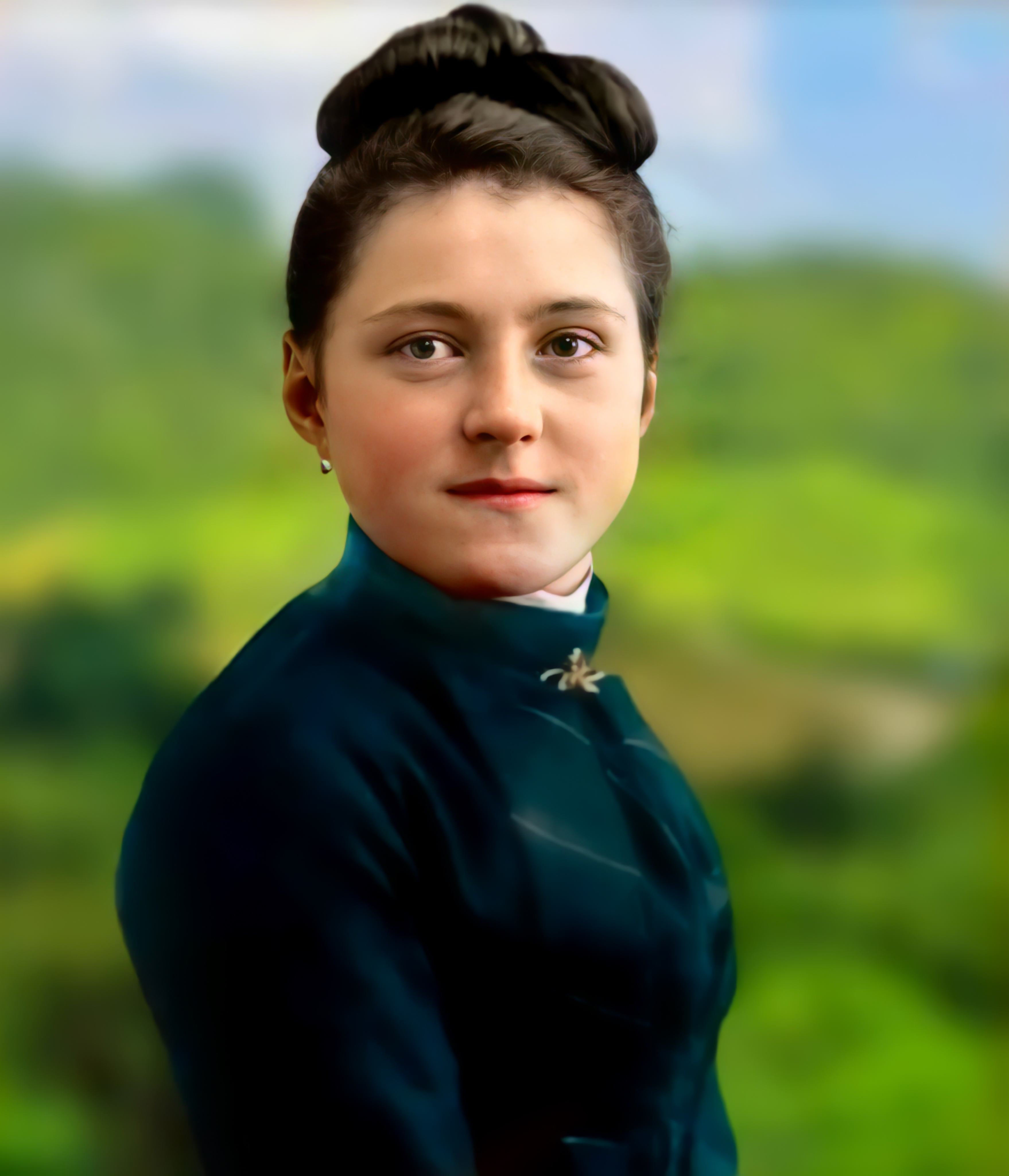
Virgin and Doctor of the Universal Church
The Little Flower of Jesus — Feast Day: October 1
Saint Thérèse of the Child Jesus and the Holy Face, popularly known as Saint Thérèse of Lisieux or the Little Flower, is one of the most beloved saints of modern times. A Discalced Carmelite who died at only twenty-four, she discovered a simple but profound path to holiness: to trust completely in God’s merciful love and to do even the smallest things with great love.
Her spirituality is commonly called the “Little Way.” It is not a spirituality of extraordinary achievements, but of childlike confidence, humility, loving abandonment, and fidelity in ordinary circumstances.
The Catholic Church celebrates her liturgical memorial on October 1. She was canonized by Pope Pius XI in 1925 and proclaimed Doctor of the Universal Church by Pope John Paul II on October 19, 1997. (Vatican City State)


1. Who was Saint Thérèse of Lisieux?
Name: Thérèse Françoise Marie Martin
Religious name: Sister Thérèse of the Child Jesus and the Holy Face
Known as: The Little Flower
Born: January 2, 1873
Birthplace: Alençon, Normandy, France
Died: September 30, 1897
Age at death: 24
Religious order: Discalced Carmelites
Feast: October 1
Canonized: May 17, 1925, by Pope Pius XI
Doctor of the Church: October 19, 1997, proclaimed by Pope John Paul II
Patronage: Missions and missionaries; secondary patroness of France
Spiritual teaching: The Little Way / spiritual childhood
The Vatican describes her as a Carmelite whose message of holiness is accessible to everyone. Although her earthly life was very short, her spiritual influence spread throughout the world. (Vatican City State)
2. Her Family: A Home of Faith
Thérèse was the youngest daughter of Louis Martin and Zélie Guérin Martin, a deeply religious French couple. Both parents were canonized by Pope Francis in 2015.
The Martin household was marked by:
- daily prayer,
- Mass,
- devotion to the Eucharist,
- love for the poor,
- concern for priests and missionaries,
- family affection,
- confidence in Divine Providence.
Thérèse was born into a family in which Christian faith was not merely taught but lived.
Her mother, Zélie, died of breast cancer on August 28, 1877, when Thérèse was only four years old. After her mother’s death, the family moved from Alençon to Lisieux. (Vatican News)
Her sisters Pauline, Marie, Léonie and Céline played important roles in her life. Several of the Martin daughters eventually entered religious life.
3. The Little Girl Who Wanted to Belong to Jesus
From childhood, Thérèse possessed a deep desire for God.
She was sensitive, affectionate and strongly attached to those she loved. The death of her mother profoundly affected her. Later, when her beloved sister Pauline entered the Carmelite convent, Thérèse experienced another painful separation.
Yet these experiences gradually deepened her relationship with God.
The spiritual life of Thérèse was not free from suffering. Her holiness did not consist in never experiencing pain, fear or weakness. Rather, she learned to place everything into God’s hands.
This became one of the foundations of her spirituality.
4. The Grace of Our Lady of Victories
In 1883, Thérèse became seriously ill. Her condition caused great concern among her family.
During her illness, she experienced what she understood as a special grace through the intercession of the Blessed Virgin Mary.
She later described seeing a smile from a statue of Our Lady and experiencing a sudden healing.
The Vatican records this event as a significant moment in her spiritual development and identifies the healing with the intercession of Our Lady of Victories. (Vatican)
From then onward, Thérèse developed a particularly tender love for Mary.
5. First Confession, First Communion and Confirmation
Thérèse made her first confession toward the end of 1879.
On May 8, 1884, she received her First Holy Communion.
For her, the Eucharist was not merely a religious ceremony. It was a profound encounter with Jesus.
On June 14, 1884, she received the Sacrament of Confirmation. She understood Confirmation as a personal participation in the grace of Pentecost. (Vatican)
Her spirituality remained profoundly Eucharistic throughout her life.
6. The Desire to Enter Carmel
Thérèse gradually became convinced that Jesus was calling her to the contemplative life of Carmel.
Two of her sisters, Pauline and Marie, had already entered the Carmel of Lisieux.
But there was one major obstacle:
She was too young.
Thérèse nevertheless did not simply give up.
At fourteen, she undertook a pilgrimage to Italy with other pilgrims from the Diocese of Lisieux.
During the pilgrimage she visited places including Loreto and Rome.
7. Thérèse Meets Pope Leo XIII
On November 20, 1887, the pilgrims were received by Pope Leo XIII.
Thérèse courageously asked the Pope to allow her to enter Carmel at the age of fifteen.
She had been instructed not to speak directly to the Pope about the matter, but her desire was so strong that she approached him.
The Pope responded that she could enter Carmel if it was God’s will. (Vatican City State)
Eventually, permission was obtained.
On April 9, 1888, at the age of fifteen, Thérèse entered the Carmel of Lisieux.
She received the religious name:
Sister Thérèse of the Child Jesus and the Holy Face.
8. Life in the Carmel
Thérèse spent the rest of her earthly life inside the Carmelite monastery.
From the outside, her life appeared extremely ordinary.
She prayed.
She worked.
She lived with other sisters.
She followed the Carmelite rule.
She endured misunderstandings.
She experienced illness.
She struggled with temptations and spiritual dryness.
She performed small acts of charity.
There was nothing outwardly spectacular.
And this is precisely what makes her message so powerful.
Thérèse discovered holiness in ordinary life.
The Church later recognized that her apparently hidden life contained profound spiritual wisdom. Pope John Paul II emphasized that her teaching constitutes a genuine school of spiritual life. (Vatican)
9. The Little Way
The heart of St Thérèse’s spirituality is known as the Little Way.
It can be summarized through several interconnected attitudes:
1. Childlike trust
Thérèse trusted God as a child trusts a loving father.
She knew that she was small and weak.
Instead of becoming discouraged by her weakness, she allowed her weakness to become the place where she experienced God’s mercy.
2. Humility
She did not seek greatness in the eyes of the world.
She wanted only to please Jesus.
3. Confidence in God’s mercy
For Thérèse, holiness begins not with confidence in oneself but with confidence in God.
4. Small acts of love
She believed that little things become great when they are done with love.
5. Abandonment
She sought to surrender herself completely to God’s will.
6. Perseverance
The Little Way does not mean avoiding suffering.
It means continuing to love when suffering comes.
10. “I Cannot Climb the Staircase of Perfection”
Thérèse often used the image of a little child.
A small child cannot climb a great staircase.
Instead, the child looks toward the father and waits for him to carry the child upward.
This became an image of her relationship with God.
She did not want to become holy by relying on extraordinary personal achievements.
She wanted to allow God’s grace to lift her.
This is one of the most beautiful dimensions of her spirituality:
Holiness is God’s work in us, received through humble cooperation, trust and love.
11. Her Discovery of Her Vocation
One of the most famous passages in her writings concerns her search for her vocation.
She reflected on the different vocations within the Church: apostle, martyr, missionary, priest and others.
Then she discovered the answer:
Love is at the heart of every vocation.
Pope John Paul II highlighted this discovery in his homily when proclaiming her a Doctor of the Church. He quoted her reflection that love gives life to all the Church’s vocations. (Vatican)
For Thérèse, therefore, her vocation was:
to love Jesus and to make love the center of everything she did.
12. Thérèse and the Missions
One might wonder how a cloistered Carmelite could become a patroness of missionaries.
Thérèse never travelled to foreign mission lands.
She never preached publicly.
She never founded a missionary congregation.
But she understood that the Church’s mission depends upon love and prayer.
She prayed intensely for priests and missionaries.
She corresponded with missionary priests.
She offered her prayers and sufferings for the salvation of souls.
Pope Pius XI proclaimed her Universal Patron of the Missions, together with St Francis Xavier, on December 14, 1927. (Vatican)
This is a remarkable lesson:
A person does not have to travel across the world to participate in the Church’s missionary work.
Prayer, sacrifice and love can become missionary acts.
13. Thérèse and the Holy Face
The words “and the Holy Face” in her religious name are important.
Thérèse had a profound devotion to the Holy Face of Jesus.
She contemplated Christ not only in His glory but also in His suffering.
The face of Jesus marked by suffering revealed to her the depth of divine love.
She learned to unite herself with Christ especially in His humility, suffering and abandonment.
Her spirituality therefore combines:
the Child Jesus + the Holy Face + the Cross + Divine Mercy + Love.
14. Her Relationship with the Blessed Virgin Mary
Thérèse’s devotion to Mary was tender and deeply biblical.
She did not imagine Mary as distant or inaccessible.
She saw her as a mother.
One of Thérèse’s important poems is:
“Why I Love You, O Mary”
In it she reflects on Mary’s life according to the Gospel.
Pope John Paul II specifically mentioned this poem in his Apostolic Letter on Thérèse, noting its theological and spiritual depth. (Vatican)
Thérèse’s Marian spirituality is therefore characterized by:
- simplicity,
- confidence,
- tenderness,
- imitation,
- Gospel-centered devotion.
15. Her Spiritual Struggle
One of the most important aspects of Thérèse’s life is often overlooked.
She did not spend her final years in constant spiritual consolation.
During the final period of her life, she experienced a profound trial of faith.
Pope John Paul II described this as a painful “night” of purification.
She continued to believe and trust even when she experienced interior darkness.
This makes her spirituality particularly relevant to people who pray but feel nothing, people who suffer doubts, and people who experience God’s apparent silence. (Vatican)
Her faith was not based simply on emotional consolation.
She learned to love and trust God even in darkness.
16. Her Illness and Final Suffering
Thérèse contracted tuberculosis.
As her condition deteriorated, she was moved to the monastery infirmary on July 8, 1897.
Her physical suffering became increasingly severe.
Yet she continued trying to love God and those around her.
Her final months were marked by:
- physical pain,
- spiritual darkness,
- prayer,
- surrender,
- love,
- concern for souls.
She died on September 30, 1897, at the age of twenty-four. (Vatican)
Her final words were:
“My God, I love you!”
Pope John Paul II identifies these words as the seal of her life. (Vatican)
17. “I Am Not Dying; I Am Entering Life”
Another famous expression attributed to Thérèse comes from a letter written before her death:
“I am not dying; I am entering life.”
For Thérèse, death was not annihilation.
She believed that death was entrance into eternal life with God.
Her confidence was rooted in the resurrection of Jesus Christ.
This is an important element of Catholic Christian hope:
The Christian does not ultimately belong to death but to Christ.
18. Her “Story of a Soul”
Thérèse’s best-known work is her autobiography, commonly known as Story of a Soul (Histoire d’une âme).
It was formed from three autobiographical manuscripts:
Manuscript A
Written in 1895–1896, it covers her childhood, family, conversion experiences, adolescence and entrance into Carmel.
Manuscript B
Written in 1896, it contains some of her most profound reflections on love, vocation and the Church.
Manuscript C
Written in 1897, it describes her Carmelite life and her final spiritual trials.
The three manuscripts were published after her death and became one of the most influential spiritual autobiographical works of modern Catholicism. (Vatican)
19. Her Other Writings
Thérèse left considerably more than her autobiography.
According to Pope John Paul II’s Apostolic Letter, her writings include:
- 3 autobiographical manuscripts
- 266 letters
- 54 poems
- 8 pious recreations
- 21 prayers
- her final conversations and sayings. (Vatican)
Among her best-known spiritual works are:
- Story of a Soul
- Living on Love
- Why I Love You, O Mary
- her letters
- her prayers
- her final conversations.
20. Why Is She Called “The Little Flower”?
Thérèse became associated with flowers because she frequently used flowers as spiritual images.
She understood herself as a little flower growing in God’s garden.
She did not need to be the largest or most impressive flower.
She simply wanted to bloom where God had planted her.
The image expresses her understanding of holiness:
God does not ask every person to become extraordinary in the eyes of the world. He asks each person to love Him faithfully where he or she is.
21. Why Is Thérèse a Doctor of the Church?
The title Doctor of the Church does not mean that Thérèse earned an academic doctorate.
It means that the Church recognizes a saint’s teaching as having particular importance for the universal Church.
Pope John Paul II proclaimed Thérèse a Doctor of the Universal Church on October 19, 1997, through the Apostolic Letter Divini Amoris Scientia.
She was only the third woman to receive the title at that time, following Teresa of Ávila and Catherine of Siena. (Vatican)
The reason for this recognition was not academic scholarship.
It was her profound “science of divine love.”
Pope John Paul II emphasized that Thérèse’s wisdom came from the Gospel and from her lived experience of faith. (Vatican)
22. Her “Science of Divine Love”
This is perhaps the best way to understand why Thérèse is a Doctor of the Church.
Her theology was not primarily expressed through complicated theological terminology.
It was expressed through:
- trust,
- prayer,
- Scripture,
- suffering,
- love,
- humility,
- abandonment,
- missionary concern.
She learned the Gospel by living it.
Her “little way” demonstrates that profound theology can be expressed through a very simple life.
Pope John Paul II called this a particular charism of wisdom. (Vatican)
23. Her Canonization
Thérèse’s reputation for holiness spread rapidly after her death.
She was beatified on April 29, 1923.
Pope Pius XI canonized her on May 17, 1925, in St Peter’s Basilica in Rome.
The Vatican notes that approximately 50,000 faithful gathered for the canonization, a striking contrast with the small number of people who had accompanied her burial in Lisieux. (Vatican City State)
Her worldwide popularity grew enormously after the publication of her writings.
24. Patroness of the Missions
Thérèse’s missionary spirituality deserves special attention.
She dreamed of becoming a missionary.
Yet she remained enclosed within the Carmel.
Her missionary activity became:
prayer + sacrifice + love + offering.
She prayed for priests.
She prayed for missionaries.
She offered her sufferings for souls.
Her life demonstrates that the Church’s mission is not carried out only by those who travel.
Every Christian can participate through prayer and love.
25. Thérèse and Priests
Thérèse had a special concern for priests.
Through correspondence with missionary priests, she supported them spiritually.
Her concern was not based on placing priests on a pedestal as perfect human beings.
Rather, she understood the need for prayer for those who serve the Church.
This is an especially valuable lesson for Catholic communities:
Pray for priests. Encourage priests. Pray for missionaries. Pray for vocations.
26. What Makes Her Spirituality So Powerful?
Thérèse speaks especially to people who think:
- “I am too ordinary to become holy.”
- “I cannot do great things.”
- “My life is hidden.”
- “I have many weaknesses.”
- “I struggle to pray.”
- “God seems far away.”
- “I cannot perform extraordinary sacrifices.”
Her answer is essentially:
Begin with love.
A small act of kindness can become an act of holiness.
A hidden sacrifice can become an offering.
A difficult person can become an opportunity for charity.
An ordinary duty can become an act of love.
A moment of suffering can become an offering to Jesus.
27. The Little Way in Daily Life
We can practice the spirituality of St Thérèse in very practical ways.
At home
Speak gently when you are irritated.
At work
Do your duties faithfully even when nobody notices.
In the parish
Serve without needing recognition.
In family life
Forgive quickly.
In suffering
Offer your pain to Jesus.
In prayer
Remain faithful even when you feel nothing.
With difficult people
Choose patience instead of retaliation.
With children
Show affection and kindness.
With the poor
Serve Christ in them.
With priests and religious
Pray for their perseverance.
In hidden sacrifices
Offer small inconveniences to God with love.
This is the Little Way in practice.
28. Thérèse’s Message to Those Who Feel Small
One of the deepest lessons of her life is that smallness is not an obstacle to holiness.
In fact, Thérèse deliberately embraced her spiritual littleness.
She did not try to pretend that she was powerful.
She recognized her dependence upon God.
This is closely connected with the Gospel teaching about becoming like little children.
Her spiritual childhood means:
“Father, I am small. I cannot do everything. But I trust You.”
29. Thérèse and Suffering
Thérèse’s teaching should never be reduced to sentimental optimism.
She suffered deeply.
She experienced:
- the death of her mother,
- separation from loved ones,
- illness,
- misunderstandings,
- physical suffering,
- spiritual darkness,
- fear of death,
- the struggle of faith.
Yet suffering did not destroy her love.
Instead, she sought to unite her suffering with Christ.
Her spirituality therefore teaches not:
“Christians will not suffer.”
but:
“Christ can transform suffering into an offering of love.”
30. Her Spirituality and the Cross
The Little Way is inseparable from the Cross.
Thérèse loved Jesus not merely as the Child of Bethlehem but also as the suffering Christ.
Her devotion to the Holy Face helped her contemplate Jesus in His humiliation and suffering.
Thus her spirituality holds together:
Bethlehem — Nazareth — Calvary — Resurrection.
The Child Jesus and the Holy Face are not separate themes.
They reveal the same Jesus who loves humanity completely.
31. A Saint for Ordinary People
Saint Thérèse is particularly attractive because her holiness was not built around spectacular public achievements.
She did not:
- establish a worldwide institution,
- lead an army,
- preach to enormous crowds,
- travel around the world,
- write enormous theological treatises.
She lived in a monastery.
Yet her message reached the world.
This is one of the paradoxes of Christian holiness:
A hidden life can have a universal mission.
32. Important Dates in Her Life
| Date | Event |
|---|---|
| January 2, 1873 | Born in Alençon, France |
| January 4, 1873 | Baptized |
| August 28, 1877 | Mother Zélie died |
| 1877 | Family moved to Lisieux |
| 1883 | Serious illness and healing associated with Our Lady of Victories |
| May 8, 1884 | First Holy Communion |
| June 14, 1884 | Confirmation |
| November 20, 1887 | Audience with Pope Leo XIII |
| April 9, 1888 | Entered Carmel of Lisieux |
| January 10, 1889 | Religious clothing / beginning of religious life |
| September 8, 1890 | Religious profession |
| 1895–1897 | Major autobiographical manuscripts written |
| July 8, 1897 | Moved to the Carmel infirmary |
| September 30, 1897 | Died at age 24 |
| 1898 | Story of a Soul published |
| April 29, 1923 | Beatified |
| May 17, 1925 | Canonized |
| December 14, 1927 | Proclaimed Universal Patron of the Missions |
| October 19, 1997 | Proclaimed Doctor of the Universal Church |
| October 1 | Liturgical memorial |
The principal dates are documented by Vatican sources. (Vatican City State)
33. A Beautiful Summary of Her Spirituality
The spirituality of St Thérèse can be remembered through ten words:
Jesus.
Trust.
Mercy.
Childhood.
Humility.
Love.
Simplicity.
Suffering.
Abandonment.
Mission.
Together they form the Little Way.
34. What Can We Learn from St Thérèse Today?
1. You do not have to be famous to be holy.
God sees hidden acts of love.
2. You do not have to be strong.
You can place your weakness in God’s hands.
3. You do not have to accomplish extraordinary things.
Do ordinary things extraordinarily well—with love.
4. You do not have to feel God’s presence all the time.
Faith can continue even during spiritual darkness.
5. You do not have to travel to become a missionary.
Prayer and sacrifice can serve the Church’s mission.
6. You do not have to understand everything.
Trust God.
7. You do not have to win every argument.
Sometimes love means remaining silent.
8. You do not have to seek recognition.
Let God see what others do not see.
9. You can turn suffering into prayer.
Offer it to Christ.
10. Love is the heart of Christian life.
For Thérèse, this was the key to her vocation.
35. A Practical Reflection for the Feast of St Thérèse
On the feast of St Thérèse, ask yourself:
What small thing can I do today with great love?
Perhaps it is:
- forgiving someone,
- calling a lonely person,
- praying for a priest,
- helping someone without being asked,
- patiently listening,
- visiting someone who is sick,
- giving something to someone in need,
- praying for a missionary,
- accepting an inconvenience without complaining,
- spending a few quiet minutes with Jesus.
Do not wait for a great opportunity to become holy.
The great opportunity may already be hidden inside the small moment in front of you.
36. A Prayer to St Thérèse
O Little Flower of Jesus,
Saint Thérèse of the Child Jesus and the Holy Face,
you discovered the path of holiness
through humility, simplicity, trust and love.
Teach me to become small before God,
not seeking greatness in the eyes of the world,
but desiring only to please Jesus.
Help me to trust God’s mercy
when I experience weakness, failure, suffering or fear.
Teach me to place my whole life
into the loving hands of our Heavenly Father.
Saint Thérèse,
teach me to do the smallest things with great love.
Help me to be patient with those who hurt me,
kind to those who need me,
faithful in my duties,
and generous even when nobody notices.
Pray for my family,
for children and young people,
for priests and religious,
for missionaries and vocations,
for the sick and suffering,
and for all who have lost hope.
Obtain for me the grace
to trust Jesus more deeply each day.
When I am afraid, teach me trust.
When I am discouraged, teach me hope.
When I am suffering, teach me surrender.
When I am tempted to think that my life is insignificant,
remind me that every act of love has value before God.
O Saint Thérèse,
the Little Flower of Jesus,
pray that I may walk your little way
with childlike confidence and perseverance.
May I spend my life loving Jesus
and helping others to know His love.
And when my earthly journey is finished,
may I confidently place myself
into the merciful hands of God.
Saint Thérèse of the Child Jesus and the Holy Face,
pray for us.
Amen.
37. A Short Feast-Day Prayer
Little Flower of Jesus,
teach me your little way.
Help me to trust God’s mercy,
to accept my littleness,
to love in small things,
to persevere in suffering,
and to offer everything to Jesus.
Pray for me and for those I love.
May my whole life become an act of love.
Amen.
38. Final Message of St Thérèse
The greatness of St Thérèse is not that she lived a long life.
She lived only twenty-four years.
Her greatness is that she discovered what she believed was the heart of the Gospel:
God is love, and we can respond to that love with complete trust.
She teaches us that holiness is possible in the ordinary.
A smile can be an act of love.
A hidden sacrifice can be an act of love.
A prayer can be an act of love.
A patient response can be an act of love.
A small service can be an act of love.
A suffering accepted with Christ can be an act of love.
And a whole hidden life offered to God can become a missionary life.
That is why the little Carmelite of Lisieux became a Doctor of the Universal Church.
As Pope John Paul II explained when proclaiming her Doctor of the Church, Thérèse’s wisdom is a profound “science of love” rooted in the Gospel and offered to the whole Church. (Vatican)
Saint Thérèse of the Child Jesus and the Holy Face,
Little Flower of Jesus,
Doctor of Divine Love,
Patroness of the Missions,
pray for us!
“My vocation is Love.”
Authoritative references
- Vatican — Saint Thérèse of Lisieux
- Vatican — *Divini Amoris Scientia*, proclaiming Thérèse Doctor of the Church
- Vatican — John Paul II’s homily for the proclamation of Thérèse as Doctor of the Church
- Vatican State — October 1: Saint Thérèse of the Child Jesus
- Vatican News — Saint Thérèse of the Child Jesus
Leave a Reply