
Introduction
Saint Ursula is one of the most celebrated virgin martyrs associated with the early Christian Church. Remembered especially in connection with Cologne, Germany, she became a symbol of courage, purity, fidelity to Christ, and the willingness to remain steadfast in faith even in the face of death.
According to medieval tradition, Ursula was a Christian princess who travelled with a large company of young women and suffered martyrdom with her companions at Cologne. The familiar story speaks of the “Eleven Thousand Virgins,” a number that became deeply embedded in European Christian art, literature, and devotion.
Although many details of Ursula’s traditional life cannot be established with historical certainty, the ancient evidence for the veneration of virgin martyrs at Cologne provides a foundation for understanding the origin of her cult. Her story subsequently inspired generations of Christians, particularly women and educators, to embrace lives of holiness, courage, and dedication to God.
Saint Ursula’s enduring spiritual significance lies in the Christian conviction that fidelity to Christ is more precious than worldly security and that the dignity of a person is never diminished by suffering or persecution.
1. Who Was Saint Ursula?
Saint Ursula is traditionally remembered as a Christian virgin and martyr who died with her companions at Cologne, a Roman city situated along the Rhine in present-day Germany.
The precise dates of her birth and death are unknown. Medieval accounts place her origins in Britain and portray her as the daughter of a Christian king. However, these details belong to the developed tradition surrounding her life rather than to firmly established historical evidence.
The earliest surviving evidence associated with the martyrs of Cologne is an inscription known as the Clematius inscription, preserved in the Basilica of Saint Ursula in Cologne. It refers to a church built or restored at a place where holy virgins had shed their blood for the name of Christ.
The inscription does not identify Ursula by name, specify the number of martyrs, or provide a reliable date for their deaths. The name Ursula appears in later sources, and the story associated with her gradually developed over the centuries.
Despite these historical limitations, devotion to Saint Ursula became widespread throughout medieval Europe. Her name became associated with Christian virginity, martyrdom, courage, and the protection of young women.
2. The Traditional Story of Saint Ursula
The best-known account of Saint Ursula comes from medieval hagiographical traditions, especially narratives that developed in the ninth and tenth centuries and were elaborated in later centuries.
According to this tradition, Ursula was a princess from Britain who had dedicated herself to Christ and desired to preserve her virginity. A powerful pagan ruler wished to arrange her marriage to his son.
Ursula’s father was reportedly placed in a difficult position by the proposal. The traditional narrative portrays Ursula as requesting certain conditions before the marriage could take place. These included a period of delay, companions who would accompany her on a journey, and the conversion of her intended husband to Christianity.
The story subsequently describes Ursula and her companions travelling by sea and eventually reaching the European mainland.
These details vary considerably between medieval versions. They should therefore be read as elements of a religious tradition rather than as a verified historical biography.
Nevertheless, the traditional account presents Ursula as a young woman who sought to remain faithful to her religious convictions despite pressure from powerful people around her.
Her story became an expression of the freedom of conscience and the importance of making life decisions according to one’s deepest spiritual commitments.
3. The Legend of the Eleven Thousand Virgins
One of the most famous elements of Ursula’s story is the tradition that she travelled with eleven thousand virgin companions.
According to the developed medieval legend, Ursula was accompanied by ten young women, each of whom led a thousand companions, while Ursula herself also had a thousand. Together, they were said to number eleven thousand.
The story describes their journey through several European cities, including Cologne, Basel, and Rome. In some versions, Ursula and her companions made a pilgrimage to Rome before beginning their return journey.
The number eleven thousand became one of the most recognizable features of Ursula’s legend. It inspired paintings, sculptures, religious processions, churches, and devotional literature throughout Europe.
What Does History Tell Us About the Number?
The historical evidence does not establish that eleven thousand women accompanied Ursula.
Early medieval liturgical sources mention groups of virgin martyrs associated with Cologne, but their numbers vary. Some sources refer to five, eight, or eleven virgins, while later accounts describe thousands.
Scholars have proposed several explanations for the development of the number eleven thousand, including possible misunderstandings of abbreviations or the combination of earlier traditions. No single explanation has been established with certainty.
The responsible historical conclusion is that a group of virgin martyrs was venerated at Cologne, while the precise number and personal identities of the martyrs remain uncertain.
Recognizing these limitations does not require dismissing the spiritual importance that the tradition acquired. It allows readers to appreciate the historical evidence honestly while understanding the religious meaning the story conveyed to generations of Christians.
4. The Martyrdom of Saint Ursula and Her Companions
In the traditional account, Ursula and her companions eventually arrived at Cologne during a period of danger associated with the Huns.
The medieval narrative describes the women being threatened and killed because of their Christian faith. Ursula is portrayed as refusing to surrender her convictions or submit to the demands of a pagan ruler. In the familiar version, she is killed by an arrow.
The details of this account cannot be independently verified. The early inscription at Cologne supports the existence of a tradition honouring virgin martyrs who died for Christ, but it does not confirm the complete narrative of Ursula’s life or the circumstances of her death.
The story nevertheless became a powerful expression of Christian martyrdom.
In the Christian understanding, a martyr is a witness who remains faithful to Christ even when threatened with death. Martyrdom is not the pursuit of suffering for its own sake; it is the refusal to abandon the truth and love of God under coercion.
Ursula and her companions consequently became symbols of courage, fidelity, and the conviction that earthly power cannot determine the ultimate value of a human life.
Their traditional story also emphasized the dignity of women who remained steadfast in their religious commitments despite the expectations and pressures of their society.
5. The Historical Evidence: The Martyrs of Cologne
To understand Saint Ursula properly, it is important to distinguish the ancient evidence from the later legend.
The Clematius Inscription
The most important early evidence is the Latin inscription associated with the Basilica of Saint Ursula in Cologne.
The inscription records that a man named Clematius, described as being of senatorial rank, rebuilt a basilica at the place where holy virgins had suffered martyrdom for Christ.
The precise date and interpretation of the inscription have been subjects of scholarly discussion, although it is commonly regarded as evidence of an early cult associated with virgin martyrs at Cologne.
Importantly, the inscription does not name Ursula or identify the women as a group of eleven thousand.
The Development of Ursula’s Cult
During the early Middle Ages, liturgical calendars and religious writings began to provide more information about the martyrs of Cologne. The name Ursula appeared in later sources, and the story gradually developed into a detailed narrative.
By the high Middle Ages, the legend had become widely known. The discovery of ancient burial grounds around Cologne and the circulation of relics further encouraged devotion to Ursula and her companions.
Over time, their story became part of the religious and cultural identity of Cologne.
A Balanced Historical Understanding
The historical evidence supports the existence of an early Christian tradition honouring virgin martyrs at Cologne. It does not allow historians to reconstruct Ursula’s life with the certainty possible for better-documented saints.
A careful account should therefore acknowledge both the limitations of the evidence and the lasting influence of her veneration.
Saint Ursula’s importance in Christian history rests not only on the details of her traditional biography but also on the spiritual ideals that her story came to represent.
6. Saint Ursula’s Christian Virtues
A. Fidelity to Christ
The central virtue associated with Saint Ursula is fidelity to Christ.
In the traditional narrative, she remains committed to her religious convictions despite pressure to abandon them. Her story encourages Christians to examine the depth of their own faith.
Christian fidelity is expressed not only in dramatic moments of persecution but also in ordinary decisions: remaining honest when dishonesty appears advantageous, choosing forgiveness when resentment seems easier, and remaining faithful to one’s responsibilities when difficulties arise.
Ursula’s example invites believers to place their relationship with Christ at the centre of their lives.
B. Courage in the Face of Fear
The traditional account portrays Ursula as courageous when confronted by powerful people who sought to control her future.
Courage does not mean the absence of fear. It means choosing what is right despite fear and uncertainty.
Christians today may face pressures to compromise their conscience, abandon their convictions, or remain silent when others are treated unjustly. Saint Ursula’s story encourages them to seek the courage that comes from faith in God.
Her example is especially relevant to young people who are trying to make decisions about their future, relationships, education, and vocation.
C. Purity of Heart
Saint Ursula became especially associated with consecrated virginity in Christian tradition.
Virginity, within the Christian understanding of consecrated life, is not merely a physical condition. It signifies an undivided dedication of the heart to God and a commitment to live in accordance with one’s vocation.
The broader spiritual lesson of purity extends to every Christian state of life. All believers are called to sincerity, integrity, respect for the human body, and the proper ordering of their desires.
Purity of heart means allowing God to shape our intentions so that we learn to love others with respect and freedom rather than possessiveness or selfishness.
D. Freedom of Conscience
The traditional story emphasizes Ursula’s refusal to allow others to determine her deepest religious commitments through coercion.
Her example invites reflection on the importance of conscience and personal responsibility.
Christian freedom does not mean doing whatever one desires. It means learning to choose what is good and true in the light of God’s will.
A mature conscience must be formed through prayer, Scripture, the teaching of the Church, and sincere moral reflection.
E. Perseverance in Faith
Martyrdom represents the ultimate form of perseverance in the Christian tradition.
Saint Ursula and her companions became symbols of a faith that remains steadfast even when circumstances become hostile.
For most Christians, perseverance is lived through the ordinary challenges of life: illness, disappointment, family responsibilities, financial difficulties, and periods of spiritual dryness.
Ursula’s traditional witness reminds believers that holiness is not measured by the absence of suffering but by the love and faithfulness with which they respond to life’s trials.
7. Saint Ursula and the Dignity of Women
The story of Saint Ursula acquired particular significance in Christian traditions concerning women’s dignity and vocation.
Medieval accounts portrayed her as a woman who made deliberate decisions about her future and remained faithful to her convictions. This portrayal gave her a distinctive place among female saints and martyrs.
Her story inspired women who sought to live lives of prayer, education, charitable service, and consecration to God.
It also encouraged the belief that women could become influential witnesses to Christian faith through holiness, leadership, and service.
The historical details of Ursula’s life remain uncertain, but her enduring religious significance demonstrates the power of saintly traditions to inspire people across generations.
For contemporary Christians, her example should not be reduced to a single vocation or state of life. Women and men alike are called to dignity, holiness, responsible freedom, and fidelity to God.
8. Saint Ursula and the Ursuline Tradition
Saint Ursula’s name is closely associated with the Ursulines, a religious tradition devoted especially to Christian education and the formation of young people.
Saint Angela Merici founded the Company of Saint Ursula in 1535. She placed her community under the patronage of Saint Ursula, whose traditional association with Christian virginity and young women offered an appropriate spiritual inspiration for the new foundation.
The Ursuline tradition subsequently developed into a major influence in Catholic education, especially in the education of girls and young women.
Ursuline communities established schools and educational institutions in many parts of the world. Their work emphasized the integration of intellectual development, moral formation, prayer, and Christian responsibility.
The connection between Ursula and the Ursulines demonstrates how devotion to a saint can inspire practical forms of Christian service.
The spiritual ideals associated with Ursula were thus expressed not only in prayer and remembrance but also in the work of educating generations of young people.
9. Saint Ursula in Christian Art and Devotion
Saint Ursula became a popular subject in medieval and Renaissance art.
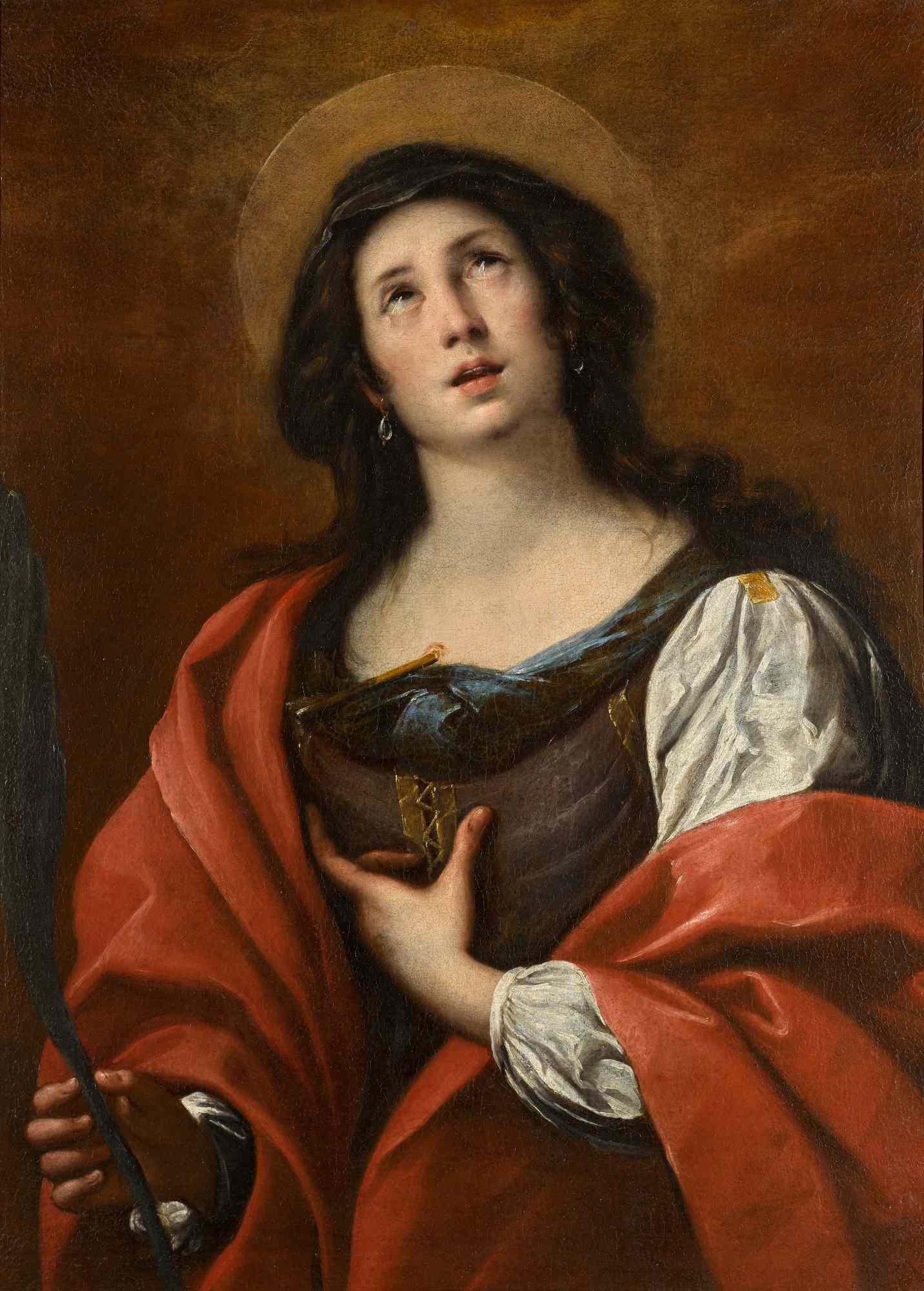
She is often represented as a young woman wearing a crown or royal clothing, reflecting the traditional account of her noble birth. An arrow is another common attribute, recalling the familiar story of her martyrdom.
Artists have also depicted her carrying a banner, standing beneath a protective cloak, or surrounded by groups of women.
The image of Ursula sheltering her companions beneath her cloak became particularly significant. It symbolized her role as a protector and the spiritual protection associated with her intercession.
One of the best-known artistic treatments of her story is the cycle of paintings by Vittore Carpaccio, created for the Scuola di Sant’Orsola in Venice during the late fifteenth and early sixteenth centuries.
These paintings helped shape the visual imagination of Ursula’s legend and remain important works in the history of European art.
The artistic tradition demonstrates how the story of a saint can communicate religious ideals through visual symbols even when the historical details of the saint’s life remain uncertain.
10. Feast Day of Saint Ursula
Saint Ursula and her companions are traditionally commemorated on 21 October.
Their commemoration remains in the Roman Martyrology, although it is not included in the current General Roman Calendar as a universal obligatory memorial.
The distinction is important: the presence of a saint in the Roman Martyrology does not automatically mean that the saint has a universal celebration in the General Roman Calendar.
Saint Ursula continues to be honoured particularly in Cologne and in communities influenced by the Ursuline tradition.
Her feast provides an opportunity to reflect on the Christian vocation to holiness, the witness of martyrs, and the courage required to remain faithful to Christ.
11. Spiritual Lessons from Saint Ursula
1. Put God First in Every Decision
The traditional story of Ursula presents a woman whose religious convictions shaped her decisions about the future.
Her example encourages us to place prayer and discernment at the heart of important choices.
When facing decisions about relationships, employment, education, family responsibilities, or vocation, Christians should ask not only what is convenient but also what is good, just, and faithful to God.
2. Do Not Be Afraid to Stand for What Is Right
Ursula’s traditional witness reminds us that faith sometimes requires courage.
There may be moments when following conscience means resisting pressure from others. Christians are called to do so without hatred or arrogance, remaining firm in truth while treating others with respect.
3. Holiness Is Possible for the Young
Ursula became especially associated with young women and girls.
Her story challenges the assumption that holiness belongs only to old age or to people who have withdrawn from ordinary responsibilities.
Young people can grow in holiness through prayer, study, friendship, service, responsible choices, and a sincere desire to follow Christ.
4. Protect the Dignity of Others
The traditional image of Ursula sheltering her companions beneath her cloak offers a beautiful symbol of protection.
Christian love calls us to defend those who are vulnerable, accompany those who are suffering, and create communities where people are treated with dignity.
We honour the saints not merely by remembering their stories but by imitating the virtues their lives represent.
5. Remain Faithful in Difficult Times
The Christian tradition remembers martyrs because their witness proclaims that God’s love is greater than fear and death.
Most believers will not be asked to face martyrdom, but everyone encounters situations that test faith and perseverance.
Saint Ursula encourages us to remain faithful in prayer, to trust God in uncertainty, and to continue choosing love when life becomes difficult.
12. A Personal Spiritual Reflection
The story of Saint Ursula invites us to reflect on the place of God in our lives.
We live in a world filled with expectations. Families, friends, society, and our own ambitions may influence the decisions we make. Some expectations can help us grow, while others may lead us away from our deepest convictions.
The traditional story of Ursula presents a young woman who desired to remain faithful to Christ even when powerful people sought to determine her future. Whatever the historical limitations of the legend, its central spiritual question remains relevant: Are we willing to place God above the pressures that seek to control our lives?
Faithfulness is not always dramatic. Often it begins with small decisions: praying when we feel distracted, telling the truth when it is inconvenient, respecting the dignity of another person, remaining faithful to our responsibilities, and refusing to compromise our conscience for personal gain.
Saint Ursula also reminds us that courage and gentleness can belong together. A Christian can remain firm in faith without becoming harsh towards others. We can defend what is right while continuing to love those who disagree with us.
Her traditional association with her companions offers another important lesson. Holiness is not merely an individual achievement. We are called to encourage one another, protect one another, and help others remain faithful to God.
May the example of Saint Ursula inspire us to make our decisions prayerfully, live with integrity, and remain steadfast in our commitment to Jesus Christ.
13. Prayer to Saint Ursula
Saint Ursula, faithful witness to Jesus Christ, you are remembered in Christian tradition for your courage, purity of heart, and steadfast commitment to God.
Pray for us, that we may place Christ at the centre of our lives and remain faithful to Him in every circumstance.
Obtain for us the grace to make wise decisions, to listen attentively to God’s will, and to resist the pressures that lead us away from truth and goodness.
Pray especially for young people who are discerning their vocation, for students preparing for their future, for women seeking to live their faith courageously, and for all who experience pressure because of their Christian convictions.
Inspire us to protect the vulnerable, encourage those who are discouraged, and build communities founded on faith, respect, and love.
May we learn to persevere in prayer, serve others generously, and remain steadfast in our hope of eternal life.
Saint Ursula and your companions, pray for us.
Amen.
Conclusion
Saint Ursula remains an enduring figure in Christian devotion, especially as a symbol of courage, consecration, and fidelity to Christ.
Although the historical details of her life and the familiar story of the eleven thousand virgins cannot be established with certainty, the early evidence for the veneration of virgin martyrs at Cologne provides a foundation for understanding the origins of her cult.
Over the centuries, Ursula’s story inspired generations of Christians, shaped religious art, and influenced the educational mission of the Ursulines.
Her enduring spiritual message is clear: faithfulness to God calls for courage, purity of heart, respect for human dignity, and perseverance in love.
May Saint Ursula and her companions inspire us to live with conviction, protect those entrusted to our care, and follow Jesus Christ with undivided hearts.
References and Further Reading
Historical and Ecclesiastical Sources
- Saint Ursula and the Eleven Thousand Virgins, The Catholic Encyclopedia, New Advent.
https://www.newadvent.org/cathen/15225d.htm - Saint Ursula in Art and Legend, Christian Iconography.
https://www.christianiconography.info/ursula.html - Saint Ursula and Her Companions, Novena Regina, Lives of the Saints.
https://novenaregina.com/lives-of-the-saints/st-ursula-and-companions - Saint Ursula, Ursulines of the Roman Union.
https://ursulines-roman-union.org/en/contents/looking-back/70 - Saint Ursula, Google Arts & Culture.
https://artsandculture.google.com/entity/saint-ursula/m02svt5?hl=en
Biblical References for Reflection
Although no biblical passage directly recounts the life of Saint Ursula, the following passages illuminate the Christian virtues associated with her traditional witness:
- Matthew 5:10–12 — Blessed are those who are persecuted for righteousness.
- Matthew 10:28 — Do not be afraid of those who can kill the body.
- Matthew 25:1–13 — The parable of the wise and foolish virgins.
- John 15:18–21 — The world’s opposition to Christ’s disciples.
- Romans 8:35–39 — Nothing can separate us from the love of God in Christ.
- 1 Corinthians 6:19–20 — The body as a temple of the Holy Spirit.
- 2 Timothy 4:7–8 — Fighting the good fight and keeping the faith.
These passages offer a scriptural framework for reflecting on courage, consecration, perseverance, and fidelity to Christ.
Leave a Reply