
Introduction
Saint Cornelius the Centurion occupies a significant place in the history of early Christianity. A Roman military officer stationed in Caesarea, he is remembered in the Acts of the Apostles as a devout man who feared God, prayed continually, and gave generously to those in need. His encounter with Saint Peter became a decisive moment in the expansion of the Gospel beyond the Jewish people to the Gentile world.
The story of Cornelius is more than an account of an individual conversion. It reveals God’s universal plan of salvation, the power of prayer and charity, and the Holy Spirit’s freedom to work beyond human expectations and established boundaries.
Through Cornelius, the early Church came to recognize more clearly that the grace of Jesus Christ was intended for all peoples. His story remains a powerful invitation to welcome God’s guidance, overcome prejudice, and recognize the dignity of every human person.
1. Who Was Saint Cornelius the Centurion?
Cornelius was a Roman centurion belonging to the cohort known as the Italian Cohort. He was stationed in Caesarea, an important coastal city in the Roman province of Judea.
A centurion was a military officer responsible for commanding a unit of soldiers, traditionally associated with approximately one hundred men. Cornelius therefore held a position of responsibility within the Roman military establishment.
Although he belonged to the Roman world and was not Jewish, Cornelius worshipped the God of Israel. The Acts of the Apostles describes him as a devout and God-fearing man who prayed constantly and gave generously to the people.
Acts 10:1–2 presents the essential features of his character:
- He was a man of faith and reverence for God.
- He encouraged his household to share in religious devotion.
- He practised generosity towards those in need.
- He persevered in prayer.
- He remained open to divine guidance.
Cornelius is often described as the first Gentile convert whose reception into the Church is narrated in detail in the New Testament. More precisely, his story records the decisive reception and baptism of a Gentile household into the Christian community without requiring them first to become Jewish converts.
Scripture does not provide details about his childhood, parents, military career before Caesarea, or eventual death. These matters should not be confused with the biblical account.
2. A Man of Prayer and Charity
The spiritual portrait of Cornelius begins before he encounters Saint Peter. He is already seeking God sincerely.
Acts 10:2 describes him as a man who feared God with his entire household, gave alms generously, and prayed continually.
These three characteristics—faith, prayer, and charity—form the foundation of his spiritual life.
His Faith in God
Cornelius lived in a society where Roman religious practices and the worship of many deities were widespread. Nevertheless, he had come to revere the one God worshipped by the Jewish people.
He was among those Gentiles commonly described as “God-fearers”: people attracted to the worship of Israel’s God who had not fully converted to Judaism.
His spiritual journey reminds us that God can begin preparing a person’s heart long before that person fully understands the Christian faith.
His Perseverance in Prayer
Cornelius did not approach God only during moments of difficulty. Prayer was a regular part of his life.
His example teaches us that prayer is not merely a request for immediate help. It is an ongoing relationship with God, expressed through trust, attentiveness, and the willingness to follow divine guidance.
His Generosity Towards the Poor
Cornelius’s faith was expressed through concrete acts of charity. His almsgiving was known beyond his own household and was remembered in the message he received from the angel.
In Acts 10:4, the angel tells him that his prayers and almsgiving have ascended before God as a memorial offering.
This does not mean that human beings can purchase salvation through good deeds. Rather, the passage illustrates the importance of sincere faith expressed through love and generosity.
The life of Cornelius reminds Christians that authentic devotion cannot be separated from concern for others.
3. The Angel’s Visit to Cornelius
The decisive event in Cornelius’s life occurred while he was praying.
According to Acts 10:3–8, he received a vision in which an angel of God appeared and called him by name.
The angel instructed him to send men to Joppa and summon Simon Peter, who was staying with Simon the tanner.
Cornelius responded promptly. He called two of his servants and a devout soldier from among those who served him, explained what had happened, and sent them to Joppa.
This response reveals an important quality of his faith: he was willing to act upon the guidance he had received.
Cornelius did not yet know everything that Peter would teach him. He had not heard the full proclamation of the Gospel from the apostle. Nevertheless, he was prepared to take the next step.
His experience teaches that spiritual growth often begins with a willingness to respond to God even when the whole journey remains unclear.
The angel did not tell Cornelius that he had no further need of instruction. Instead, he directed him towards Peter, through whom he would hear the message of Jesus Christ.
Divine guidance and the ministry of the Church thus come together in this account.
4. Saint Peter’s Vision: God Prepares the Apostle
While Cornelius’s messengers were travelling towards Joppa, God was preparing Saint Peter for their arrival.
Acts 10:9–16 recounts that Peter went up to the rooftop to pray. While he was hungry and waiting for a meal, he experienced a vision of a great sheet descending from heaven. It contained various animals, and a voice instructed him to kill and eat.
Peter objected because some of the animals were considered ritually unclean according to Jewish dietary regulations. The voice replied:
“What God has made clean, you are not to call profane.” (Acts 10:15, NABRE)
The vision occurred three times.
Its significance becomes clearer when Peter meets Cornelius and his household. The vision was not simply about food; it prepared Peter to recognize that he must not regard Gentiles as inherently unclean or excluded from God’s saving invitation.
Peter had to undergo a conversion of understanding. He was being led to recognize that God’s work extended beyond the boundaries he had previously assumed.
The narrative therefore presents two journeys of conversion: Cornelius is being led towards the Christian faith, while Peter is being led towards a fuller understanding of the universal scope of the Gospel.
This is one of the most important lessons of Acts 10. Sometimes God transforms not only the people who are waiting to receive the Gospel but also the people who believe they already understand how it should be proclaimed.
5. Cornelius Welcomes Saint Peter
When the messengers arrived, Peter received them and agreed to accompany them. Some believers from Joppa travelled with him.
The following day, they arrived in Caesarea, where Cornelius was waiting with his relatives and close friends.
Cornelius had not kept the news to himself. He had gathered people who mattered to him so that they too could hear what God was about to reveal.
When Peter entered the house, Cornelius fell at his feet in reverence. Peter immediately raised him, explaining that he himself was only a human being.
This brief encounter reveals the humility of both men. Cornelius was eager to receive God’s message, while Peter refused to accept the kind of reverence that would place him above his proper human position.
Peter then entered the house and began to explain why he had come.
He acknowledged that God had taught him not to call any person profane or unclean. He also declared a truth that would shape the Church’s mission:
“In truth, I see that God shows no partiality.” (Acts 10:34, NABRE)
Peter was not claiming that all religious beliefs or actions were identical. He was proclaiming that God’s saving invitation was not restricted by ethnic origin or social identity.
The Gospel was to be proclaimed to all peoples.
6. Peter Proclaims Jesus Christ
Peter’s message to Cornelius and his household is one of the important summaries of the Gospel found in the Acts of the Apostles.
In Acts 10:34–43, Peter proclaims the ministry of Jesus, His anointing by the Holy Spirit, His works of healing and liberation, His death, and His Resurrection.
Peter declares that Jesus is Lord of all and that everyone who believes in Him receives forgiveness of sins through His name.
The proclamation includes the essential events of Christian faith:
- Jesus’ public ministry: God anointed Jesus of Nazareth with the Holy Spirit and power.
- Jesus’ works of mercy: He went about doing good and healing those oppressed by the devil.
- Jesus’ death: He was put to death by being hung on a tree.
- Jesus’ Resurrection: God raised Him on the third day.
- The apostolic witness: The apostles were witnesses to the risen Lord.
- The universal offer of salvation: Forgiveness of sins is offered through Jesus Christ to everyone who believes in Him.
Cornelius and his household were not merely receiving information about a religious movement. They were being invited to believe in the risen Lord and enter into a new relationship with God.
The story emphasizes that Christian faith is centred on the person of Jesus Christ, not simply on moral goodness or religious devotion.
Cornelius was already prayerful and charitable, but he still needed to hear the Gospel and respond to Christ.
7. The Holy Spirit Descends Upon the Gentiles
While Peter was still speaking, an extraordinary event took place.
Acts 10:44–46 records that the Holy Spirit descended upon those who were listening to the message. The Jewish believers who had accompanied Peter were astonished because the gift of the Holy Spirit had also been poured out upon the Gentiles.
They heard them speaking in tongues and glorifying God.
This event is sometimes called the Gentile Pentecost because of its resemblance to the outpouring of the Holy Spirit upon the disciples at Pentecost in Acts 2.
The Holy Spirit acted before the community could impose its own conditions upon these Gentile believers. God Himself demonstrated that they were being welcomed into the new covenant community.
Peter responded by asking whether anyone could withhold baptism from those who had received the Holy Spirit just as the Jewish believers had.
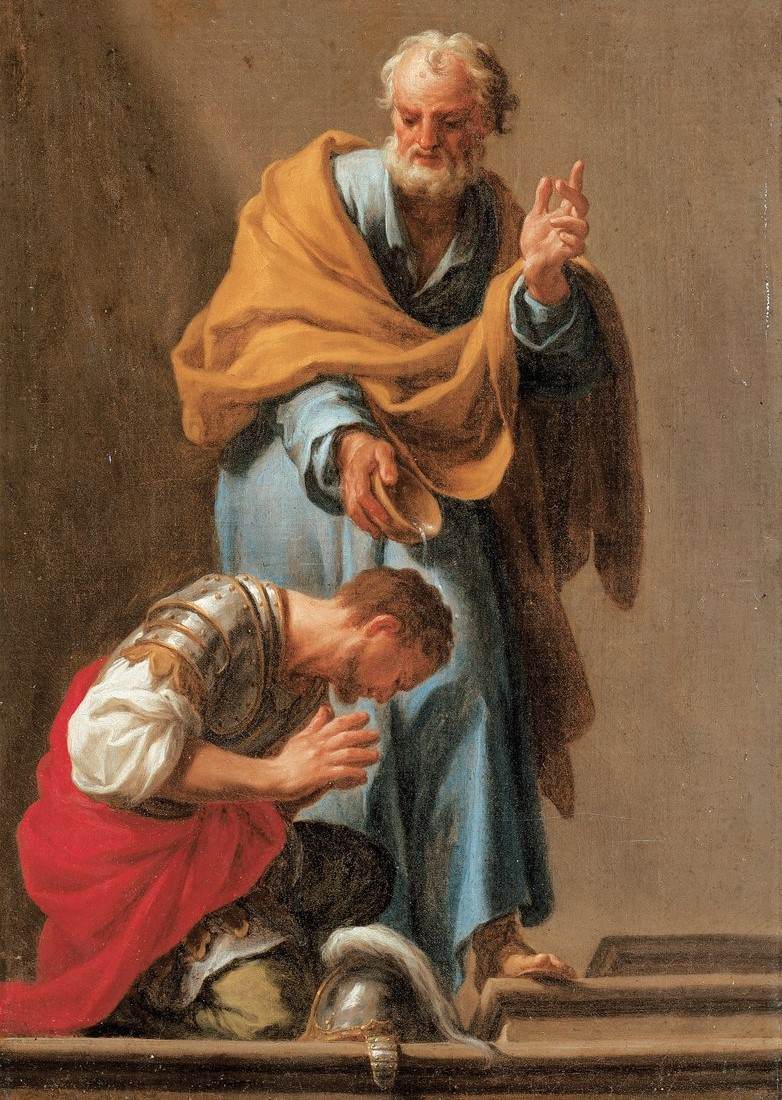
He then ordered that Cornelius and his household be baptized in the name of Jesus Christ.
The sequence is significant. The Gentiles heard the Gospel, received the Holy Spirit, and were baptized. Their reception into the Church was not based on their first adopting Jewish identity or undergoing circumcision.
Their baptism became a decisive sign that the Church’s mission was to embrace all nations.
8. The Baptism of Cornelius and His Household
The baptism of Cornelius is a major turning point in the history of the early Church.
Until this event, the relationship between the Jewish origins of Christianity and the wider Gentile world remained a matter of great importance. The disciples were learning how the promises of God to Israel related to the universal mission of Jesus Christ.
Cornelius’s baptism showed that Gentiles could receive the gift of the Holy Spirit and enter the Christian community without first becoming Jews.
Peter’s experience was not an isolated personal decision. In Acts 11:1–18, he later explained the events to the believers in Jerusalem, describing both visions and the outpouring of the Spirit.
His account helped the community recognize what God had done. The believers responded by glorifying God because He had granted repentance leading to life to the Gentiles as well.
The matter was also relevant to the wider debate about Gentile converts in Acts 15, where the apostles and elders considered whether Gentile believers should be required to observe the Mosaic law, particularly circumcision.
The Council of Jerusalem affirmed that Gentile Christians were not to be burdened with the requirement of circumcision as a condition of belonging to Christ.
The story of Cornelius therefore stands at the beginning of a decisive development in the Church’s understanding of her universal mission.
9. Cornelius and the Universal Mission of the Church
The conversion of Cornelius reveals a central truth of Christianity: the Gospel is intended for every nation and people.
Jesus had commanded His disciples to proclaim the Gospel to all nations (Matthew 28:19–20). The encounter in Caesarea demonstrates how the early Church began to live out this universal commission in a concrete and decisive way.
Cornelius was a Roman officer, a Gentile, and a person outside the Jewish covenant community. Yet God called him, heard his prayers, and led him to the apostolic proclamation of Jesus Christ.
His story challenges every form of religious exclusivism that places human boundaries where God is opening a path of grace.
It also challenges Christians to examine their own attitudes. We may be tempted to decide who deserves to be welcomed, who is capable of conversion, or who belongs within our communities. The story of Cornelius reminds us that God can be at work in people whose lives and backgrounds differ greatly from our own.
The Church does not create the universal reach of God’s invitation; she receives it from Christ and is sent to proclaim it faithfully.
10. The Spiritual Lessons of Saint Cornelius
A. Prayer Opens the Heart to God
Cornelius was a man who prayed continually. His prayerful life prepared him to recognize the importance of the angel’s message.
His example invites us to cultivate a regular life of prayer, not merely turning to God when we are desperate or afraid.
Prayer helps us become attentive to God’s presence and willing to respond to His direction.
B. Charity Is an Essential Expression of Faith
Cornelius did not separate worship from generosity. His concern for others was an integral part of his devotion to God.
Christian prayer must lead us towards greater love, compassion, and practical service. The needs of the poor, the lonely, the sick, and the marginalized are not distractions from spirituality; they are among the places where our love of God becomes visible.
C. God Can Work Beyond Our Expectations
Peter had to learn that God’s grace was reaching people he had previously regarded as outside the boundaries of his religious community.
The story calls us to humility. We must remain willing to learn, to examine our prejudices, and to recognize the ways in which the Holy Spirit may be working beyond our expectations.
D. Obedience Requires Courage
Cornelius acted upon the angel’s instruction without knowing the full outcome. Peter, too, accepted the invitation to visit a Gentile household.
Both men took steps that moved them beyond familiar circumstances.
Their example reminds us that following God may require courage, especially when His call challenges established habits or assumptions.
E. Faith Must Lead to Christ
Cornelius’s religious sincerity was important, but the narrative does not end with his prayers or generosity. It leads him to hear the Gospel, receive the Holy Spirit, and be baptized.
Christian life is not simply an effort to be a good person. It is a response to God’s grace through Jesus Christ, expressed in faith, conversion, baptism, and a life of discipleship.
F. The Gospel Is for Everyone
The story of Cornelius remains a call to missionary openness. No nation, language, social class, or cultural background places a person beyond the reach of God’s invitation.
Christians are called to share the Gospel with respect and love, recognizing the dignity of every person and allowing the Holy Spirit to guide their witness.
11. Saint Cornelius and the Church Today
The experience of Cornelius remains relevant to the Church in the contemporary world.
In multicultural societies, Christian communities often encounter people whose cultures, languages, religions, and life experiences differ from their own. The story of Acts 10 teaches that such encounters can become opportunities for genuine listening, conversion, and the discovery of God’s action.
The Church must remain faithful to the Gospel while resisting prejudice and unnecessary barriers that prevent people from hearing the good news of Jesus Christ.
Cornelius also reminds us that evangelization is not simply a human project. Peter did not plan the encounter independently, and Cornelius did not discover the Gospel by his own efforts alone. God was preparing both men, arranging their meeting, and confirming the mission through the Holy Spirit.
This is an important lesson for priests, missionaries, catechists, and all the baptized. We proclaim the Gospel, but it is God who opens hearts and brings forth the fruits of faith.
The story also encourages us to pray for those who are searching for God, to accompany them patiently, and to trust that sincere spiritual seeking can become the beginning of a deeper encounter with Christ.
12. Was Cornelius the First Gentile Christian?
Cornelius is traditionally recognized as the first Gentile convert whose reception into the Church is described in detail in the Acts of the Apostles.
A careful reading, however, should distinguish between the biblical narrative and broader historical claims.
The New Testament also records earlier encounters involving Gentiles who expressed faith in Jesus, including the Roman centurion whose servant Jesus healed (Matthew 8:5–13; Luke 7:1–10). These accounts do not explicitly state that the centurion was baptized or formally incorporated into the Church.
The significance of Cornelius’s story is more specific: it is the first extended account in Acts of a Gentile household receiving the Holy Spirit and baptism without first becoming Jewish converts.
His experience became a crucial precedent for the Church’s subsequent discernment about the admission of Gentiles.
13. What Happened to Cornelius After His Baptism?
The biblical account does not tell us what happened to Cornelius after the events of Acts 10–11.
Later Christian traditions associate him with further missionary work and, in some accounts, with episcopal ministry. However, these details are not established by the New Testament itself, and different traditions preserve different accounts.
It is therefore best to distinguish the historical foundation of his story from later traditions.
What Scripture clearly establishes is already remarkable: Cornelius was a God-fearing Roman officer whose conversion and baptism helped the early Church recognize the universal scope of the Gospel.
His lasting importance does not depend upon uncertain details about his later career or death.
14. Feast Day and Liturgical Commemoration
Saint Cornelius the Centurion is commemorated in some Christian calendars on 20 October. Eastern Christian traditions commonly commemorate him on 13 September.
Calendar dates and forms of commemoration vary among Christian traditions. The Roman Catholic liturgical calendar also contains a distinct Saint Cornelius: Pope Cornelius, a third-century pope and martyr, whose memorial is celebrated together with Saint Cyprian on 16 September.
These are two different saints and should not be confused.
For the biblical Cornelius, the central commemoration is the account of his conversion in Acts 10 and the Church’s recognition that God’s saving invitation extends to the Gentiles.
15. A Personal Spiritual Reflection
The story of Saint Cornelius invites us to ask a simple but profound question: Am I willing to allow God to lead me beyond the boundaries I have created?
Cornelius prayed faithfully, served others, and remained open to God’s voice. Yet God was calling him towards something more. He was invited to hear the Gospel and enter the community of believers through baptism.
Peter, meanwhile, discovered that he too needed to grow. The Lord was asking him to see other people in a new light and to recognize that divine grace could not be confined by his previous assumptions.
Both men had something to learn, and both responded to God’s initiative.
We can find ourselves in either of their experiences. Like Cornelius, we may be sincerely searching for God and waiting for greater clarity. Like Peter, we may need to let go of prejudices, fears, or expectations that prevent us from recognizing God’s work in others.
Saint Cornelius teaches us that prayer should make our hearts more receptive, charity should make our lives more generous, and faith should make us more willing to obey God.
His story also offers hope for families. Cornelius gathered his relatives and friends to hear Peter’s message. He wanted others to share in the blessing he was about to receive. His example encourages us to pray for our loved ones, bear witness through a life of goodness, and invite others towards Christ with patience and love.
Above all, Cornelius reminds us that the Holy Spirit is always at work, preparing hearts, opening doors, and leading people towards Jesus Christ.
May his example inspire us to pray faithfully, serve generously, welcome others without prejudice, and remain attentive to the voice of God.
16. Prayer to Saint Cornelius the Centurion
Saint Cornelius the Centurion, faithful servant of God, you sought the Lord with a sincere heart, persevered in prayer, and showed generosity towards those in need.
Through God’s providence, you were led to hear the Gospel proclaimed by Saint Peter and to receive the gift of the Holy Spirit.
Pray for us, that we may grow in faith, persevere in prayer, and express our love for God through generous service to others.
Help us to overcome prejudice, welcome those who are different from us, and recognize the dignity of every person. Teach us to listen attentively to God’s guidance and to respond with courage when He calls us to take a new step in faith.
Pray especially for our families, for those searching for God, and for all who are preparing to receive the sacraments of Christian initiation. May the Holy Spirit guide them towards a deeper relationship with Jesus Christ.
May our hearts remain open to God’s will, and may our lives bear witness to the universal love of Christ.
Saint Cornelius the Centurion, pray for us.
Amen.
Conclusion
Saint Cornelius the Centurion stands as an enduring witness to the universal mission of the Church. His conversion was not merely a personal spiritual experience; it became a decisive moment in the early Church’s recognition that the Gospel of Jesus Christ was intended for all peoples.
His life teaches us the importance of prayer, charity, humility, obedience, and openness to the Holy Spirit. His encounter with Saint Peter also reminds us that conversion is not always limited to those who are newly discovering the faith. Even committed believers may need to allow God to transform their understanding and broaden their hearts.
The story of Cornelius continues to proclaim that God’s grace reaches across human boundaries and calls people everywhere to salvation in Jesus Christ.
May Saint Cornelius inspire us to become people of sincere prayer, generous love, and courageous faith, always ready to welcome the work of the Holy Spirit.
References and Further Reading
Biblical References
- Acts 10:1–8 — Cornelius’s faith, prayer, almsgiving, and vision of the angel.
- Acts 10:9–23 — Peter’s vision and the arrival of Cornelius’s messengers.
- Acts 10:24–33 — Cornelius welcomes Peter and gathers his household.
- Acts 10:34–43 — Peter proclaims Jesus Christ.
- Acts 10:44–48 — The Holy Spirit descends upon Cornelius and his household, who are baptized.
- Acts 11:1–18 — Peter explains the conversion of the Gentiles to the Jerusalem community.
- Acts 15:7–11 — The apostles discuss God’s acceptance of the Gentiles.
- Matthew 28:19–20 — Jesus commissions His disciples to make disciples of all nations.
Further Reading
- The Holy Bible — Acts of the Apostles, Chapter 10, United States Conference of Catholic Bishops: https://bible.usccb.org/bible/acts/10
- Cornelius, Catholic Encyclopedia, New Advent: https://www.newadvent.org/cathen/04375b.htm
- A Double Dynamic of Conversion: Peter and Cornelius (Acts 10), Vatican website: https://press.vatican.va/content/salastampa/it/bollettino/pubblico/2021/09/07/0540/01156.pdf
- The Conversion of Cornelius, Catholic Bible study resource: https://www.catholic-bible.org/acts/acts-10.htm
- Saint Cornelius the Centurion, National Catholic Register: https://www.ncregister.com/blog/st-cornelius-a-centurion-who-prayed-to-god-constantly
- Cornelius the Centurion, The Episcopal Church: https://www.episcopalchurch.org/glossary/cornelius-the-centurion/
Leave a Reply