
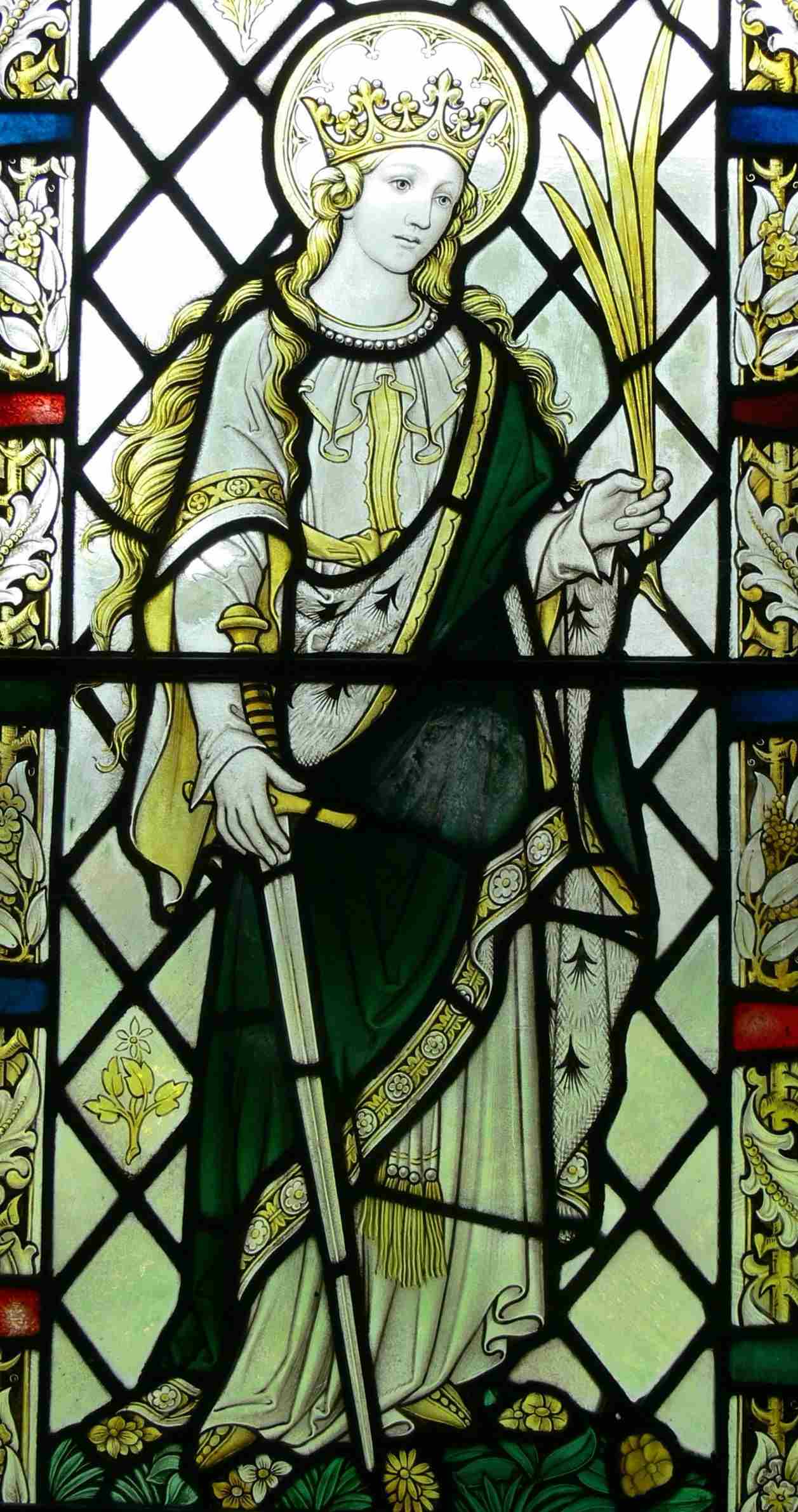
Introduction
Saint Winifred of Wales, also known as Saint Winefride or Gwenffrewi, is one of the most beloved Welsh saints. Remembered for her purity, courage, devotion to Christ, and miraculous healing power, she occupies a special place in the religious and cultural history of Wales. Her story is closely associated with Holywell in Flintshire, where a remarkable spring, traditionally believed to have appeared at the place of her martyrdom, became one of the most celebrated pilgrimage destinations in Britain.
Saint Winifred’s life combines the themes of Christian virginity, martyrdom, forgiveness, perseverance, and miraculous healing. For centuries, pilgrims have travelled to her holy well seeking physical healing, spiritual renewal, and the grace to remain faithful to God amid suffering.
Although many details of her life come from medieval hagiographical traditions rather than contemporary historical records, her enduring veneration reveals the profound influence she has had on Welsh Christianity.
1. Historical Background and Early Life
Saint Winifred is traditionally believed to have lived during the seventh century in Wales, probably during the period when Christianity was flourishing through the missionary work of Welsh monastic communities.
She was born into a noble Christian family. Her father is traditionally identified as Tyfid ap Eiludd, a local chieftain, and her mother as Gwenlo, who was associated with the family of Saint Beuno, one of the prominent Welsh missionary saints.
Winifred was raised in a deeply Christian environment. From her childhood, she received religious instruction and developed a strong love for prayer, purity, and the teachings of Jesus Christ.
According to her traditional biography, Saint Beuno became her spiritual teacher and guide. Under his influence, she grew in holiness and developed a desire to dedicate her life entirely to God.
Her story presents her as a young woman who understood that her greatest treasure was not earthly beauty, social position, or material comfort, but her relationship with Christ.
2. The Attack on Her Chastity
The most famous episode in Saint Winifred’s life concerns an assault by a powerful young man traditionally named Caradog.
According to medieval accounts, Caradog became attracted to Winifred and attempted to persuade her to abandon her religious commitment and accept his advances. Winifred firmly rejected him, explaining that she wished to preserve her virginity and dedicate herself to God.
Her refusal enraged Caradog. In a violent act, he attacked her and severed her head.
The traditional account places this terrible event at a location near the present-day town of Holywell in Flintshire, Wales.
The story presents Winifred as a young woman who refused to surrender her Christian convictions even when faced with violence and death. Her courage became an enduring symbol of fidelity to God and the dignity of women.
3. The Miracle of Her Restoration to Life
The traditional account relates that Saint Beuno, who was nearby, discovered what had happened. Deeply saddened by the violence committed against his young disciple, he took her severed head, placed it against her body, and prayed fervently to God.
According to the legend, Winifred was miraculously restored to life. A fine white scar remained around her neck as a permanent sign of the terrible violence she had suffered.
At the place where her head had fallen, a spring of water is said to have appeared. Its waters became associated with miraculous healings and spiritual blessings. The location came to be known as Holywell, and the spring became famous as Saint Winifred’s Well.
This extraordinary event became the central episode in her medieval biography. It also established the connection between Saint Winifred and the Christian tradition of pilgrimage to holy wells.
The miracle was understood by generations of Christians as a sign of God’s power over death and suffering. Winifred’s restoration to life also became a powerful testimony to the belief that fidelity to Christ is never forgotten by God.
4. Her Consecration to God
Following her miraculous restoration, Winifred remained faithful to her original desire to dedicate her life entirely to Christ.
According to tradition, she renewed her commitment to virginity and embraced a life of prayer, simplicity, and religious discipline. Rather than allowing her terrible experience to turn her towards bitterness, she devoted herself more completely to God.
A religious community was established at Holywell, where Winifred became associated with the formation of women in the consecrated life.
Her spiritual journey eventually took her to Gwytherin, in North Wales. There she joined a religious community under the spiritual guidance of Saint Eleri, also known as Saint Elwy.
Winifred lived a life of prayer, obedience, humility, and service. After the death of the community’s earlier superior, she is traditionally said to have become its abbess.
Her life as a religious superior demonstrated that holiness is not confined to extraordinary miracles or dramatic moments of suffering. It is also cultivated through ordinary faithfulness, responsibility, prayer, and love.
5. Her Life as an Abbess
As abbess, Saint Winifred became a spiritual mother to the women entrusted to her care.
She encouraged her companions to live according to the Gospel, persevere in prayer, practise humility, and remain faithful to their religious vocation.
Her community followed the ideals of early Welsh monastic Christianity, which emphasised prayer, asceticism, communal life, and service to God.
Although the surviving accounts provide limited reliable information about the details of her administration, her reputation as a holy religious leader became an important part of her spiritual legacy.
Saint Winifred’s life reminds us that Christian leadership is fundamentally a ministry of service. An authentic spiritual leader does not seek personal honour but helps others discover the presence of God in their lives.
She spent her remaining years in Gwytherin, where she eventually died, traditionally on 3 November around the year 660.
6. Saint Winifred’s Well: A Famous Centre of Pilgrimage
The Catholic Shrines of England & Wales
St Winefride’s Well – Greenfield Valley
St. Winefride’s Well & Shrine – All You SHOULD Know Before Going (2026 Reviews)
One of the most remarkable aspects of Saint Winifred’s legacy is the holy well associated with her name.
Saint Winifred’s Well is situated in Holywell, Flintshire, North Wales. It is traditionally believed to have originated at the place where her head fell after the attack by Caradog.
For centuries, the well has attracted pilgrims seeking healing, consolation, and spiritual renewal. Its waters have been associated with numerous accounts of miraculous cures.
The shrine became one of the most important pilgrimage destinations in medieval Wales. Its reputation extended beyond the Welsh borders, attracting pilgrims from different parts of Britain and Europe.
The well is particularly remarkable because of its long history of Christian pilgrimage. The Catholic Bishops’ Conference of England and Wales describes it as the oldest continually visited pilgrimage site in Britain. Catholic Bishops’ Conference+1
The present chapel, with its distinctive late-medieval architecture, reflects the importance attached to this sacred place. The spring flows into a beautifully constructed stone basin and continues into an outdoor bathing pool.
Even today, pilgrims visit the well to pray, seek the intercession of Saint Winifred, and reflect upon the healing power of God.
It is important to understand that Catholics do not regard the water itself as possessing independent supernatural power. Rather, the faithful seek God’s grace, sometimes through the intercession of saints and through the devotional use of sacred places and objects.
Saint Winifred’s Well therefore represents a centuries-old expression of Christian faith, hope, and devotion.
7. The Translation of Her Relics to Shrewsbury
Saint Winifred’s reputation grew considerably during the Middle Ages.
In 1138, her relics were transferred from Gwytherin to Shrewsbury Abbey in England. This event played a major role in spreading her devotion beyond Wales.
Robert, the prior of Shrewsbury, became closely associated with the promotion of her cult and composed an important medieval account of her life and miracles.
Her shrine at Shrewsbury attracted many pilgrims, and the abbey became an important centre of devotion to the Welsh saint.
The veneration of Saint Winifred continued to flourish throughout the medieval period. Her name became associated with healing, protection, purity, and the courage of Christian women.
However, her shrine at Shrewsbury was destroyed during the English Reformation in the sixteenth century. The destruction of the shrine did not bring an end to her devotion. Holywell continued to preserve her memory and remained a place of pilgrimage. Dictionary of Welsh Biography+1
8. Historical Reliability of Her Life
The story of Saint Winifred has been preserved through medieval religious biographies, traditionally called vitae. These accounts provide the foundation for what is known about her life.
However, it is important to distinguish between historical evidence and devotional tradition.
The earliest surviving accounts of her life were composed centuries after the period in which she is believed to have lived. Two important medieval Lives date from around the twelfth century. One is associated with the Welsh tradition of Pseudo-Elerius, while another was written by Robert, Prior of Shrewsbury, following the translation of her relics in 1138.
The Dictionary of Welsh Biography notes that these twelfth-century accounts are the principal basis for the traditional narrative. It also acknowledges her association with Saint Beuno’s cult in north-eastern Wales and her later connection with Gwytherin and Saint Eleri. Dictionary of Welsh Biography+1
Consequently, the precise details of the attack, the miraculous restoration to life, and the chronology of her life cannot be independently established by contemporary historical documentation.
Nevertheless, her longstanding veneration and the historical development of her pilgrimage sites are well documented.
The Church preserves her memory as a saint whose story has inspired generations of Christians.
9. Spiritual Significance and Lessons from Her Life
Saint Winifred’s life offers several important lessons for Christians today.
1. Fidelity to God Above Everything
Winifred refused to abandon her commitment to Christ even when confronted with violence and the threat of death. Her story reminds us that faithfulness to God must remain stronger than the pressures and temptations of the world.
Every Christian is called to remain faithful to the Gospel, even when doing so requires sacrifice.
2. The Dignity of Women
Saint Winifred’s story is also a powerful reminder of the dignity and freedom of women. Her refusal to submit to an act of violence was an expression of her personal convictions and her commitment to God.
Her memory invites Christians to defend the dignity of every human person, particularly those who suffer violence, exploitation, abuse, and injustice.
3. Forgiveness Instead of Hatred
One of the spiritual lessons traditionally associated with Winifred is the importance of responding to suffering with faith rather than hatred.
Her story directs our attention away from revenge and towards the transforming power of God’s grace.
Christians are called to forgive, not because injustice is insignificant, but because hatred must never be allowed to become the master of the human heart.
4. The Healing Power of God
The association of Saint Winifred with miraculous healing has made her especially beloved among those who suffer from physical illnesses and emotional difficulties.
Her holy well became a place where generations of pilgrims brought their pain, fears, and hopes.
Her example reminds us that God remains close to those who suffer. Even when physical healing does not take place, the Lord can grant spiritual strength, peace, courage, and hope.
5. The Beauty of Consecrated Life
Winifred’s decision to dedicate her life to prayer and religious service demonstrates the beauty of a life completely surrendered to God.
Her example is particularly meaningful for priests, religious sisters, and all those who have embraced a vocation of consecrated service.
She reminds us that holiness is not measured by public recognition but by the depth of our love for God and our fidelity to our vocation.
10. Feast Day and Veneration
Icon of St. Winifred – (1WN10) – Uncut Mountain Supply
Saint Winifred of Wales
- Feast day: 3 November
- Also known as: Saint Winefride, Gwenfrewi
- Era: Seventh century
- Associated places: Holywell and Gwytherin, Wales
- Known for: Virginity, martyrdom tradition, healing and religious life
- Traditional patronage: Holywell and those seeking healing
Saint Winifred is particularly venerated in Wales, especially at Holywell, where her holy well continues to attract pilgrims.
Her principal feast is celebrated on 3 November, traditionally associated with the date of her death.
Her memory has also been preserved through churches, chapels, religious institutions, medieval manuscripts, and works of Christian art.
Her story remains an important part of Welsh Catholic heritage and the wider history of Christianity in Britain.
11. Prayer to Saint Winifred of Wales
Saint Winifred, faithful servant of Christ and witness to the power of God’s grace, intercede for us before the throne of Almighty God.
You remained faithful to your vocation even in the face of violence and suffering. Obtain for us the courage to remain steadfast in our Christian faith and the strength to overcome every temptation that draws us away from God.
Pray for all women who suffer violence, injustice, exploitation, and persecution. May they experience the protection, dignity, and freedom that God desires for every human person.
Pray for the sick, the suffering, and all those who seek healing. May the Lord grant them physical restoration according to His holy will and, above all, the peace and strength that come from His presence.
Help us to grow in purity of heart, humility, forgiveness, and love. May our lives become a beautiful offering to God, just as you dedicated your life entirely to Christ.
Saint Winifred, faithful virgin and servant of God, pray for us.
Amen.
12. A Reflection for Our Lives
The story of Saint Winifred invites us to reflect on a fundamental question: How deeply are we committed to God?
In a world where personal convictions are frequently challenged and Christian values are sometimes misunderstood, her example reminds us that faith requires courage. She did not allow the violence committed against her to destroy her commitment to Christ. Her life became a testimony to the enduring power of faith.
There is another beautiful dimension to her story. After experiencing terrible suffering, Winifred did not withdraw from the service of God. She continued her spiritual journey and eventually became a religious leader, guiding others towards holiness.
This is a particularly meaningful message for those who have experienced painful moments in life. Our wounds do not have to become the end of our story. With God’s grace, even our most difficult experiences can become opportunities for deeper faith, compassion, and spiritual growth.
The spring associated with Saint Winifred has continued to welcome pilgrims for centuries. It stands as a beautiful symbol of the hope that flows from faith in Christ.
May Saint Winifred inspire us to remain faithful in adversity, courageous in defending what is right, compassionate towards those who suffer, and generous in serving God.
May her intercession help us discover that true holiness consists not in escaping every suffering but in remaining united with Christ through every circumstance of life.
Saint Winifred of Wales, pray for us!
References and Further Reading
1. Catholic Encyclopedia – St. Winefride. Historical and traditional account of her life, religious vocation, and miracles.
https://www.newadvent.org/cathen/15656a.htm
2. Dictionary of Welsh Biography – Gwenfrewi, or Winifred. Scholarly discussion of her historical background, medieval biographies, and veneration.
https://biography.wales/article/s-GWEN-FFR-0600.html
3. Catholic Bishops’ Conference of England and Wales – Wales’ National Shrine of St Winefride. Information about the saint and her shrine at Holywell.
https://www.cbcew.org.uk/home/our-work/pilgrimage/wales-national-shrine-of-st-winefride/
4. Cadw – St Winefride’s Chapel and Well. Historical and architectural information about the medieval shrine and pilgrimage tradition.
https://cadw.gov.wales/visit/places-to-visit/st-winefrides-chapel-and-well
5. Colin Haydon – St Winifred, Bishop Fleetwood and Jacobitism. Studies in Church History, Cambridge University Press, 2016.
https://doi.org/10.1017/S0424208400001030
6. James Ryan Gregory – The Life of St. Winifred. Medieval Feminist Forum, 2016. An edition, introduction, and translation of a medieval Latin Life of the saint.
7. The National Churches Trust – St Winefride’s Well Shrine, Holywell. Historical information about the shrine and its pilgrimage tradition.
https://www.nationalchurchestrust.org/church/st-winefrides-well-shrine-holywell
Leave a Reply