
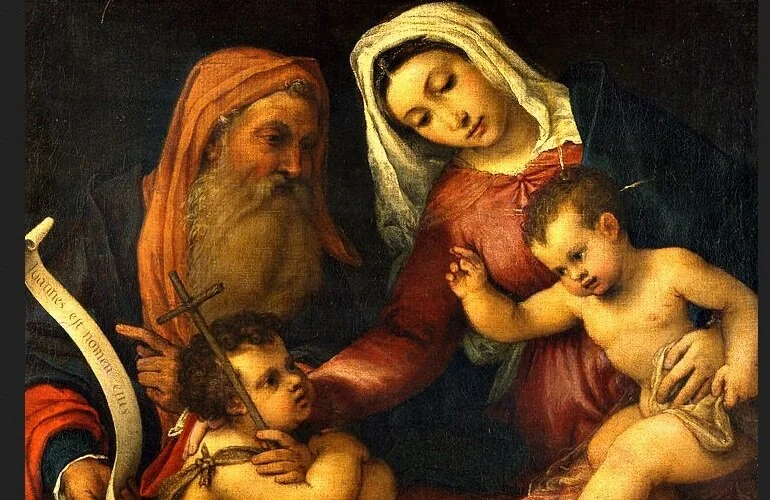
Feast Day: November 5 (traditional Western devotional calendar)
Patronage: Saint Elizabeth is traditionally invoked by expectant mothers, mothers, and women experiencing difficulties in childbirth. Saints Elizabeth and Zechariah are honoured as models of faithful marriage, prayer, patience, and trust in God’s promises.
Introduction
Among the beautiful figures who appear in the opening chapters of the Gospel of Luke, Saints Elizabeth and Zechariah hold a special place. They were an elderly couple who remained faithful to God despite years of disappointment and the sorrow of having no children. Their story is one of patient prayer, steadfast faith, divine intervention, and the extraordinary joy of welcoming a child who would prepare the way for the Saviour.
They were the parents of Saint John the Baptist, the great prophet who proclaimed the coming of Jesus Christ and called people to repentance. Their lives remind us that God’s plans are never limited by human weakness, age, disappointment, or seemingly impossible circumstances.
The Gospel describes both of them as righteous before God, observing His commandments and ordinances faithfully (Luke 1:6). Their holiness was not expressed through extraordinary public achievements but through their quiet fidelity to God in their ordinary lives.
Through their son, John the Baptist, they became closely connected with the great mystery of salvation and the coming of Jesus Christ.
1. Saint Zechariah: A Faithful Priest of God
Saint Zechariah was a Jewish priest belonging to the priestly division of Abijah. He lived during the reign of King Herod in Judea. His wife, Elizabeth, was also descended from a priestly family, being a daughter of Aaron.
Zechariah faithfully performed his priestly duties and served God in the Temple of Jerusalem. His life was marked by prayer, religious observance, and devotion to the Lord.
Although he was a righteous man, his personal life carried a deep sorrow. He and his wife had no children, and both had grown old. In the society of that time, childlessness was often regarded as a source of shame and humiliation. Nevertheless, Zechariah and Elizabeth continued to trust in God.
One day, Zechariah’s priestly division was serving in the Temple. By lot, he was chosen to enter the sanctuary and offer incense before the Lord. While the people prayed outside, Zechariah entered the holy place to perform this sacred duty.
It was during this moment of prayer and worship that something extraordinary happened.
2. The Angel Gabriel Announces the Birth of John
While Zechariah was offering incense, an angel of the Lord appeared to him, standing at the right side of the altar of incense.
Zechariah was deeply troubled and frightened by the heavenly vision. But the angel spoke words of reassurance:
“Do not be afraid, Zechariah, because your prayer has been heard. Your wife Elizabeth will bear you a son, and you shall name him John.” (Luke 1:13)
The angel continued to explain that the child would bring joy and gladness to his parents and that many would rejoice at his birth. He would be great in the sight of the Lord, filled with the Holy Spirit even before his birth, and would turn many people back to God.
The angel also revealed the special mission entrusted to this child. He would go before the Lord in the spirit and power of Elijah, preparing a people for the coming of the Messiah.
This announcement was extraordinary. Zechariah and Elizabeth were already advanced in age, and humanly speaking, the possibility of having a child seemed impossible.
Zechariah struggled to believe the angel’s message. He asked:
“How shall I know this? For I am an old man, and my wife is advanced in years.” (Luke 1:18)
The angel identified himself as Gabriel, who stands in the presence of God, and declared that Zechariah would become unable to speak until the promise was fulfilled because he had not believed the message.
When Zechariah came out of the sanctuary, he could not speak to the waiting people. They understood that he had experienced a heavenly vision.
The priest who had entered the Temple to offer incense emerged carrying a mysterious sign of God’s intervention.
3. Saint Elizabeth: A Woman of Faith and Hope
Saint Elizabeth was a descendant of Aaron and the wife of Zechariah. The Gospel presents her as a righteous woman who faithfully observed God’s commandments.
Her life was marked by a long period of waiting. She had endured the sorrow of childlessness and the difficulties associated with growing old without receiving the blessing of motherhood.
Yet Elizabeth did not abandon her faith.
After the angel’s announcement, she conceived a child. She withdrew from public life for five months and praised God for His mercy.
She said:
“So has the Lord done for me at a time when he has seen fit to take away my disgrace before others.” (Luke 1:25)
Elizabeth’s experience reveals the tenderness of God towards those who suffer silently. Her story is especially meaningful for couples who experience the pain of infertility, women who long for motherhood, and families who wait for an answer to their prayers.
Her life teaches us that a delayed answer is not necessarily a forgotten prayer. God’s time and human time are not always the same.
Elizabeth became a mother when everyone believed that motherhood was no longer possible. Her child was not merely an answer to her personal longing but a special instrument in God’s plan of salvation.
4. The Visitation: Elizabeth Welcomes the Blessed Virgin Mary
One of the most beautiful moments in the life of Saint Elizabeth is her encounter with the Blessed Virgin Mary.
After receiving the announcement from the angel Gabriel that she would become the Mother of Jesus, Mary learned that Elizabeth, her relative, was also expecting a child despite her advanced age.
Mary immediately set out and travelled to the hill country of Judea to visit Elizabeth.
When Mary entered the house of Zechariah and greeted Elizabeth, an extraordinary event took place. The child in Elizabeth’s womb leaped for joy, and Elizabeth was filled with the Holy Spirit.
Recognising the extraordinary mystery taking place in Mary, Elizabeth exclaimed:
“Most blessed are you among women, and blessed is the fruit of your womb.” (Luke 1:42)
She continued:
“And how does this happen to me, that the mother of my Lord should come to me?” (Luke 1:43)
Elizabeth recognised Mary not simply as a relative but as the mother of her Lord. Even before the birth of Jesus, she acknowledged His divine presence.
She also praised Mary’s faith:
“Blessed are you who believed that what was spoken to you by the Lord would be fulfilled.” (Luke 1:45)
These words are particularly significant because they reveal Elizabeth’s spiritual insight. Filled with the Holy Spirit, she recognised God’s work in Mary’s life and responded with humility, joy, and gratitude.
The meeting of these two holy women is celebrated in the Catholic Church as the Feast of the Visitation of the Blessed Virgin Mary on May 31.
It is also a beautiful reminder of Christian friendship, mutual encouragement, and the joy of sharing God’s blessings with others.
5. The Birth of Saint John the Baptist
When the time came, Elizabeth gave birth to a son.
Her neighbours and relatives heard that the Lord had shown great mercy towards her, and they rejoiced with her.
On the eighth day, the child was brought for circumcision. The people expected him to be named after his father, Zechariah. However, Elizabeth insisted:
“No. He will be called John.” (Luke 1:60)
The people were surprised because no one in their family had that name. They turned to Zechariah and asked him what the child should be called.
Still unable to speak, Zechariah requested a writing tablet and wrote:
“John is his name.” (Luke 1:63)
Immediately, his mouth was opened, his tongue was freed, and he began to speak, blessing God.
The name John, meaning “The Lord is gracious” or “Yahweh has shown favour,” was given according to the angel’s instruction.
The restoration of Zechariah’s speech marked the fulfilment of God’s promise. His first response was not complaint or explanation but praise and thanksgiving.
The birth of John was a moment of joy not only for his parents but also for the entire community.
6. The Benedictus: Zechariah’s Song of Praise
After his speech was restored, Zechariah was filled with the Holy Spirit and proclaimed a beautiful hymn of praise known as the Benedictus.
This canticle is recorded in Luke 1:68–79 and is traditionally prayed every morning in the Church’s Liturgy of the Hours.
It begins:
“Blessed be the Lord, the God of Israel, for he has visited and brought redemption to his people.” (Luke 1:68)
Zechariah praised God for remembering His covenant and fulfilling the promises made to the people of Israel.
He then turned towards his newborn son and prophesied about his mission:
“And you, child, will be called prophet of the Most High, for you will go before the Lord to prepare his ways.” (Luke 1:76)
Zechariah understood that his son would have a unique responsibility. John would prepare the hearts of people to receive the Messiah by proclaiming repentance and forgiveness of sins.
The Benedictus is a prayer of thanksgiving, hope, and salvation. It celebrates God’s faithfulness and the dawn of a new chapter in salvation history.
Through this canticle, Zechariah reminds every believer that God’s promises remain trustworthy even when their fulfilment seems delayed.
7. The Parents of the Forerunner of Christ
Saints Elizabeth and Zechariah were entrusted with the responsibility of raising John the Baptist, the man who would prepare the way for Jesus.
John grew up to become a powerful preacher of repentance. He called people to turn away from sin, baptised them in the Jordan River, and announced the coming of the Kingdom of God.
He courageously confronted injustice and called even powerful people to conversion. Eventually, he gave his life as a martyr for the truth.
Jesus Himself honoured John with extraordinary words:
“Among those born of women there has been none greater than John the Baptist.” (Matthew 11:11)
Behind this great prophet stood two faithful parents who had received him as a gift from God.
Although the Bible does not provide extensive details about their later lives, their importance in salvation history is unmistakable. They were part of the family through whom God prepared the way for the coming of His Son.
Their son would eventually point to Jesus and proclaim:
“Behold, the Lamb of God, who takes away the sin of the world.” (John 1:29)
8. The Spiritual Lessons from Saints Elizabeth and Zechariah
The lives of these two saints offer several important lessons for Christians today.
1. Never Lose Hope in Prayer
Zechariah and Elizabeth prayed and waited for many years. Their experience reminds us that no sincere prayer is forgotten by God.
Sometimes we become discouraged because our prayers are not answered according to our expectations. Their story encourages us to remain faithful even when we cannot understand God’s timing.
2. God Can Work Beyond Human Limitations
Elizabeth’s advanced age and years of childlessness seemed to make motherhood impossible. Yet God brought new life into her family.
Their story reminds us that God’s power is greater than human limitations. What appears impossible to us is never beyond His power.
3. Faith Requires Trust
Zechariah struggled to believe the angel’s announcement. His temporary silence became an opportunity for reflection and a reminder that God’s word deserves our trust.
His eventual response was a beautiful proclamation of praise.
We, too, are invited to move from doubt towards deeper faith.
4. A Holy Marriage Is a Journey of Faith
Elizabeth and Zechariah remained faithful to each other and to God through years of disappointment.
Their marriage teaches us the importance of mutual support, patience, prayer, and perseverance. A Christian marriage is not free from suffering, but it can become a place where faith grows stronger through every difficulty.
5. Rejoice in the Blessings of Others
Elizabeth welcomed Mary with genuine joy. She did not become jealous or compare her blessings with Mary’s extraordinary vocation.
Instead, she recognised God’s work in another person’s life and celebrated it.
Her example teaches us to rejoice when others receive blessings, opportunities, and answered prayers.
6. Prepare the Way for Jesus
Just as John was entrusted with preparing the way for Christ, every Christian is called to prepare hearts to receive Jesus.
Through prayer, good example, forgiveness, and loving service, we can help others encounter Christ.
The greatest legacy parents can leave their children is not wealth or social status but a living faith and a sincere love for God.
9. Saints Elizabeth and Zechariah as Models for Christian Families
The family of Elizabeth, Zechariah, and John the Baptist offers a beautiful model for Christian households.
Their home became a place where God’s promises were fulfilled and where a child was prepared for a sacred mission.
Their example encourages parents to make their homes places of prayer, faith, forgiveness, and love. Children are gifts entrusted to parents by God, and the responsibility of raising them in faith is among the most important Christian vocations.
They also remind elderly couples that their lives continue to have meaning and purpose. God’s plans for a person do not end with age, retirement, or physical limitations.
Their story is particularly encouraging for couples who are waiting for children, families experiencing difficulties, and those who feel that their prayers have remained unanswered.
Saints Elizabeth and Zechariah teach us that God never abandons those who remain faithful to Him.
10. Devotion and Patronage
Saint Elizabeth is traditionally honoured as a patroness of expectant mothers and women approaching childbirth. She is also remembered by those praying for the gift of children and for a safe pregnancy and delivery.
Saint Zechariah is honoured as a model of priestly devotion, prayer, and faithfulness to God’s word.
Together, they are especially meaningful intercessors for:
- Married couples longing for the gift of children.
- Women experiencing difficulties during pregnancy.
- Expectant mothers and families awaiting childbirth.
- Parents praying for the faith and future of their children.
- Elderly people who seek renewed hope and purpose.
- Priests and those dedicated to God’s service.
- Families experiencing trials and uncertainty.
Their lives invite us to bring our family concerns before God with confidence and perseverance.
11. Prayer to Saints Elizabeth and Zechariah
Saints Elizabeth and Zechariah, faithful servants of God and blessed parents of Saint John the Baptist, we turn to you with confidence and devotion.
You experienced years of waiting, disappointment, and uncertainty, yet you never abandoned your trust in God. Through your intercession, help us remain faithful during difficult moments and patient when our prayers seem unanswered.
Pray for married couples who long for the gift of children. Intercede for expectant mothers, unborn babies, and families facing difficulties during pregnancy and childbirth.
Bless our homes with love, understanding, forgiveness, and peace. Help parents raise their children in the knowledge and love of Jesus Christ. Pray especially for priests, religious, and all those who dedicate their lives to preparing the way for the Lord.
Saint Elizabeth, teach us to recognise the presence of God in our lives and to rejoice in His blessings.
Saint Zechariah, teach us to trust in God’s promises and to proclaim His goodness through our words and actions.
May our families become places where faith flourishes, hope is renewed, and Christ is welcomed with love.
Through Jesus Christ our Lord.
Amen.
12. A Reflection for the Feast of Saints Elizabeth and Zechariah
The story of Elizabeth and Zechariah speaks to every heart that has experienced waiting.
There are moments in life when we pray sincerely but see no immediate answer. We wait for a child, a healing, a reconciliation, a job, a vocation, or a breakthrough in our family. As the years pass, we may begin to wonder whether God has forgotten us.
Elizabeth and Zechariah remind us that God has not forgotten.
Their story does not promise that every prayer will be answered in precisely the way we desire. Rather, it teaches us that God’s presence and faithfulness remain with us even during seasons of uncertainty.
What is particularly beautiful about this couple is that their faithfulness preceded their miracle. They were righteous before God even when their deepest desire remained unfulfilled.
Their encounter with Mary also offers another important lesson. Elizabeth recognised God’s extraordinary work in another person and rejoiced. She teaches us to celebrate the blessings of others without jealousy or comparison.
Today, let us ask ourselves: Do we continue to trust God when life does not happen according to our plans? Do we support one another in our families? Do we recognise God’s blessings in the lives of others?
May Saints Elizabeth and Zechariah teach us to wait with hope, love with generosity, and serve God faithfully.
Their story reminds us that a life lived faithfully with God is never wasted, and that His grace can bring new hope even in the most unexpected moments.
References and Further Reading
Biblical References
- Luke 1:5–25 – The announcement of the birth of John.
- Luke 1:26–38 – The Annunciation to Mary.
- Luke 1:39–45 – The Visitation of Mary and Elizabeth.
- Luke 1:46–56 – The Magnificat.
- Luke 1:57–66 – The birth and naming of John the Baptist.
- Luke 1:67–79 – The Benedictus of Zechariah.
- Matthew 11:7–15 – Jesus’ testimony concerning John the Baptist.
- John 1:19–34 – John bears witness to Jesus.
Further Reading
- The Gospel according to Luke – United States Conference of Catholic Bishops
- The New American Bible – Vatican Archives
- Saints Elizabeth and Zechariah – University of Notre Dame
Note on the feast: November 5 is a traditional Western date associated with the joint commemoration of Elizabeth and Zechariah. Liturgical dates vary across calendars and traditions; the Roman Martyrology also records their commemoration on September 23.
Leave a Reply