
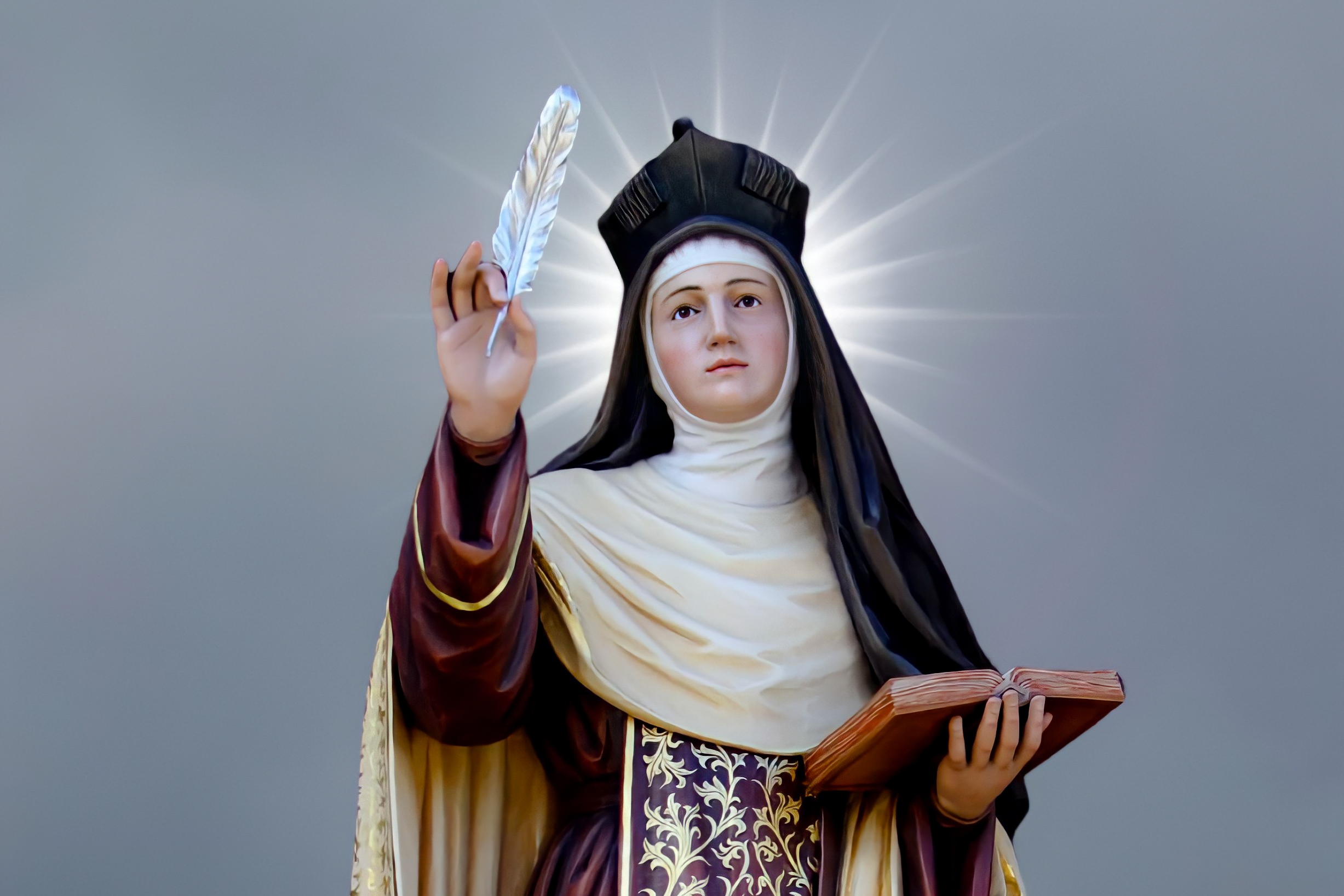
A Detailed and Systematic Summary
1. Introduction
The Constitutions (Constituciones) of Saint Teresa of Ávila is a foundational document for understanding the practical organization, spiritual discipline, and communal life of the Discalced Carmelite nuns established through Teresa’s reform of the Carmelite Order.
While Teresa’s major spiritual works, such as The Way of Perfection and The Interior Castle, explore the life of prayer and the soul’s relationship with God, the Constitutions addresses a complementary question: How should a religious community be organized so that its members can live faithfully, grow in holiness, and devote themselves to prayer?
Teresa did not regard religious life as a collection of external rules. For her, the purpose of a convent was to create an environment in which women could seek God through prayer, fraternal charity, evangelical poverty, humility, and obedience.
The Constituciones gives practical expression to these convictions. It addresses the daily responsibilities of a Carmelite community, the conduct of its members, the duties of superiors, the administration of material goods, and the observance of religious discipline.
The document should be understood within its historical setting. Teresa lived in sixteenth-century Spain, a period marked by ecclesiastical reform, social hierarchy, and strict expectations concerning religious life. Her legislation sought to establish communities in which contemplative prayer and fidelity to the Carmelite vocation would remain central.
2. Historical Background
Saint Teresa of Ávila (1515–1582) began her reform of the Carmelite Order at a time when she desired a more intense and faithful observance of religious life.
In 1562, she founded the convent of St Joseph in Ávila. This foundation became a model for the communities that emerged from her reform. Teresa sought a simpler form of Carmelite life, characterized by prayer, poverty, solitude, and a small, closely united community.
Her experience convinced her that spiritual aspirations needed practical structures. A convent could not flourish through good intentions alone. It required clear responsibilities, common discipline, wise leadership, and a shared commitment to its vocation.
The Constituciones developed within this context. It helped establish the pattern of life that Teresa wished her reformed Carmelite communities to follow.
The document also reflects the influence of the Carmelite tradition, the Church’s established rules for religious communities, and the practical lessons Teresa learned while founding and governing convents.
It is important to distinguish Teresa’s own constitutional legislation from later revisions and the constitutions that govern the Discalced Carmelite Order today. The modern order’s legal documents have developed over centuries and should not be treated as identical to Teresa’s original text.
3. The Principal Purpose of the Constitutions
The central purpose of the Constituciones is to safeguard the spiritual character of the Carmelite vocation through an orderly common life.
Teresa understood that contemplation requires more than private devotion. It flourishes in a community where members support one another, live simply, respect legitimate authority, and remain faithful to prayer.
The Constitutions therefore seeks to:
- Preserve the contemplative character of Carmelite life.
- Establish a common pattern of prayer and religious observance.
- Encourage evangelical poverty and simplicity.
- Promote humility, obedience, and fraternal charity.
- Regulate the responsibilities of superiors and other community members.
- Ensure responsible administration of the convent’s resources.
- Protect the community from unnecessary distractions and worldly ambitions.
- Foster a spirit of unity in which each sister contributes to the holiness of the whole community.
For Teresa, rules are not ends in themselves. Their value lies in helping the sisters live their vocation more faithfully.
The underlying principle is that external discipline should support interior freedom and union with God.
4. The Spiritual Vision Behind the Constitutions
4.1. Prayer at the Centre of Religious Life
Prayer occupies the central place in Teresa’s understanding of Carmelite life.
The convent exists primarily as a place where the sisters can seek God through personal prayer, communal worship, meditation, and contemplation. The community’s schedule and discipline should protect this purpose.
Teresa understood that prayer requires perseverance. A religious life cannot depend entirely on feelings, enthusiasm, or moments of consolation. Members must cultivate fidelity even when prayer becomes difficult.
The Constitutions provides a practical framework for this fidelity by establishing common expectations and responsibilities.
Teresa’s approach is deeply connected with her definition of prayer in The Book of Her Life and The Way of Perfection: prayer is an intimate relationship of friendship with God.
Spiritual lesson: A life dedicated to God needs both interior devotion and a stable daily rhythm that allows prayer to grow.
4.2. The Importance of Community
Teresa’s convents were intended to be communities of women united by a common spiritual purpose.
The sisters were not simply individuals living in the same building. They were called to support one another in the pursuit of holiness.
This required mutual respect, patience, forgiveness, and a willingness to place the good of the community above personal preferences.
Teresa knew that community life could also create difficulties. Differences in temperament, misunderstandings, personal sensitivities, and competing expectations could weaken unity.
A common rule of life helped establish a shared foundation. Yet the success of the community depended on the virtues with which the sisters observed that rule.
The Constitutions must therefore be understood in the context of Teresa’s wider teaching on fraternal charity, especially in The Way of Perfection.
Spiritual lesson: A religious community becomes a genuine school of holiness when its members learn to love one another through ordinary acts of patience, service, and forgiveness.
4.3. Evangelical Poverty
Poverty was an essential element of Teresa’s reform.
She desired communities that would live simply and avoid unnecessary attachment to possessions. Material simplicity was intended to strengthen trust in divine providence and protect the sisters from the distractions associated with wealth and social prestige.
Poverty also expressed the community’s desire to imitate Christ, who lived in simplicity and placed His confidence in the Father.
Teresa’s approach did not mean that material needs could be ignored. A community still required food, clothing, shelter, and resources for its ordinary life. The issue was the spirit in which these necessities were acquired and used.
The Constitutions helped regulate material life so that possessions would serve the community’s vocation rather than become its principal concern.
Spiritual lesson: Christian poverty is not merely the absence of possessions. It is the freedom to use material goods responsibly without allowing them to dominate the heart.
4.4. Humility and Self-Denial
Humility was fundamental to Teresa’s spirituality.
She understood that religious life could be undermined when individuals sought recognition, influence, comfort, or superiority over others.
The common discipline of the convent was intended to challenge such tendencies. By accepting shared responsibilities, respecting others, and living within agreed limits, the sisters learned to surrender self-will.
Teresa’s understanding of humility was not a rejection of human dignity. Rather, it was an honest recognition that everything good ultimately depends upon God.
Humility enabled the sisters to receive correction, acknowledge mistakes, and cooperate in the life of the community.
Spiritual lesson: The discipline of religious life becomes fruitful when it helps a person grow in freedom from pride and in willingness to serve.
4.5. Obedience and Fidelity
Obedience was another essential element of the Carmelite vocation.
The Constitutions established a framework within which superiors could guide the community and members could fulfil their responsibilities.
Teresa understood obedience as a way of seeking God’s will through legitimate authority and the demands of a shared vocation. It required more than outward compliance; it called for an interior willingness to surrender personal preferences when necessary.
At the same time, obedience belonged within a wider spiritual framework that included conscience, the Church’s teaching, and the proper responsibilities of superiors.
The purpose of authority was to serve the spiritual good of the community, not to satisfy the personal ambitions of its leaders.
Spiritual lesson: Authentic obedience is ordered toward faithfulness to God and the common good, not merely toward the exercise of human power.
5. The Organization of the Carmelite Community
The Constitutions gives practical form to Teresa’s vision by establishing responsibilities and expectations for community life.
The precise wording and arrangement of particular provisions can differ across historical editions. The following themes summarize the main practical concerns of Teresa’s constitutional approach.
5.1. The Role of the Prioress
The prioress holds an important responsibility for maintaining the spiritual and practical well-being of the convent.
Her task includes encouraging fidelity to prayer, protecting the community’s observance, addressing difficulties, and ensuring that ordinary responsibilities are fulfilled.
Leadership in Teresa’s understanding should be exercised with prudence and humility. The superior must recognize the needs of the community rather than govern solely according to personal preference.
The prioress also needs to preserve unity while treating the sisters with appropriate care and fairness.
Authority therefore carries a spiritual responsibility. The superior’s conduct should help the community grow in charity and fidelity.
5.2. The Responsibilities of the Sisters
Each sister shares responsibility for the community’s life.
Faithfulness to prayer, observance of common discipline, respect for superiors, participation in communal responsibilities, and charity toward fellow members contribute to the well-being of the convent.
No member can reasonably expect the community to flourish if she disregards its common commitments.
Teresa’s approach nevertheless places these responsibilities within the larger goal of holiness. Rules should help members become more faithful disciples of Christ rather than encourage mere external conformity.
5.3. Common Discipline
The community requires a stable order of life.
A common schedule, regular prayer, shared responsibilities, and agreed standards of conduct help protect the contemplative atmosphere of the convent.
Such arrangements also reduce the likelihood that personal preferences will repeatedly disrupt the common life.
For Teresa, discipline is most valuable when it serves a spiritual purpose. It should create conditions favourable to recollection, prayer, and charity.
5.4. The Administration of the Convent
A religious community must manage its material resources responsibly.
The Constitutions belongs to a tradition of religious legislation concerned with the proper administration of common goods, the fulfilment of ordinary needs, and the prevention of disorder.
Teresa understood that practical problems could interfere with the spiritual life of a convent if they were neglected.
Responsible administration therefore formed part of the superior’s duty and the community’s shared commitment to simplicity.
The purpose was not to turn the convent into a material enterprise but to ensure that its necessities were met without compromising its religious vocation.
6. Daily Life Under the Constitutions
The Constitutions is best understood as a framework for an entire way of life rather than simply a list of prohibitions.
6.1. Prayer and Worship
Regular prayer anchors the community’s day. Personal meditation and communal worship enable the sisters to remain focused on God and the Church’s liturgical life.
The discipline of prayer encourages perseverance and prevents the contemplative vocation from being reduced to occasional spiritual enthusiasm.
6.2. Silence and Recollection
Silence and recollection have an important place in Carmelite spirituality.
Silence is not merely the absence of conversation. It can help the soul become attentive to God’s presence and less distracted by unnecessary activity.
Yet silence is valuable because of what it makes possible: a deeper attentiveness to God, greater self-knowledge, and more thoughtful relationships with others.
Teresa’s spirituality does not encourage a silence that becomes indifference to the needs of fellow members. Recollection must remain compatible with charity and practical responsibility.
6.3. Work and Responsibility
Prayer does not eliminate ordinary work.
The sisters must attend to the practical responsibilities that sustain the community. Such work can become part of their offering to God when performed faithfully and without excessive concern for recognition.
Teresa herself combined a deep life of prayer with extensive practical activity as a foundress and reformer.
Her example demonstrates that a contemplative vocation requires both recollection and responsible action.
6.4. Fraternal Charity
Community life requires the daily practice of charity.
The sisters must learn to bear with one another, avoid unnecessary conflict, speak truthfully, and seek reconciliation when relationships become strained.
This aspect of religious life is especially important because the desire for spiritual perfection can sometimes coexist with impatience toward the weaknesses of others.
Teresa’s wider writings repeatedly challenge such contradictions. The person who seeks union with God must also learn to love the people whom God has placed nearby.
7. The Importance of Small Communities
Teresa’s reform favoured relatively small communities in which the sisters could maintain a close, prayerful life.
A smaller community could make it easier to preserve recollection, encourage personal responsibility, and develop genuine fraternal relationships.
Teresa’s vision was not simply a matter of limiting numbers. It concerned the character of the community.
The convent was intended to be a spiritual family rather than an institution dominated by social distinctions or personal ambition.
This emphasis also helps explain Teresa’s concern for equality in community life. Wealth, family background, and social position should not determine a sister’s spiritual worth.
The community’s shared vocation should unite its members in a life of prayer and service.
8. The Constitutions and the Carmelite Charism
The Constitutions belongs to the broader Carmelite tradition, which emphasizes prayer, contemplation, devotion to the Blessed Virgin Mary, and the search for God.
Teresa sought to renew this tradition by establishing communities in which these elements could flourish.
Her reform was not an attempt to create a spirituality detached from the Church. It was an effort to live the Carmelite vocation with renewed intensity and fidelity.
The constitutional framework helped translate the ideals of the reform into practical arrangements.
This relationship between spiritual vision and concrete discipline is one of the most important features of Teresa’s work as a religious reformer.
She understood that a charism must be lived, taught, protected, and passed on through a stable form of life.
9. Relationship with Teresa’s Other Writings
The Constitutions becomes clearer when read alongside Teresa’s spiritual works.
| Work | Principal emphasis | Connection with the Constitutions |
|---|---|---|
| The Book of Her Life | Teresa’s spiritual journey and growth in prayer | Explains the personal experience behind her spiritual vision. |
| The Way of Perfection | Prayer, humility, detachment, and charity | Presents the virtues that sustain the life established by the rule. |
| The Interior Castle | The soul’s journey toward union with God | Explains the deeper spiritual goal of Carmelite life. |
| The Book of Foundations | Establishment and governance of reformed convents | Reveals the practical challenges of implementing Teresa’s reform. |
| Spiritual Testimonies (Relaciones) | Mystical experiences and spiritual discernment | Illustrates Teresa’s personal relationship with God and her concern for fidelity. |
| The Constitutions | Community discipline and religious organization | Gives practical and institutional expression to the Carmelite vocation. |
Together, these works reveal two complementary dimensions of Teresa’s spirituality: the transformation of the individual soul and the formation of a community capable of supporting that transformation.
10. The Constitutions in the Light of Modern Religious Life
Although Teresa’s constitutional legislation emerged from sixteenth-century circumstances, its underlying spiritual concerns remain relevant.
Its historical provisions should not simply be transferred unchanged into contemporary religious communities. Some arrangements reflect the social, ecclesiastical, and practical conditions of Teresa’s own time.
Nevertheless, several principles remain valuable.
10.1. Rules Should Serve the Mission
Rules are most fruitful when their purpose is clearly understood.
Religious discipline should help members fulfil their vocation, not become an end in itself.
10.2. Authority Should Be Exercised as Service
Superiors have a responsibility to guide, encourage, and protect the community.
Leadership should be marked by prudence, justice, humility, and concern for the spiritual and human well-being of its members.
10.3. Community Life Requires Mutual Responsibility
A community cannot depend entirely on its superior. Each member contributes through fidelity, cooperation, and charity.
10.4. Simplicity Protects Spiritual Freedom
Material goods are necessary, but excessive attachment to possessions and prestige can weaken the freedom required for a life dedicated to God.
10.5. Prayer Must Shape Conduct
The authenticity of contemplative life becomes visible in patience, humility, honesty, and service.
A community that devotes time to prayer but neglects charity contradicts the very purpose of its vocation.
11. Major Spiritual Lessons from the Constitutions
The principal lessons of Teresa’s constitutional approach can be summarized as follows:
- Prayer must be protected. A stable pattern of life creates space for sustained prayer and contemplation.
- Community is a path to holiness. Living with others provides daily opportunities to practise patience, humility, and love.
- Poverty encourages freedom. Simplicity helps the religious person remain focused on God rather than possessions.
- Obedience requires humility. Personal preferences must sometimes yield to the common good and legitimate authority.
- Leadership is a responsibility of service. Superiors should guide communities with prudence and charity.
- Work belongs to the spiritual life. Ordinary duties can become offerings to God when performed faithfully.
- Discipline should lead to inner transformation. External observance is valuable when it fosters virtue and spiritual maturity.
- The common vocation is more important than personal ambition. Community life flourishes when its members work together toward a shared spiritual purpose.
These principles show why Teresa considered practical arrangements essential to the success of her reform.
12. Conclusion
Saint Teresa of Ávila’s Constitutions (Constituciones) reveals the practical wisdom behind her contemplative spirituality.
Teresa understood that a life dedicated to God requires more than a sincere desire for holiness. It also requires a stable community, common discipline, responsible leadership, simplicity of life, and the daily practice of charity.
The Constitutions helped establish the framework within which her reformed Carmelite communities could pursue their vocation of prayer and contemplation.
Its significance lies not merely in the regulations it contains but in the spiritual purpose those regulations serve. Prayer, poverty, obedience, silence, work, and community discipline are directed toward a single goal: helping the sisters become more faithful to Christ.
Read alongside The Way of Perfection and The Interior Castle, the Constitutions shows that Teresa’s vision of holiness embraces both the inner life of the soul and the practical organization of the community.
For Saint Teresa, a well-ordered religious community is not simply an institution governed by rules. It is a spiritual family whose common life should enable every member to seek God, grow in holiness, and serve the Church faithfully.
References and Further Reading
- Teresa of Ávila, Constituciones (Constitutions), in editions of her collected works.
- Teresa of Ávila, The Book of Her Life (Libro de la Vida).
- Teresa of Ávila, The Way of Perfection (Camino de Perfección).
- Teresa of Ávila, The Interior Castle (Castillo Interior).
- Teresa of Ávila, The Book of Foundations (Libro de las Fundaciones).
- Kieran Kavanaugh, OCD, and Otilio Rodriguez, OCD, translators, The Collected Works of St. Teresa of Ávila.
- The historical and spiritual traditions of the Order of Discalced Carmelites.
Editorial note for publication: Teresa’s original constitutional text should be distinguished from later Carmelite legislation. This article provides a thematic overview of its spiritual and practical principles rather than a clause-by-clause commentary. Exact historical provisions should be checked against the particular edition of the Constituciones used for scholarly publication.
Leave a Reply