
1. Introduction
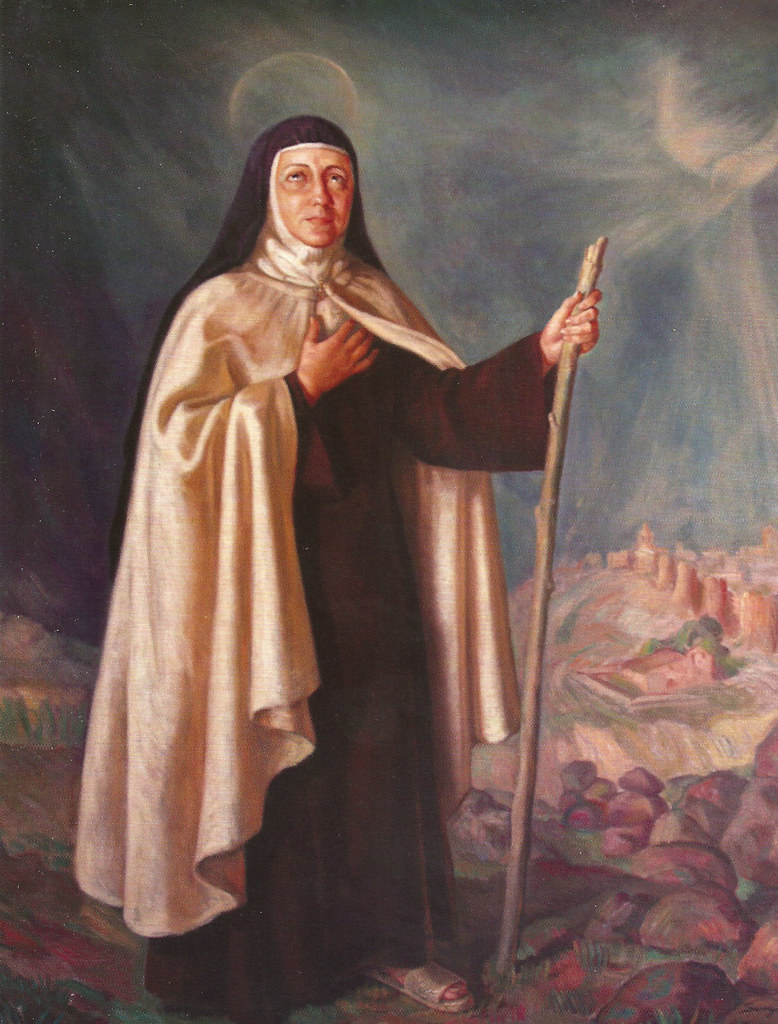
The Book of Foundations (Libro de las Fundaciones) is one of the most important spiritual and autobiographical works of Saint Teresa of Ávila (1515–1582). In this book, Teresa recounts the establishment of the reformed Carmelite convents that emerged from her commitment to restore a more contemplative and disciplined form of religious life.
While The Book of Her Life describes her personal spiritual journey and The Way of Perfection offers instruction in prayer and community life, The Book of Foundations shows how her prayer, discernment, courage, and trust in God became concrete action in the Church.
It is both a spiritual autobiography and a history of religious foundations. Teresa narrates journeys, negotiations, financial difficulties, opposition, misunderstandings, the formation of religious communities, and the extraordinary providence she believed accompanied the work.
The book reveals an essential truth about her spirituality: authentic contemplation does not withdraw a person from responsibility; it strengthens that person to serve God faithfully in the world.
Teresa did not establish convents merely to create institutions. She wanted communities in which women could live a life of prayer, fraternal charity, humility, poverty, silence, and fidelity to the Church. Her foundations were intended to become places where the spiritual renewal of the Church could begin through lives wholly dedicated to God.
Historical background
Teresa began the reform of the Carmelite way of life with the foundation of the convent of Saint Joseph at Ávila in 1562. This community followed a stricter contemplative observance and became the model for her subsequent foundations.
Her work developed during a period of significant religious reform in sixteenth-century Spain. The Catholic Church was responding to the challenges of the Protestant Reformation and undertaking its own renewal. Within this setting, Teresa sought a deeper observance of Carmelite religious life, rooted in prayer, poverty, community, and personal conversion.
The book describes foundations made during the years of her reform, principally from 1567 onward. It also records the beginnings of the Discalced Carmelite friars’ reform, especially through her collaboration with Saint John of the Cross and other collaborators.
The work is especially valuable because Teresa does not present the history as a flawless triumph. She includes setbacks, difficult personalities, financial uncertainty, illness, exhaustion, and moments when the success of a foundation seemed almost impossible. Her account is therefore a testimony to faith working through human weakness.
2. Purpose and central message of the book
Teresa’s principal purpose is to recount how God enabled her to establish and strengthen reformed Carmelite communities despite considerable obstacles. She wants her readers to understand the spiritual foundations of the reform and the practical sacrifices required to sustain it.
Four major intentions shape the book:
- To testify to divine providence: Teresa repeatedly interprets unexpected assistance, the generosity of benefactors, and the opening of apparently closed doors as signs of God’s care.
- To preserve the history of the reform: She records the people, places, decisions, conflicts, and events that shaped the developing Carmelite movement.
- To instruct religious communities: Her narratives offer lessons on obedience, humility, discernment, charity, poverty, leadership, and perseverance.
- To encourage fidelity to prayer: She demonstrates that contemplative prayer is not an escape from work but the source of strength for apostolic responsibility.
The book’s central question is not simply how a convent can be established. It is how a person can discern God’s will, remain faithful amid opposition, and accomplish a spiritual mission without allowing ambition, fear, or personal pride to take control.
3. Structure and literary character
The book combines three dimensions that should be read together.
3.1 Historical narrative
Teresa recounts the founding of convents, her travels across Spain, the search for suitable buildings, negotiations with civil and ecclesiastical authorities, and the practical difficulties of establishing communities.
3.2 Spiritual instruction
Alongside the events, Teresa offers advice about prayer, obedience, spiritual discernment, community government, human weakness, and the dangers of confusing personal desires with God’s will.
3.3 Testimony to providence
Teresa interprets unexpected help, providential encounters, and the endurance of her companions as signs that God’s work can advance even through uncertainty and opposition.
Unlike a conventional history, the work frequently pauses to draw spiritual lessons from events. Teresa’s style is direct, personal, humorous at times, and remarkably practical. She does not conceal the difficulties of leadership or the limitations of the people involved. Her spirituality is mystical, but her method is grounded in experience.
4. Detailed systematic summary of the book
The following guide presents the principal movements of the work in a thematic and chapter-oriented arrangement. Chapter titles and numbering can vary between English translations; the sections below summarize the principal themes rather than reproduce the exact headings of a particular edition.
Part I: The beginnings of the reform
4.1 The mission entrusted to Teresa
Teresa understands her work as a response to God’s call rather than a project born from her own ambition. The establishment of the first reformed convent had shown her that a small community devoted to prayer could become a meaningful contribution to the spiritual renewal of the Church.
Her growing responsibility, however, required more than personal holiness. She had to learn how to organize communities, find suitable houses, secure financial support, consult ecclesiastical authorities, and discern which opportunities were genuinely appropriate.
The central lesson is that a spiritual vocation must become concrete through action. Teresa’s prayer did not exempt her from planning, negotiation, or hard work; it gave these activities their purpose.
4.2 The foundation at Medina del Campo
The foundation at Medina del Campo marks a significant expansion of Teresa’s reform beyond Ávila. It illustrates the complexity of translating a spiritual inspiration into a permanent religious community.
Teresa had to deal with practical obstacles, including arrangements for the house, financial needs, local circumstances, and the cooperation of people whose interests and expectations did not always coincide.
The episode demonstrates that a work can be spiritually meaningful without being easy. Obstacles do not automatically mean that God has abandoned a mission. At the same time, Teresa’s narrative does not teach that every obstacle should be ignored. The founder must distinguish between difficulties that require perseverance and difficulties that call for prudent reconsideration.
Spiritual lesson: Trust in providence and practical wisdom must work together.
4.3 The visit of the Carmelite superior general
Teresa recounts the arrival of the superior general of the Order in Ávila and the consequences of his visit. His support was important because her reform needed legitimate ecclesiastical authorization and cooperation within the Carmelite family.
The episode highlights the relationship between personal conviction and obedience. Teresa possessed strong spiritual convictions, but she did not consider herself free to disregard the legitimate authority of the Church or her religious superiors.
This is an important corrective to the idea that mystical experiences place a person above ordinary ecclesiastical discernment. Teresa believed that spiritual gifts must be tested and lived within the life of the Church.
Spiritual lesson: A genuine reformer needs courage, but also humility, patience, and ecclesial communion.
4.4 Negotiations for the convent at Medina
Teresa describes the negotiations through which the foundation was made possible. Her account reveals the many human relationships that support a religious undertaking: benefactors, local contacts, ecclesiastical authorities, members of the community, and those responsible for material arrangements.
She recognizes the importance of money and property without allowing material security to become the ultimate purpose of the foundation. A convent needs a suitable house and sufficient means to sustain its members, but its real value lies in the life of prayer and charity carried out within it.
This part of the narrative also illustrates Teresa’s capacity to adapt. She could be firm about the essential character of the reform while remaining flexible about practical methods.
Spiritual lesson: Fidelity to a mission does not require rigidity about every practical detail.
Part II: The spiritual life of the new communities
4.5 The graces experienced by the nuns and the responsibility of prioresses
Teresa moves from the story of foundations to the spiritual experiences of the women who live in them. She describes the graces that she believed God granted to members of the reformed communities and considers how superiors should respond to the spiritual needs of their sisters.
For Teresa, spiritual leadership is not simply the enforcement of rules. A prioress must know the persons entrusted to her care, encourage their growth, correct them when necessary, and prevent spiritual enthusiasm from becoming a source of pride or disorder.
Teresa recognizes that people differ in temperament, capacity, emotional stability, and spiritual maturity. A superior must therefore combine firmness with compassion.
The leader who governs only through fear may produce outward conformity without inward growth. Conversely, a leader who avoids all correction may permit habits that damage community life.
Spiritual lesson: Authority in religious life should be exercised as a service of discernment, charity, and responsibility.
4.6 Directions concerning prayer and spiritual experiences
Teresa offers practical guidance on prayer, especially when people experience unusual interior movements or believe themselves to have received special spiritual favours.
She does not dismiss spiritual experiences, but neither does she consider them automatically reliable. Feelings of consolation, extraordinary experiences, and strong interior impressions must be examined carefully.
The decisive question is not whether a person has experienced something unusual. It is whether the experience leads to greater humility, charity, obedience, freedom from self-centredness, and fidelity to God.
Teresa’s approach protects the spiritual life from two opposite errors:
- Rejecting every extraordinary experience simply because it is unfamiliar.
- Accepting every interior impression as a direct message from God without discernment.
She places spiritual growth within a larger framework of prayer, sound judgment, obedience, and the fruits of a person’s life.
Spiritual lesson: Authentic prayer should transform character, not merely produce religious feelings.
4.7 The dangers of mistaken spiritual enthusiasm
Teresa warns that spiritual persons can misunderstand their own desires. Someone may believe that a particular practice is inspired by God when it actually arises from anxiety, imagination, vanity, or an excessive desire for recognition.
She also addresses the desire to speak about spiritual experiences and the danger of seeking admiration through accounts of one’s interior life. A person can become attached to appearing spiritually gifted rather than growing in genuine holiness.
Her counsel is notably realistic. Religious communities are not immune to self-deception merely because their members are committed to prayer.
Teresa therefore advocates humility, sound spiritual guidance, and careful examination of motives. She recognizes the need for discernment while insisting that it must not become a pretext for extinguishing sincere devotion.
Spiritual lesson: The desire to be holy must be purified of the desire to be regarded as holy.
4.8 The care of sisters suffering from melancholy
Teresa devotes attention to the treatment of sisters experiencing melancholy or forms of emotional distress. Her concern reveals her understanding that a religious community must care for the whole person rather than treating every difficulty as a purely spiritual problem.
She urges superiors to exercise patience and practical judgment. Some persons may require encouragement, companionship, changes in routine, or relief from unnecessary burdens. Harshness and indiscriminate discipline can worsen their difficulties.
Teresa’s historical vocabulary should not be equated directly with modern psychiatric diagnoses. Nevertheless, her insistence that superiors attend to individual needs and respond compassionately remains valuable.
Spiritual lesson: Charity must be attentive to human weakness. Spiritual discipline should not become an excuse for cruelty or neglect.
Part III: The expanding reform and the foundation of new communities
4.9 The foundation of Malagón
The foundation at Malagón illustrates Teresa’s growing experience as a founder. By this stage, she had learned that the establishment of a convent required both spiritual conviction and practical preparation.
Teresa had to consider the location, the suitability of the house, the community’s needs, and the arrangements necessary to ensure that the foundation could endure.
The episode also reveals the importance of collaboration. Although Teresa’s personality and determination were central to the reform, she depended on other people who provided material assistance, local knowledge, advice, and encouragement.
The foundation demonstrates that a religious work is rarely accomplished by one person alone. A founder may initiate the mission, but its continuation depends on a community united in purpose.
Spiritual lesson: God often accomplishes great works through the cooperation of many people, each contributing according to their abilities.
4.10 The foundation at Valladolid
Valladolid represents another important stage in the geographical expansion of the reform. Teresa’s work increasingly required her to balance the needs of existing communities with the demands of new foundations.
Her journeys involved physical fatigue, uncertain accommodation, practical difficulties, and the responsibility of making decisions that would affect the future of the communities.
Teresa’s narrative reveals a woman who combines contemplative prayer with administrative competence. She does not romanticize the founding process. She recognizes that spiritual aspirations must be supported by careful decisions and responsible management.
The foundation also illustrates the importance of continuity. Establishing a convent was only the beginning. The community had to develop stable patterns of prayer, mutual care, obedience, and common life.
Spiritual lesson: A good beginning must be followed by faithful and sustained commitment.
4.11 The foundation at Toledo
The Toledo foundation highlights the complicated relationship between religious idealism and social reality. Teresa had to navigate questions of property, financial support, local influence, and the practical arrangements required for a stable community.
She demonstrates that poverty does not mean carelessness. A community can embrace evangelical simplicity while still exercising prudent judgment concerning its material needs.
Teresa’s approach is neither materialistic nor impractical. She refuses to make wealth the purpose of religious life, yet she recognizes that responsible administration can protect the community and enable its spiritual mission to continue.
Spiritual lesson: Detachment concerns the heart’s relationship with possessions; it does not eliminate the duty to use material resources responsibly.
4.12 The foundation at Pastrana
The events connected with Pastrana reveal the difficulties that can arise when a religious foundation becomes entangled with the preferences, influence, or expectations of powerful individuals.
Teresa had to discern whether the conditions surrounding a proposed foundation were compatible with the purposes of the reform. She could not allow the success of a project to be measured merely by prestige, patronage, or the advantages offered by influential benefactors.
The episode illustrates the need to protect the freedom and integrity of a religious community. External assistance can be valuable, but it becomes problematic when it threatens to control the community’s vocation or undermine its proper governance.
Teresa’s response demonstrates that fidelity sometimes requires withdrawing from an arrangement that initially appeared promising.
Spiritual lesson: Not every attractive opportunity is God’s will. Discernment sometimes demands the courage to refuse.
4.13 The foundation at Salamanca
Salamanca presents further challenges in establishing a permanent community. Teresa had to deal with practical uncertainty while preserving the spiritual purpose of the reform.
Her experience had taught her that the initial enthusiasm surrounding a foundation must be accompanied by discipline, sound judgment, and perseverance.
The foundation also demonstrates the importance of maintaining a clear identity. Communities can easily become distracted by external expectations, financial anxieties, or interpersonal conflicts. Teresa continually returns to the essential purpose of the reform: prayer, poverty, charity, and fidelity to the Carmelite vocation.
Spiritual lesson: A community remains faithful when its daily decisions are guided by its spiritual purpose rather than by convenience or prestige.
4.14 The foundation at Alba de Tormes
Alba de Tormes became one of the significant places associated with Teresa’s later life. The foundation belongs to the broader story of her continued dedication to the reform despite increasing demands and the limitations imposed by age and physical weakness.
Teresa’s perseverance illustrates that vocation is not fulfilled in a single moment of enthusiasm. It requires a sustained willingness to serve, even when the work becomes tiring or complicated.
The foundation also forms part of the historical background to the final period of her life. Teresa died at Alba de Tormes in 1582, after years of travelling, writing, prayer, and community building.
Spiritual lesson: Fidelity is measured not only by the greatness of one’s beginnings but also by perseverance to the end.
Part IV: The foundation of the Discalced Carmelite friars
4.15 The need for a male branch of the reform
Teresa recognized that the reform of Carmelite life could benefit from the participation of men who embraced the same contemplative spirit and stricter observance.
The establishment of a reformed male branch was not simply an administrative extension of the convents. It required a distinct community of friars capable of living the Carmelite vocation through prayer, solitude, poverty, study, and apostolic service.
Teresa understood the importance of finding suitable men who possessed both spiritual seriousness and practical judgment. The success of the reform depended on more than enthusiasm; it required people willing to accept the demands of a disciplined religious life.
Spiritual lesson: A spiritual movement becomes stable when its ideals are embodied in people who are willing to live them consistently.
4.16 The collaboration with Saint John of the Cross
Saint John of the Cross played a decisive role in the early development of the Discalced Carmelite friars. Teresa recognized his spiritual depth and his commitment to a life of prayer and simplicity.
Their collaboration reveals the importance of shared spiritual purpose. Teresa brought experience in founding and organizing communities, while John contributed his own gifts of contemplation, spiritual direction, and religious leadership.
The reform developed through the cooperation of different personalities whose gifts complemented one another. Their common purpose was not personal advancement but a more faithful expression of the Carmelite vocation.
Spiritual lesson: Genuine spiritual collaboration allows different gifts to serve one mission without demanding that everyone possess the same personality or abilities.
4.17 The first communities of Discalced friars
The early male foundations faced many of the same difficulties as the convents: finding suitable places, securing necessities, forming stable communities, and maintaining fidelity to the reform.
Teresa’s narrative emphasizes that the reform required perseverance from both women and men. The external structures mattered, but their real value depended on the quality of the life lived within them.
The foundations also reveal Teresa’s confidence that contemplative prayer could serve the Church profoundly even when its fruits were not immediately visible.
Spiritual lesson: The hidden life of prayer can make a lasting contribution to the Church, even when it attracts little public recognition.
Part V: Trials, opposition, and the cost of reform
4.18 Resistance and misunderstanding
Teresa’s reform did not develop without opposition. Changes to established practices could provoke suspicion, disagreement, and criticism. Some people questioned the need for a stricter observance, while others misunderstood Teresa’s intentions or disagreed with her methods.
Teresa had to distinguish between legitimate criticism and opposition that arose from misunderstanding, personal interests, or resistance to change.
Her response was not simply to dismiss those who disagreed with her. She sought counsel, worked through legitimate authority, and attempted to preserve the reform without surrendering its essential principles.
This is an important aspect of her leadership. Conviction must be accompanied by humility, but humility does not mean abandoning a legitimate mission whenever it encounters resistance.
Spiritual lesson: Faithful service requires the ability to listen, discern, correct mistakes, and persevere in what is essential.
4.19 The burden of travel and physical exhaustion
Teresa’s travels placed considerable demands on her health and energy. She often had to undertake long journeys under difficult conditions while remaining responsible for the needs of several communities.
Her experience reveals the human cost of her vocation. She was not an untiring figure untouched by fatigue. She knew physical weakness, discomfort, uncertainty, and the burden of responsibility.
Yet she continued to work because she believed the reform was worth the sacrifice. Her perseverance was not a rejection of human limitations but a determination to serve within them.
Spiritual lesson: Holiness often develops through ordinary acts of fidelity performed amid fatigue, inconvenience, and uncertainty.
4.20 Financial uncertainty and dependence on benefactors
The foundations required material resources. Houses had to be acquired or adapted, daily necessities supplied, and communities supported.
Teresa frequently depended on benefactors and local assistance. This dependence demanded prudence, gratitude, and the ability to distinguish useful support from arrangements that could compromise the community’s freedom.
Her attitude toward material resources was balanced. She trusted in providence but did not regard planning as a lack of faith. She worked diligently, explored available opportunities, and made practical decisions while remaining convinced that the ultimate success of the reform depended on God.
Spiritual lesson: Providence and human responsibility are not opposites. Trust in God should encourage diligent and prudent action.
4.21 Human weakness within religious communities
Teresa does not idealize the women and men who joined the reform. Religious commitment does not immediately remove personal limitations, differences of temperament, impatience, or misunderstandings.
Communities must therefore cultivate charity, humility, mutual forgiveness, and responsible leadership. The daily life of a convent becomes a place of spiritual formation precisely because people must learn to live together despite their differences.
Teresa’s account shows that a religious community is not holy merely because its members have embraced a demanding rule. Its holiness must appear in the way they treat one another.
Spiritual lesson: Fraternal charity is one of the clearest tests of authentic spiritual progress.
Part VI: Leadership and the formation of a lasting spiritual tradition
4.22 The responsibilities of a founder
Teresa’s experience reveals the many responsibilities involved in founding a religious community. A founder must discern opportunities, consult others, organize material resources, resolve disagreements, appoint suitable leaders, and ensure that the community understands its purpose.
These responsibilities demand both spiritual depth and practical competence. A founder who possesses enthusiasm without judgment may place a community at risk. Conversely, a person concerned only with administration may preserve an institution while neglecting its spiritual life.
Teresa’s example brings these two dimensions together. Prayer provides the foundation for action, while practical wisdom helps prayer bear fruit in a stable community.
Spiritual lesson: Spiritual leadership requires a union of contemplation, discernment, courage, and responsible action.
4.23 The importance of obedience and discernment
Teresa repeatedly demonstrates that spiritual conviction must be tested within a framework of obedience and sound judgment.
She did not believe that a person should follow every interior impulse simply because it appears religious. Genuine discernment requires patience, humility, prayer, consultation, and attention to the consequences of a decision.
Obedience, in this context, is not mere passivity. It is a willingness to seek God’s will rather than insist that one’s own preferences must prevail.
Teresa’s experience also shows that obedience can require difficult conversations and persistent efforts to explain a legitimate undertaking. Humility and courage are complementary virtues.
Spiritual lesson: The discernment of God’s will involves both an open heart and a responsible mind.
4.24 The value of small beginnings
The foundations demonstrate that significant spiritual renewal can emerge from small and apparently fragile beginnings. A modest house, a small group of committed religious, and a life organized around prayer can become the starting point of a lasting movement.
Teresa did not measure success simply by numbers, wealth, public recognition, or influence. She was concerned with whether the community remained faithful to its vocation.
This perspective challenges the tendency to judge religious work only by visible results. Some of the most important contributions to the Church may take place quietly, through lives of prayer and hidden service.
Spiritual lesson: Faithfulness to God’s call matters more than outward prestige.
5. The major spiritual themes of The Book of Foundations
5.1 Divine providence
Providence is one of the most persistent themes in Teresa’s account. She interprets the help received at critical moments as evidence of God’s presence in the reform.
This does not mean that every difficulty disappears or that every desired outcome is guaranteed. Rather, Teresa learns to recognize opportunities for faithfulness even when circumstances remain uncertain.
For her, providence is experienced through ordinary means: the generosity of people, the advice of wise counsellors, the availability of a house, the resolution of a conflict, or the perseverance of a companion.
5.2 Contemplation and action
Teresa’s life challenges the assumption that prayer and practical work are opposing activities. Her contemplative life gives meaning to her administrative responsibilities, and her responsibilities become opportunities to practise humility, patience, and charity.
The book demonstrates that prayer does not remove the believer from the needs of the world. It can deepen the capacity to respond to those needs faithfully.
5.3 Humility
Humility is essential because spiritual work can easily become entangled with self-importance. Teresa recognizes the temptation to desire recognition, control, or admiration.
Her remedy is to return continually to God as the source of grace and to evaluate success in terms of fidelity rather than personal achievement.
5.4 Obedience to the Church
Teresa’s reform developed within the life of the Catholic Church. She sought ecclesiastical authorization, consulted superiors, and worked within the religious structures of her time.
Her experience illustrates that spiritual renewal and ecclesial communion belong together. Personal conviction must be accompanied by discernment and a willingness to remain accountable.
5.5 Poverty and detachment
Teresa valued poverty because it helped communities focus on God rather than material security or social prestige.
Nevertheless, she recognized that a community needed adequate resources to survive. Her approach was not irresponsible neglect of material needs but the careful use of resources without allowing possessions to dominate the community’s purpose.
5.6 Fraternal charity
Teresa understood that the spiritual quality of a community is revealed in ordinary relationships. Patience, forgiveness, mutual respect, and consideration for the vulnerable are essential to religious life.
A strict observance without charity would contradict the very purpose of the reform.
5.7 Perseverance
The foundations demanded sustained effort. Teresa encountered obstacles that could not be overcome immediately, and she sometimes had to reconsider her plans.
Her perseverance was rooted in discernment rather than stubbornness. She remained committed to the essential purpose of the reform while adapting her methods to changing circumstances.
5.8 Discernment of spirits
Teresa’s treatment of spiritual experiences shows the importance of testing interior movements. Extraordinary experiences are not the final measure of holiness.
The more reliable signs of spiritual growth are humility, charity, obedience, freedom from excessive self-concern, and an increasing capacity to fulfil one’s responsibilities.
5.9 Practical wisdom
One of the most distinctive features of the book is Teresa’s practical intelligence. She attends to finances, buildings, people, schedules, travel, and governance without regarding these concerns as distractions from God.
Her example shows that practical competence can become a form of service when it is directed toward a genuine spiritual purpose.
5.10 Courage in the face of opposition
Teresa’s reform required courage because she had to undertake work that many people did not understand or support.
Her courage was strengthened by prayer but also disciplined by consultation, obedience, and a willingness to reconsider her decisions.
The book therefore presents courage not as aggression or self-confidence alone, but as the capacity to remain faithful amid uncertainty.
6. Teresa’s understanding of religious community
A religious community occupies a central place in The Book of Foundations. Teresa does not view a convent simply as a building or a collection of individuals following common rules. It is a spiritual family whose members help one another grow in holiness.
6.1 Prayer as the centre of community life
Prayer gives unity and direction to the community. It reminds the members that their life is ordered toward God rather than personal achievement or social approval.
6.2 Charity as the test of holiness
The quality of a community cannot be measured by external observance alone. Its members must learn to forgive, serve, correct one another appropriately, and respect individual differences.
6.3 Leadership as service
The prioress must preserve the community’s purpose while caring for the needs of its members. Her authority should be exercised with wisdom and compassion.
6.4 Discipline with humanity
Rules provide structure and protect the common vocation, but they must be applied with discernment. Teresa recognizes that people have different needs and capacities.
6.5 Shared responsibility
The founder cannot carry the entire mission indefinitely. The community must develop members who understand its spirit and can sustain it through their own fidelity.
Teresa’s vision is therefore both demanding and compassionate. She expects religious commitment to be serious, but she also recognizes that spiritual growth requires patience, understanding, and the support of others.
7. Teresa’s leadership: lessons from the foundations
Teresa’s leadership offers insights that extend beyond religious communities.
First, vision must be joined to action. A worthy mission requires planning, organization, and the willingness to face practical difficulties.
Second, discernment must precede commitment. Not every opportunity is suitable, and not every promising arrangement should be accepted.
Third, people are central to every mission. A project cannot succeed in the long term if it neglects the relationships, needs, and responsibilities of those involved.
Fourth, flexibility protects the essential purpose. Methods may change, but the mission’s fundamental values must remain clear.
Fifth, opposition should be met with patience and courage. Criticism can provide opportunities for correction, while unjust resistance may require perseverance.
Sixth, success requires collaboration. Teresa’s work depended on benefactors, religious superiors, fellow Carmelites, local supporters, and the members of the new communities.
Finally, prayer must shape leadership. Without humility and discernment, even a good mission can become an instrument of personal ambition.
8. The relationship between The Book of Foundations and Teresa’s other works
Teresa’s principal works illuminate different aspects of her spiritual journey.
| Work | Principal emphasis |
|---|---|
| The Book of Her Life | Her personal conversion, spiritual experiences, and growth in prayer |
| The Way of Perfection | The formation of a contemplative community, prayer, humility, and charity |
| The Interior Castle | The stages of interior prayer and the soul’s journey toward union with God |
| The Book of Foundations | The practical expression of contemplative spirituality through religious reform and community building |
These works should not be treated as separate or competing accounts of her spirituality. They form a complementary picture.
The Book of Her Life explains the spiritual experiences that shaped Teresa. The Way of Perfection shows how she wanted her communities to pray and live. The Interior Castle offers a profound account of interior spiritual growth. The Book of Foundations reveals how that spirituality sustained her through the demands of founding and governing communities.
Together, they show that Teresa’s mysticism was inseparable from her responsibilities in the Church.
9. The relevance of The Book of Foundations today
Although Teresa wrote in sixteenth-century Spain, her insights remain relevant to religious communities, parishes, families, and people engaged in service.
9.1 For priests and religious
The book encourages priests and religious to unite prayer with pastoral responsibility. Administration, formation, community life, and the resolution of conflicts should not be regarded as obstacles to holiness. They can become places where holiness is practised.
9.2 For leaders
Teresa teaches that leadership requires discernment, humility, courage, and care for individuals. Leaders must preserve the purpose of an institution without losing sight of the people who sustain it.
9.3 For families
The importance Teresa gives to charity, patience, and mutual understanding applies to family life. Spiritual growth occurs not only during formal prayer but also in the way family members respond to one another’s weaknesses.
9.4 For people facing difficulties
Teresa’s foundations remind readers that obstacles do not necessarily mean that a worthy undertaking has failed. Difficulties may require a change of method, renewed consultation, or greater patience.
Faith does not promise a life without problems. It offers the possibility of responding to problems with hope, wisdom, and perseverance.
9.5 For those discerning a vocation
The book illustrates the importance of testing a perceived call through prayer, sound counsel, obedience, and a realistic assessment of one’s responsibilities.
A genuine vocation is not simply an intense feeling. It must become a sustained commitment that produces good fruits.
9.6 For the Church’s mission
Teresa’s work demonstrates that renewal can begin with small communities whose members take prayer and charity seriously. The Church’s mission is strengthened when institutions remain faithful to their spiritual purpose and when their members serve one another with humility.
10. A critical appreciation of the book
The Book of Foundations is especially valuable because it presents sanctity in practical terms. Teresa does not portray holiness as an uninterrupted series of extraordinary experiences. She shows it emerging through decisions, negotiations, conflicts, journeys, fatigue, and the patient construction of communities.
Her account also reveals the human dimensions of reform. A good intention does not automatically produce a good outcome. Spiritual enthusiasm must be guided by discernment, and religious ideals must be supported by sound administration.
Some of the book’s descriptions reflect the social assumptions, medical vocabulary, and institutional structures of sixteenth-century Spain. Modern readers should therefore distinguish Teresa’s historical circumstances from the spiritual principles that can be applied more broadly.
Her reflections on prayer, leadership, charity, perseverance, and discernment remain significant precisely because they arise from lived experience rather than abstract theory.
The book is not merely a record of buildings established or convents opened. It is an account of how a spiritual vision can be embodied in human communities through God’s grace and sustained effort.
11. Conclusion
The Book of Foundations offers a remarkable portrait of Saint Teresa of Ávila as mystic, reformer, founder, administrator, and spiritual mother. It reveals how deeply her contemplative life shaped her practical responsibilities and how she understood the expansion of the Carmelite reform as a work dependent on divine providence.
Teresa’s experience demonstrates that faith must become visible in action. Prayer must lead to charity; conviction must be accompanied by humility; courage must be guided by discernment; and spiritual ideals must be sustained through practical responsibility.
Her foundations were built not only through the acquisition of houses and the organization of communities but also through perseverance, sacrifice, mutual cooperation, and fidelity to the Church.
The enduring message of the book is that God’s work is accomplished through people who remain faithful to their vocation, trust in providence, exercise sound judgment, and continue serving even when the path is difficult.
For contemporary readers, Teresa offers an example of a spirituality that is both deeply contemplative and thoroughly practical. She reminds us that holiness is not confined to moments of prayer or extraordinary spiritual experience. It is also revealed in the courage to begin, the wisdom to discern, the patience to endure, and the charity to build communities where others can encounter God.
References and further reading
- Teresa of Ávila. The Book of Foundations (Libro de las Fundaciones). Translated editions available in English.
- Teresa of Ávila. The Book of Her Life (Libro de la Vida).
- Teresa of Ávila. The Way of Perfection (Camino de Perfección).
- Teresa of Ávila. The Interior Castle (Las Moradas).
- The Carmelite tradition and the historical development of the Discalced Carmelites.
- The writings and spiritual legacy of Saint John of the Cross.
Editorial note: This is a thematic summary for general readers, not a verified chapter-by-chapter synopsis of a particular English edition. For precise chapter numbering, quotations, and page references, consult the specific translation used for publication.
Leave a Reply