
Introduction
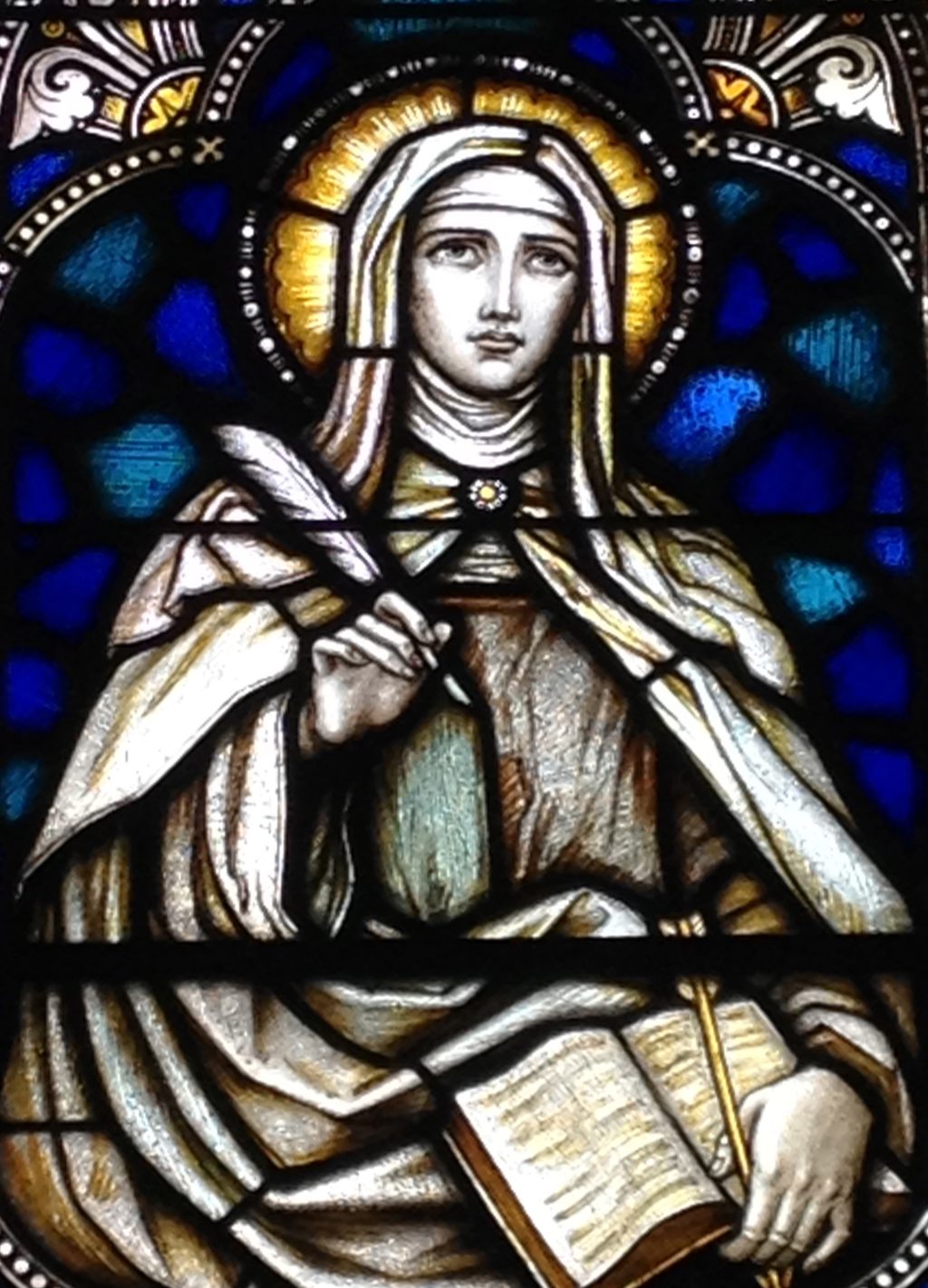
The Book of Her Life (Libro de la Vida), also known as The Life of Saint Teresa of Jesus, is one of the most important spiritual classics in the Catholic tradition. Written by Saint Teresa of Ávila (1515–1582), the great Spanish Carmelite mystic, reformer, and Doctor of the Church, this remarkable work recounts her journey from childhood to a profound life of prayer and mystical union with God.
More than a simple autobiography, the book is a testimony to the transforming power of divine grace. Teresa candidly describes her virtues and weaknesses, her struggles with prayer, her serious illnesses, her spiritual setbacks, and the extraordinary experiences through which she gradually came to understand God’s presence in her life. Her purpose is not to glorify herself but to magnify the mercy of God, who patiently draws a soul toward holiness even when that soul repeatedly struggles with its own limitations.
Written principally at the request of her spiritual advisers, the book also reflects Teresa’s concern to explain her mystical experiences and demonstrate their compatibility with Catholic faith. She writes with remarkable honesty, humility, warmth, and practical wisdom. Her personal story gradually becomes a guide for anyone who desires to deepen his or her relationship with God.
For readers seeking to understand Christian prayer, spiritual conversion, discernment, perseverance, and contemplative life, The Book of Her Life remains an enduring source of wisdom.
1. Saint Teresa of Ávila and the Background of the Book
Teresa was born on 28 March 1515 in Ávila, Spain, into a family that valued Christian devotion and religious reading. She entered the Carmelite monastery of the Incarnation in Ávila as a young woman and eventually became one of the most influential figures in the renewal of Carmelite spirituality.
The writing of The Book of Her Life took place during a period of intense spiritual development. Teresa’s unusual experiences in prayer, including visions and states of deep contemplation, required careful discernment. Her confessors and spiritual advisers wanted a detailed account of her interior life so that they could evaluate her experiences and guide her appropriately.
The work reached its mature form around 1565, following earlier accounts and revisions. It contains forty chapters and combines autobiography, spiritual instruction, reflections on prayer, and accounts of mystical experience.
The book is particularly significant because Teresa does not present holiness as a smooth or effortless journey. She speaks openly about her failures, distractions, fears, illnesses, and prolonged periods of spiritual inconsistency. Her story demonstrates that growth in holiness often involves a gradual process of surrender, repentance, perseverance, and trust.
At the centre of her testimony is a conviction that would shape all her writings: God is faithful, prayer opens the heart to His action, and His mercy is greater than human weakness.
2. Childhood: The Seeds of a Spiritual Vocation
In the opening chapters, Teresa recalls the influence of her parents, who taught their children to pray and encouraged them to read religious books. Her father was particularly interested in good spiritual literature, while her mother fostered devotion to the Blessed Virgin Mary and the saints.
As a child, Teresa was fascinated by the lives of the saints, especially the accounts of martyrs who had given their lives for Christ. Together with her brother, she imagined the possibility of going to lands where they might suffer martyrdom for the faith. Their youthful enthusiasm reveals an early desire to give themselves completely to God.
Teresa also describes her attraction to religious stories and the powerful influence that books can have on a young person’s imagination. These early experiences awakened within her a desire for eternity and a life beyond earthly ambitions.
However, Teresa does not portray her childhood as a story of uninterrupted holiness. As she grew older, she became increasingly conscious of the attractions of worldly attention, friendships, and personal vanity. She recognises that good beginnings do not automatically guarantee perseverance.
The death of her mother was a decisive moment in her childhood. Grieving deeply, Teresa turned to the Blessed Virgin Mary and entrusted herself to her maternal protection. This early Marian devotion remained an important part of her spiritual identity.
Spiritual lesson
Teresa’s childhood teaches parents and educators the importance of introducing children to prayer, Scripture, the lives of the saints, and the beauty of Christian virtue. It also reminds adults that the spiritual formation of the young must be accompanied by continuing guidance and personal example.
Good beginnings are precious, but faith must be nourished throughout life.
3. Youth, Worldly Attractions, and the Search for Direction
As Teresa entered adolescence, she became more conscious of social relationships and the desire to be admired. She candidly admits that she was influenced by the company she kept and by interests that gradually weakened her earlier spiritual aspirations.
Her account is striking because she does not excuse herself or conceal her mistakes. She recognises how easily a person can drift from God without making one dramatic decision against faith. Sometimes spiritual decline begins through small compromises, excessive concern for appearances, or friendships that encourage vanity rather than virtue.
Her father, concerned about her development, arranged for her to receive further formation in a convent school. There Teresa again encountered the influence of a religious environment and began to recover her earlier interest in a life devoted to God.
Gradually, the idea of becoming a religious sister grew stronger. Yet Teresa also experienced an interior conflict. She was attracted to the religious life, but she feared its demands and struggled to surrender her future entirely to God.
Her decision to enter religious life therefore did not arise from an absence of human hesitation. It emerged through a gradual struggle in which grace helped her move beyond fear.
Spiritual lesson
Teresa reminds readers that a vocation is often discerned through a process rather than a single moment of certainty. The Lord can work through family guidance, friendships, education, spiritual reading, and the quiet movements of conscience.
What matters is the willingness to listen, reconsider one’s direction, and respond generously when God’s call becomes clearer.
4. Entering the Carmelite Life and Facing Serious Illness
Teresa eventually entered the Carmelite convent of the Incarnation in Ávila. Her decision marked an important step in her spiritual journey, but it did not bring immediate freedom from suffering.
She soon experienced serious health difficulties. Her illnesses became so severe that her life was at times endangered. Teresa recounts the physical pain, weakness, and uncertainty that accompanied these experiences.
Her suffering exposed her dependence on others and challenged her expectations about what religious life would be like. She also reflects on the patience and spiritual insight she gained through adversity.
During this period, she became increasingly devoted to Saint Joseph. She came to regard him as a powerful intercessor and spiritual protector, particularly in times of illness and need.
Teresa’s testimony about Saint Joseph became one of the best-known elements of her spirituality. Her devotion was not merely sentimental; it arose from her conviction that God had heard her prayers through the intercession of the foster father of Jesus.
Her recovery did not mean that all her difficulties disappeared. Rather, suffering became one of the circumstances through which she learned to trust God more deeply.
Spiritual lesson
Illness can bring fear, frustration, and a sense of helplessness. Teresa does not suggest that suffering is easy or that every illness is immediately cured through prayer. Instead, she shows how faith can sustain a person through uncertainty.
Her devotion to Saint Joseph also encourages Christians to seek the intercession of the saints while entrusting their needs to God’s providence.
5. Spiritual Inconsistency and the Struggle with Prayer
One of the most honest aspects of Teresa’s autobiography is her account of the years when her prayer life lacked consistency. Although she had entered a convent, she did not immediately attain the interior freedom and spiritual maturity she desired.
She describes periods of fervour followed by distraction, moments of genuine devotion followed by renewed attachment to social relationships and worldly concerns. She sometimes found herself divided between the desire to belong entirely to God and the desire to preserve forms of comfort and approval.
Her experience challenges the assumption that religious commitment automatically eliminates temptation or interior conflict. Teresa shows that even someone living within a religious community may struggle with divided intentions.
She gradually came to understand that prayer cannot flourish fully when a person continually protects attachments that compete with God. Yet she also realised that abandoning prayer because of one’s imperfections only deepens the difficulty.
She therefore strongly encourages perseverance in prayer, even when it seems fruitless or when a person feels unworthy to approach God.
Her reflections are particularly consoling for those who experience spiritual dryness, repeated failures, or discouragement. Teresa does not claim that progress in holiness depends on never falling. Rather, she emphasises the importance of returning to the Lord with humility and trust.
Spiritual lesson
The Christian life is not sustained by enthusiasm alone. It requires fidelity, repentance, and the willingness to begin again.
Teresa teaches that prayer should not be abandoned simply because we are distracted, imperfect, or disappointed in ourselves. God invites us to return to Him precisely in our weakness.
6. The Rediscovery of Prayer and the Importance of Perseverance
A central theme in the early chapters is Teresa’s gradual rediscovery of the value of mental prayer.
For Teresa, prayer is not merely the recitation of formulas or the performance of religious duties. It is a personal relationship with Christ, expressed through loving attention, honest conversation, and the desire to remain in His presence.
She acknowledges that she struggled to persevere in prayer, even when she recognised its importance. Her experience eventually convinced her that prayer was essential to recovering spiritual vitality.
Teresa encourages those who have abandoned prayer to return to it. She does not regard past failures as a reason for permanent discouragement. Instead, she sees prayer as one of the principal means through which God restores the soul.
She also stresses the value of spiritual guidance. Because interior experiences can be misunderstood, she considers it important to seek the advice of wise and faithful confessors.
Her teaching balances personal experience with ecclesial discernment. She does not encourage Christians to trust every unusual feeling or private revelation. Authentic spiritual growth requires humility, obedience, sound judgment, and a willingness to be guided.
Spiritual lesson
Prayer is a relationship that must be cultivated. It grows through regularity, honesty, and perseverance, not merely through moments of consolation.
When prayer becomes difficult, the answer is not necessarily to abandon it. Often, the most important step is simply to return to the Lord and remain faithful.
7. The Turning Point: Encountering the Wounded Christ
A decisive moment in Teresa’s spiritual life occurred around 1554, when she was deeply moved by an image of the wounded Christ.
She had long known the teachings of the faith and had practised religious observances, but this encounter awakened a new intensity in her relationship with Jesus. Confronted with the suffering Christ, she became more conscious of her own divided heart and of the depth of God’s love.
The experience was not merely an emotional response to a religious image. It became part of a wider conversion in which Teresa increasingly surrendered her life to God’s action.
She began to understand more profoundly that spiritual progress depends not on self-reliance but on grace. Her awareness of Christ’s suffering awakened gratitude, repentance, and a desire to love Him more faithfully.
Teresa’s conversion was not the end of all struggle. Rather, it marked the beginning of a deeper transformation. Her subsequent experiences of prayer became more intense, and she gradually developed a clearer understanding of the different stages of contemplative life.
The wounded humanity of Jesus remained central to her spirituality. Even as she describes elevated mystical experiences, she insists on the importance of Christ’s life, passion, and humanity.
Spiritual lesson
A genuine encounter with Christ transforms the way a person understands sin, mercy, suffering, and love. It moves the heart beyond the mere fulfilment of religious obligations toward a personal response to the Lord.
Teresa’s experience invites Christians to contemplate the crucified Jesus and to allow His love to awaken a deeper conversion of heart.
8. The Four Degrees of Prayer: The Garden of the Soul
Chapters 11–22 of The Book of Her Life form one of its most important spiritual sections. Here Teresa explains the development of prayer through the image of a garden that must be watered.
The garden represents the soul, while the water represents the grace that sustains spiritual life. The gardener must labour, but the growth of the plants ultimately depends on God’s gift.
Teresa describes four ways of watering the garden. These are often understood as four degrees or stages of prayer.
First degree: Drawing water from a well
In the first stage, the soul works actively to draw water from the well. This represents prayer in which the person must make a deliberate effort to recollect the mind, meditate on Christ, overcome distractions, and remain faithful despite difficulty.
The work can be tiring. Thoughts wander, emotions fluctuate, and prayer may appear unproductive. Yet Teresa insists that this effort is valuable.
The person who perseveres is already cultivating the garden, even when spiritual progress seems slow.
This stage encourages beginners in prayer not to become discouraged by distraction or dryness. The effort to turn towards God is itself an important part of the spiritual journey.
Second degree: Water drawn by a waterwheel
In the second stage, water is brought to the garden through a system that reduces the effort required of the gardener.
Teresa uses this image to describe a more receptive form of prayer, commonly associated with the prayer of quiet. The soul experiences a deeper awareness of God’s presence and a growing stillness of the faculties.
The person remains involved in prayer, but the experience becomes less dependent on strenuous mental activity. God’s grace takes a more evident role in drawing the soul into recollection.
Teresa nevertheless warns against pride. These experiences are gifts, not achievements that a person can claim as personal accomplishments.
Third degree: Water supplied by a stream or flowing river
In the third stage, the garden is watered more easily by a stream or flowing river. Teresa uses this image to describe a more profound experience of God’s action in the soul.
The soul receives spiritual consolation and an increased awareness of divine presence. The experience may bring deep peace, joy, and a sense that God is acting within the person beyond ordinary human effort.
Yet Teresa’s concern is not simply to describe extraordinary feelings. She wants readers to understand that genuine prayer must lead to greater love, humility, and fidelity.
The experience of God is not an invitation to spiritual self-importance. It is a call to surrender more completely to Him.
Fourth degree: Rain falling from heaven
The fourth stage is like a garden watered by rain from heaven. The gardener no longer needs to draw water or direct it through channels; the water comes as a gift.
Teresa uses this image to describe a profound form of infused contemplation in which the soul experiences God’s action with an intensity that cannot be produced by human effort alone.
The experience involves a deepening union with God and a sense that the soul is being drawn beyond its usual capacities. Teresa describes mystical states with great care, recognising both their beauty and the difficulty of expressing them in ordinary language.
This prayer is entirely dependent on divine grace. It cannot be forced or obtained through technique.
The purpose of the garden analogy
Teresa’s four degrees of prayer teach an important lesson: spiritual growth involves both human cooperation and divine grace.
The gardener must prepare the soil and tend the plants, but God gives the rain and makes the garden fruitful. Similarly, Christians are called to pray faithfully, cultivate virtue, and remain open to God’s action.
Teresa also makes clear that the stages of prayer are not a rigid timetable through which every person must progress in exactly the same way. Her account is a guide to understanding different experiences of prayer, not a formula for controlling God’s action.
The goal is not to pursue extraordinary experiences but to grow in love and conformity to Christ.
9. Why the Humanity of Christ Must Remain Central
Following her discussion of prayer, Teresa repeatedly emphasises the importance of the humanity of Jesus.
She cautions against the idea that advanced contemplatives should leave Christ’s humanity behind in order to concentrate on the divine nature alone. For Teresa, Jesus is not merely a starting point that can eventually be discarded. He remains the centre of Christian prayer.
The Incarnation, the Passion, and the personal relationship between Christ and the believer are essential to her understanding of contemplation.
This insistence is particularly important because Teresa’s descriptions of mystical experiences might otherwise be misunderstood as a movement away from the concrete realities of the Gospel.
Her teaching is the opposite. The deeper the soul enters into prayer, the more it should be drawn into the mystery of Christ.
Contemplation is not an escape from the humanity of Jesus or from the responsibilities of Christian life. It is a deeper participation in His love.
Spiritual lesson
Christian mysticism must remain rooted in the Gospel. Prayer leads us toward Christ, forms us according to His example, and deepens our love for the people He loves.
A spirituality that seeks extraordinary experiences while neglecting Christ’s humanity, His Cross, or the demands of charity has lost an essential part of Teresa’s teaching.
10. Visions, Ecstasies, and Mystical Experiences
In the later chapters, Teresa recounts a variety of mystical experiences, including visions, locutions, ecstasies, and profound experiences of God’s presence.
She describes these events as gifts that came to her without her being able to produce them through her own efforts. At times, she struggled to understand what she was experiencing and feared that she might be deceived.
Her honesty is one of the most remarkable aspects of the book. She does not present herself as someone who automatically understands every spiritual movement. Instead, she describes her uncertainty and her desire for sound guidance.
Teresa places considerable importance on discernment. She recognises that intense emotions, unusual experiences, and interior impressions must not automatically be assumed to come from God.
She therefore values the judgment of wise spiritual advisers and the guidance of the Church. She also evaluates spiritual experiences by their fruits: humility, love, patience, obedience, and a greater desire to serve God.
For Teresa, authentic mystical prayer does not lead to vanity or indifference towards others. It produces a deeper awareness of God’s greatness and of one’s own need for grace.
She also acknowledges the limitations of language. Mystical experiences are difficult to communicate because they concern an interior encounter that exceeds ordinary description. Her comparisons, images, and explanations are attempts to make these realities understandable to readers.
Spiritual lesson
The Church’s spiritual tradition calls for both openness to God’s grace and prudent discernment. Not every unusual experience should be treated as a divine revelation.
Teresa’s approach encourages humility, sound spiritual direction, fidelity to Catholic teaching, and attention to the moral fruits of prayer.
11. The Meaning of Suffering and Spiritual Purification
Throughout the book, Teresa reflects on physical illness, emotional distress, spiritual dryness, fear, and interior struggle.
She does not suggest that holiness removes every form of suffering. Nor does she claim that every difficulty can be explained immediately.
Instead, she shows how trials can reveal the limitations of self-reliance and invite a deeper surrender to God.
Her experiences of illness taught her patience. Her spiritual struggles taught her the importance of perseverance. Her fear of deception encouraged her to seek guidance. Her awareness of personal weakness made her increasingly conscious of divine mercy.
Teresa gradually learned to interpret her life not simply as a sequence of successes and failures but as a story in which God continued to work despite her limitations.
This perspective offers hope to Christians who struggle with discouragement. Spiritual maturity does not mean that a person never experiences weakness. It means learning to respond to weakness with faith, humility, and a renewed willingness to follow Christ.
Teresa’s account also guards against a superficial understanding of spirituality. Prayer does not exempt the believer from ordinary responsibilities, human suffering, or the need for personal growth.
Rather, prayer provides the foundation for facing these realities with greater freedom and trust.
12. Humility, Obedience, and Spiritual Discernment
Teresa’s spiritual experiences could easily have led to misunderstanding or suspicion in the religious environment of sixteenth-century Spain. She was aware that claims of visions and extraordinary prayer required careful examination.
She therefore repeatedly expresses her willingness to be corrected and guided by the Church. She seeks the judgment of confessors and theologians, even when their opinions differ or when she finds their advice difficult to understand.
Her humility is not simply a literary expression. It reflects her conviction that the soul must not place personal experiences above the truth of the faith.
Teresa also understands humility as a realistic awareness of oneself before God. It involves acknowledging one’s limitations without despair and recognising God’s gifts without taking personal credit for them.
She does not believe that humility requires a person to deny the good that God has accomplished. Instead, it means giving God the glory and remaining willing to learn.
This balance is central to her spirituality. The Christian must trust God’s mercy without becoming presumptuous, and must acknowledge personal weakness without losing hope.
Spiritual lesson
Authentic holiness grows through humility and openness to correction. Spiritual experiences must be tested through faith, reason, sound guidance, and their fruits in daily life.
Teresa encourages believers to trust God deeply while remaining teachable and faithful to the Church.
13. The Fruits of Prayer: Love, Virtue, and Service
One of the most important principles emerging from The Book of Her Life is that prayer must transform the way a person lives.
Teresa does not measure spiritual progress solely by the intensity of religious feelings or the occurrence of mystical experiences. She asks whether prayer is producing greater love for God, deeper humility, stronger virtue, and a more generous response to others.
A person who claims to experience God but remains selfish, impatient, proud, or unwilling to serve has misunderstood the purpose of contemplation.
For Teresa, the soul becomes more closely united with God as it becomes more conformed to His love. The fruits of prayer should be visible in everyday conduct, relationships, decisions, and responsibilities.
This teaching gives her mystical writings a strongly practical character. She is interested not merely in what happens during prayer but in what prayer makes possible in the life of a Christian.
The deeper the relationship with Christ becomes, the more the believer should desire to live according to the Gospel.
Spiritual lesson
The authenticity of prayer is revealed in the life that follows it. Prayer should make us more compassionate, patient, forgiving, truthful, and generous.
Contemplation and service are not opposing paths. Genuine contemplation deepens the love that makes Christian service possible.
14. Prayer and the Beginning of Teresa’s Reforming Mission
Although The Book of Her Life is principally concerned with Teresa’s interior journey, it also provides insight into the beginnings of her reforming vocation.
As her spiritual life deepened, she became increasingly concerned about the conditions needed for a more faithful life of prayer. She desired a community in which silence, recollection, simplicity, and fidelity to the Carmelite vocation could be cultivated more fully.
This desire eventually contributed to the establishment of the reformed Carmelite convent of Saint Joseph in Ávila in 1562.
The foundation was not simply an administrative achievement. It arose from Teresa’s conviction that a community devoted to prayer could serve the Church through its hidden life of contemplation and fidelity.
Her reforming work required courage, practical wisdom, perseverance, and trust in providence. She encountered difficulties and opposition, but she continued to believe that God was calling her to a more demanding form of religious life.
The book therefore connects interior transformation with external responsibility. Teresa’s growth in prayer did not make her withdraw entirely from the needs of the Church. Instead, it prepared her for a mission that demanded practical action as well as contemplation.
Her later foundations and reforms would become major contributions to the renewal of Carmelite spirituality.
15. The Spiritual Significance of the Book’s Conclusion
The final chapters bring together many of the themes developed throughout Teresa’s testimony. She reflects on the spiritual graces she has received, the need for discernment, the importance of humility, and her continuing desire to serve God faithfully.
The book does not present Teresa as a person who has mastered every mystery of the spiritual life. She remains conscious of her limitations and dependent on God’s mercy.
Her testimony is ultimately an act of gratitude. By recounting her weaknesses and the graces she has received, she seeks to show that God’s love can transform a human life over time.
The narrative also leaves readers with a practical invitation: to take prayer seriously, remain faithful amid difficulty, seek wise guidance, and allow God’s grace to bear fruit in everyday life.
Teresa’s spiritual journey demonstrates that conversion is not merely a single event in the past. It is a continuing response to the Lord, who invites the soul into deeper love and fidelity.
16. Major Themes of The Book of Her Life
Several central themes make this work especially valuable for Christian readers.
1. The mercy of God
Teresa sees her life as a testimony to God’s patience and generosity. Even when she struggles or falls short, divine grace continues to invite her toward conversion.
2. The necessity of prayer
Prayer is the foundation of spiritual growth. It is a personal relationship with Christ that requires perseverance, honesty, and trust.
3. The importance of perseverance
Spiritual dryness, distraction, and weakness should not become excuses for abandoning prayer. The soul must continue to seek God even when consolation is absent.
4. The centrality of Christ
The humanity of Jesus, His Passion, and His personal love remain central to Teresa’s contemplative spirituality.
5. Humility and discernment
Mystical experiences must be approached with humility and examined carefully. Spiritual maturity includes a willingness to receive guidance and correction.
6. The transforming power of suffering
Illness and interior struggles can become occasions for deeper trust, patience, and surrender to God.
7. Prayer must produce virtue
The fruits of prayer are seen in a life increasingly marked by charity, humility, fidelity, and service.
8. The role of spiritual guidance
Teresa values the wisdom of confessors and advisers. Personal experiences must be understood within the wider life and teaching of the Church.
9. The relationship between contemplation and mission
A deeper life of prayer can inspire courageous action, service, and commitment to the renewal of the Church.
10. The gradual journey towards holiness
Spiritual growth unfolds through repeated acts of faith, conversion, perseverance, and cooperation with grace.
17. Why The Book of Her Life Remains Relevant Today
Modern readers may live in circumstances very different from those of sixteenth-century Spain, but Teresa’s spiritual concerns remain remarkably familiar.
Many people struggle to find time for prayer amid work, family responsibilities, anxiety, and constant distractions. Others experience spiritual dryness or feel disappointed because their religious life does not seem to produce immediate change.
Teresa speaks to these experiences with honesty. She understands that the desire for God can coexist with weakness and inconsistency. She shows that prayer is not reserved for people who have already achieved spiritual perfection.
Her teaching is particularly valuable for priests, religious, catechists, spiritual directors, and all those who accompany others on their journey of faith. It encourages them to combine fidelity to the Church with patience, humility, and a deep confidence in God’s grace.
For families, the book highlights the importance of Christian formation, spiritual reading, and a prayerful home environment. For those facing illness or suffering, it offers a witness to perseverance and trust. For those discerning a vocation, it demonstrates that God’s call may become clear through a gradual process of prayer and conversion.
Above all, Teresa reminds readers that the Christian life is not merely about knowing religious truths or performing religious duties. It is about entering into a living relationship with Jesus Christ.
Her autobiography invites every reader to consider a personal question: Am I allowing prayer to transform my heart, my decisions, and the way I love others?
Conclusion
The Book of Her Life is a profound testimony to the mercy of God and the transforming power of prayer. Through the story of her childhood, religious vocation, illnesses, spiritual struggles, conversion, mystical experiences, and emerging reforming mission, Saint Teresa of Ávila presents holiness as a journey of grace and perseverance.
Her message is both challenging and consoling. She does not conceal human weakness, but neither does she allow weakness to have the final word. She teaches that the soul must continue to seek God, remain faithful in prayer, accept sound spiritual guidance, and allow divine grace to produce genuine virtue.
The heart of Teresa’s spirituality is not the pursuit of extraordinary experiences but a loving relationship with Christ that gradually transforms the whole person. Her garden analogy reminds us that spiritual growth requires faithful cultivation while remaining dependent on the grace that comes from God.
For anyone who desires to deepen a life of prayer, The Book of Her Life offers wisdom that is both personal and universal. It shows that the path to holiness is not a journey of self-sufficiency but one of surrender, conversion, trust, and love.
Saint Teresa’s witness continues to encourage Christians to persevere in prayer, return to God after failure, and discover that His mercy can bring new life even to a soul that has struggled for many years.
Her life and writings remain a powerful invitation to know Christ more deeply, love Him more faithfully, and serve Him with a generous heart.
A Prayer Inspired by the Spirituality of Saint Teresa of Ávila
Lord Jesus Christ, draw me into a deeper relationship with You. Teach me to pray with a sincere heart, to persevere when prayer becomes difficult, and to trust in Your mercy when I recognise my weakness.
Free me from the attachments that keep me from loving You wholeheartedly. Give me the humility to accept guidance, the wisdom to discern Your will, and the courage to follow You faithfully.
Like Saint Teresa of Ávila, may I learn to remain close to Your sacred humanity and discover in Your Cross the depth of Your love. Let my prayer bear fruit in patience, compassion, forgiveness, and service to others.
Water the garden of my soul with Your grace. May everything I do lead me closer to You, until my life becomes a humble testimony to Your goodness and love.
Through the intercession of Saint Teresa of Ávila, grant me the grace to persevere in prayer and grow in holiness each day.
Amen.
References and Further Reading
- Teresa of Ávila. The Life of St. Teresa of Jesus, of the Order of Our Lady of Carmel, Written by Herself. Translated by David Lewis. 1904 edition. Available online through the Christian Classics Ethereal Library: https://ccel.org/ccel/teresa/life.all.html
- Teresa of Ávila. The Life of Teresa of Jesus: The Autobiography of Teresa of Avila. Translated by E. Allison Peers. A modern English edition of her spiritual autobiography.
- Praying with Teresa of Ávila. “The Book of Her Life.” A resource offering an introduction and chapter-by-chapter guidance to the work: https://prayingwithteresaofavila.com/the-book-of-her-life/
- Eire, Carlos M. N. The Life of Saint Teresa of Avila: A Biography. Princeton University Press, 2019. A scholarly study of the book’s origins, interpretation, and influence.
- The Holy Bible. Relevant biblical themes include Luke 10:38–42; John 15:1–11; John 19:25–37; Romans 8:26–39; and Philippians 3:7–14.
This article is a thematic summary and spiritual interpretation of Saint Teresa of Ávila’s original work, not a verbatim translation. Chapter references and descriptions follow the traditional forty-chapter structure of The Book of Her Life.
Leave a Reply