
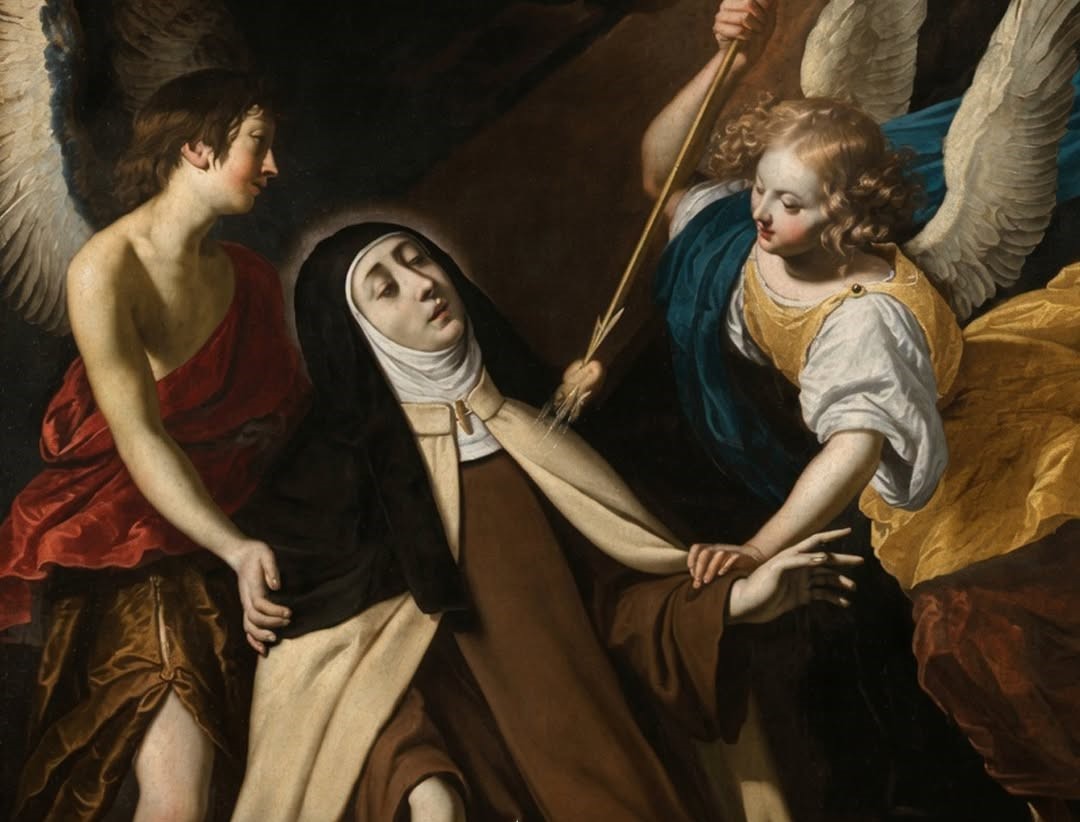
The Interior Castle by Saint Teresa of Ávila: A Systematic and Detailed Summary
1. Introduction
The Interior Castle (El Castillo Interior, also known as The Mansions) is one of the greatest spiritual classics of the Catholic Church. Written by Saint Teresa of Ávila in 1577, it presents a profound guide to the journey of the soul toward deeper union with God through prayer, humility, self-knowledge, love, and surrender to the divine will.
Saint Teresa of Ávila (1515–1582), a Spanish Carmelite nun, mystic, reformer, and Doctor of the Church, wrote from her experience of prayer and her desire to help others grow in holiness. She does not present the spiritual life as a merely intellectual pursuit. Rather, she describes it as a living relationship with God that gradually transforms the whole person.
The central image of the book is a beautiful castle made of a single diamond or crystal, containing many rooms or mansions. God dwells at its innermost centre. The soul is invited to travel inward—not to escape the world, but to discover the presence of God who sustains and transforms it.
Teresa divides this spiritual journey into seven mansions. These are not simply seven rigid steps that every Christian experiences in exactly the same way. They are a framework for understanding spiritual growth, from the first awakening of the soul to profound union with God and a life increasingly expressed through love and service.
2. The Central Image: The Soul as an Interior Castle
Teresa begins with a remarkable affirmation: the human soul possesses a dignity and beauty that we often fail to recognize. She compares it to a castle made of precious crystal or a diamond, containing many rooms. At the centre dwells the King—God Himself.
The image teaches several important truths.
First, God is not distant from the soul. The spiritual journey is a discovery of the God who is already present, inviting the person into a deeper relationship.
Second, prayer is an inward journey. People can become distracted by external concerns, worldly ambitions, anxieties, and superficial desires. Teresa calls them to enter within through prayer and self-knowledge.
Third, the soul’s true beauty comes from God. Sin obscures this beauty, while grace restores and develops the soul’s capacity for communion with its Creator.
Fourth, the journey requires perseverance. Entering the castle is only the beginning. The soul must continue through its mansions, allowing God to purify its desires, strengthen its virtues, and deepen its love.
Teresa’s castle is therefore not a place of isolation or self-absorption. It is an image of the soul becoming more fully alive in God.
3. The Seven Mansions at a Glance
1) First Mansions — Awakening and Self-Knowledge
The soul begins to recognize God’s presence, the seriousness of sin, and the need for prayer and humility.
2) Second Mansions — Perseverance in Prayer
The soul experiences competing attractions and struggles, yet learns to listen to God and remain faithful.
3) Third Mansions — The Life of Virtue
The soul grows in discipline and good works but must learn deeper humility and trust rather than relying on its own achievements.
4) Fourth Mansions — The Beginning of Supernatural Prayer
Prayer becomes more inward and receptive as the soul begins to experience forms of contemplation that are gifts of grace.
5) Fifth Mansions — Union of the Will with God
The soul experiences a deeper union with God, expressed in dying to selfishness and bearing the fruits of transformed love.
6) Sixth Mansions — Deep Love, Trials, and Spiritual Betrothal
The soul may undergo intense purification and suffering while receiving profound graces of intimacy with Christ.
7) Seventh Mansions — Spiritual Marriage
The soul reaches a profound and stable union with God, whose fruits are peace, humility, love, and generous service.
These mansions describe the soul’s growing receptivity to grace. Teresa repeatedly reminds her readers that progress depends on God’s initiative, not merely on human effort or spiritual technique.
4. The First Mansions: Awakening to God and the Need for Self-Knowledge
The First Mansions introduce the reader to the spiritual life. Teresa explains that a soul may have begun to seek God but still remain heavily influenced by distractions, worldly concerns, sinful habits, and an incomplete understanding of itself.
The soul has entered the castle, yet it remains close to the outer rooms. It has not fully discovered the beauty and depth of the spiritual life.
4.1 The dignity and beauty of the soul
Teresa insists that the soul is far more precious than people imagine. Created in the image and likeness of God, it possesses a spiritual beauty that cannot be measured by worldly standards.
The tragedy is that people often live without recognizing this dignity. They may focus entirely on possessions, reputation, pleasures, relationships, or achievements while neglecting the interior life.
For Teresa, recognizing the beauty of the soul is not an invitation to pride. It should awaken gratitude, humility, and a desire to know God more deeply.
4.2 Prayer is the entrance to the castle
Prayer is the doorway through which the spiritual journey begins. Teresa does not limit prayer to the recitation of formulas. Prayer is a relationship with God, involving attention, love, listening, repentance, and a willingness to be transformed.
A person may pray while still struggling with distractions and weaknesses. These difficulties do not mean that prayer is useless. What matters is the decision to continue returning to God.
4.3 Self-knowledge and humility
Self-knowledge is one of Teresa’s foundational teachings. A person must honestly recognize both personal weakness and the greatness of God’s mercy.
Self-knowledge without attention to God can lead to discouragement. Conversely, an exaggerated idea of one’s own spiritual progress can lead to pride. Teresa therefore encourages the soul to look both inward and upward: inward to recognize its need for grace, and upward to contemplate God’s goodness.
4.4 The danger of sin
Teresa explains that sin damages the soul’s relationship with God and obscures its spiritual beauty. Serious sin is not a minor imperfection; it wounds the relationship for which the soul was created.
Her warning is not intended to produce despair. Rather, it is meant to awaken the desire for conversion, reconciliation, and renewed life in grace.
Practical lesson: Begin with honest self-examination, regular prayer, repentance, and confidence in God’s mercy. Do not become discouraged by discovering your weaknesses; allow that discovery to lead you closer to Christ.
Primary text: First Mansions, Chapters 1–2.
5. The Second Mansions: Perseverance in Prayer
In the Second Mansions, the soul has become more conscious of God’s invitation and desires to advance. Yet it experiences an interior struggle. The world continues to attract it, old habits remain powerful, and the path of discipleship requires genuine decisions.
Teresa describes this stage as a time of spiritual conflict.
5.1 Hearing God’s invitation
The soul receives encouragement through Scripture, sermons, spiritual reading, good examples, the advice of others, and the promptings of grace. These influences awaken a deeper desire for holiness.
However, hearing God’s invitation is not the same as responding wholeheartedly. The person must choose to follow the Lord despite competing attractions.
5.2 The importance of perseverance
Teresa strongly emphasizes perseverance. Prayer may feel difficult, dry, or unrewarding. The mind may wander, and progress may seem slow. Nevertheless, the soul must not abandon prayer simply because it does not experience consolation.
The value of prayer does not depend solely on how peaceful or joyful a person feels while praying. Faithfulness itself is an expression of love.
5.3 The struggle between God and worldly attractions
The soul may desire holiness while still clinging to habits, ambitions, resentments, or relationships that weaken its commitment to God.
Teresa encourages the reader to recognize this conflict honestly. Spiritual growth requires more than admiration for holy things; it demands a willingness to change.
5.4 Choosing the right path from the beginning
Teresa urges her readers to seek sound spiritual guidance, practise humility, and avoid unnecessary distractions. She recognizes that beginners may become discouraged when they expect rapid progress.
The appropriate response is neither presumption nor despair, but patient fidelity.
Practical lesson: Establish a regular time for prayer. Read Scripture attentively, seek wise spiritual guidance, and remain faithful during periods of dryness. Do not measure the quality of your spiritual life merely by your feelings.
Primary text: Second Mansions, Chapter 1.
6. The Third Mansions: Virtue, Discipline, and the Need for Greater Trust
The Third Mansions describe souls who have made considerable progress in Christian living. They may pray regularly, practise self-discipline, fulfil their duties, avoid serious sin, and strive to live according to the commandments.
Yet Teresa identifies a subtle danger: a person may begin to trust too much in personal virtue and become unsettled when God permits difficulties.
6.1 The goodness and limitations of disciplined living
Teresa does not dismiss discipline or good works. They are essential to the Christian life. The soul must strive to practise virtue, fulfil its obligations, and resist sin.
However, outwardly ordered living does not automatically produce complete interior surrender. A person may be disciplined but still desire control over every circumstance.
6.2 The danger of spiritual self-satisfaction
A person may begin to think, consciously or unconsciously, that a disciplined life entitles them to peace, consolation, or a particular outcome.
When suffering or dryness arrives, disappointment can expose a lack of deeper trust. Teresa teaches that the soul must learn to love God not merely for the benefits it receives, but for God Himself.
6.3 Humility in suffering
Teresa is concerned with how a person responds when things do not go according to expectations. Difficulties may reveal impatience, self-will, excessive concern about reputation, or a lack of compassion for others.
The soul must learn to accept its limitations and depend more completely on grace.
6.4 Do not compare your spiritual life with others
Teresa discourages spiritual rivalry. People differ in temperament, responsibilities, gifts, and circumstances. One person may find prayer easy, while another struggles with distractions or dryness.
The proper question is not whether someone else appears more advanced, but whether one is growing in humility, love, patience, and fidelity.
Practical lesson: Continue practising virtue, but do not rely on your achievements as though holiness were a personal accomplishment. Accept correction, bear inconveniences patiently, and learn to trust God when prayer brings no immediate consolation.
Primary text: Third Mansions, Chapters 1–2.
7. The Fourth Mansions: The Transition to More Receptive Prayer
The Fourth Mansions mark an important development. Teresa begins to distinguish between forms of prayer that depend more directly on our efforts and forms in which God acts in the soul in a more immediate way.
She discusses spiritual consolations and the prayer of recollection and quiet, particularly the prayer of quiet, in which the soul experiences a deeper inward awareness of God’s presence.
7.1 The difference between natural satisfaction and spiritual consolation
A person may experience happiness through beautiful music, religious reading, inspiring sermons, or the warmth of communal worship. These experiences can be good and helpful.
Teresa distinguishes such satisfactions from spiritual consolations that arise from God’s action within the soul. These cannot simply be produced by effort or technique.
Her purpose is not to make people suspicious of ordinary happiness. Rather, she wants them to understand that the deepest spiritual gifts come from grace.
7.2 Prayer of recollection
In recollection, the soul gathers its attention inward and turns toward God, who is present within. Instead of allowing the mind to remain scattered among countless concerns, the person learns to become attentive to the divine presence.
This does not necessarily mean that thoughts disappear completely. The important movement is toward a deeper inward attention to God.
7.3 Prayer of quiet
In the prayer of quiet, Teresa describes a more passive and receptive form of prayer. The soul experiences a deep interior peace and a loving awareness of God’s presence. The will becomes more deeply engaged with God, even if the understanding and imagination remain active.
This prayer is a gift rather than something that can be forced. A person should not attempt to manufacture unusual experiences or conclude that prayer has failed when such experiences do not occur.
7.4 The role of the imagination and understanding
Teresa recognizes that the human mind can remain restless even when the soul desires God. She encourages patience rather than anxious attempts to control every thought.
The spiritual life is not a contest to achieve a perfectly blank mind. It is a growing relationship of love and surrender.
Practical lesson: Practise quiet prayer without trying to force an experience. Remain attentive to God, receive consolation with gratitude, and continue faithfully when consolation is absent.
Primary text: Fourth Mansions, Chapters 1–3.
8. The Fifth Mansions: The Prayer of Union and the Transformation of Life
The Fifth Mansions bring Teresa to a deeper form of prayer: the prayer of union. Here she explores the soul’s more profound encounter with God and the transformation that genuine union produces.
Teresa is careful to distinguish authentic spiritual growth from temporary emotion or unusual experiences. The most reliable evidence of prayer is what it produces in the person’s life.
8.1 The silkworm and the butterfly
One of Teresa’s memorable images in this part of the book is the silkworm that forms a cocoon and eventually becomes a butterfly.
The silkworm represents the soul’s former way of living. Through grace, prayer, self-denial, and love, the old life is gradually transformed. The butterfly represents a new freedom and a deeper desire to live for God.
The image does not suggest that Christians become perfect through their own effort. The transformation is made possible by divine grace, to which the soul responds.
8.2 The prayer of union
Teresa describes a profound interior union in which the soul’s faculties become deeply absorbed in God. Such prayer is not merely a strong emotion or a moment of religious excitement.
The soul experiences God’s presence in a way that exceeds ordinary reflection. Yet the experience remains a gift, not an achievement to boast about.
8.3 How can genuine union be recognized?
Teresa directs attention to the fruits of prayer. Does the person become more humble? Is there greater love for others? Does the person become more detached from selfish desires? Is there a stronger willingness to serve God?
These effects matter more than claims of extraordinary experiences.
8.4 Love of neighbour as proof of love for God
Teresa insists that love of God cannot be separated from love of neighbour. A person who claims a deep union with God but remains cruel, selfish, resentful, or indifferent to others has misunderstood the purpose of prayer.
Love must become practical. It appears in patience, forgiveness, kindness, responsibility, and concern for the needs of others.
8.5 The spiritual betrothal
The Fifth Mansions also introduce the image of spiritual betrothal, which Teresa develops further in the Sixth Mansions. It suggests a profound commitment of the soul to Christ, although the journey toward the stable union of spiritual marriage is not yet complete.
Practical lesson: Do not judge spiritual progress by extraordinary feelings. Look for conversion, humility, freedom from selfishness, and a more generous love of God and neighbour.
Primary text: Fifth Mansions, Chapters 1–4.
9. The Sixth Mansions: Spiritual Trials, Longing for Christ, and Deepening Love
The Sixth Mansions are among the most extensive and complex sections of The Interior Castle. Teresa describes the soul’s intense longing for God, the spiritual trials that may accompany profound prayer, and the extraordinary graces that she believes God may give to certain souls.
This stage is not simply a period of uninterrupted spiritual happiness. Teresa emphasizes that greater intimacy with God may be accompanied by suffering, purification, and a painful awareness of the distance between earthly life and the fullness of divine communion.
9.1 The wound of divine love
Teresa describes a spiritual wound: the soul becomes so deeply conscious of God’s love that it longs more intensely for Him. The person experiences a desire for complete communion with Christ that earthly life cannot fully satisfy.
This longing is not the same as ordinary dissatisfaction. It arises from a love that has been awakened and deepened by grace.
9.2 Interior and exterior trials
The soul may experience illness, misunderstanding, criticism, loneliness, dryness in prayer, or anxiety about its spiritual condition. Teresa also discusses interior anguish and the fear that one’s experiences may be deceptive.
She does not suggest that all suffering is a sign of spiritual advancement. Rather, she recognizes that suffering can occur during the spiritual journey and must be met with discernment, patience, and trust in God.
9.3 The purification of motives
As love deepens, the soul gradually becomes less concerned with praise, reputation, and personal comfort. It learns to desire God’s glory more than its own recognition.
This purification is demanding because human beings naturally seek approval and security. Teresa encourages the soul to become increasingly free to serve God whether others praise or criticize it.
9.4 Spiritual locutions and visions
Teresa discusses different kinds of spiritual experiences, including what she calls locutions, visions, raptures, and other extraordinary graces.
Her descriptions reflect her own mystical experience and the spiritual vocabulary of her time. She does not advise people to seek such experiences. Nor should every unusual thought, impression, or feeling be interpreted as a direct message from God.
The proper response is discernment, humility, and obedience to sound spiritual guidance. The ultimate test is whether an experience leads toward greater faith, charity, peace, and fidelity to Christ.
9.5 The importance of Christ’s humanity
Teresa strongly emphasizes the humanity of Jesus. Deep contemplative prayer must not become an attempt to bypass Christ’s human life, suffering, and love.
For Teresa, Christ is not merely a stepping-stone to an abstract spiritual state. He is the Lord who reveals the Father’s love and accompanies the soul throughout its journey.
9.6 The longing to see God
As love grows, the soul may experience an intense longing for the fullness of God’s presence. Teresa describes this as a desire that can become painful because the person has tasted something of divine love but has not yet reached the complete union for which the soul longs.
This longing must be integrated into faithful Christian living rather than used as an excuse to neglect ordinary responsibilities.
9.7 Spiritual betrothal and preparation for union
The Sixth Mansions prepare the soul for the spiritual marriage described in the Seventh. The relationship between Christ and the soul becomes more intimate, but further purification and transformation remain necessary.
Practical lesson: When spiritual life becomes difficult, remain faithful to prayer, seek prudent spiritual direction, and do not chase extraordinary experiences. Keep Christ at the centre, practise humility, and allow love to become stronger than the desire for recognition or comfort.
Primary text: Sixth Mansions, Chapters 1–11.
10. The Seventh Mansions: Spiritual Marriage and Fullness of Union with God
The Seventh Mansions form the climax of Teresa’s spiritual journey. Here she describes what she calls spiritual marriage: a profound and enduring union between God and the soul.
This is not physical marriage, nor does it mean that the soul becomes God by nature. It is Teresa’s mystical language for an intimate communion with God that transforms the person’s whole life.
10.1 God dwells in the centre of the soul
Teresa returns to the central image of the castle. At the heart of the soul is the innermost dwelling place where God is present in a uniquely intimate way.
The soul may have received graces in earlier mansions, but now it experiences a deeper awareness of the divine presence. Teresa uses the image of the King’s private chamber to express the intimacy of this relationship.
The experience does not mean that God was absent from the soul before. Rather, the soul now receives a deeper awareness of God’s presence and action.
10.2 The mystery of the Blessed Trinity
Teresa describes a profound awareness of the presence of the Father, Son, and Holy Spirit. This is not presented as a theological theory that the soul discovers through intellectual effort. It is described as a grace through which the reality of God’s presence becomes deeply experienced.
The Trinity remains a mystery beyond complete human comprehension, even when the soul receives an extraordinary grace of awareness.
10.3 Spiritual marriage and lasting transformation
Teresa distinguishes the spiritual marriage of the Seventh Mansions from earlier experiences of union. The soul’s relationship with God becomes more stable and deeply integrated into life.
This does not mean that the person is incapable of suffering, temptation, or ordinary human limitations. Rather, the person’s deepest orientation has been transformed. Love of God becomes the governing centre of life.
10.4 The fruits of spiritual marriage
Teresa highlights several important fruits:
- Peace: a deeper interior stability rooted in trust in God.
- Humility: an awareness that all goodness comes from divine grace.
- Detachment: freedom from excessive concern for praise, comfort, and worldly status.
- Charity: a more generous and practical love for other people.
- Courage: a greater readiness to accept difficulties for the sake of God’s will.
- Apostolic concern: a stronger desire that God be known, loved, and served.
These fruits reveal the purpose of mystical prayer. The soul is not transformed merely to enjoy spiritual consolation; it is transformed to love more completely.
10.5 The Blessed Trinity’s presence is not always equally felt
Teresa makes an important distinction between God’s presence and the soul’s conscious awareness of that presence. A person may not always experience intense consolation, even after receiving profound spiritual graces.
The absence of a particular feeling does not necessarily mean that God has withdrawn. Faithfulness must not depend entirely on emotional experience.
10.6 Martha and Mary: Contemplation must lead to service
In the final chapter, Teresa returns to the biblical figures of Martha and Mary. Mary represents attentive contemplation at the feet of Jesus, while Martha represents active service.
Teresa does not set these two forms of Christian life against each other. Rather, she insists that they belong together. Contemplation must give birth to service, and service must be animated by love.
A person who truly grows in union with God becomes more ready to carry responsibilities, help others, endure difficulties, and respond generously to the needs of the Church and the world.
Practical lesson: The goal of prayer is not to withdraw permanently into private spiritual consolation. It is to become a person whose whole life expresses God’s love through humble, faithful, and generous service.
Primary text: Seventh Mansions, Chapters 1–4.
11. The Main Spiritual Teachings of The Interior Castle
The seven mansions present a unified vision of Christian holiness. The following themes run throughout the book.
11.1 Prayer is a relationship of love
For Teresa, prayer is not simply the performance of religious duties. It is an encounter with God that gradually transforms the heart.
Prayer may include vocal prayer, meditation, quiet attention, and forms of contemplation. These forms differ, but the central purpose remains the same: to grow in relationship with God.
11.2 Humility is indispensable
Humility is not self-hatred or denial of the gifts God has given. It is the truthful recognition of who we are before God.
The humble person acknowledges personal weakness, receives grace with gratitude, accepts correction, and avoids boasting about spiritual achievements.
11.3 Self-knowledge and knowledge of God belong together
A person who examines only personal weakness may become discouraged. A person who thinks only about divine greatness without examining personal conduct may become presumptuous.
Teresa encourages both: honest self-knowledge and contemplation of God’s mercy and goodness.
11.4 Perseverance matters more than temporary feelings
The spiritual life includes consolation and dryness, enthusiasm and fatigue, clarity and uncertainty. Teresa repeatedly urges her readers not to abandon prayer merely because it becomes difficult.
Faithfulness during ordinary and unremarkable days is an essential part of spiritual growth.
11.5 Spiritual progress must produce charity
One of the most important tests of spiritual maturity is the growth of love. Prayer should make people more patient, compassionate, forgiving, responsible, and willing to serve.
If religious practices lead to pride, harshness, or contempt for others, their purpose has been misunderstood.
11.6 God is the principal agent of transformation
Human effort matters, but it cannot manufacture mystical union. The soul cooperates with grace through prayer, virtue, repentance, and perseverance.
Teresa therefore combines practical spiritual discipline with profound trust in God’s initiative.
11.7 Extraordinary experiences are not the goal
Visions, locutions, raptures, and unusual consolations are not necessary for every Christian. Teresa’s account of these experiences is meant to illuminate the spiritual journey, not to encourage people to seek spectacular phenomena.
The goal is holiness: deeper union with God and a life transformed by love.
12. The Relevance of The Interior Castle Today
Although Teresa wrote in sixteenth-century Spain for a Carmelite audience, her insights remain valuable for Christians in every state of life.
For priests and religious
The book offers a reminder that ministry must be sustained by an authentic interior life. Pastoral work, administration, preaching, teaching, and service can become exhausting when detached from prayer.
Teresa’s teaching does not encourage ministers to neglect their responsibilities. It calls them to let prayer deepen their love for the people they serve and strengthen their fidelity to Christ.
For families
Family life often includes competing responsibilities, financial worries, misunderstandings, and tiredness. Teresa’s emphasis on perseverance, humility, and charity can help family members recognize holiness in ordinary acts of patience, forgiveness, and service.
The interior castle is not reserved for people who live in monasteries. Every Christian is called to deepen his or her relationship with God.
For young people
The book speaks to the search for identity and meaning. Teresa invites young people to look beyond popularity, achievement, possessions, and external approval, and to discover the deeper dignity of the soul.
Self-knowledge, discipline, prayer, and the freedom to choose what is good remain essential to a mature life.
For those experiencing dryness in prayer
Teresa’s teaching is especially consoling for people who struggle to pray. She explains that prayer is not measured by constant emotional satisfaction.
A person may remain faithful to God even when prayer feels difficult. In such circumstances, simple and persevering prayer can be more valuable than the pursuit of extraordinary experiences.
For those who suffer
Teresa does not romanticize suffering, but she recognizes that trials can become occasions for deeper trust and purification. Her message is not that every suffering has an obvious explanation, but that the Christian need not face suffering apart from God’s presence and grace.
13. A Practical Guide to Living the Seven Mansions
The following suggestions translate Teresa’s teaching into daily practice. They are not a formula for automatically advancing from one mansion to another; they are ways of cooperating with grace.

1. Begin with prayer and self-examination
Set aside a regular time for prayer. Read a short passage of Scripture and ask where God is inviting you to conversion. A brief examination of conscience can help you recognize both your weaknesses and the signs of grace in your life.

2. Persevere when prayer is difficult
Do not abandon prayer because of distraction, dryness, or a lack of consolation. Return patiently to God. Seek guidance when necessary, and do not compare your prayer with the experiences of others.
3. Practise humility and charity
Accept correction, resist the desire always to be right, and perform ordinary duties faithfully. Make a deliberate effort to forgive, listen patiently, and help someone in need.

4. Keep Christ at the centre
Reflect on the Gospels and the life of Jesus. Bring your joys, disappointments, and struggles to Him. Let contemplation of His love lead you toward greater trust and a more generous response to others.
5. Let prayer become service
At the end of prayer, ask how you can put God’s love into practice. Faithful service in the family, parish, workplace, and community is not separate from holiness; it is one of its fruits.
14. A Suggested Seven-Week Reading Plan
Readers who wish to study The Interior Castle systematically may follow this seven-week plan. The divisions correspond to the seven mansions and can be adapted to individual circumstances.
| Week | Reading | Main theme |
|---|---|---|
| 1 | First Mansions, Chapters 1–2 | The dignity of the soul, prayer, and self-knowledge |
| 2 | Second Mansions, Chapter 1 | Perseverance and spiritual struggle |
| 3 | Third Mansions, Chapters 1–2 | Virtue, humility, and trust |
| 4 | Fourth Mansions, Chapters 1–3 | Recollection and the prayer of quiet |
| 5 | Fifth Mansions, Chapters 1–4 | Union, transformation, and charity |
| 6 | Sixth Mansions, Chapters 1–11 | Trials, spiritual discernment, and longing for God |
| 7 | Seventh Mansions, Chapters 1–4 | Spiritual marriage and the fruits of union |
At the end of each reading, reflect on three questions:
- What does Teresa teach me about God and the soul?
- What needs conversion or greater trust in my own life?
- What concrete act of love can I practise today?
15. Conclusion: The Goal of the Interior Journey
The Interior Castle is not simply a description of mystical experiences. It is a profound invitation to holiness. Saint Teresa of Ávila teaches that the human soul possesses an extraordinary dignity because it is created by God and called to communion with Him.
The journey begins with prayer and self-knowledge. It continues through perseverance, humility, the practice of virtue, and the purification of selfish desires. It deepens through the action of grace and reaches its culmination in the profound union Teresa calls spiritual marriage.
Yet the final measure of this journey is not the number of visions a person experiences or the intensity of spiritual consolation. It is the transformation of the heart.
The closer the soul comes to God, the more it should grow in love, humility, courage, patience, and service. Contemplation and action belong together. The soul that rests in God’s love becomes more ready to carry the burdens of others and to serve faithfully in the ordinary circumstances of life.
Teresa’s message remains clear: do not be satisfied with remaining at the outer entrance of the castle. Through prayer, conversion, and grace, keep moving toward the God who dwells at the centre of the soul.
16. A Prayer Inspired by The Interior Castle
Lord Jesus Christ, You who dwell in the deepest centre of the soul, lead me inward through the mansions of prayer, humility, and love. Free me from the distractions that draw me away from You. Teach me to know myself honestly, to trust in Your mercy, and to persevere when prayer becomes difficult.
Purify my heart from pride, selfishness, and the desire for recognition. Grant me a deeper love for Your presence, a faithful spirit in times of dryness, and the wisdom to discern Your will. May my prayer bear fruit in patience, forgiveness, compassion, and generous service.
Holy Spirit, guide me along the path of holiness. May I seek not extraordinary experiences, but a heart that belongs entirely to God. Bring me ever closer to the love of the Father, through Jesus Christ our Lord.
Saint Teresa of Ávila, teacher of prayer and Doctor of the Church, pray for us. Amen.
References and Further Reading
- Teresa of Ávila, The Interior Castle, especially the seven mansions. English text available through Christian Classics Ethereal Library: Read The Interior Castle online.
Christian Classics Ethereal Library+1
- Teresa of Ávila, The Interior Castle or The Mansions, complete text and chapter contents: Read the complete text and chapter index.
Bible Hub
- Sacred Scripture: Genesis 1:26–27; John 14:1–3; John 15:1–17; Luke 10:38–42; 1 Corinthians 13.
- Catechism of the Catholic Church, sections on prayer, contemplation, grace, and holiness.
Leave a Reply