
Memorial: November 18
The Catholic Church celebrates the Dedication of the Basilicas of Saints Peter and Paul, Apostles, on November 18. This celebration commemorates the dedication of two of the most important churches in Christianity: the Basilica of Saint Peter in the Vatican and the Basilica of Saint Paul Outside the Walls in Rome.
These magnificent basilicas were built over the traditional burial places of the two great apostles who gave their lives for Christ in Rome. Saint Peter, the Prince of the Apostles, and Saint Paul, the Apostle to the Gentiles, occupy a special place in the history of Christianity. Their preaching, missionary work, martyrdom, and faithful witness laid important foundations for the growth of the Church.
This memorial is not simply a celebration of beautiful church buildings. It is an opportunity to remember the apostolic foundations of our faith, the courage of the early Christians, and the enduring mission of the Church throughout the world.
It also reminds us that while church buildings are sacred places dedicated to God, the living Church is made up of people united in Christ.
1. The Historical Background of the Celebration
The origins of this celebration go back to the fourth century, when Christianity began to experience greater freedom following the Edict of Milan in 313 AD, issued by Emperor Constantine and Emperor Licinius.
For centuries, Christians had faced persecution under various Roman emperors. They gathered secretly for prayer and celebrated the Eucharist in private homes, cemeteries, and underground burial chambers known as catacombs.
After Christianity received legal recognition, Christians were able to construct larger places of worship. Emperor Constantine supported the construction of several magnificent basilicas in Rome, including an early basilica over the tomb of Saint Peter and another over the traditional burial place of Saint Paul.
These churches became important centres of Christian worship and pilgrimage.
The anniversaries of their dedications were eventually celebrated together on November 18. This joint celebration became established in the Roman liturgical tradition and was extended more widely throughout the Roman Rite.
The celebration honours not merely the architecture of the two basilicas but the apostolic witness of the saints whose memory they preserve.
2. The Basilica of Saint Peter in the Vatican
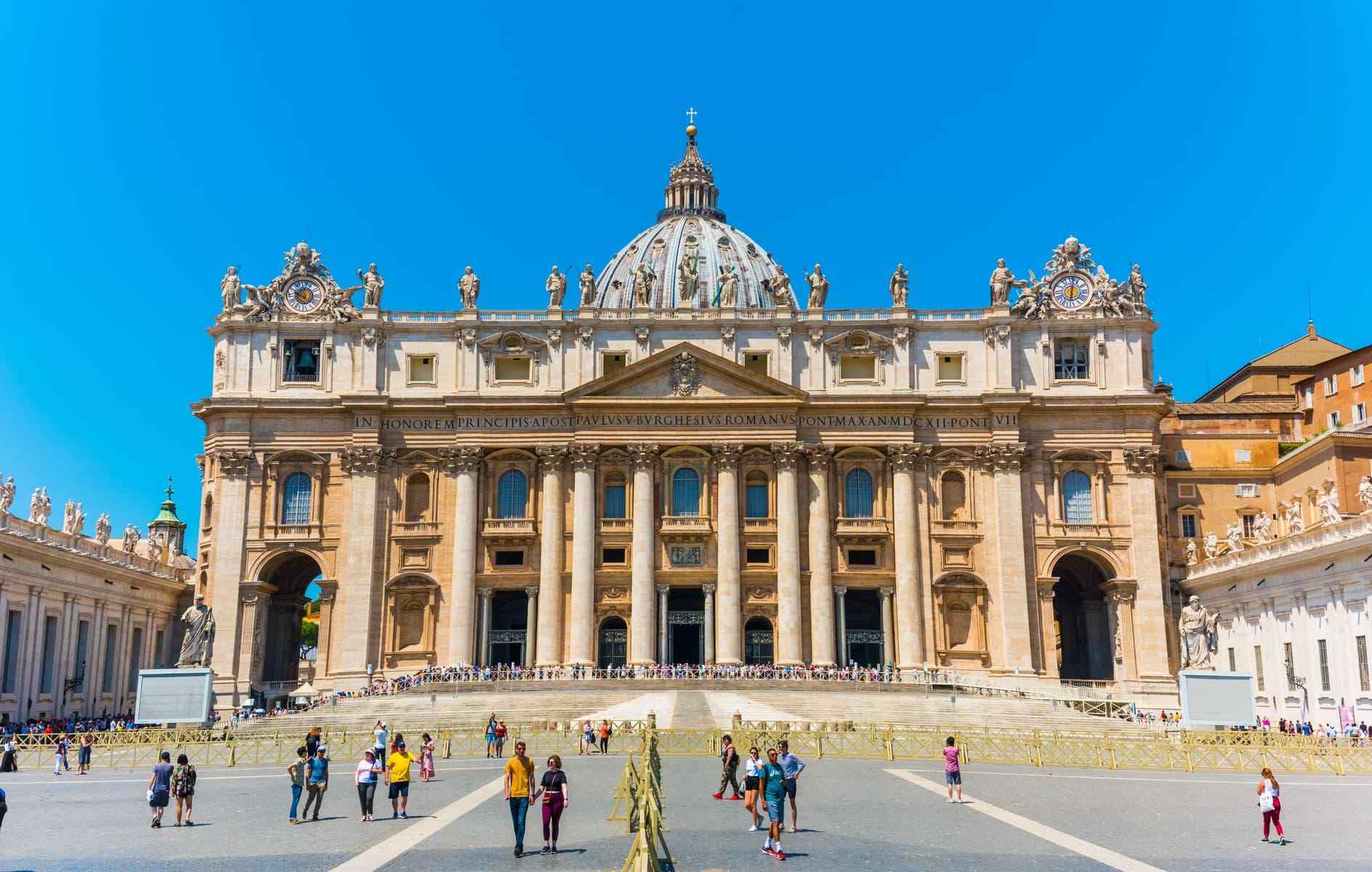
Basílica de San Pedro: una magnífica arquitectura renacentista
The Basilica of Saint Peter is one of the most famous and significant churches in the world. Located in Vatican City, it stands over the traditional burial place of Saint Peter, the Apostle chosen by Jesus Christ to lead His Church.
According to ancient Christian tradition, Saint Peter was martyred in Rome during the persecution under Emperor Nero, around 64–67 AD. He was crucified, and tradition maintains that he requested to be crucified upside down because he considered himself unworthy to die in the same manner as Jesus.
Christians preserved the memory of his burial place, and it became an important destination for pilgrims.
The First Basilica of Saint Peter
Emperor Constantine ordered the construction of the original Basilica of Saint Peter during the fourth century. It was built over the traditional tomb of the Apostle and became one of the most important centres of Christian pilgrimage.
The ancient basilica stood for approximately twelve centuries. Over time, however, the building deteriorated and required extensive reconstruction.
The Present Basilica
The construction of the present Basilica of Saint Peter began in 1506 under Pope Julius II. Many renowned architects and artists contributed to the project, including Donato Bramante, Michelangelo, Carlo Maderno, and Gian Lorenzo Bernini.
Michelangelo played a particularly important role in the design of the magnificent dome, which remains one of the most recognizable features of Rome.
The new basilica was solemnly dedicated by Pope Urban VIII on November 18, 1626, exactly 1,300 years after the traditional date assigned to the dedication of the original basilica in 326.
The basilica contains numerous artistic and spiritual treasures, including Michelangelo’s famous sculpture Pietà, the monumental bronze baldachin designed by Bernini, and the Confession of Saint Peter, located above the traditional tomb of the Apostle.
Today, the Basilica of Saint Peter remains a major centre of Catholic worship and a symbol of the unity of the universal Church.
3. The Basilica of Saint Paul Outside the Walls
Papal Basilica of St Paul Outside the Walls (Rome, Italy)
The second basilica commemorated on November 18 is the Basilica of Saint Paul Outside the Walls (Basilica Papale di San Paolo fuori le Mura).
It is located along the ancient Ostian Way, outside the historic walls of Rome. It was built over the traditional burial place of Saint Paul the Apostle.
Saint Paul was one of the greatest missionaries in Christian history. Originally known as Saul, he was a zealous persecutor of Christians. His dramatic encounter with the risen Jesus on the road to Damascus transformed his life.
He became a passionate preacher of the Gospel and travelled extensively throughout the Roman world, establishing Christian communities and strengthening the faith of believers.
According to Christian tradition, Saint Paul was martyred in Rome during the persecution under Emperor Nero. Because he was a Roman citizen, he was executed by beheading rather than crucifixion.
The Original Basilica
The first Basilica of Saint Paul Outside the Walls was constructed under Emperor Constantine in the fourth century. It was later enlarged under Emperor Theodosius and his successors to accommodate the growing number of pilgrims.
The basilica became one of the most important Christian pilgrimage destinations in Rome.
In 1823, a devastating fire destroyed much of the building. Pope Leo XII initiated its reconstruction, and the restored basilica was consecrated by Pope Pius IX on December 10, 1854, in the presence of numerous bishops and cardinals, during the proclamation of the dogma of the Immaculate Conception.
Although the present building was consecrated on December 10, the traditional joint commemoration of the dedications of the two apostolic basilicas remains November 18.
The basilica is especially famous for its magnificent interior, its long series of papal portraits, its ancient mosaics, and the tomb of Saint Paul.
It remains a powerful reminder of the missionary spirit of the Apostle to the Gentiles.
4. Saint Peter and Saint Paul: Two Pillars of the Church
Saint-Pierre, le premier pape de l’histoire ? (Café du Forum) – Ville de Chaville
The dedication of these two basilicas brings together the memory of two extraordinary apostles whose lives were very different but whose mission was united in Christ.
Saint Peter: The Rock of the Church
Saint Peter was originally a fisherman from Galilee. His original name was Simon, but Jesus gave him the name Peter, meaning rock.
Jesus entrusted him with a special responsibility in the Church:
“You are Peter, and on this rock I will build my church” (Matthew 16:18).
Peter was an ordinary human being with weaknesses and limitations. He sometimes acted impulsively, misunderstood Jesus, and even denied Him three times during His Passion.
Yet Jesus did not abandon him. After His Resurrection, Christ restored Peter and entrusted him with the responsibility of shepherding His flock.
Peter became a courageous preacher of the Gospel and an important leader of the early Christian community.
His life teaches us that God does not call perfect people; He calls people who are willing to be transformed by His grace.
Saint Paul: The Apostle to the Gentiles
Saint Paul was originally known as Saul. He was a learned Pharisee who initially persecuted Christians because he believed that he was defending the Jewish faith.
His encounter with the risen Christ on the road to Damascus changed everything.
The persecutor became a preacher. The enemy of the Church became one of its greatest missionaries.
Paul travelled throughout the Mediterranean world, proclaiming the Gospel, establishing Christian communities, and writing letters that became an essential part of the New Testament.
His missionary journeys took him through Asia Minor, Greece, and eventually to Rome.
Paul’s letters continue to guide Christians in faith, love, holiness, and perseverance.
His life teaches us that no one is beyond the reach of God’s mercy and that a genuine encounter with Christ can completely transform a person’s life.
5. Two Different Lives, One Common Mission
Peter and Paul had different personalities, backgrounds, and experiences.
Peter was a fisherman called directly by Jesus during His earthly ministry. Paul was a highly educated Pharisee who encountered the risen Christ after the Resurrection.
Peter became especially associated with the ministry among the Jews, while Paul was entrusted with a special mission to the Gentiles.
They also experienced disagreements and challenges in their ministry. Their relationship was not without difficulties, as we learn from Paul’s account in Galatians 2:11–14.
Yet both remained faithful to Christ and dedicated their lives to proclaiming the Gospel.
According to ancient Christian tradition, both suffered martyrdom in Rome during the persecution under Nero.
Peter gave his life through crucifixion, while Paul was beheaded.
Their martyrdom reveals the depth of their commitment to Jesus Christ.
The two basilicas celebrated on November 18 stand as lasting monuments to their common witness.
6. The Spiritual Meaning of the Dedication of a Church
The dedication of a church is a significant event in Catholic life. A church is not simply a building where people gather for religious activities. It is a sacred place set apart for the worship of God.
In the Old Testament, the people of Israel built the Temple in Jerusalem as a special place of prayer and sacrifice. At its dedication, King Solomon prayed that God would listen to the prayers offered there (1 Kings 8).
In the New Testament, the understanding of God’s dwelling place becomes even deeper. Through Jesus Christ, believers become members of God’s family and temples of the Holy Spirit.
Saint Paul reminds the Corinthians:
“Do you not know that you are God’s temple and that God’s Spirit dwells in you?” (1 Corinthians 3:16).
Therefore, while we honour the physical basilicas of Saints Peter and Paul, we are also reminded of our responsibility to become living temples of God.
A beautiful church building is important, but the holiness of the people who worship within it is even more important.
The dedication of a church should inspire us to dedicate our hearts, families, and lives to God.
7. The Church Is Built on the Foundation of the Apostles
The Catholic Church understands itself as an apostolic Church because it continues the faith, teaching, and mission entrusted by Jesus to His Apostles.
The Apostles were the first witnesses of the Resurrection and the foundation of the Church’s missionary proclamation.
Saint Paul writes:
“You are built upon the foundation of the apostles and prophets, with Christ Jesus himself as the capstone” (Ephesians 2:20).
This verse beautifully expresses the meaning of today’s celebration.
The Church is not built merely on human achievements, buildings, institutions, or traditions. Its foundation is Jesus Christ, and the Apostles were chosen to establish and proclaim His Gospel.
The Basilica of Saint Peter reminds us of the unity of the Church and the ministry entrusted to Peter.
The Basilica of Saint Paul reminds us of the missionary responsibility of every Christian to proclaim the Gospel to all nations.
Together, they express two essential dimensions of the Church: unity in faith and missionary outreach.
8. The Missionary Spirit of Saint Paul and the Pastoral Mission of Saint Peter
The two Apostles offer complementary examples of Christian discipleship.
Saint Peter reminds us of the responsibility to shepherd, protect, and strengthen the community of believers. His life inspires priests, bishops, and all pastoral leaders to remain faithful to their responsibilities.
Saint Paul reminds us that the Gospel must reach beyond familiar boundaries. His missionary journeys challenge Christians to carry the message of Jesus to people of different cultures, languages, and backgrounds.
For the Church in India, particularly in Kerala, this celebration has special relevance.
Our parishes, religious communities, and families are called to preserve the apostolic faith while reaching out to people who have not yet experienced the love of Christ.
Like Peter, we must remain rooted in the faith.
Like Paul, we must have the courage to proclaim that faith.
A Church that preserves its traditions but forgets evangelization loses an essential dimension of its mission. Similarly, missionary activity must always remain rooted in the authentic faith handed down by the Apostles.
9. Lessons for Christians Today
The Dedication of the Basilicas of Saints Peter and Paul offers several important lessons for our spiritual lives.
1. Build Your Life on Jesus Christ
The magnificent basilicas remind us that every Christian life must be built on the foundation of Jesus Christ. Without Him, even the greatest achievements remain empty.
2. Remain Faithful Despite Your Weaknesses
Peter denied Jesus, but he repented and became a courageous witness. His life reminds us that our failures do not have to determine our future. God’s grace can restore us.
3. Never Give Up on Anyone
Paul persecuted Christians before becoming one of the greatest Apostles. His conversion reminds us never to consider anyone beyond the reach of God’s mercy.
4. Preserve the Unity of the Church
Peter and Paul served the same Lord despite their different backgrounds and approaches. Their lives encourage us to overcome divisions and work together for the mission of Christ.
5. Become Missionaries in Everyday Life
Not everyone is called to travel to distant countries to preach the Gospel. We can evangelize through our family life, professional responsibilities, kindness, forgiveness, and personal example.
6. Respect and Preserve Sacred Places
Churches are places dedicated to worship, prayer, and the celebration of the sacraments. We should approach them with reverence and help preserve their spiritual significance.
7. Become Living Temples of the Holy Spirit
The greatest dedication we can offer God is the dedication of our hearts. Our thoughts, words, relationships, and actions should reflect the presence of Christ.
10. A Special Reflection for Priests and Religious
This celebration has a particular significance for priests, bishops, and religious who have dedicated their lives to the service of the Church.
Saint Peter reminds every shepherd that pastoral ministry is a responsibility entrusted by Christ. Jesus’ words to Peter, “Feed my sheep” (John 21:17), remain an invitation to every priest to care for God’s people with love, patience, and faithfulness.
Saint Paul reminds every missionary and preacher that the Gospel must be proclaimed with courage. His words, “Woe to me if I do not preach the gospel!” (1 Corinthians 9:16), express the urgency of evangelization.
Both Apostles teach us that ministry is not about personal recognition or worldly success. It is about giving one’s life for Christ and His people.
Their basilicas stand as reminders that the Church belongs to Jesus Christ and that every ministry must serve His mission.
A Prayer on the Dedication of the Basilicas of Saints Peter and Paul
Heavenly Father,
We thank You for the gift of Your Church and for the witness of Saints Peter and Paul, the great Apostles whose faith and martyrdom helped establish Christianity in Rome.
Through the intercession of Saint Peter, strengthen our faith and help us remain united with the Church. When we experience weakness, fear, or uncertainty, grant us the courage to return to You with humble and repentant hearts.
Through the intercession of Saint Paul, fill us with missionary zeal. Give us the courage to proclaim the Gospel through our words and actions. Transform our hearts as You transformed his, and help us become instruments of Your love.
Bless our Holy Father, bishops, priests, religious, missionaries, and all the faithful. Protect the universal Church from divisions and difficulties. Strengthen Christian families and inspire young people to dedicate their lives to Your service.
Lord, just as these magnificent basilicas were dedicated to Your glory, help us dedicate our hearts, homes, families, and lives entirely to You.
May we become living temples of the Holy Spirit and faithful witnesses of Jesus Christ until the end of our lives.
We ask this through Christ our Lord.
Amen.
Saint Peter, pray for us!
Saint Paul, pray for us!
Further Reading and References
- The Holy Bible: Matthew 16:13–20; John 21:15–19; Acts 9:1–19; Acts 15:1–29; 1 Corinthians 3:9–17; Ephesians 2:19–22.
- Saint Leo the Great, Sermons on the Solemnity of Saints Peter and Paul.
- The Roman Missal, November 18 – Dedication of the Basilicas of Saints Peter and Paul.
- The Liturgy of the Hours, November 18 – Office of Readings.
- Franciscan Media, “Dedication of Churches of Saints Peter and Paul.”
- Italian Art Society, “The Dedication of the Basilicas of Saints Peter and Paul.”
The Dedication of the Basilicas of Saints Peter and Paul – November 18
The magnificent basilicas of Saints Peter and Paul remind us that the Church is built upon the foundation of apostolic faith and the unchanging love of Jesus Christ.
Peter, the fisherman who became the shepherd of the Church, and Paul, the persecutor who became the Apostle to the Gentiles, gave everything for the Gospel.
Their lives remind us that God can transform weakness into strength, fear into courage, and even a persecutor into a missionary.
Today, let us not only admire the beauty of these great basilicas but also renew our commitment to become living temples of God.
May our faith be as firm as Peter’s confession, our missionary zeal as passionate as Paul’s, and our love for Christ as complete as theirs.
Saints Peter and Paul, Apostles, pray for us!
Liturgical note: November 18 is observed as an optional memorial in the General Roman Calendar. It commemorates the dedications of the two great Roman basilicas and honours the apostolic witness of Saints Peter and Paul. tarsus.ie+3
Leave a Reply