
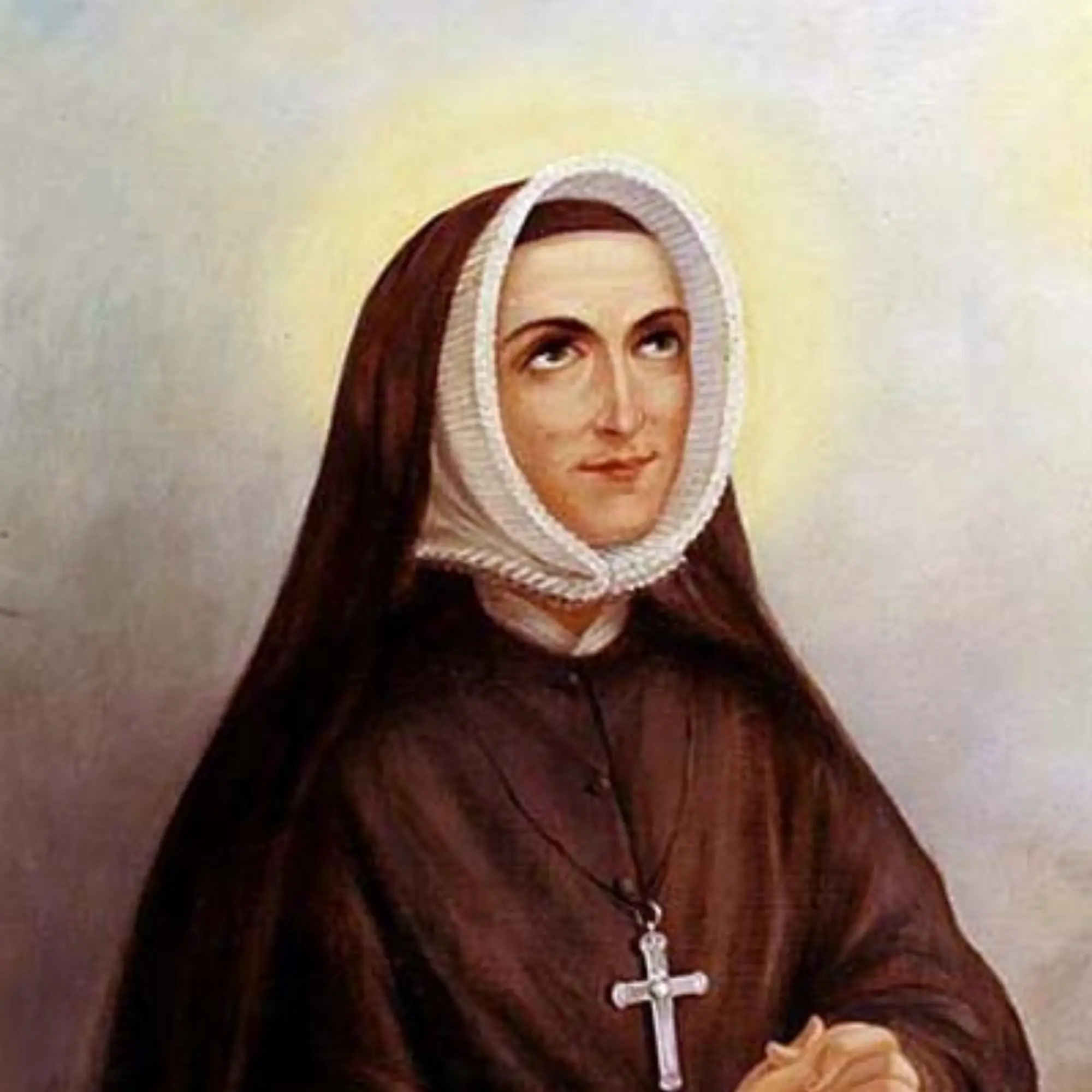
Feast Day: November 18
Saint Rose Philippine Duchesne (1769–1852) was a French Catholic religious sister, missionary, and pioneer of Catholic education in the United States. A member of the Society of the Sacred Heart of Jesus, she dedicated her entire life to spreading the Gospel, educating children, and serving the poor. Her extraordinary missionary journey took her from France to the vast and challenging territories of North America, where she worked tirelessly to establish schools and religious communities.
Known affectionately as the “Woman Who Prays Always,” she possessed an extraordinary spirit of prayer, courage, and perseverance. Even in old age, when physical weakness prevented her from undertaking many activities, she continued to desire one thing above all: to bring the love of Jesus Christ to people who had not yet heard the Gospel.
Her life is a beautiful testimony to missionary dedication, Eucharistic devotion, humility, and perseverance. She reminds us that holiness is not measured by the success we achieve but by our faithfulness to God’s calling.
Early Life and Family Background
Rose Philippine Duchesne was born on August 29, 1769, in Grenoble, France. She came from a respected and prosperous family. Her father, Pierre-François Duchesne, was a prominent lawyer, while her mother, Rose-Euphrosine Périer, belonged to a well-established family.
Philippine grew up during a period of significant political, social, and religious change in France. The French Revolution, which began in 1789, would profoundly affect her life and the future of the Catholic Church in her country.
From childhood, Philippine displayed a strong religious inclination. She was particularly attracted to prayer, the Eucharist, and the lives of missionaries. Stories about missionaries who travelled to distant lands to proclaim the Gospel awakened in her a desire to dedicate her life to Christ.
Her family provided her with a good education. However, Philippine gradually became convinced that her true vocation was not to pursue an ordinary life of comfort and security but to serve God through religious life.
Her Call to Religious Life
At the age of eight, Philippine visited the Monastery of Sainte-Marie-d’en-Haut, belonging to the Visitation Sisters, with her aunt. The experience deeply impressed her.
She became fascinated by the religious life and developed a desire to become a nun.
Despite her family’s initial hesitation, Philippine eventually entered the Visitation convent at Sainte-Marie-d’en-Haut in 1788, when she was eighteen years old.
She embraced religious life with enthusiasm, dedicating herself to prayer, community life, and the service of God.
However, the French Revolution soon brought severe difficulties.
In 1792, revolutionary authorities suppressed religious communities and forced the sisters to leave their convent. The monastery was closed, and the religious life that Philippine had embraced so wholeheartedly was suddenly interrupted.
She returned to her family home, but her vocation remained alive.
Rather than abandoning her religious commitment, she continued to pray, help the poor, and care for priests who were forced to serve secretly during the persecution.
During these difficult years, she understood that fidelity to God sometimes requires patience and the willingness to wait for His time.
The French Revolution and Her Courageous Service
The French Revolution brought enormous suffering to the Catholic Church. Religious houses were closed, priests were persecuted, and many faithful Catholics were forced to practise their religion in secret.
Philippine refused to allow these difficulties to destroy her faith.
She opened her family home to priests and helped them carry out their pastoral ministry. She also visited prisoners and assisted people who were suffering because of the political and religious upheaval.
Her courage was remarkable. At a time when openly supporting the Catholic Church could be dangerous, she continued to live her faith through concrete acts of charity.
She also attempted to restore religious life at Sainte-Marie-d’en-Haut by gathering former Visitation sisters and acquiring the monastery property.
Although these efforts did not develop as she had hoped, they revealed her determination to preserve the spiritual heritage of religious life.
Her years of uncertainty became a period of deeper spiritual preparation for the missionary work that awaited her.
Joining the Society of the Sacred Heart of Jesus
In 1804, Philippine became acquainted with Saint Madeleine Sophie Barat, the foundress of the Society of the Sacred Heart of Jesus.
The Society had been established to promote devotion to the Sacred Heart of Jesus, provide Christian education to young girls, and form women who would dedicate themselves to the service of the Church.
Philippine immediately recognized that this congregation offered the opportunity to fulfil her religious vocation.
She joined the Society of the Sacred Heart in 1804 and brought the former Visitation monastery at Sainte-Marie-d’en-Haut into the congregation.
She became one of the earliest members of the Society and eventually took an important role in its development.
Her relationship with Saint Madeleine Sophie Barat was marked by deep spiritual friendship and mutual trust.
Both women shared a profound devotion to the Sacred Heart of Jesus and a desire to spread His love through prayer, education, and missionary service.
Philippine, however, carried a special missionary dream in her heart: she wanted to travel to America and establish the Society of the Sacred Heart in the New World.
A Missionary Dream: Going to America
Philippine had developed a deep desire to serve as a missionary in distant lands. She was especially attracted to the idea of bringing the Gospel to Native American communities.
Her dream was strengthened by missionary accounts and letters describing the spiritual needs of people in North America.
She believed that God was calling her to undertake a difficult missionary journey.
For several years, she prayed and waited for an opportunity. Eventually, the call came through the bishop of Louisiana, William Louis DuBourg, who was seeking religious sisters to establish Catholic schools and strengthen the Church in his territory.
Philippine and four other sisters were selected for this mission.
After receiving permission from Saint Madeleine Sophie Barat, she prepared to leave France.
She was nearly forty-nine years old when she began this extraordinary adventure.
Her journey reminds us that God’s call does not depend on age or personal convenience. When God invites us to serve Him, He also gives us the grace and strength necessary to respond.
Her Journey to America
On March 14, 1818, Philippine and four other Religious of the Sacred Heart departed from France for America.
The journey across the Atlantic was long and difficult. They travelled by ship, facing uncomfortable conditions and the uncertainty of beginning a new mission in an unfamiliar land.
After arriving in New Orleans in May 1818, the sisters travelled north towards St. Charles, Missouri, which was then part of the vast American frontier.
They encountered a very different world from the one they had left behind. The settlements were small, transportation was difficult, and resources were limited. They also faced language barriers, extreme weather, and the challenges of establishing a religious community in a developing region.
Nevertheless, Philippine remained determined.
She understood that missionary life required sacrifice, patience, and complete trust in Divine Providence.
In September 1818, the sisters opened a school for girls at St. Charles, establishing one of the earliest schools of the Society of the Sacred Heart in the United States.
The school marked the beginning of a remarkable missionary journey that would transform Catholic education in the region.
Establishing Schools and Religious Communities
Philippine’s missionary work was not limited to one location. She desired to establish educational institutions and religious communities wherever the need was greatest.
In 1819, she helped establish a school and convent at Florissant, Missouri. This became an important centre for the Society of the Sacred Heart in America.
The sisters worked tirelessly to educate young girls, provide religious instruction, and form future generations of committed Christians.
Philippine believed that education was an essential instrument of evangelization. She wanted children to develop not only intellectual abilities but also strong moral values, Christian faith, and a spirit of service.
Life was not easy. The sisters frequently experienced poverty, shortages of food, inadequate buildings, and financial difficulties.
At times, their efforts seemed almost impossible. Yet Philippine continued to encourage her companions and place her confidence in God.
Under her leadership, the Society gradually expanded its educational mission.
She helped establish additional schools and communities, contributing significantly to the growth of Catholic education in the United States.
Her perseverance laid the foundation for the flourishing missionary and educational work of the Society of the Sacred Heart in North America.
Her Deep Desire to Evangelize Native American Communities
One of the most distinctive aspects of Saint Philippine’s missionary vocation was her desire to bring the Gospel to Native American peoples.
She believed that the love of Christ should reach every nation, culture, and community.
Although she had devoted many years to establishing schools, her heart continued to long for direct missionary work among Indigenous communities.
She especially desired to serve the Potawatomi people.
In 1841, when she was seventy-one years old, her long-awaited opportunity finally arrived.
Philippine travelled with a group of Religious of the Sacred Heart to Sugar Creek, Kansas, where they established a mission among the Potawatomi.
The journey was physically demanding, particularly for someone of her age. Nevertheless, she embraced the opportunity with extraordinary enthusiasm.
She hoped to teach the children, assist families, and help the community discover the Christian faith.
However, her health was increasingly weak, and the physical demands of missionary life became difficult for her.
Although she was unable to undertake as much active ministry as she had hoped, her presence became a powerful spiritual witness.
The Woman Who Prays Always
“Quah-kah-ka-num-ad” – Woman Who Prays Always
One of the most beautiful aspects of Saint Philippine’s life was her extraordinary spirit of prayer.
During her time among the Potawatomi people, she became known by the name “Quah-kah-ka-num-ad,” traditionally translated as “Woman Who Prays Always.”
This name reflected the deep impression her prayerful presence made on the people around her.
Although she was elderly and physically weak, she spent long hours in prayer, often remaining before the Blessed Sacrament.
She could not always participate in the demanding activities of the mission, but she offered her prayers and sacrifices for the success of the Gospel.
Her life teaches us that missionary work is not accomplished through preaching and physical activity alone. Prayer is itself a powerful missionary service.
A person who faithfully prays for the conversion of hearts, the growth of the Church, and the salvation of souls participates deeply in the mission of Christ.
Philippine’s example is especially inspiring for elderly people, the sick, and those who feel that they can no longer contribute actively to society.
Even when physical strength diminishes, the power of prayer remains.
Her Return to St. Charles
After approximately one year at Sugar Creek, Philippine’s health deteriorated further. The severe conditions of the mission made it impossible for her to continue living there.
In 1842, she returned to St. Charles, Missouri.
Although she was disappointed that she could not continue her missionary activities among the Potawatomi, she accepted her limitations with humility.
She remained united with the Society of the Sacred Heart and continued supporting its mission through prayer and spiritual encouragement.
Her missionary dream had taken her thousands of kilometres from her homeland, but her greatest achievement was not the number of schools she established or the places she visited.
It was her complete surrender to God’s will.
She had travelled across oceans, endured hardship, and offered her entire life for the Gospel.
Now, in her final years, she embraced another form of missionary service: the hidden apostolate of prayer and suffering.
Her Spirituality and Devotion to the Sacred Heart of Jesus
Saint Rose Philippine Duchesne’s entire life was deeply centred on the Sacred Heart of Jesus.
The spirituality of the Society of the Sacred Heart emphasises the love of Christ revealed through His Heart, especially in the mystery of the Incarnation and His Passion.
Philippine understood that the Sacred Heart was the source of missionary love.
Her devotion inspired her to leave behind family comforts, embrace religious life, cross the Atlantic Ocean, and dedicate herself to people she had never previously met.
She believed that the love of Jesus should be made visible through education, compassion, prayer, and service.
Her spirituality was characterized by several important elements:
Eucharistic devotion: She loved spending time before the Blessed Sacrament and drew strength from the presence of Jesus in the Eucharist.
Missionary zeal: She desired to bring the Gospel to people who had not yet received Christian instruction.
Sacrifice and perseverance: She accepted difficulties and disappointments without abandoning her vocation.
Humility: She never sought personal recognition or comfort but desired to serve wherever God called her.
Love for children: She considered Christian education an important way of forming future generations in faith and virtue.
Her life demonstrates that devotion to the Sacred Heart must lead to a heart that loves others generously.
Her Final Years and Death
During the final years of her life, Philippine remained at St. Charles, Missouri.
Although she was no longer able to participate actively in missionary activities, she continued to pray for the congregation, its schools, and the people she had served.
She remained deeply devoted to the Eucharist and maintained her missionary spirit until the end.
Her health gradually declined, and she died peacefully on November 18, 1852, at St. Charles, Missouri, at the age of eighty-three.
Her death was mourned by the Religious of the Sacred Heart and the many people who had benefited from her missionary dedication.
She was remembered as a woman of extraordinary faith, courage, and perseverance.
Her missionary work continued through the sisters she had formed and the educational institutions she had helped establish.
Beatification and Canonization
The Church gradually recognized the extraordinary holiness of Philippine’s life.
Pope Pius XII beatified her on May 12, 1940.
Her reputation for holiness continued to spread, particularly among the Religious of the Sacred Heart and the Catholic communities of the United States.
On July 3, 1988, Pope John Paul II canonized her as a saint.
Her canonization recognized her heroic Christian virtues and the miracle attributed to her intercession.
Today, Saint Rose Philippine Duchesne is remembered as one of the great missionary women of the nineteenth century.
She is especially honoured in the United States and by the Society of the Sacred Heart throughout the world.
Her feast is celebrated on November 18.
Lessons from the Life of Saint Rose Philippine Duchesne
The life of Saint Philippine offers several important lessons for Christians today.
1. Never Abandon the Dreams God Places in Your Heart
Philippine waited many years before she could fulfil her missionary dream. Political difficulties, financial problems, and practical obstacles delayed her plans. Yet she never abandoned her desire to serve God.
Her life reminds us that God’s timing may be different from our expectations. We must remain faithful even when our dreams seem delayed.
2. Missionary Work Requires Sacrifice
Philippine left her homeland, family, familiar surroundings, and personal comforts to proclaim the Gospel. She teaches us that genuine missionary commitment requires generosity and a willingness to embrace difficulties.
3. Prayer Is a Powerful Form of Mission
Her title, “Woman Who Prays Always,” beautifully expresses her spiritual identity. Even when she could no longer work actively, she continued supporting the mission through prayer.
We should never underestimate the spiritual value of praying for others.
4. Age Is Not an Obstacle to Holiness
Philippine undertook her missionary journey to America when she was nearly fifty years old. At seventy-one, she travelled to the Potawatomi mission.
Her life reminds us that God can call us to new beginnings at every stage of life.
5. Education Is an Important Mission of the Church
Through her educational work, Philippine helped generations of children receive intellectual, moral, and spiritual formation.
Her example challenges teachers, parents, and educational institutions to make education a means of forming responsible and compassionate human beings.
6. Accept God’s Will with Humility
Philippine dreamed of active missionary work among Indigenous communities, but her health eventually prevented her from continuing. Instead of becoming bitter, she accepted her limitations and continued serving through prayer.
Sometimes God asks us to change our plans without abandoning our purpose.
7. Love Must Cross Boundaries
Philippine travelled from France to America because she believed that the Gospel belonged to everyone. Her life challenges us to overcome divisions of nationality, language, culture, and social status.
The love of Christ has no boundaries.
A Prayer Through the Intercession of Saint Rose Philippine Duchesne
Heavenly Father,
You inspired Saint Rose Philippine Duchesne with an extraordinary love for the Sacred Heart of Jesus and a burning desire to proclaim the Gospel to distant lands.
Through her intercession, strengthen our missionary spirit and teach us to serve You with courage, humility, and perseverance.
Lord Jesus, give us hearts that are generous, compassionate, and open to the needs of others. When difficulties discourage us, grant us the strength to continue. When our plans fail, help us trust in Your divine providence.
Bless all missionaries, priests, religious sisters, catechists, teachers, and those who dedicate their lives to the education and formation of young people.
Remember those who work among the poor, marginalized, and Indigenous communities. Protect them and make their service fruitful.
Teach us to become people of deep prayer, like Saint Philippine, and help us discover that even our hidden sacrifices can become powerful instruments of Your grace.
May the Sacred Heart of Jesus be our refuge, our strength, and the centre of our lives.
We ask this through Christ our Lord.
Amen.
Saint Rose Philippine Duchesne, pray for us!
Further Reading and References
- Pope John Paul II, Homily at the Canonization of Rose Philippine Duchesne, July 3, 1988.
- Society of the Sacred Heart, Saint Rose Philippine Duchesne: Her Life and Mission.
- Vatican News, Saint Rose Philippine Duchesne.
- Catholic Encyclopedia, “Rose Philippine Duchesne.”
- Archives of the Society of the Sacred Heart, historical materials on Philippine Duchesne and the early missions in the United States.
- Butler’s Lives of the Saints, November 18.
Saint Rose Philippine Duchesne – Feast Day: November 18
Saint Rose Philippine Duchesne teaches us that a life completely surrendered to God can become a blessing to countless people. She crossed oceans, endured hardships, established schools, served the poor, and carried the love of the Sacred Heart of Jesus to distant communities.
Even when age and illness prevented her from active missionary work, she continued to serve through prayer. Her beautiful title, “Woman Who Prays Always,” reminds us that no act of sincere prayer is ever wasted.
May her life inspire us to become courageous missionaries of Christ, generous servants of the poor, dedicated educators, and people deeply rooted in prayer.
May we never become discouraged by difficulties but continue to follow wherever God leads us.
Saint Rose Philippine Duchesne, pray for us!
Leave a Reply