
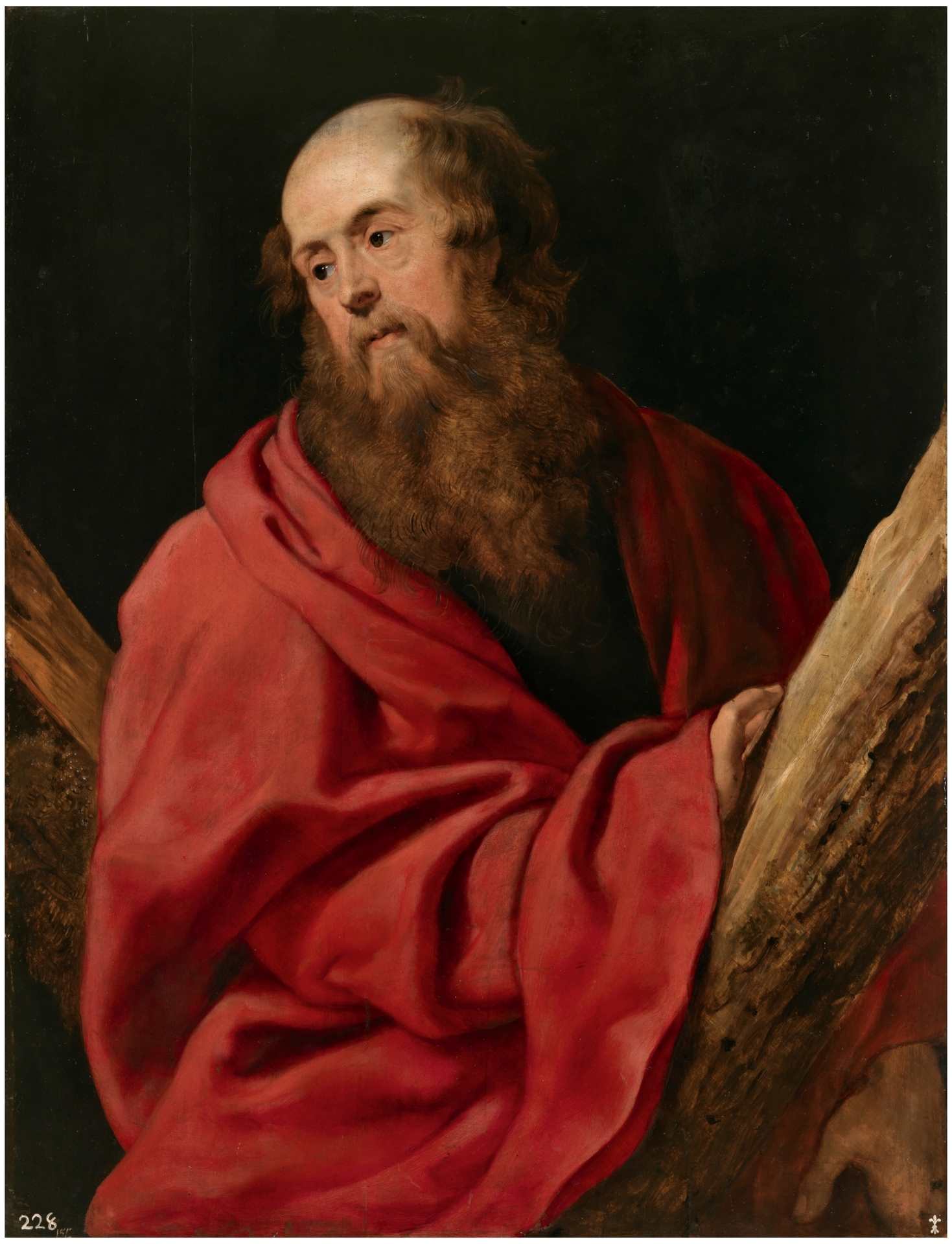
The First-Called Apostle, Brother of Saint Peter and Missionary of Christ
Feast Day: 30 November
Saint Andrew the Apostle was one of the first disciples of Jesus Christ and one of the Twelve Apostles. He is traditionally honoured as the Protokletos, a Greek word meaning “the First-Called.” He was the brother of Saint Peter and a fisherman from Bethsaida in Galilee.
Andrew occupies a special place in the history of Christianity because he was among the first to recognise Jesus as the Messiah. Having encountered Christ, he immediately went to find his brother Simon Peter and introduced him to the Lord.
His life was characterised by faith, humility, missionary zeal and an extraordinary willingness to bring others to Jesus. Though he is not as frequently mentioned in the Gospels as his brother Peter, his contribution to the apostolic mission was significant.
According to ancient Christian tradition, Andrew preached the Gospel in various regions, including Asia Minor and Greece, and eventually suffered martyrdom at Patras. He is traditionally represented with an X-shaped cross, known as the Cross of Saint Andrew.
The Church celebrates his feast on 30 November, remembering his courageous witness and his dedication to proclaiming the Gospel.
1. Early Life and Family Background
Saint Andrew was born in Bethsaida, a fishing village situated near the Sea of Galilee in northern Palestine. He was the son of Jonah (also called John in some biblical translations) and the brother of Simon Peter.
Andrew and Peter belonged to a Jewish family whose livelihood depended on fishing. They later lived and worked in Capernaum, another important town near the Sea of Galilee.
Andrew was a fisherman by profession. His work required patience, perseverance, physical strength and the ability to work with others. These ordinary experiences of life would later become part of his apostolic mission.
The name Andrew comes from the Greek Andreas, meaning “manly” or “courageous.”
Although the New Testament provides very little information about his childhood and family life, it clearly reveals his spiritual sensitivity and openness to God’s call.
Unlike many people who encountered Jesus during His public ministry, Andrew was already searching for the Messiah before he became one of His disciples.
2. A Disciple of John the Baptist
Before meeting Jesus, Andrew was a disciple of John the Baptist.
John the Baptist was a prophetic preacher who called the people to repentance and prepared them for the coming of the Messiah. He baptised people in the Jordan River and encouraged them to turn away from sin and prepare their hearts for God’s kingdom.
Andrew was among those who listened to John’s preaching and awaited the promised Saviour.
One day, John the Baptist saw Jesus approaching and declared:
“Behold, the Lamb of God!” (John 1:36)
These words changed Andrew’s life.
He recognised that Jesus was the One whom John had been announcing. Along with another disciple, he began following Jesus.
When Jesus noticed them following Him, He asked:
“What are you looking for?” (John 1:38)
They replied:
“Rabbi, where are you staying?” (John 1:38)
Jesus answered:
“Come, and you will see.” (John 1:39)
Andrew and the other disciple went with Jesus and remained with Him that day.
The Gospel of John even records the approximate time of this encounter: it was about four in the afternoon.
This was the beginning of Andrew’s personal relationship with Jesus Christ. He was no longer merely listening to someone speaking about the Messiah; he had encountered the Messiah Himself.
3. The First-Called Apostle
Saint Andrew is traditionally known as the First-Called Apostle because he was among the first disciples to follow Jesus.
The Eastern Churches particularly honour him with the title Protokletos, meaning “the First-Called.”
His encounter with Jesus was not a passing experience. It transformed his entire life.
Andrew discovered that the One whom he had been seeking was now standing before him. He recognised Jesus as the promised Messiah and immediately wanted to share this discovery with someone he loved.
His first missionary activity was directed towards his own family.
This simple action reveals an important dimension of Christian evangelisation: we must first bring the Good News to those who are closest to us.
4. Andrew Brings His Brother Peter to Jesus
One of the most significant events in Andrew’s life is recorded in the Gospel of John.
After spending time with Jesus, Andrew immediately went to find his brother Simon.
He told him:
“We have found the Messiah.” (John 1:41)
Then he brought Simon to Jesus.
When Jesus looked at Simon, He said:
“You are Simon son of John; you will be called Cephas” (which is translated Peter). (John 1:42)
This meeting would change the history of Christianity.
Andrew introduced his brother to Jesus, and Simon Peter eventually became the leader of the Twelve Apostles and a foundational figure in the early Church.
Andrew never sought recognition for himself. He was content to bring another person to Christ.
This is one of the most beautiful lessons of his life: sometimes the greatest contribution we can make to the Church is simply to introduce someone to Jesus.
Andrew did not know what Simon Peter would eventually become. He simply knew that he had found the Messiah and wanted his brother to experience the same joy.
His example teaches us that every Christian can become an instrument through whom another person encounters Christ.
5. The Call to Become Fishers of Men
The Synoptic Gospels provide another account of Andrew’s calling.
Jesus was walking along the shore of the Sea of Galilee when He saw two brothers, Simon Peter and Andrew, casting their nets into the sea.
Jesus called them:
“Come after me, and I will make you fishers of men.” (Matthew 4:19)
The Gospel tells us:
“At once they left their nets and followed him.” (Matthew 4:20)
Andrew and Peter left behind their fishing nets, their familiar occupations and their previous way of life to follow Jesus.
This was not merely a change of profession. It was a complete transformation of their lives.
The sea that had once provided their livelihood would become a symbol of the world into which they would eventually be sent to proclaim the Gospel.
Jesus did not promise them an easy life. Instead, He invited them to participate in His mission of salvation.
Andrew responded without hesitation.
His response teaches us that following Christ requires trust, courage and a willingness to place God’s call above our personal security.
6. One of the Twelve Apostles
Andrew became one of the Twelve Apostles chosen by Jesus.
He belonged to the close circle of disciples who accompanied the Lord during His public ministry. He witnessed Jesus’ teachings, miracles, healing ministry and extraordinary encounters with people.
In the lists of the Twelve Apostles, Andrew is usually mentioned among the first four, together with Peter, James and John.
Although Peter frequently appears as the spokesperson of the Apostles, Andrew also played important roles in several Gospel events.
His presence in these accounts reveals a disciple who was observant, practical and attentive to the needs of others.
He did not always occupy the centre of attention, but he was often present at significant moments in Jesus’ ministry.
7. Andrew and the Miracle of the Multiplication of Loaves
One of the most memorable appearances of Saint Andrew occurs in the account of the multiplication of the loaves and fishes.
A large crowd had gathered to listen to Jesus. As evening approached, the people were hungry, and the disciples wondered how they could provide food for so many.
Jesus asked Philip where they could buy bread to feed the people.
Andrew noticed a young boy who had five barley loaves and two fish.
He brought this information to Jesus and said:
“There is a boy here who has five barley loaves and two fish; but what good are these for so many?” (John 6:9)
Humanly speaking, the available food was completely insufficient for the enormous crowd.
However, Andrew brought the little that was available to Jesus.
The Lord took the five loaves and two fish, gave thanks and distributed them among the people. Everyone ate until they were satisfied, and twelve baskets of leftovers were collected.
This event teaches us a profound spiritual lesson.
God does not necessarily ask us to possess extraordinary resources. He asks us to offer whatever we have with faith and generosity.
Andrew did not have enough food to feed the crowd, but he knew where to take the little that was available.
The miracle began with someone willing to offer a small gift to Jesus.
This is a beautiful message for families, priests, religious and every Christian community. Our talents, time, resources and abilities may appear insignificant, but when placed in the hands of Christ, they can become instruments of extraordinary blessings.
8. Andrew Brings the Greeks to Jesus
Another important episode involving Saint Andrew is recorded in John 12:20–22.
Some Greeks had come to Jerusalem for the Passover celebration. They approached Philip and expressed their desire to meet Jesus.
They said:
“Sir, we would like to see Jesus.” (John 12:21)
Philip went and told Andrew, and Andrew and Philip together brought the message to Jesus.
This incident is significant because it reveals Andrew’s missionary character.
He was willing to introduce people from different cultural and religious backgrounds to Christ.
The Greeks represented people beyond the immediate Jewish community who were interested in meeting Jesus.
Andrew’s role in bringing them to the Lord anticipates the universal mission of the Church: the Gospel is meant for every nation and every people.
His example reminds us that the Church must always remain open to those who sincerely seek Christ.
9. Andrew Among the Apostles Who Witnessed Jesus’ Teaching
Saint Andrew also appears in the Gospel account of Jesus’ teaching on the Mount of Olives.
In Mark 13:3, Andrew is mentioned alongside Peter, James and John.
They privately asked Jesus about the signs of the coming destruction of the Temple and the events associated with the end times.
Jesus responded with an extensive teaching about vigilance, perseverance, suffering and the need to remain faithful.
Andrew was therefore among the disciples who received some of Jesus’ important private instructions.
These encounters helped prepare him for the challenges of apostolic ministry after the Resurrection.
10. Saint Andrew and the Early Church
After the Resurrection of Jesus and His Ascension into heaven, Andrew remained with the other Apostles.
The Acts of the Apostles mentions him among those who gathered in Jerusalem in prayer.
Acts 1:13 lists Andrew among the Apostles who were present in the upper room, awaiting the promised coming of the Holy Spirit.
Together with Mary, the Mother of Jesus, and the other disciples, they devoted themselves to prayer.
On the day of Pentecost, the Holy Spirit descended upon the Apostles and gave them courage to proclaim the Gospel.
From that moment onwards, the Apostles began their missionary work with renewed confidence.
Although the New Testament does not provide a detailed account of Andrew’s subsequent missionary journeys, ancient Christian traditions associate him with evangelisation in several regions.
According to these traditions, he preached in Asia Minor, along the Black Sea and in Greece.
He is particularly associated with the Christian communities of Byzantium and Patras.
The ancient traditions surrounding his missionary activity contributed to his special place in the spiritual heritage of Eastern Christianity.
11. His Missionary Journey and Preaching in Greece
Much of what is known about Andrew’s missionary journeys comes from early Christian traditions rather than the canonical Scriptures.
According to these traditions, Andrew travelled through different regions, proclaiming Jesus Christ as the Saviour.
He is traditionally associated with missionary work among the peoples living around the Black Sea, in Asia Minor and in Greece.
Patras, a city in the region of Achaea in Greece, is especially connected with the final chapter of his earthly life.
There he is believed to have preached the Gospel, converted people to Christianity and established a Christian community.
His preaching brought him into conflict with the authorities who opposed the Christian faith.
Tradition identifies the Roman governor Aegeas, also known as Aegeates, as the official responsible for his arrest and martyrdom.
Although the details of these events are preserved principally in ancient Christian traditions, Andrew’s martyrdom at Patras has remained central to his historical veneration.
12. The Martyrdom of Saint Andrew
Saint Andrew’s missionary journey eventually ended in martyrdom.
According to ancient tradition, he was arrested in Patras because of his preaching about Jesus Christ.
He was brought before the Roman authorities and ordered to abandon his Christian faith.
Andrew refused to deny Christ.
He continued to proclaim the Gospel and remained faithful to the Lord even when threatened with death.
Tradition tells us that he was condemned to crucifixion.
However, he was not nailed to an ordinary upright cross. He was bound to a cross shaped like the letter X.
This distinctive cross later became known as the Cross of Saint Andrew.
According to the traditional account, Andrew considered himself unworthy to die on a cross identical to the one on which Jesus had been crucified.
He therefore accepted the X-shaped cross with humility.
Tradition further recounts that he remained alive on the cross for two days, continuing to instruct and encourage the people who gathered around him.
His death is traditionally dated to around the middle or latter part of the first century, although the precise year is uncertain.
His feast is celebrated on 30 November, the traditional date of his martyrdom.
His courageous death became a powerful witness to the Christian conviction that faithfulness to Christ is more valuable than earthly life.
13. The Cross of Saint Andrew
The X-shaped cross and its spiritual meaning
The most recognisable symbol associated with Saint Andrew is the X-shaped cross, commonly called the Saltire or Cross of Saint Andrew.
According to Christian tradition, this was the form of the cross on which he suffered martyrdom.
The cross has become an important Christian symbol and appears in churches, religious artwork and national emblems.

It is particularly famous because it forms the central design of the national flag of Scotland.
The Cross of Saint Andrew reminds Christians of three important spiritual realities:
- Faithfulness: Andrew remained faithful to Jesus even in the face of death.
- Humility: He did not seek personal glory or recognition.
- Mission: His suffering became a testimony to the Gospel he had preached.
The cross also reminds us that Christian discipleship involves carrying our own crosses with courage and trusting in the saving power of Jesus Christ.
14. The Relics of Saint Andrew
After his martyrdom, Saint Andrew was venerated by the Christian community of Patras.
According to historical tradition, his relics were transferred to Constantinople in the fourth century, during the reign of Emperor Constantius II, around the year 357.
They were placed in the Church of the Holy Apostles, where they became objects of great veneration.
During the thirteenth century, following the Crusader occupation of Constantinople, some of his relics were transferred to Italy.
They were eventually preserved in the Cathedral of Amalfi, where Saint Andrew is particularly honoured.
Other relics are associated with Patras and various Christian communities.
In 1964, Pope Paul VI arranged for relics of Saint Andrew preserved in the Vatican to be returned to Patras as a gesture of friendship and Christian unity.
This gesture was particularly meaningful because Saint Andrew is deeply venerated in both the Catholic and Eastern Orthodox traditions.
His memory continues to unite Christians across different traditions.
15. Saint Andrew and the Eastern Christian Tradition
Saint Andrew occupies a particularly important position in Eastern Christianity.
He is traditionally regarded as the founder and patron of the Church of Constantinople, which today is represented by the Ecumenical Patriarchate of Constantinople.
The Eastern Orthodox Churches honour him as the First-Called Apostle and celebrate his feast on 30 November.
He is also closely associated with the Christian heritage of several countries, including:
- Greece
- Romania
- Russia
- Ukraine
- Scotland
- Georgia
His missionary legacy has become an important part of the spiritual identity of these nations.
In the Catholic Church, Saint Andrew is also honoured as the patron saint of fishermen and is especially associated with the city of Patras in Greece.
His place in Eastern Christianity is a reminder of the common apostolic heritage shared by the Catholic and Orthodox Churches.
16. Patronage of Saint Andrew
Saint Andrew is traditionally invoked as the patron and protector of several communities and professions.
He is particularly associated with:
Fishermen: Because he and his brother Peter were fishermen before following Jesus.
Scotland: Saint Andrew is the patron saint of Scotland. The Scottish national flag displays his X-shaped cross.
Greece: He is closely connected with the city of Patras, where he is traditionally believed to have suffered martyrdom.
Russia and Ukraine: He is honoured through ancient Christian traditions associating him with the evangelisation of these regions.
Romania: He is especially venerated as an apostolic missionary associated with the beginnings of Christianity in the region.
The Church of Constantinople: He is honoured as its traditional apostolic founder and patron.
His example is particularly meaningful for those who work at sea, earn their livelihood through fishing and depend upon God’s protection in dangerous circumstances.
17. Important Biblical References to Saint Andrew
Although Andrew does not speak frequently in the Gospels, the occasions on which he appears reveal important aspects of his personality and faith.
| Biblical reference | Event |
|---|---|
| John 1:35–40 | Andrew follows Jesus after the testimony of John the Baptist |
| John 1:41–42 | Andrew brings Simon Peter to Jesus |
| Matthew 4:18–20 | Andrew and Peter are called to become fishers of men |
| Mark 1:16–18 | Jesus calls Andrew and Peter |
| Luke 6:14 | Andrew is included among the Twelve Apostles |
| John 6:8–9 | Andrew identifies the boy with five loaves and two fish |
| Mark 13:3–4 | Andrew questions Jesus about the future |
| John 12:20–22 | Andrew helps the Greeks approach Jesus |
| Acts 1:13 | Andrew is present with the Apostles in Jerusalem |
These passages provide a beautiful biblical portrait of Andrew as a man who encountered Christ, followed Him faithfully and introduced others to Him.
18. Spiritual Lessons from the Life of Saint Andrew
The life of Saint Andrew offers several powerful lessons for Christians today.
1. Introduce Others to Jesus
Andrew’s first action after meeting Jesus was to bring his brother Simon to Him.
He did not keep the joy of discovering the Messiah to himself.
Every Christian is called to do something similar. We may not be preachers or missionaries in the traditional sense, but we can introduce people to Jesus through our words, kindness, prayer and personal example.
Our families, workplaces, friendships and communities are places where we can share the love of Christ.
2. Be Willing to Leave Everything for Christ
Andrew left his fishing nets when Jesus called him.
His response teaches us that discipleship requires commitment and sacrifice.
Sometimes following Jesus means leaving behind harmful habits, selfish ambitions, unhealthy attachments and anything that prevents us from becoming faithful disciples.
3. Offer the Little You Have
The episode of the five loaves and two fish teaches us that God can accomplish extraordinary things through our small offerings.
We may feel that our talents, resources or abilities are insufficient.
However, Andrew teaches us to place everything in the hands of Jesus.
What appears insignificant in our eyes can become a blessing for many when offered to God.
4. Do Not Seek Recognition
Andrew was not always at the centre of attention among the Apostles.
His brother Peter became a prominent leader in the early Church, but Andrew remained faithful to his own calling.
He teaches us that we do not need public recognition to make a meaningful contribution to God’s kingdom.
True greatness lies in serving Christ faithfully.
5. Welcome Everyone Who Seeks Jesus
When the Greeks wanted to meet Jesus, Andrew helped them approach the Lord.
His example reminds us that Christianity is universal.
The Church must welcome people from every nation, language, culture and background.
No one should feel that the love of Christ is beyond their reach.
6. Remain Faithful Until the End
Andrew’s martyrdom demonstrates his extraordinary courage and fidelity.
He did not abandon his faith when confronted with suffering and death.
His example encourages us to remain faithful during difficulties, disappointments, illness, persecution and uncertainty.
19. Saint Andrew and the Mission of the Church Today
Saint Andrew is an excellent model of evangelisation for the contemporary Church.
His missionary method was remarkably simple: he encountered Jesus and introduced others to Him.
He did not begin with complicated arguments or impressive speeches. He shared the greatest discovery of his life with his brother:
“We have found the Messiah.”
This simple testimony remains relevant in our families and parishes.
Parents can introduce their children to Jesus through family prayer and Christian values. Teachers can introduce students to Christ through their example. Priests and religious can lead people towards a personal encounter with the Lord through the sacraments and pastoral ministry.
Young people can become missionaries among their friends through friendship, integrity and courage.
Saint Andrew also reminds us that evangelisation begins with a personal relationship with Christ. We cannot effectively introduce others to someone whom we do not personally know and love.
His life challenges every Christian to ask:
Have I introduced someone to Jesus?
20. Prayer to Saint Andrew the Apostle
O glorious Saint Andrew, First-Called Apostle of Jesus Christ, you heard the invitation of the Lord and immediately left everything to follow Him.
You discovered the Messiah and joyfully brought your brother Simon Peter to Jesus.
Obtain for us the grace of a deep and personal relationship with Christ. Teach us to recognise His voice, respond generously to His call and remain faithful to Him throughout our lives.
Help us to become instruments of evangelisation in our families, parishes and communities. Give us the courage to proclaim the Gospel through our words and actions.
Just as you brought the little boy with five loaves and two fish to Jesus, teach us to offer our talents, resources and abilities generously to the Lord.
Pray especially for fishermen, seafarers and all those who work on the waters. Protect them from dangers and bless their families with security and peace.
Intercede for missionaries, priests, religious and all those who dedicate their lives to proclaiming the Gospel.
Obtain for us the grace of perseverance in faith, humility in service and courage in suffering.
May we one day share with you the eternal joy of seeing Jesus face to face.
Through Christ our Lord. Amen.
Saint Andrew the Apostle, pray for us!
21. A Short Novena Prayer to Saint Andrew
Glorious Saint Andrew, you were among the first to follow Jesus and proclaim Him as the Messiah. Obtain for me the grace to love Jesus more deeply and to follow Him faithfully.
Bring my family and loved ones closer to Christ. Intercede for my personal intentions, difficulties and needs.
Help me to become a person of faith, humility, generosity and courage. May I never hesitate to share the love of Jesus with others.
Saint Andrew, First-Called Apostle, pray for us. Amen.
22. A Reflection for the Feast of Saint Andrew
“We have found the Messiah.” (John 1:41)
These simple words reveal the heart of Saint Andrew’s spirituality.
Andrew had found something infinitely greater than anything he could have discovered through his fishing profession. He had found Jesus Christ, the Saviour of the world.
His first response was not to keep this discovery to himself. He went in search of his brother and brought him to Jesus.
This is the essence of Christian life. When we genuinely encounter Christ, we naturally desire to share Him with others.
Sometimes we think that evangelisation requires extraordinary talents, extensive theological knowledge or special positions in the Church. Saint Andrew teaches us otherwise.
He began with his own brother. He shared what he had personally experienced.
Perhaps the most important question we can ask ourselves on his feast day is this:
- Have I brought my family closer to Jesus?
- Have I helped someone discover the love of God?
- Have I offered my gifts and talents for the good of others?
- Am I willing to follow Jesus even when the journey becomes difficult?
May Saint Andrew inspire us to become joyful witnesses of Christ and courageous messengers of the Gospel.
The world does not simply need people who speak about Jesus. It needs people who have encountered Jesus and bring others to Him.
Conclusion
Saint Andrew the Apostle was a humble fisherman who became one of the greatest witnesses of Jesus Christ. He was among the first to follow the Lord, the first to introduce his brother Peter to Him and one of the Apostles who carried the Gospel beyond the boundaries of his homeland.
His life teaches us that holiness begins with a personal encounter with Jesus and grows through faithful discipleship, humility, sacrifice and missionary commitment.
He reminds us that we do not need to possess extraordinary resources to serve God. We simply need to offer what we have, trust in Christ and become instruments through whom others can encounter His love.
As we celebrate his feast on 30 November, may we renew our commitment to follow Jesus with the same enthusiasm and generosity that characterised Saint Andrew.
May we always be ready to say, through our words and actions, “We have found the Messiah!”
Saint Andrew the Apostle, First-Called Disciple, brother of Saint Peter and courageous missionary of Christ, pray for us!
References and Further Reading
- The Holy Bible – John 1:35–42; Matthew 4:18–20; Mark 1:16–18; John 6:1–14; John 12:20–22; Acts 1:12–14.
- Vatican News – Saint Andrew, Apostle. Vatican News+1
- United States Conference of Catholic Bishops – Feast of Saint Andrew, Apostle. USCCB
- Pope Benedict XVI – General Audience, 14 June 2006: Saint Andrew.
- Pope Benedict XVI – Letter on the Feast of Saint Andrew, 30 November 2010. Vatican
- Catholic Encyclopedia – Saint Andrew. newadvent.org
Leave a Reply