
Introduction
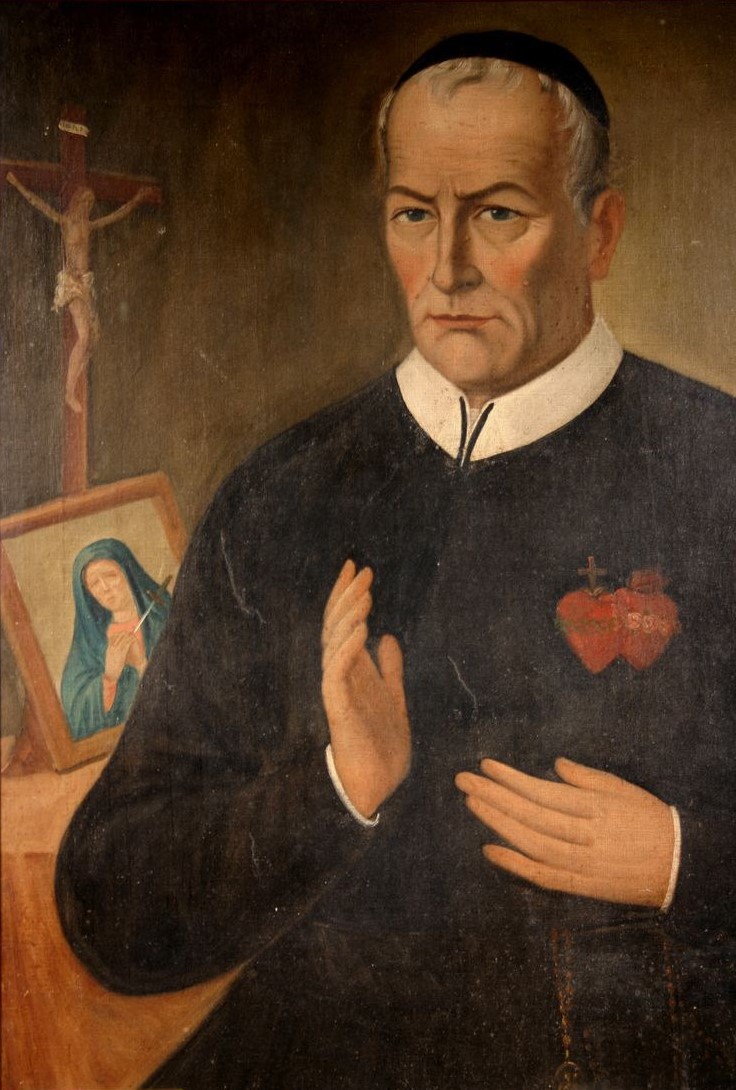
Saint Gaetano Errico (19 October 1791 – 29 October 1860) was an Italian Catholic priest whose life was marked by prayer, penance, missionary zeal, and an extraordinary dedication to the Sacrament of Reconciliation. He founded the Missionaries of the Sacred Hearts of Jesus and Mary, a religious congregation devoted to spreading the love of Christ and the compassionate love of the Blessed Virgin Mary.
Born in Secondigliano, near Naples, Italy, Gaetano grew up in a humble and deeply religious family. From an early age, he displayed a strong desire to serve God. After his ordination to the priesthood, he devoted himself to teaching, catechesis, visiting the sick, preaching the Gospel, and hearing confessions.
His spiritual life was centred on prayer and the love of the Sacred Hearts of Jesus and Mary. He believed that the experience of God’s merciful love should lead people away from sin and toward a renewed relationship with the Father. His ministry was particularly directed toward those who were spiritually troubled, physically ill, socially neglected, or in need of reconciliation.
Canonized by Pope Benedict XVI on 12 October 2008, Saint Gaetano Errico continues to inspire priests, religious, and laypeople through his example of holiness, pastoral charity, and faithful service.
1. Early Life and Family
Gaetano Errico was born on 19 October 1791 in Secondigliano, a community near Naples in southern Italy. He was the son of Pasquale Errico and Maria Marseglia, who lived by honest and modest work. His father managed a small pasta-making business, while his mother worked as a weaver.
The family was not wealthy, but it possessed a strong Christian spirit. Faith, hard work, family responsibility, and prayer shaped the atmosphere in which Gaetano grew up.
He was baptised shortly after his birth in the parish church of Saints Cosmas and Damian. From childhood, he was known for his obedience, seriousness, and devotion. His parents helped him understand that faith was not simply a matter of religious observance but a way of living with responsibility, charity, and trust in God.
As a boy, Gaetano participated in the religious life of his parish and developed a special love for the Eucharist. His early experiences of family prayer and Christian service prepared him for the demanding spiritual life he would later embrace.
His vocation did not develop apart from ordinary responsibilities. Even as he pursued his studies, he remained attentive to his family and to the needs of the people around him.
2. The Call to the Priesthood
Gaetano began discerning a vocation to religious life during his early teenage years. At approximately fourteen, he sought admission to the Capuchins and subsequently to the Redemptorists. Both applications were unsuccessful because he was considered too young.
Rather than abandoning his desire to serve God, he continued his formation. At sixteen, he entered the Archdiocesan Seminary of Naples.
His family’s limited financial resources meant that he could not live as a resident seminarian. He therefore attended as an external student and walked approximately eight kilometres each way to reach the seminary.
This daily journey required perseverance. He continued his studies through different weather conditions while maintaining his spiritual practices and helping his family.
During these years, Gaetano attended Mass regularly and cultivated a strong devotion to the Eucharist. He also visited sick people and encouraged children to attend catechism classes. His concern for others was already evident before he became a priest.
These early experiences reveal an important characteristic of his spirituality: he did not separate prayer from service. His relationship with God strengthened his desire to bring comfort, instruction, and hope to others.
3. Ordination and Early Ministry
Gaetano Errico was ordained a priest on 23 September 1815 in the Chapel of Saint Restituta in the Cathedral of Naples. Following his ordination, he was appointed as a teacher.
For nearly twenty years, he carried out his educational responsibilities with dedication. He considered teaching an opportunity not only to provide knowledge but also to form young people in Christian values.
His ministry extended beyond the classroom. He served in the parish church of Saints Cosmas and Damian, where he proclaimed the Word of God, instructed the faithful, cared for the sick, and administered the sacraments.
His pastoral activity was characterised by four closely connected commitments:
- Proclamation of the Word of God: He preached the Gospel and instructed people in the Christian faith.
- The ministry of reconciliation: He devoted considerable time to hearing confessions and guiding people toward repentance and spiritual renewal.
- Care for the sick: He visited those who were ill and offered both spiritual encouragement and practical assistance.
- Works of charity: He sought to respond to the needs of the poor and vulnerable.
Through these ministries, Gaetano wanted people to experience God not as a distant or indifferent judge but as a loving Father who calls sinners to conversion and offers mercy to those who return to him.
His example demonstrates that effective pastoral ministry requires more than words. It calls for presence, patience, compassion, and a willingness to accompany people through their struggles.
4. The Vision That Changed His Life
An important turning point in Gaetano’s life occurred in 1818 during his annual spiritual retreat at the Redemptorist house in Pagani, near Salerno.
According to the account preserved in the tradition of his congregation, Saint Alphonsus Maria de Liguori appeared to him during prayer and communicated that God desired him to establish a new religious congregation. He was also directed to build a church in Secondigliano in honour of Our Lady of Sorrows.
This experience profoundly influenced Gaetano’s understanding of his vocation. He began to recognise that his priestly mission would extend beyond his existing parish responsibilities.
However, the path toward fulfilling this calling was not easy. Although many people supported the proposed church, others opposed the project. Gaetano encountered suspicion, resistance, and practical obstacles.
He persevered despite these difficulties. He trusted that the work entrusted to him could be accomplished through prayer, patience, and faithful effort.
The church dedicated to Our Lady of Sorrows was blessed on 9 December 1830. A statue of the Sorrowful Mother, commissioned by Gaetano from the sculptor Francesco Verzella, arrived in Secondigliano in May 1835. It became an important focus of local devotion.
This period illustrates a central lesson from his life: discernment requires both prayer and perseverance. A genuine commitment to God’s will does not guarantee an easy path, but it calls for fidelity even when progress is slow.
5. The Sacred Hearts of Jesus and Mary
During a later retreat at Pagani, Gaetano came to understand that the new congregation should be dedicated to the Sacred Hearts of Jesus and Mary.
This devotion became the spiritual foundation of his life and apostolate. He saw the Sacred Heart of Jesus as a sign of Christ’s redeeming love and the Heart of Mary as a maternal expression of faithful love, compassion, and union with her Son.
For Gaetano, devotion to the Sacred Hearts was not merely a private spiritual practice. It was meant to shape the whole of Christian life and missionary activity.
The love of Jesus called people to repentance and reconciliation with God. The example of Mary encouraged them to respond to God’s grace with humility, fidelity, and generous love.
Gaetano sought to communicate this message particularly to those who felt distant from God. He wanted people burdened by sin to discover the possibility of forgiveness and those discouraged by their circumstances to encounter the mercy of the Father.
His spirituality therefore combined contemplation with action. The more deeply he prayed, the more urgently he felt called to seek those in need of spiritual and material assistance.
6. The Foundation of the Missionaries of the Sacred Hearts of Jesus and Mary
Gaetano’s desire to establish a religious congregation gradually became a reality.
He began by establishing a house in Secondigliano where priests and other men who wished to dedicate themselves to the apostolate could gather. The work developed into the congregation known as the Missionaries of the Sacred Hearts of Jesus and Mary.
The congregation received approval from the civil authorities of the Kingdom of the Two Sicilies in 1840. Pope Pius IX granted definitive papal approval in 1846.
Gaetano was elected the first Superior General. He remained deeply involved in the formation of his religious brothers, the development of the congregation, and the expansion of its apostolic activities.
The congregation’s mission reflected the priorities of its founder: preaching the Gospel, promoting devotion to the Sacred Hearts, celebrating the sacraments, conducting spiritual retreats, and reaching out to people who needed reconciliation and pastoral care.
Gaetano understood that a religious congregation could not be sustained by enthusiasm alone. It required prayer, discipline, sound formation, mutual charity, and fidelity to its constitutions.
He therefore gave particular attention to the spiritual and apostolic preparation of his religious brothers. He wanted them to become instruments of God’s mercy in the places where they served.
The congregation continues to draw inspiration from his spirituality and missionary vision.
7. A Tireless Minister of Confession
One of the most distinctive features of Saint Gaetano Errico’s ministry was his dedication to the Sacrament of Reconciliation.
He spent long hours hearing confessions and offering spiritual guidance. He welcomed people who came to him with troubled consciences, moral failures, family burdens, and the desire to begin again.
He understood confession not merely as a religious obligation but as an encounter with the merciful love of God. Through repentance and sacramental absolution, sinners could receive forgiveness and be restored to communion with the Lord.
Gaetano was known for his patience in this ministry. He did not wish people to remain trapped in shame or discouragement. He wanted them to recognise their sins honestly, trust in God’s mercy, and make a sincere effort to change their lives.
His approach reflected the Gospel’s proclamation of God’s desire to seek and save the lost. He understood that the priest in the confessional must be a faithful minister of both truth and mercy.
Truth without compassion can discourage the sinner; compassion without truth can fail to guide a person toward conversion. Gaetano sought to bring both together by helping people recognise the seriousness of sin while assuring them that God’s mercy remains available to those who repent.
For priests today, his example offers a profound lesson in pastoral ministry. The confessional is not simply a place where religious duties are completed. It is a sacred encounter in which a person can experience forgiveness, healing, and a renewed desire to follow Christ.
For all the faithful, his life is an invitation to approach the Sacrament of Reconciliation with humility and trust.
8. His Love for the Sick and the Poor
Saint Gaetano’s holiness was not confined to prayer and sacramental ministry. He also demonstrated a deep concern for people who suffered physically, materially, or socially.
As a young seminarian and later as a priest, he visited the sick and offered assistance to those in need. His ministry extended to workers, artisans, farmers, people with limited education, prisoners, and vulnerable women.
He recognised that many people experienced suffering not only through illness but also through poverty, loneliness, exclusion, and a lack of support.
His response was rooted in the conviction that every person is loved by God. He sought to communicate this truth through personal attention, spiritual guidance, and acts of charity.
His care for the sick was especially significant during periods when disease placed communities under severe strain. Accounts of his life remember his commitment to pastoral service during cholera epidemics.
He did not consider the needs of the body separate from the needs of the soul. He offered spiritual encouragement while remaining attentive to people’s material difficulties.
This integrated vision of charity remains relevant today. Christian service must recognise the whole person: physical, emotional, social, and spiritual. Proclaiming God’s love becomes credible when it is accompanied by practical care for those who suffer.
9. A Life of Prayer and Penance
Saint Gaetano Errico’s active ministry was sustained by an intense life of prayer.
Those who knew him remembered his devotion to the Eucharist and his commitment to prolonged prayer. Tradition also associates his room in Secondigliano with marks left in the floor by the repeated kneeling of his prayer.
He understood that apostolic work must flow from a living relationship with God. Without prayer, ministry can become routine, and religious activity can lose its spiritual centre.
His life also included severe forms of penance, fasting, and bodily discipline, practices associated with the ascetical spirituality of his time. These practices should be understood within their historical context rather than treated as a universal model for every Christian.
The deeper principle behind his penance was the desire for conversion, self-discipline, and solidarity with the suffering Christ. He sought to discipline his desires and free himself from anything that could obstruct his response to God’s call.
His prayer life also strengthened his capacity to serve people patiently. The demands of ministry did not lead him to abandon contemplation; rather, prayer renewed his commitment to pastoral charity.
Saint Gaetano teaches that holiness is not achieved through activity alone. It requires a heart continually renewed by prayer, the sacraments, repentance, and openness to God’s grace.
10. Leadership and the Formation of Religious Life
As founder and Superior General, Gaetano carried significant responsibilities. He had to guide his congregation, form its members, establish communities, and ensure fidelity to the mission entrusted to them.
His leadership was grounded in a clear understanding of religious life. He wanted his brothers to be men of prayer who lived in fraternal charity and dedicated themselves generously to the Church’s mission.
He paid close attention to their formation and to the observance of the congregation’s rules. For him, religious discipline was not intended merely to maintain order. It was meant to help the members grow in holiness and serve more faithfully.
His final words to his religious brothers are traditionally reported as an exhortation to love one another and observe their rules faithfully.
This message captures two essential dimensions of religious life. The first is fraternal charity: a community must be united by sincere love, mutual respect, forgiveness, and service. The second is fidelity to its vocation: members must remain committed to the spiritual and apostolic purpose for which the congregation exists.
Saint Gaetano’s leadership reminds all those entrusted with responsibility in the Church that authority should be exercised in the service of communion, formation, and mission.
11. His Final Days and Death
Saint Gaetano Errico spent the final years of his life continuing the work of his congregation and ministering to the people entrusted to his care.
Despite the demands of his responsibilities, he remained committed to prayer, preaching, confession, and the formation of his religious brothers.
He died in Secondigliano on 29 October 1860, at the age of sixty-nine.
His death was met with deep sorrow among the people who had known him. His reputation for holiness had grown through his pastoral work, his care for the poor and sick, his spiritual guidance, and his devotion to the Sacred Hearts.
His life left behind a legacy that extended beyond his own community. The congregation he founded continued its apostolic mission, while the faithful remembered him as a priest who had sought to lead people toward the merciful love of God.
His death did not bring an end to the spiritual influence of his life. The Church continued to examine his virtues and the testimony associated with his ministry, eventually recognising him as a saint.
12. The Road to Beatification and Canonization
The Church’s recognition of Gaetano Errico’s holiness developed through a formal process.
Pope Leo XIII declared him Venerable in 1884, recognising the heroic character of his virtues. Pope Paul VI confirmed the heroic nature of his virtues through a decree in 1974.
Pope John Paul II beatified him on 14 April 2002 after the approval of a miracle attributed to his intercession.
On 12 October 2008, Pope Benedict XVI canonized him at Saint Peter’s Square in Vatican City. Through canonization, the Church formally recognised him as a saint and proposed his life as an example of Christian holiness.
His liturgical memorial is celebrated on 29 October, the anniversary of his death.
The process of canonization was not simply a recognition of extraordinary religious activity. It acknowledged a life shaped by faith, hope, charity, and a sustained commitment to the service of God and neighbour.
Saint Gaetano’s canonization encourages the faithful to recognise that holiness can flourish through the ordinary responsibilities of life when they are lived with extraordinary love.
13. Spiritual Lessons from Saint Gaetano Errico
A. Make prayer the foundation of life
Saint Gaetano’s ministry was sustained by his deep commitment to prayer and the Eucharist. His example reminds us that prayer is not an interruption of our responsibilities but the spiritual foundation that helps us fulfil them faithfully.
B. Trust in the mercy of God
His dedication to confession reveals his confidence in God’s desire to forgive and restore those who repent. No one should presume upon God’s mercy, but neither should anyone despair of it. The invitation is always to return to the Lord with a sincere heart.
C. Let devotion lead to service
Saint Gaetano’s love for the Sacred Hearts moved him to care for the sick, the poor, and the neglected. Genuine devotion must shape our conduct and make us more attentive to the needs of others.
D. Persevere when God’s work encounters obstacles
The construction of the church in honour of Our Lady of Sorrows and the establishment of his congregation required years of effort. His perseverance teaches us to combine prayer with patience and responsible action.
E. Care for the whole person
His ministry included preaching, sacramental care, education, and practical assistance. Christian charity must attend to the spiritual and material needs of people, especially those who are vulnerable.
F. Practise mutual charity
His exhortation to his religious brothers to love one another remains a valuable principle for families, parishes, religious communities, and workplaces. Unity grows through humility, forgiveness, patience, and a willingness to serve.
G. Renew the Church through holiness
Saint Gaetano did not seek renewal through criticism alone. He worked to form people in faith, strengthen sacramental life, and establish a community dedicated to the Gospel. His example reminds us that the renewal of the Church begins with hearts converted to Christ.
14. A Personal Reflection: Learning to Live from the Sacred Hearts
Saint Gaetano Errico’s life invites us to consider an important question: Where do we turn when our hearts become tired, wounded, or distant from God?
Many people carry burdens that remain hidden from others. Some struggle with guilt over past mistakes. Others are anxious about their families, uncertain about the future, or discouraged by repeated failures. Some continue to fulfil their responsibilities outwardly while experiencing deep spiritual exhaustion within.
Saint Gaetano’s ministry of reconciliation reminds us that we do not have to remain imprisoned by our failures. We can return to the Lord, confess our sins, receive his forgiveness, and begin again.
His devotion to the Sacred Heart of Jesus also invites us to contemplate a love that does not abandon the sinner. Christ calls us to conversion, but he also offers the grace needed to change. He does not invite us to remain in darkness; he calls us into the light of truth and mercy.
The Heart of Mary teaches us another important lesson: to remain faithful even when God’s ways are difficult to understand. Mary stood close to her Son in his suffering, and her example encourages us to accompany others with compassion rather than judgement.
Perhaps the most practical way to honour Saint Gaetano is to allow his spirituality to transform our daily lives. We can spend time in prayer, participate faithfully in the Eucharist, approach confession with sincerity, forgive someone who has hurt us, visit a sick person, or offer encouragement to someone who feels forgotten.
These actions may appear small, but they become meaningful when they flow from a heart united with Christ.
Saint Gaetano shows us that holiness is not reserved for people who perform extraordinary deeds. It grows wherever God’s love is welcomed and shared faithfully.
May our devotion to the Sacred Hearts of Jesus and Mary lead us toward deeper conversion, greater compassion, and a more generous service of others.
15. Prayer to Saint Gaetano Errico
Saint Gaetano Errico, faithful priest and founder of the Missionaries of the Sacred Hearts of Jesus and Mary, intercede for us before the Lord.
You devoted your life to prayer, the Eucharist, the Sacrament of Reconciliation, and the service of those who were sick, poor, and troubled. Help us to discover the merciful love of God in every circumstance of our lives.
Pray for priests and religious, that they may remain faithful to their vocation and become compassionate ministers of God’s mercy. Strengthen those who serve in the confessional, preach the Gospel, guide the young, and accompany people who are searching for spiritual peace.
Remember those who are burdened by guilt, those who have been away from the Church, and those who find it difficult to believe that God can forgive them. Obtain for them the grace of repentance and the courage to return to the Lord.
Pray for the sick, the poor, the lonely, and all who feel forgotten. Help us to recognise Christ in their suffering and to respond with generous and practical love.
May our hearts be formed by the Sacred Heart of Jesus and the Immaculate Heart of Mary. Teach us to pray faithfully, forgive sincerely, persevere through difficulties, and serve others with humility.
Saint Gaetano Errico, faithful witness to God’s mercy, pray for us, that we may grow in holiness and lead others to the love of Christ.
Amen.
Conclusion
Saint Gaetano Errico stands as a powerful example of priestly holiness, missionary dedication, and confidence in the mercy of God. Through his ministry in Secondigliano and the foundation of the Missionaries of the Sacred Hearts of Jesus and Mary, he sought to lead people toward a deeper relationship with Christ.
His love for the Eucharist sustained his prayer. His dedication to confession expressed his confidence in God’s forgiveness. His service to the sick and the poor demonstrated that devotion must become concrete charity. His perseverance in establishing a religious congregation revealed his willingness to work patiently for the mission entrusted to him.
His life continues to speak to the Church today. In a world where many people experience loneliness, guilt, anxiety, and spiritual discouragement, Saint Gaetano reminds us that the love of God is a source of conversion and hope.
May his intercession inspire us to become people of prayer, ministers of reconciliation, and witnesses to the compassionate love of the Sacred Hearts of Jesus and Mary.
Saint Gaetano Errico, pray for us!
References
- The Holy Bible. Relevant passages: Luke 15:11–32; John 19:31–37; John 20:19–23; Romans 5:5–8; 1 John 4:7–12.
- Vatican, “Gaetano Errico (1791–1860): Biography,” prepared for his canonization, 12 October 2008.
- Vatican, Homily for the Canonization of Blessed Gaetano Errico and other blesseds, 12 October 2008.
- Dicastery for the Causes of Saints, official biography of Saint Gaetano Errico.
- Missionaries of the Sacred Hearts of Jesus and Mary, historical and spiritual materials concerning their founder.
Further Reading
- Vatican biography of Saint Gaetano Errico: https://press.vatican.va/news_services/liturgy/saints/2008/ns_lit_doc_20081012_errico_en.html
- Dicastery for the Causes of Saints – Gaetano Errico: https://www.causesanti.va/it/santi-e-beati/gaetano-errico.html
- Missionaries of the Sacred Hearts of Jesus and Mary: https://www.missionofsacredhearts.org/
Leave a Reply