
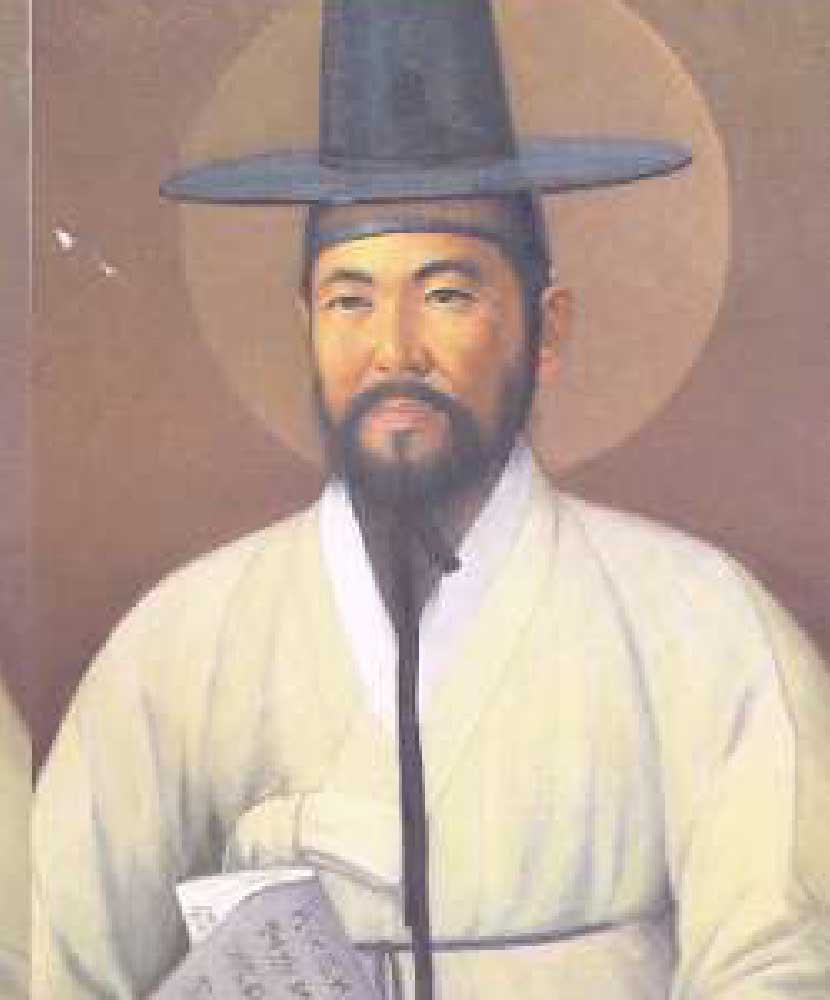
Feast Day: September 20
Saint Paul Chong Hasang was one of the great lay leaders of the early Catholic Church in Korea. He was not a priest, yet he devoted his life to strengthening the Korean Catholic community, obtaining priests for the faithful, encouraging persecuted Christians, and defending the Catholic faith.
His life is a remarkable testimony to the missionary vocation of the laity. Through courage, perseverance, and deep faith, Paul Chong Hasang helped establish a stronger foundation for the young Korean Church. He eventually gave his life for Christ during the persecution of 1839.
He was canonized together with Saint Andrew Kim Taegon and 101 other Korean martyrs by Pope Saint John Paul II in Seoul on May 6, 1984. Their liturgical memorial is celebrated on September 20.
1. The Remarkable Beginning of Catholicism in Korea
The beginnings of Catholicism in Korea are unusual in the history of the Church.
The faith initially took root not through a large missionary enterprise, but through the efforts of Korean laypeople who encountered Christian writings coming from China.
During the late eighteenth century, Korean scholars began studying books about Christianity. Some of them became convinced of the truth of the Christian faith and sought baptism.
In 1784, Yi Seung-hun traveled to Beijing, where he was baptized and subsequently returned to Korea. He and other early believers helped establish a Catholic community in Korea.
When the Chinese priest Father Zhou Wen-mo entered Korea in 1794, he found approximately 4,000 Catholics already living there.
The new Church, however, soon encountered severe persecution.
It was in this difficult environment that Paul Chong Hasang was born and raised.
2. Born into a Family of Martyrs
Paul Chong Hasang was born around 1795 into a Catholic family.
His father, Augustine Chong Yak-jong, was one of the leading Catholics of the early Korean Church. He wrote a catechetical work known as Jugyo Yoji, intended to explain Catholic teaching to Korean readers.
In 1801, during a major persecution, Paul’s father was arrested and executed because of his Catholic faith.
Paul was still a child.
His older brother also died as a martyr.
Thus, from his earliest years, Paul experienced the cost of discipleship in a very personal way. His family had already demonstrated that faith in Christ could demand the ultimate sacrifice.
Yet the persecution did not extinguish Paul’s faith.
Instead, the example of his family helped form him into a courageous servant of the Church.
3. A Layman Who Became a Leader
Paul grew into a deeply committed Catholic.
At a time when Korea had very few priests and when the Catholic faith was prohibited, he took responsibility for helping the Christian community survive.
He became a catechist and lay leader, instructing fellow Catholics and encouraging them to remain faithful.
His life demonstrates something important about the history of Christianity:
The mission of the Church does not belong only to priests and religious.
The early Korean Church depended greatly upon courageous laypeople.
Paul was one of its most dedicated servants.
He understood the needs of his fellow Christians and refused to remain passive.
4. His Long Journey to Beijing
One of Paul’s greatest contributions was his effort to obtain priests for the Korean Church.
The Catholics of Korea desperately needed sacramental and pastoral care. They needed the Eucharist, Confession, spiritual guidance, and the regular ministry of priests.
Paul therefore undertook dangerous journeys to Beijing, China, seeking assistance from the Catholic Church there.
Travel in those days was extremely difficult. The journey itself was long and dangerous, and returning to Korea with Catholic contacts carried considerable risk.
Yet Paul persevered.
He repeatedly sought help for his fellow Catholics.
His concern was not simply for himself.
His question was:
How can the Korean Church receive the pastoral care it needs?
This was an extraordinary expression of his love for the Church.
5. Seeking Missionaries for Korea
Paul’s efforts eventually helped bring greater attention to the needs of the Korean Church.
He appealed through the Church in Beijing and sought the establishment of a regular missionary presence in Korea.
His perseverance contributed to the decision of Pope Gregory XVI in 1831 to establish the Apostolic Vicariate of Korea. The first bishop appointed was Barthélemy Bruguière, a member of the Paris Foreign Missions Society.
Although Bishop Bruguière died before entering Korea, other missionaries eventually succeeded in entering the country.
Among them was Bishop Laurent-Joseph-Marius Imbert, who arrived in Korea in 1837.
Paul’s efforts had helped open the way for a more organized pastoral presence.
6. A Man Dedicated to the Church
Paul Chong Hasang’s life was characterized by a remarkable sense of responsibility.
He did not simply receive the faith for himself.
He felt responsible for passing it on.
He did not simply pray that priests would come.
He worked to make it possible.
He did not simply complain about persecution.
He encouraged other Christians to remain faithful.
He did not simply accept Catholic teaching privately.
He was prepared to defend it publicly.
His faith was therefore active and missionary.
7. A Defender of Catholic Teaching
Paul was not only an organizer and catechist. He was also deeply concerned with explaining and defending the Catholic faith.
During his imprisonment, he composed a written defense of Christianity, presenting arguments in support of the Catholic faith.
His writing demonstrated his knowledge of Catholic teaching and his confidence in the truth of the Gospel.
He tried to explain that Catholic Christianity was not a threat to society, but a religion that taught people to worship God, live morally, respect others, and practice virtue.
His defense was significant because he was not trained as a professional theologian.
He was a lay Catholic who had taken the time to learn his faith deeply.
This is an important lesson for Christians today:
We should know the faith we profess.
8. “I Am a Christian”
Eventually, Paul was arrested during the persecution of 1839.
He was interrogated and pressured to renounce Catholicism.
He refused.
His response expressed the simplicity and strength of his faith.
He identified himself openly as a Christian and remained faithful to Christ even when doing so meant accepting death.
For Paul, being a Christian was not merely a name.
It was an identity rooted in Christ.
It was a commitment that could not be abandoned simply because circumstances became dangerous.
9. His Martyrdom
Paul Chong Hasang was executed in Seoul on September 22, 1839.
He was approximately forty-five years old.
He died because he refused to abandon the Catholic faith.
His death occurred during a period when many Korean Catholics were being imprisoned and executed.
Paul’s martyrdom became part of the larger witness of the Korean Church.
The persecutors intended to suppress Christianity.
Instead, the martyrs became witnesses whose faith continued to inspire future generations.
10. The Blood of the Martyrs
The early Korean Church experienced repeated persecution.
Many Catholics were arrested, tortured, imprisoned, and executed.
Among those who suffered were bishops, priests, catechists, and ordinary laypeople.
Men and women, young and old, rich and poor, gave witness to Christ.
Paul Chong Hasang stands prominently among them because of the extraordinary service he had rendered to the Church as a layman.
His life and death demonstrate that persecution could not ultimately destroy the Christian community.
The faith continued to grow.
The seed planted by the martyrs eventually produced abundant fruit.
11. Canonization
Paul Chong Hasang was beatified with the Korean martyrs in 1925.
On May 6, 1984, Pope Saint John Paul II traveled to South Korea and canonized 103 Korean martyrs, including Paul Chong Hasang and Andrew Kim Taegon.
The canonization was celebrated in Seoul rather than Rome, making it a particularly memorable event in the history of the Korean Church.
Today, Paul Chong Hasang is remembered throughout the universal Church on September 20.
12. Saint Paul Chong Hasang and Saint Andrew Kim Taegon
Saint Paul Chong Hasang and Saint Andrew Kim Taegon are closely associated in the history of Korean Catholicism.
Their roles, however, were different.
Andrew Kim Taegon became the first native Korean Catholic priest and eventually died as a young martyr.
Paul Chong Hasang remained a layman and became one of the most important leaders of the early Korean Church.
One served the Church as a priest.
The other served the Church as a lay apostle.
Both ultimately gave their lives for Christ.
Their witness reminds us that the Church needs every vocation.
13. A Patron and Model for the Laity
Saint Paul Chong Hasang has particular significance for Catholic laypeople.
He demonstrates that lay Christians can make an extraordinary contribution to the life and mission of the Church.
A layperson can teach the faith.
A layperson can evangelize.
A layperson can support priests.
A layperson can organize charitable work.
A layperson can encourage other believers.
A layperson can defend Catholic teaching.
A layperson can become a missionary disciple in the ordinary circumstances of life.
Paul did all these things under extremely difficult conditions.
14. Faith Begins at Home
Paul’s story also illustrates the power of family witness.
His father died for the faith, but his father’s death did not end the family’s Christian witness.
The faith continued in Paul.
This is an important reminder for Catholic families today.
Children learn faith not only from catechism classes and religious books.
They learn by watching their parents.
They see whether their parents pray.
They see whether they attend Mass.
They see how they treat one another.
They see whether they forgive.
They see whether they help those who are suffering.
They see whether their parents trust God when life becomes difficult.
A Christian family can become the first school of holiness.
15. A Man of Perseverance
Perhaps one of the most striking characteristics of Paul Chong Hasang was his perseverance.
He faced repeated disappointments.
Missionaries could not easily enter Korea.
The journey to Beijing was dangerous.
The political situation remained hostile.
Persecution continued.
Yet Paul continued serving the Church.
He did not abandon his mission because the results were slow.
This is an important lesson for Christians today.
Sometimes we pray for something and do not immediately see an answer.
Sometimes our efforts seem unsuccessful.
Sometimes our family members do not change.
Sometimes our ministry seems fruitless.
Paul’s life reminds us:
Faithfulness is more important than immediate success.
16. Knowing and Defending the Faith
Saint Paul also challenges Catholics to deepen their knowledge of Christianity.
A Christian should not be satisfied with simply saying, “I am Catholic.”
We should know:
- What the Church teaches;
- Why we believe in Jesus Christ;
- Why we celebrate the Sacraments;
- Why the Eucharist is central to Christian life;
- Why we honor the Blessed Virgin Mary and the saints;
- Why the Church teaches the dignity of every human person;
- Why prayer and charity belong together.
Paul lived in a time when being Catholic could cost a person his life.
Today, Catholics in many places enjoy freedom of worship.
That freedom gives us an even greater opportunity to learn, live, and share our faith.
17. Evangelization Through Courage
Paul did not evangelize by force.
He evangelized through conviction, teaching, service, and personal witness.
His example is especially relevant today.
The world does not need Christians who merely argue about religion.
It needs Christians whose lives make the Gospel visible.
A Christian who forgives can evangelize.
A Christian who serves the poor can evangelize.
A Christian who remains honest when dishonesty is easier can evangelize.
A Christian who cares for the elderly, sick, lonely, or forgotten can evangelize.
A Christian who remains faithful to Christ in suffering can evangelize.
Holiness itself becomes a form of evangelization.
18. A Witness for Priests and Religious
Although Paul was a layman, his love for the priesthood was remarkable.
He understood how essential priests were to the sacramental life of the Korean Church.
He risked his own safety to help bring priests into Korea.
His example reminds Catholics to pray for priests and religious vocations.
Every priest needs the prayers and support of the faithful.
Every seminarian needs encouragement.
Every missionary needs people who will stand beside him or her in prayer.
Paul’s life shows what can happen when laypeople actively support the Church’s pastoral mission.
19. A Saint for Difficult Times
Saint Paul Chong Hasang is also a powerful intercessor for Christians who experience hardship.
He knew loss.
He knew persecution.
He knew uncertainty.
He knew separation from loved ones.
He knew danger.
He knew imprisonment.
Yet he continued to trust in God.
When our own lives become difficult, we can ask his intercession.
We can pray:
“Saint Paul Chong Hasang, help me remain faithful when life becomes difficult.”
20. Seven Lessons from Saint Paul Chong Hasang
1. Take your baptism seriously
Being Catholic is not merely a label. It is a call to live as a disciple of Christ.
2. Serve the Church with whatever gifts you possess
Paul was a layman, yet he played a major role in the growth of the Korean Church.
3. Learn your faith
His knowledge of Catholic teaching enabled him to defend the faith courageously.
4. Pray and work for vocations
Paul understood the great need for priests and worked tirelessly to obtain them for the Korean Church.
5. Persevere when results are slow
He continued his mission despite obstacles, danger, and disappointment.
6. Let family life become a witness to Christ
His father’s martyrdom became part of the faith heritage that shaped his own life.
7. Remain faithful to Christ until the end
Paul did not abandon his faith when threatened with death.
Prayer to Saint Paul Chong Hasang
Saint Paul Chong Hasang,
faithful disciple of Jesus Christ,
courageous lay apostle,
teacher of the faith,
servant of the Korean Church,
and glorious martyr,
pray for us.
Obtain for us the grace
to love Jesus Christ with all our hearts.
Help us to treasure the gift of our Baptism
and to live faithfully as children of God.
Teach us to know our Catholic faith,
to understand it deeply,
to live it sincerely,
and to share it lovingly with others.
Pray for our families,
that parents may pass the faith to their children
through both their words and their example.
Pray for our priests,
that they may remain faithful to their vocation
and serve God’s people with generous hearts.
Pray for seminarians and young people,
that they may courageously respond
to God’s call.
Pray for missionaries
and for Christians who suffer persecution
because of their faith.
When we become discouraged,
help us to persevere.
When we are afraid,
help us to trust in Christ.
When we face difficulties,
remind us that God’s grace is always sufficient.
Obtain for us the courage to say,
as you did by your life and death:
“I am a Christian,
and I will remain faithful to Christ.”
Saint Paul Chong Hasang,
glorious martyr of Korea,
pray for us.
Saint Andrew Kim Taegon
and all the Korean Martyrs,
pray for us.
Mary, Mother of the Church,
pray for us.
Amen.
Conclusion
Saint Paul Chong Hasang lived during one of the most difficult periods in the history of the Korean Church.
He witnessed the martyrdom of members of his own family. He served a persecuted Christian community. He traveled repeatedly to seek priests for his fellow Catholics. He helped establish a stronger connection between the Korean Church and the universal Church. He taught and defended the Catholic faith. Finally, he accepted martyrdom rather than deny Christ.
His life demonstrates the extraordinary missionary power of a committed layperson.
Paul did not possess worldly power.
He had no army.
He had no political influence.
He had no wealth capable of protecting him from persecution.
He possessed something more important:
a deep faith in Jesus Christ and an unwavering love for the Church.
His story continues to speak to Catholics today.
We may never be asked to make the sacrifice that Paul made. But every Christian is asked to make smaller sacrifices every day—to remain faithful, to forgive, to pray, to serve, to speak the truth with charity, and to place Christ at the center of life.
Saint Paul Chong Hasang reminds us that holiness is possible in every vocation.
He reminds us that laypeople have a genuine and important role in the mission of the Church.
And above all, he teaches us that when Christ becomes the center of our lives, even suffering and death cannot take away the hope of eternal life.
Saint Paul Chong Hasang, faithful disciple and martyr of Korea, pray for us!
Saint Andrew Kim Taegon and all the Korean Martyrs, pray for us!
May the faith of the Korean Martyrs continue to inspire the Church throughout the world.
Sources
- Vatican News, Sts. Andrew Kim Taegon, Paul Chong Hasang and Companions, Korean Martyrs.
- Vatican News, materials on Saint Andrew Kim Taegon and the Korean Church.
- Historical materials concerning Saint Paul Chong Hasang and the Korean Martyrs.
Leave a Reply