
Introduction
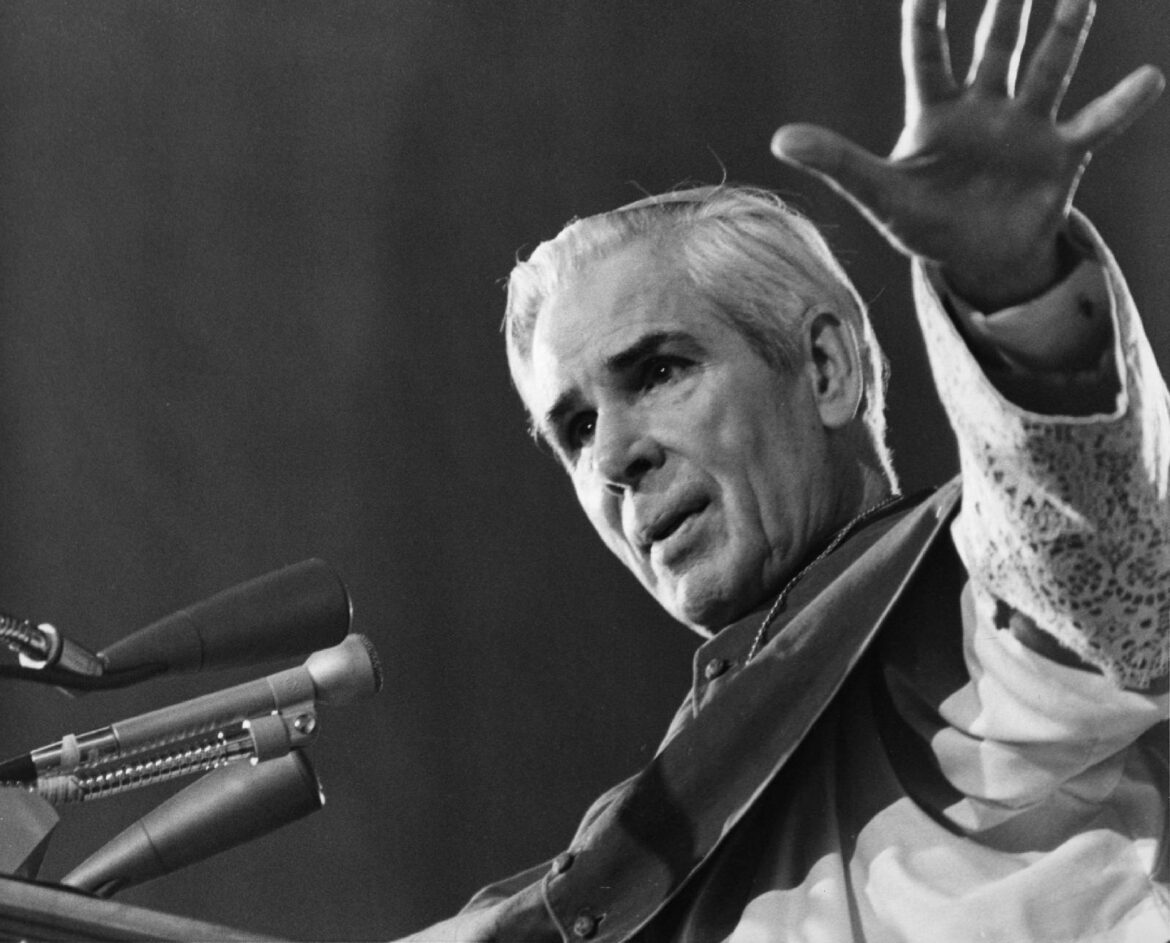
Among all the works of Archbishop Fulton J. Sheen, few have had a greater spiritual impact than his reflections on the Seven Last Words of Jesus Christ. For decades, Sheen preached annually on Good Friday, meditating on the final words spoken by Christ from the Cross. These sermons were later compiled into his classic spiritual masterpiece, The Seven Last Words of Christ.
For Archbishop Sheen, the Seven Last Words were not merely the dying statements of a condemned man. They were the final teachings of the Savior of the world—the greatest sermon ever preached. While Christ’s hands were nailed to the Cross and His earthly ministry was drawing to a close, He continued to teach humanity about forgiveness, mercy, suffering, redemption, love, and eternal life.
Sheen believed that every Christian should meditate deeply on these sacred words because they reveal the very heart of God. From the Cross, Jesus speaks not only to those who stood beneath Calvary but also to every person in every generation.
The Cross: Love’s Greatest Pulpit
Archbishop Sheen often described the Cross as Christ’s final pulpit.
Throughout His public ministry, Jesus preached from mountains, boats, synagogues, and open fields. Yet His greatest sermon was delivered from the wood of the Cross.
The world saw weakness, defeat, and humiliation. Sheen saw divine love revealing itself in its fullest form.
According to Sheen, the Cross answers the deepest questions of human existence:
- How much does God love us?
- How serious is sin?
- How great is mercy?
- What gives meaning to suffering?
- What awaits us after death?
The answers are found in the Seven Last Words.
First Word: “Father, Forgive Them”
“Father, forgive them, for they know not what they do.” (Luke 23:34)
Sheen considered this first word one of the most astonishing statements in history.
At the very moment when Christ was experiencing rejection, mockery, torture, and crucifixion, He prayed not for vengeance but for forgiveness.
Sheen pointed out that Jesus practiced what He preached. Throughout His ministry, He taught love of enemies. On Calvary, He lived it perfectly.
This first word reveals that God’s response to sin is mercy.
For Sheen, forgiveness is one of the clearest signs of divine love. Christians who wish to follow Christ must learn to forgive those who hurt them, just as Christ forgave His executioners.
Second Word: “Today You Will Be with Me in Paradise”
“Amen, I say to you, today you will be with me in Paradise.” (Luke 23:43)
This promise was made to the repentant thief crucified beside Jesus.
Archbishop Sheen saw in this word one of the greatest testimonies to God’s mercy.
The thief had wasted much of his life, yet in his final moments he turned toward Christ with faith and humility.
Jesus immediately offered forgiveness and salvation.
Sheen often emphasized that no sinner should ever despair. As long as life remains, the door of mercy remains open.
The good thief teaches that sincere repentance can transform even the final moments of life into a path toward heaven.
Third Word: “Behold Your Mother”
“Woman, behold your son… Behold your mother.” (John 19:26–27)
Standing beneath the Cross were the Blessed Virgin Mary and the beloved disciple John.
Archbishop Sheen viewed this moment as the spiritual motherhood of Mary being extended to the entire Church.
At the very moment of His suffering, Christ continued to care for others.
Mary became the mother of all believers, while Christians became her spiritual children.
Sheen often spoke of Mary’s unique role in salvation history. Just as she stood faithfully beside Christ at Calvary, she continues to accompany believers in their journey toward holiness.
This word reveals the importance of spiritual family within the Church.
Fourth Word: “My God, My God, Why Have You Forsaken Me?”
“My God, my God, why have you forsaken me?” (Matthew 27:46)
This is perhaps the most mysterious of the Seven Last Words.
Sheen explained that Jesus was quoting Psalm 22, a messianic psalm that begins in apparent abandonment but ends in triumph.
Christ was not expressing despair. Rather, He was identifying Himself with all who experience loneliness, suffering, and spiritual darkness.
Sheen taught that every human being eventually faces moments when God seems distant.
Through this word, Christ entered fully into the depths of human suffering.
No one who experiences pain, grief, anxiety, or abandonment can ever say that God does not understand. Christ has entered that darkness before us.
Fifth Word: “I Thirst”
“I thirst.” (John 19:28)
Archbishop Sheen saw profound significance in these simple words.
Certainly Jesus experienced physical thirst after enduring immense suffering. Yet Sheen believed that Christ’s thirst extended far beyond the physical.
Jesus thirsted for souls.
He thirsted for love.
He thirsted for humanity’s salvation.
According to Sheen, this cry reveals the burning desire of God’s heart for every human person.
The Creator thirsts for the love of His creatures.
Every act of prayer, conversion, worship, and charity becomes a response to Christ’s thirst.
Sixth Word: “It Is Finished”
“It is finished.” (John 19:30)
For Archbishop Sheen, this word does not signify defeat but victory.
Christ’s mission had been completed.
The prophecies had been fulfilled.
The sacrifice had been offered.
The price of redemption had been paid.
Sheen often emphasized that salvation was accomplished not through military power, political influence, or worldly success, but through sacrificial love.
The Cross represents the completion of God’s plan of redemption.
In this word, Jesus announces the triumph of divine love over sin.
Seventh Word: “Father, Into Your Hands I Commend My Spirit”
“Father, into your hands I commend my spirit.” (Luke 23:46)
The final word reveals perfect trust.
Having completed His mission, Christ surrendered Himself completely to the Father.
Sheen regarded this as the model for every Christian death.
Life begins in God’s hands and should end in God’s hands.
The Christian vocation is ultimately one of surrender—entrusting every joy, suffering, success, failure, and hope to God.
This final word transforms death from a defeat into an act of faith.
The Cross ends not with despair but with trust.
The Seven Last Words and Modern Life
Archbishop Sheen believed that the Seven Last Words speak directly to modern humanity.
A world marked by hatred needs the first word of forgiveness.
A world burdened by guilt needs the second word of mercy.
A world fractured by loneliness needs the third word of spiritual family.
A world experiencing suffering needs the fourth word of solidarity.
A world searching for meaning needs the fifth word of divine love.
A world obsessed with success needs the sixth word of sacrificial fulfillment.
A world fearful of death needs the seventh word of trust.
The Seven Last Words remain as relevant today as they were on the first Good Friday.
The Cross as the School of Love
Throughout his ministry, Archbishop Sheen returned repeatedly to the theme of love.
For him, the Seven Last Words reveal what authentic love truly means.
Love forgives.
Love saves.
Love cares.
Love suffers.
Love longs.
Love sacrifices.
Love trusts.
These qualities are perfectly embodied in Christ’s final words from the Cross.
The Christian life is fundamentally a journey of learning to love as Christ loved.
Lessons from Fulton Sheen’s Reflections on the Seven Last Words
Archbishop Sheen’s teachings offer several enduring lessons:
- The Cross is the supreme revelation of God’s love.
- Forgiveness is stronger than hatred.
- No sinner is beyond God’s mercy.
- Mary is the spiritual mother of all believers.
- Christ understands every human suffering.
- God thirsts for the salvation of souls.
- Sacrificial love is the path to true victory.
- Complete trust in God brings peace.
- The Seven Last Words continue to guide Christian discipleship.
Conclusion
Archbishop Fulton Sheen regarded the Seven Last Words of Christ as the greatest sermon ever preached because they reveal the deepest truths of the Gospel. Spoken from the Cross, these words summarize Christ’s mission and reveal the heart of divine love.
Each word carries a lesson for every believer. Together they form a spiritual roadmap leading from sin to forgiveness, from suffering to redemption, and from death to eternal life.
For Sheen, the Cross was not merely an event of the past. It remains a living reality that continues to speak to every generation. The Seven Last Words invite Christians to contemplate the mystery of God’s love and to respond with faith, hope, and charity.
As believers meditate upon these sacred words, they discover anew that the Cross is not the end of the story. It is the doorway to the Resurrection, the triumph of love, and the promise of eternal life in Christ.
Leave a Reply