
Part V: Biblical Accuracy, Catholic Symbolism, Controversies, Legacy, and the Enduring Message of the Cross
“We preach Christ crucified, a stumbling block to Jews and foolishness to Gentiles, but to those who are called… Christ the power of God and the wisdom of God.” — 1 Corinthians 1:23–24
Introduction
For more than two decades, The Passion of the Christ has remained one of the most influential religious films ever produced. It has inspired prayer, conversion, theological discussion, and artistic admiration while also generating significant debate. Few films have been praised with such enthusiasm by millions of believers and criticized so intensely by others.
This final installment examines the film beyond its dramatic narrative. Was it faithful to Scripture? How much was inspired by Catholic tradition? Why did it become controversial? What lasting influence has it had on Christian faith and religious filmmaking?
Ultimately, these questions lead to a more important one: What does The Passion of the Christ teach us about Jesus Christ and our own discipleship?
A Film Rooted in Sacred Scripture
The foundation of The Passion of the Christ is unquestionably the New Testament.
The film draws primarily from the Passion narratives found in:
- Matthew 26–27
- Mark 14–15
- Luke 22–23
- John 18–19
Rather than following a single Gospel account, Mel Gibson harmonizes the four Evangelists, allowing each to contribute its distinctive perspective.
Matthew provides the fulfillment of prophecy.
Mark emphasizes the suffering Messiah.
Luke highlights Christ’s compassion and forgiveness.
John presents Jesus as the sovereign Son of God who freely embraces His mission.
This synthesis gives the film both narrative richness and theological depth.
The Influence of the Old Testament
One of the film’s greatest achievements is its constant connection between Christ’s Passion and the Old Testament.
Throughout the movie, viewers encounter echoes of:
Isaiah 53
The Suffering Servant prophecy permeates nearly every scene.
“He was wounded for our transgressions.”
The scourging, rejection, silence before His accusers, and sacrificial death all reflect Isaiah’s vision written nearly seven centuries before Christ.
Psalm 22
Jesus’ crucifixion fulfills remarkable details contained in Psalm 22.
“My God, My God, why have You forsaken Me?”
“They divide my garments among them.”
“They pierce my hands and feet.”
The Psalm begins in suffering but ends in victory—a pattern perfectly fulfilled in Christ.
The Passover Lamb
John’s Gospel deliberately presents Jesus as the true Passover Lamb.
Just as the blood of the lamb protected Israel in Egypt, the Blood of Christ delivers humanity from slavery to sin.
The film repeatedly emphasizes this connection through visual symbolism involving sacrifice, blood, and redemption.
Catholic Spiritual Tradition
While Scripture remains the primary source, the film also reflects centuries of Catholic devotion.
This has sometimes led viewers to ask:
Which scenes come from the Bible, and which come from Christian tradition?
Several memorable moments belong to devotional tradition rather than the explicit Gospel text.
These include:
- Veronica wiping the face of Jesus.
- The detailed portrayal of Mary’s encounters with Jesus.
- The cleaning of Christ’s Precious Blood after the scourging.
- Satan’s symbolic appearances throughout the Passion.
- Some details of the Way of the Cross.
These elements draw heavily from:
- The Stations of the Cross
- The writings of Blessed Anne Catherine Emmerich
- Medieval Passion meditations
- Catholic liturgical tradition
None of these are presented as replacements for Scripture.
Instead, they function as artistic meditations that invite deeper contemplation.
This distinction is important.
The Church teaches that public revelation ended with the Apostolic age.
Private revelations may inspire devotion but never add to the deposit of faith.
Gibson uses these traditions artistically rather than dogmatically.
The Blessed Virgin Mary
One of the film’s most distinctively Catholic features is its portrayal of Mary.
Although the Gospels speak relatively little during the Passion, Mary’s silent presence carries immense theological significance.
She never attempts to prevent Christ’s mission.
She never rebels against God’s will.
She simply remains faithful.
Her suffering illustrates what St. John Paul II described as participation in Christ’s redemptive mission through perfect union with His sacrifice.
Mary’s role also reflects the prophecy of Simeon:
“A sword will pierce your own soul also.”
The film portrays her not as a passive observer but as the Mother who accompanies the Redeemer from Bethlehem to Calvary.
The Eucharistic Dimension
One of the most profound features of the film is its connection between the Last Supper and Calvary.
Throughout the Passion, Gibson inserts flashbacks to Jesus instituting the Eucharist.
As Christ offers His Body upon the Cross, viewers remember His words:
“This is My Body.”
As His Blood is poured out, we hear:
“This is My Blood of the covenant.”
These scenes beautifully illustrate Catholic theology.
The Last Supper and Calvary are one sacrifice.
The Eucharist makes present sacramentally the one sacrifice of Christ offered once for all on the Cross.
Thus, every celebration of the Holy Mass is inseparably connected with Good Friday.
The Film’s Artistic Symbolism
Mel Gibson communicates theology not only through dialogue but also through powerful visual imagery.
Among the most striking symbols are:
Light and Darkness
Darkness accompanies betrayal, condemnation, and death.
Light appears during moments of grace and culminates in the Resurrection.
The contrast reflects the Gospel of John:
“The light shines in the darkness, and the darkness has not overcome it.”
Water and Blood
The repeated emphasis on Christ’s Blood recalls the sacraments, especially the Eucharist.
The washing of wounds, the cleansing of blood, and the flowing side of Christ all evoke the life-giving grace that flows from His sacrifice.
The Crown of Thorns
The crown represents both the curse of Genesis and the paradox of Christ’s kingship.
The King conquers not by destroying His enemies but by dying for them.
Satan
Satan’s recurring appearances are symbolic rather than historical.
He represents the ongoing spiritual battle underlying the visible events.
His final scream after Christ’s death vividly portrays the paradox that the Cross—what appeared to be Satan’s greatest victory—became his ultimate defeat.
Addressing the Controversies
No discussion of The Passion of the Christ is complete without acknowledging the debates that surrounded its release.
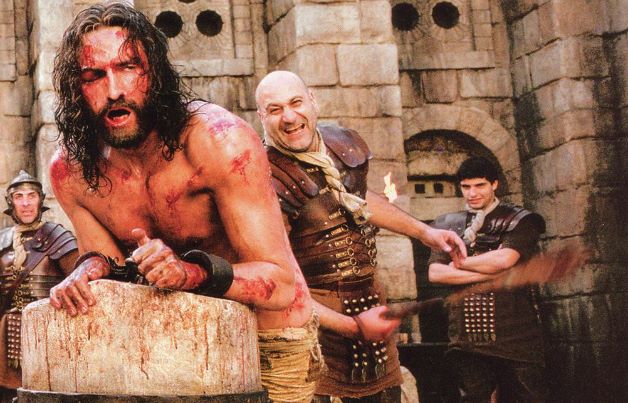
The Graphic Violence
The most common criticism concerns the film’s intense violence.
Some argued that the brutality overwhelmed the spiritual message.
Others believed the realism was necessary to appreciate the true cost of redemption.
The Gospels themselves describe the Passion with remarkable restraint.
Gibson chose to visualize the suffering implied by those concise biblical accounts.
Whether one agrees with every artistic decision, the intention was not entertainment but contemplation.
The violence serves a theological purpose: to reveal the seriousness of sin and the immeasurable love of Christ.
Accusations of Antisemitism
Another major controversy involved concerns that the film might encourage hostility toward the Jewish people.
This issue deserves careful theological clarification.
The Passion narratives describe the involvement of certain Jewish religious leaders, Roman authorities, and the crowd in the condemnation of Jesus.
However, Catholic teaching firmly rejects the idea of collective Jewish guilt.
The Second Vatican Council, in Nostra Aetate (1965), teaches that responsibility for Christ’s Passion cannot be attributed indiscriminately to all Jews of His time, much less to Jewish people today.
Indeed, from a Christian perspective, the deepest cause of Christ’s suffering is the sin of all humanity.
Every sinner stands in need of the redemption accomplished on Calvary.
Thus, the Cross is not grounds for blaming a particular people but for recognizing the universal need for God’s mercy.
Critical Reception
Professional critics responded to the film with sharply divided opinions.
Some praised:
- Jim Caviezel’s remarkable performance.
- Caleb Deschanel’s cinematography.
- John Debney’s unforgettable musical score.
- The historical atmosphere.
- The emotional and spiritual depth.
Others criticized:
- The relentless intensity of the violence.
- Certain artistic liberties.
- The film’s narrow focus on suffering.
Interestingly, audiences generally responded far more positively than many critics.
Many viewers regarded the film not simply as entertainment but as a deeply moving spiritual experience.
A New Era of Faith-Based Cinema
The enormous commercial success of The Passion of the Christ transformed Hollywood’s perception of religious filmmaking.
Before 2004, many studios believed explicitly Christian films possessed only limited commercial appeal.
The success of Gibson’s independent production demonstrated otherwise.
Its influence can be seen in later biblical productions and the growing confidence of filmmakers exploring Christian themes.
More importantly, it reminded the film industry that stories rooted in faith continue to resonate deeply with global audiences.
The Spiritual Fruits of the Film
Perhaps the greatest measure of the film’s success lies in its spiritual impact.
Across the world, countless viewers reported:
- Renewed appreciation for Christ’s sacrifice.
- Greater participation in Holy Week liturgies.
- Increased devotion to the Stations of the Cross.
- Return to the Sacrament of Reconciliation after many years.
- Deeper reverence for the Holy Eucharist.
- Stronger commitment to prayer and Christian discipleship.
Many priests testified that the film opened conversations about faith with people who had long been distant from the Church.
Its influence extended beyond cinema into evangelization, catechesis, and personal conversion.
Lessons for Christians Today
More than twenty years after its release, The Passion of the Christ continues to offer enduring spiritual lessons.
1. God’s Love Is Costly
The Cross reminds us that salvation is not cheap.
Christ gave everything for our redemption.
2. Sin Is Serious
The brutality of the Passion reveals the destructive consequences of sin.
Yet it also proclaims that God’s mercy is greater than human failure.
3. Forgiveness Is the Christian Way
Jesus forgives His executioners.
Every disciple is called to imitate that same mercy.
4. Suffering Can Become Redemptive
United with Christ, human suffering can become an offering of love rather than a source of despair.
5. Hope Always Has the Final Word
The Resurrection transforms the meaning of the Cross.
Good Friday is never the end of the Christian story.
Looking Toward The Resurrection of the Christ
Mel Gibson has announced plans for a sequel centered on the Resurrection and its cosmic significance.
If completed, the film will explore not only Christ’s appearances after Easter but also the theological mystery of His victory over sin, death, and the powers of evil.
For Christians, this continuation is fitting.
The Passion cannot be fully understood apart from Easter.
The Cross always points toward the empty tomb.
Final Reflections
The Passion of the Christ is far more than a motion picture. It is a cinematic meditation on the central mystery of Christianity. Through extraordinary performances, striking visual symbolism, reverent attention to Scripture, and rich inspiration from Catholic tradition, Mel Gibson created a work that has challenged believers and non-believers alike to confront the meaning of Christ’s sacrifice.
Like every artistic work, the film contains interpretive choices open to discussion. It is not a substitute for reading the Gospels, nor should every dramatic element be understood as a literal historical reconstruction. Yet its enduring power lies in its ability to direct attention beyond itself—to the person of Jesus Christ and the mystery of His redeeming love.
For many, the film has become a modern icon of the Passion, inviting viewers not simply to observe the suffering of Christ but to encounter Him personally. It calls each of us to repentance, gratitude, and renewed discipleship.
Conclusion
The Cross stands at the center of human history. On Calvary, the justice of God and the mercy of God meet in perfect harmony. Through the willing sacrifice of His Son, the Father opens the way to reconciliation, forgiveness, and eternal life.
The Passion of the Christ reminds us that Christianity is not founded upon an ethical system or a philosophical idea but upon a historical event: the death and resurrection of Jesus Christ. The film challenges us to see beyond the brutality of the Crucifixion to the love that made such a sacrifice possible.
As believers contemplate Christ’s Passion, they are invited to echo the words of St. Paul:
“I have been crucified with Christ; it is no longer I who live, but Christ who lives in me.” (Galatians 2:20)
May every viewing of The Passion of the Christ lead not merely to admiration for a remarkable film but to a deeper encounter with the crucified and risen Lord, whose love continues to transform hearts, renew the Church, and offer hope to the world.
Leave a Reply