
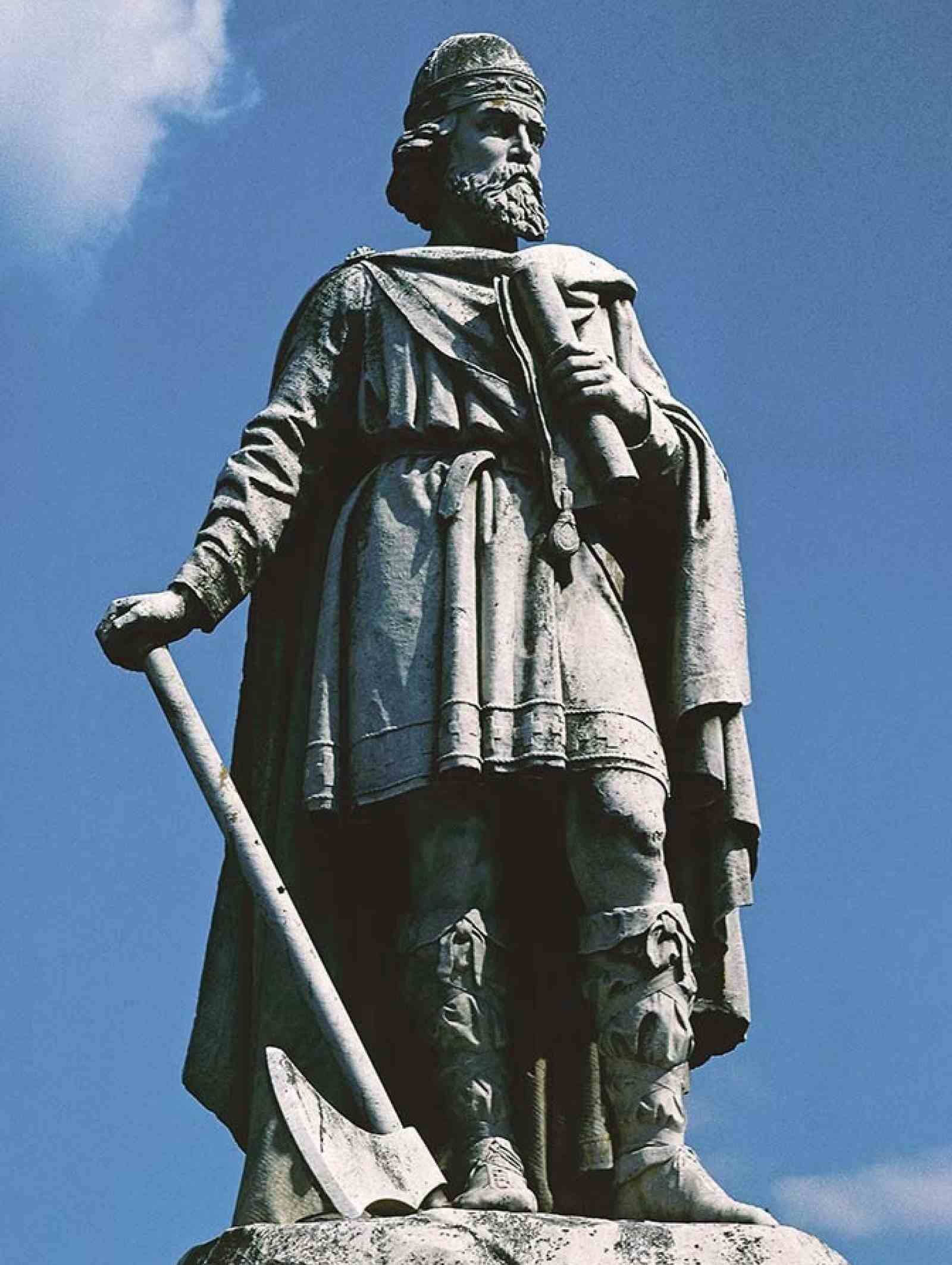
Introduction
Saint Alfred the Great (c. 849–899), King of Wessex, occupies a remarkable place in the history of Christian England. Remembered for his courage in defending his kingdom against Viking invasions, his commitment to education, his reform of the law, and his promotion of Christian learning, Alfred embodied the ideal of a ruler who understood authority as a responsibility rather than merely a privilege.
Alfred was not simply a warrior king. He was a student of wisdom, a patron of scholars, a promoter of religious instruction, and a ruler who sought to rebuild his kingdom through justice, learning, and Christian principles. His reign helped preserve the Anglo-Saxon Christian tradition during a period of political instability and military danger.
Although Alfred is widely honoured for his Christian life and leadership, he is not formally canonized as a saint in the Roman Catholic Church’s universal calendar. Nevertheless, he has been remembered in certain Christian traditions, particularly within Anglican history, as a model of Christian kingship. His life offers valuable lessons about faith, perseverance, education, justice, and responsible leadership.
1. Early Life and Family Background
Alfred was born in approximately 849 at Wantage, in what is now Oxfordshire, England, then part of the kingdom of Wessex. He was the youngest of the five sons of King Æthelwulf of Wessex and his wife, Osburh.
Alfred grew up during a turbulent period in English history. The Anglo-Saxon kingdoms faced increasing attacks from Viking forces, whose raids were gradually developing into campaigns of conquest and settlement. Churches and monasteries, which served as important centres of worship, education, and cultural life, were particularly vulnerable to these attacks.
As a royal child, Alfred received an education suited to his position, although the extent of his early formal schooling is uncertain. His later achievements demonstrate a remarkable appetite for knowledge and a determination to acquire wisdom despite the demands of military and political life.
According to the account of his life written by Bishop Asser, Alfred’s mother once showed her sons a book of English poetry and promised to give it to whichever son learned it first. Alfred eagerly took up the challenge and memorized the poems. The story, whether understood as a literal recollection or as an illustration of his character, became a lasting symbol of his love for learning.
As a child, Alfred also travelled to Rome. His journey in 855 accompanied his father on pilgrimage and brought him into contact with the wider Christian world. Such experiences formed part of the religious and cultural background of a king who would later devote considerable attention to Christian education.
2. Alfred Becomes King of Wessex
Alfred did not become king immediately after his father’s death. His elder brothers succeeded one another on the throne, and Alfred served alongside his brother Æthelred during the struggle against Viking forces.
In 871, following Æthelred’s death, Alfred became King of Wessex. He inherited a kingdom under severe pressure. Viking armies had already conquered or weakened several other Anglo-Saxon kingdoms, and Wessex remained one of the principal centres of resistance.
Alfred’s early reign was marked by repeated military confrontations. He had to organize his forces, negotiate when necessary, and preserve the political unity of his people. His success depended not only on battlefield courage but also on his ability to learn from setbacks and adapt to changing circumstances.
His kingship reveals an important principle: leadership requires more than personal bravery. It demands prudence, patience, strategic thinking, and the willingness to accept responsibility for the welfare of others.
3. The Viking Invasion and the Crisis of 878
One of the most difficult moments of Alfred’s reign occurred in 878, when a major Viking force led by Guthrum attacked Wessex. The invaders struck during the winter and captured the royal stronghold at Chippenham.
Alfred was forced to retreat with a small following into the marshlands of Somerset. The survival of his kingdom was uncertain, and his enemies appeared to have gained the advantage.
Yet Alfred did not surrender. He established a temporary base at Athelney, gathered supporters, and worked to rebuild his military strength. His ability to continue resisting during this period became central to his historical reputation.
In the spring of 878, Alfred assembled an army and confronted Guthrum’s forces at the Battle of Edington. The West Saxons achieved a decisive victory.
Following the battle, Guthrum agreed to terms of peace and subsequently received Christian baptism, with Alfred serving as his baptismal sponsor according to the historical tradition. The settlement helped bring a measure of stability to the region, although conflict between Anglo-Saxon and Viking powers did not disappear.
The events of 878 demonstrate Alfred’s resilience. He experienced defeat and displacement, but he did not allow a temporary crisis to destroy his sense of responsibility or his determination to protect his people.
For Christians today, his perseverance offers an important lesson: difficult circumstances do not necessarily mean that a mission has failed. Faithfulness sometimes requires patience, courage, and the willingness to begin again.
4. A King Who Rebuilt His Kingdom
After the victory at Edington, Alfred understood that military success alone would not secure the future of Wessex. His kingdom needed stronger defences, better administration, and institutions capable of responding to future threats.
Military and defensive reforms
Alfred reorganized military service and strengthened the network of fortified settlements known as burhs. These strongholds served as defensive centres and helped protect important communities, roads, and commercial routes.
He also improved the organization of his forces so that the kingdom could respond more effectively to invasion. These reforms contributed to the survival of Wessex during later Viking campaigns.
Administrative development
Alfred worked to strengthen the structures through which the kingdom was governed. His reforms helped establish a more durable political foundation for his successors, who eventually extended West Saxon authority over much of England.
Legal reform
Alfred compiled and revised legal traditions inherited from earlier Anglo-Saxon rulers. His law code drew upon previous legislation and presented lawgiving within a Christian moral framework.
The prologue to his laws begins with selections from biblical legal traditions, including material associated with Moses and the Ten Commandments. This reflects the importance he attached to the relationship between public justice and Christian moral teaching.
Alfred’s approach did not mean that every aspect of his society met modern standards of equality or justice. Nevertheless, his efforts demonstrate an intention to ground royal authority in an established moral and legal tradition.
His example reminds Christian leaders that good intentions must be accompanied by responsible institutions, fair procedures, and practical concern for the common good.
5. Alfred the Great: A Patron of Christian Learning
Among Alfred’s most enduring achievements was his commitment to education. He recognized that military defence could preserve a kingdom physically, but that education and moral formation were essential for preserving its intellectual and spiritual life.
During the Viking invasions, many centres of learning had suffered disruption. Alfred sought to renew learning by encouraging scholars, supporting the education of clergy and officials, and promoting the translation of important Latin works into Old English.
His educational programme was closely connected to his understanding of Christian kingship. He believed that those responsible for governing and teaching the people needed access to the wisdom preserved in Christian and classical literature.
Translation of important Christian works
Alfred’s court encouraged the translation or adaptation of several significant works, including:
- Pastoral Care by Pope Gregory the Great, a guide to the spiritual and pastoral responsibilities of church leaders.
- The Consolation of Philosophy by Boethius, a work reflecting on providence, suffering, fortune, and the nature of true happiness.
- Historical works associated with Orosius and Bede, which helped readers understand the history of the world and the development of Christianity.
The precise extent of Alfred’s personal involvement in each translation remains a matter of scholarly discussion. Nevertheless, his patronage and educational programme played an important role in the revival of learning in Wessex.
His decision to promote learning in the English language was especially significant. Latin remained essential to the Church’s learned culture, but Alfred recognized that knowledge also needed to become accessible to those who could not read Latin.
Education as a Christian responsibility
Alfred’s educational vision was not limited to practical administration. He saw learning as a means of cultivating wisdom, strengthening moral judgment, and preparing people to serve God and society.
In an age when education was far less widely available than it is today, this was a significant undertaking.
His example remains relevant to Christian communities. Schools, seminaries, libraries, publications, and digital platforms can all serve the Church’s mission when they help people encounter truth, develop sound judgment, and grow in faith.
Education becomes particularly valuable when knowledge is joined to humility, moral responsibility, and service.
6. The Anglo-Saxon Chronicle and Historical Memory
Alfred’s reign is closely associated with the beginnings of the Anglo-Saxon Chronicle, a collection of annals recording significant events in Anglo-Saxon history.
The Chronicle became one of the most important historical sources for early medieval England. Its surviving versions preserve information about rulers, battles, political developments, and religious life.
The work is generally associated with Alfred’s court and its wider programme of cultural renewal, although the precise circumstances of its creation and the king’s personal role remain subjects of historical investigation.
The Chronicle also reflects the importance Alfred attached to a shared historical identity. By recording the past in the language of the people, the project helped preserve memories that might otherwise have been lost.
This achievement illustrates another aspect of responsible leadership: a community needs not only protection and laws but also a sense of history, identity, and continuity.
For the Church, preserving historical memory is equally important. The lives of saints, the writings of theologians, the records of councils, and the stories of Christian communities help successive generations understand the faith they have received.
7. Alfred’s Christian Faith and Personal Character
Alfred’s reputation as a Christian ruler rests not only on his support for religious institutions but also on the personal qualities described by his biographer, Asser.
Asser portrays him as a king deeply interested in learning, prayer, and religious reflection. His account should be read critically, since it was written by a member of Alfred’s circle and presents a favourable picture of the king. Nevertheless, it remains a valuable source for understanding how Alfred’s contemporaries wished to remember his character.
A life of perseverance
Alfred’s reign was marked by repeated danger, illness, military pressure, and the burdens of government. He did not enjoy an uninterrupted period of peace.
His achievements therefore suggest a form of perseverance grounded in duty. He continued to govern, defend his kingdom, and support learning despite considerable personal and political difficulties.
A commitment to wisdom
Alfred’s interest in books and scholarship reveals a recognition that authority needs the guidance of knowledge. A ruler who refuses to learn risks becoming a prisoner of pride and ignorance.
His example challenges leaders to remain teachable, to listen to wise counsel, and to recognize the limits of their own understanding.
Faith expressed through responsibility
Alfred’s Christianity found expression in public action. He supported religious learning, drew upon Christian moral traditions in his lawgiving, and sought to strengthen the institutions of his kingdom.
His life reminds Christians that faith is not separated from everyday responsibilities. A person may serve God through teaching, governing, protecting the vulnerable, cultivating wisdom, and fulfilling the duties entrusted to them.
8. Alfred’s Marriage and Family Life
Alfred married Ealhswith in 868. She came from a prominent Mercian family, and their marriage strengthened connections between Wessex and Mercia during a period of political uncertainty.
The couple had several children, including Edward, who succeeded Alfred as king, and Æthelflæd, who later became an influential ruler in Mercia.
Although the surviving historical evidence gives us only a partial picture of their family life, the dynastic and political significance of the marriage is clear. Family relationships and alliances were important to the stability of early medieval kingdoms.
Alfred’s family also contributed to the continuation of the reforms and political developments that took place during his reign. His successors extended West Saxon influence and continued the gradual process that eventually led to a more unified English kingdom.
9. Alfred’s Later Years and Death
During the later years of his reign, Alfred continued to defend his kingdom against Viking attacks while strengthening its political, legal, and educational institutions.
In 886, he captured or secured control of London, an important achievement that enhanced his authority and influence. His relationships with neighbouring rulers and communities also helped establish a broader framework of cooperation.
Alfred died in 899, having ruled Wessex for nearly three decades. He was initially buried at Winchester, the principal royal centre of his kingdom. His remains were later associated with the royal burial tradition at the Old Minster and New Minster, before the New Minster community moved to Hyde Abbey.
His son Edward the Elder succeeded him and continued the expansion of West Saxon power. Later generations built upon the military, administrative, and cultural foundations established during Alfred’s reign.
Alfred’s importance, therefore, extends beyond his personal achievements. His reforms helped create conditions in which his successors could advance the political unification of England.
10. Why Is Alfred Called “the Great”?
Alfred is distinguished among English monarchs by the enduring title “the Great.” This reputation developed over time and reflects several interconnected achievements.
First, he preserved Wessex. At a moment when Viking armies had conquered or weakened several Anglo-Saxon kingdoms, Alfred successfully defended the independence of his own kingdom.
Second, he strengthened public institutions. His military organization, fortified settlements, and administrative reforms helped prepare Wessex for future challenges.
Third, he promoted education. His support for scholarship and the translation of important works into Old English contributed to the renewal of intellectual and religious life.
Fourth, he developed a Christian approach to lawgiving. His legal reforms reflected an effort to connect royal government with established moral and religious principles.
Finally, he left a lasting legacy. His successors built upon his achievements, and later generations remembered him as a model of wise and responsible kingship.
His title does not mean that every policy he pursued was perfect or that his reign was free from violence and the limitations of its age. Rather, it reflects the exceptional combination of military resilience, administrative ability, intellectual ambition, and cultural influence associated with his rule.
11. Was Alfred the Great a Saint?
Alfred is sometimes described in Christian literature as a saint or saintly king. However, historical and ecclesiastical distinctions are important.
Alfred was a Christian monarch whose faith influenced his patronage of religious learning and his understanding of public responsibility. He has been remembered with reverence in certain Christian traditions, especially in Anglican contexts.
He is not, however, formally canonized as a saint in the Roman Catholic Church’s universal calendar. He should therefore not be confused with saints whose formal recognition and liturgical commemoration are established by the Catholic Church.
His life can still be studied fruitfully by Catholics as an example of the ways Christian principles may influence public leadership, education, and the pursuit of justice.
The Christian value of his example lies not in making unsupported claims about his ecclesiastical status but in examining the historical evidence and reflecting upon the virtues his life illustrates.
12. Spiritual Lessons from the Life of Alfred the Great
Although Alfred lived in a very different world from our own, his life offers several lessons for Christians today.
1. Persevere when circumstances become difficult
Alfred’s retreat to Athelney in 878 could have marked the end of his reign. Instead, he used that difficult period to prepare for renewed resistance.
Christian life also includes seasons of uncertainty, disappointment, and apparent defeat. Perseverance does not mean pretending that suffering is insignificant. It means continuing to seek what is good and remaining faithful to one’s responsibilities.
2. Seek wisdom throughout life
Alfred’s love of learning reminds us that wisdom is not acquired once and for all. It requires continued study, reflection, and openness to correction.
Christians are called to deepen their understanding of Scripture, the teachings of the Church, and the moral demands of the Gospel.
3. Place knowledge at the service of others
Alfred’s educational reforms were intended to benefit the kingdom rather than remain the private possession of a small circle of scholars.
Knowledge becomes fruitful when it helps people live more wisely, serve more faithfully, and respond more compassionately to the needs of others.
4. Exercise authority responsibly
Alfred understood that kingship involved the defence and administration of a community. His example invites all people entrusted with authority—parents, teachers, priests, public servants, and community leaders—to exercise it with prudence and a sense of duty.
Christian leadership is not simply about exercising power. It is about serving the good of those entrusted to one’s care.
5. Preserve faith and culture for future generations
Alfred’s patronage of Christian literature helped preserve important works during a period of disruption.
Every generation has a responsibility to pass on the faith with integrity. This includes teaching children, preserving sacred traditions, supporting Christian education, and making the wisdom of the Church accessible to those who seek it.
6. Unite prayer with practical action
Alfred’s life demonstrates that religious commitment and practical responsibility need not be opposed to one another.
Prayer should deepen our commitment to justice, education, peace, and service. At the same time, our work becomes more humane when guided by moral reflection and a recognition of our responsibility before God.
13. A Brief Reflection on Christian Leadership
Alfred the Great invites us to reconsider what makes a person truly great.
Greatness is not simply measured by the territory one conquers, the power one possesses, or the honours one receives. It can also be measured by the wisdom one seeks, the difficulties one endures without surrendering responsibility, and the good one leaves behind for others.
Alfred’s historical significance arose from his determination to defend his people and rebuild their institutions. His commitment to learning reveals that the life of the mind matters even in times of crisis. His support for Christian literature reminds us that a society needs spiritual and intellectual foundations as well as material security.
For Christians, his example raises a personal question: What am I doing with the responsibilities entrusted to me?
A parent may build a legacy through the faith and character formed in children. A teacher may preserve wisdom by helping students discover truth. A priest may strengthen a community through prayer, teaching, and pastoral care. A public servant may contribute to society through honesty and justice.
Not everyone is called to become a king, a scholar, or a public figure. Everyone, however, can strive to use their gifts faithfully.
The enduring lesson of Alfred’s life is that courage becomes more fruitful when guided by wisdom, knowledge becomes more valuable when placed at the service of others, and authority becomes more worthy when exercised with responsibility.
14. Prayer for Wisdom and Faithful Leadership
Heavenly Father,
You are the source of all wisdom, justice, and truth. We thank You for the example of Alfred the Great, whose life reminds us of the importance of courage, learning, perseverance, and responsible leadership.
Grant us the wisdom to make good decisions, the courage to face difficulties, and the humility to learn from our mistakes. Help those entrusted with authority to serve their communities with integrity and compassion.
Bless parents, teachers, priests, scholars, and public servants who work for the good of others. May they use their knowledge and abilities not for selfish ambition but for the service of truth, justice, and peace.
When we experience setbacks, strengthen our hearts so that we may persevere in doing what is right. Help us to preserve the treasures of faith and wisdom and to pass them on faithfully to future generations.
May our lives bear fruit in loving service and bring honour to Your holy name.
We ask this through Jesus Christ our Lord.
Amen.
Conclusion
Alfred the Great remains one of the most significant rulers of early medieval England. His defence of Wessex, his administrative and legal reforms, and his promotion of Christian learning helped preserve and strengthen the kingdom during a period of profound instability.
His legacy is especially remarkable because it extends beyond military achievement. He understood that the future of a people depended upon wisdom, education, moral responsibility, and the preservation of their spiritual and cultural inheritance.
Although Alfred is not formally canonized in the Roman Catholic Church, his historical example offers meaningful lessons for Christians. His life invites us to combine faith with practical responsibility, courage with prudence, and learning with service.
True greatness is not merely what we achieve for ourselves, but what we faithfully build for those who come after us.
References
- Asser, Life of King Alfred. A contemporary account of Alfred’s life and reign, written by Bishop Asser. The work is an important primary source, though its favourable portrayal of Alfred should be considered when assessing historical claims.
- The Anglo-Saxon Chronicle. The principal annalistic source for the political and military events of Alfred’s reign.
- Alfred the Great, The Laws of Alfred. A collection of legal provisions associated with Alfred’s reign and reflecting earlier Anglo-Saxon legal traditions.
- Alfred the Great, preface to the Old English translation of Gregory the Great’s Pastoral Care.
- Simon Keynes and Michael Lapidge, Alfred the Great: Asser’s Life of King Alfred and Other Contemporary Sources. Penguin Classics, 1983.
- David Pratt, The Political Thought of King Alfred the Great. Cambridge University Press, 2007.
Further Reading
- Catholic Encyclopedia — Alfred the Great
https://www.newadvent.org/cathen/01309d.htm - The Royal Family — Alfred the Great (r. 871–899)
https://www.royal.uk/alfred-great-r-871-899?page=1 - British Library — The Last Will and Testament of Alfred the Great
https://www.bl.uk/stories/blogs/posts/the-last-will-and-testament-of-alfred-the-great - Fordham University — The Anglo-Saxon Chronicle on Alfred the Great
https://sourcebooks.web.fordham.edu/source/angsax-chron1.asp - Oxford Academic — What’s in a Name? Tracing the Origins of Alfred’s ‘the Great’
https://academic.oup.com/ehr/article/139/596/1/7678734 - Cambridge University — Anglo-Saxon Kingdoms: Art, Word, War at the British Library
https://www.corpus.cam.ac.uk/anglo-saxon-kingdoms-art-word-war-british-library
Leave a Reply