
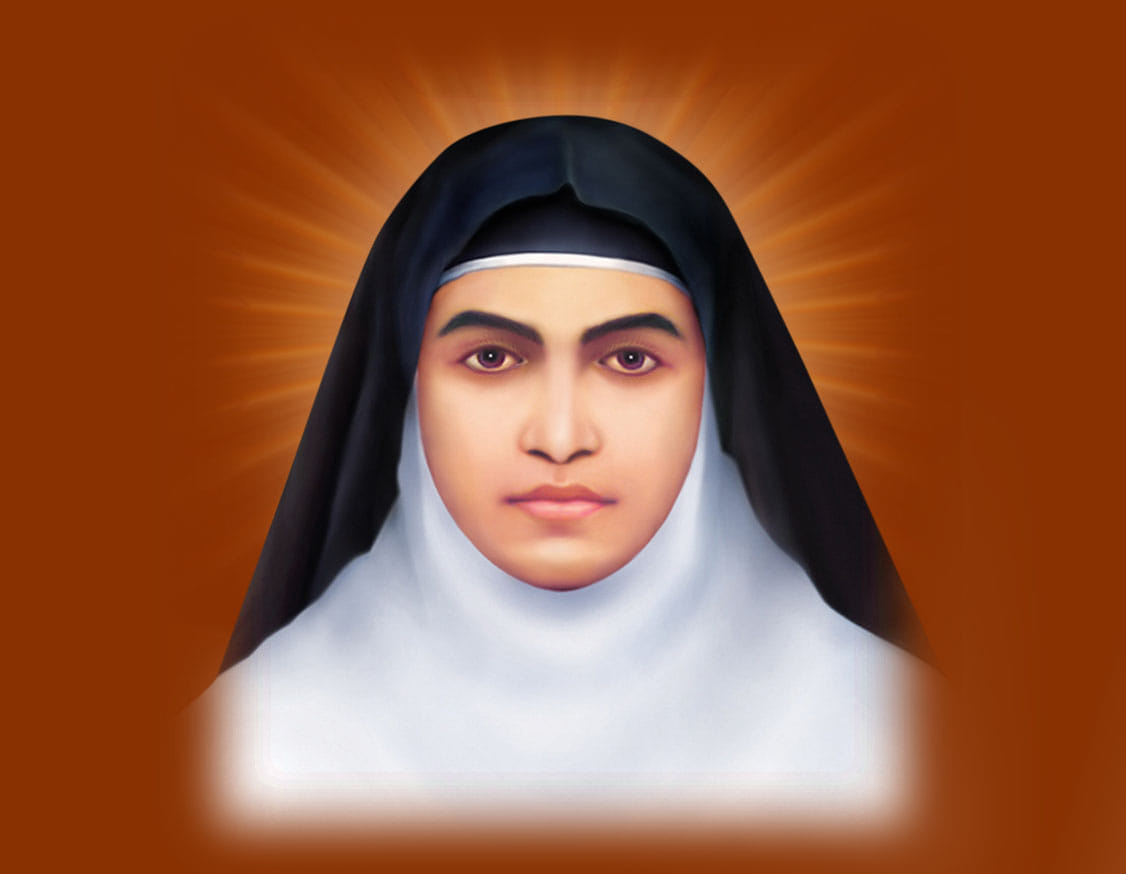
Part III – The Mystery of the Cross: Saint Alphonsa’s Theology of Suffering
“I gladly accept every suffering for the love of Jesus.”
— Faithful English rendering from Saint Alphonsa’s letters and spiritual writings (wording varies among published translations).
Introduction
Perhaps no aspect of Saint Alphonsa’s life has captivated Christians more than her extraordinary relationship with suffering. To many observers, her life appears to have been marked by almost continuous physical illness, emotional trials, and hidden sacrifices. Yet those who knew her personally never described her as bitter, pessimistic, or resentful. Instead, they remembered a woman whose serenity flowed from an intimate union with Jesus Christ.
In a world that often seeks to eliminate suffering at any cost, Saint Alphonsa offers a profoundly Christian perspective. She never glorified pain, nor did she seek suffering for its own sake. Rather, she discovered that suffering, when united with Christ’s Passion, becomes a path of love, purification, and redemption.
This understanding lies at the heart of her spirituality and remains one of her greatest gifts to the Church.
The Christian Meaning of Suffering
Every human being experiences suffering. Illness, grief, loneliness, rejection, disappointment, and death are universal realities. The question is not whether we will suffer, but how we will respond to suffering.
Christianity does not claim that suffering is good in itself. Disease, injustice, and death entered the world through sin (cf. Romans 5:12). Yet through the Passion, Death, and Resurrection of Jesus Christ, suffering received a new meaning.
The Catechism of the Catholic Church teaches:
“By His passion and death on the Cross Christ has given a new meaning to suffering: it can henceforth configure us to Him and unite us with His redemptive Passion.” (CCC 1505)
Saint Alphonsa embraced this truth not merely as a doctrine but as a lived reality.
A Life Marked by the Cross
From childhood onward, suffering became a constant companion.
Her mother died only months after her birth.
She grew up with fragile health.
The burns she sustained as a teenager left lasting physical consequences.
Throughout religious life she endured:
- recurring fevers,
- severe digestive illnesses,
- nervous disorders,
- chronic weakness,
- painful medical treatments,
- misunderstandings,
- emotional isolation.
Many people would have asked,
“Why me?”
Saint Alphonsa asked a different question:
“How can I offer this to Jesus?”
That difference changed everything.
She Did Not Love Pain—She Loved Christ
One of the greatest misconceptions about Saint Alphonsa is the idea that she desired suffering itself.
Nothing could be further from authentic Christian spirituality.
She never sought pain because pain is good.
She embraced suffering because Christ transformed suffering into an act of love.
This distinction is essential.
The Cross is not valuable because it is painful.
The Cross is valuable because it reveals the limitless love of God.
Saint Alphonsa understood this deeply.
Whenever suffering came, she tried to unite it with the suffering of Jesus.
Authentic Witness from Her Writings
Among her recurring spiritual sentiments is this faithful English rendering:
“I offer all my sufferings for priests, religious, and sinners.”
This simple statement reveals three remarkable dimensions of her spirituality.
First, suffering became prayer.
Second, suffering became intercession.
Third, suffering became an act of charity.
Rather than allowing pain to isolate her, she transformed it into love for others.
Sharing in Christ’s Redemptive Work
Saint Paul’s mysterious words often puzzled early Christians:
“In my flesh I complete what is lacking in Christ’s afflictions for the sake of His Body, the Church.”
(Colossians 1:24)
The Church has always understood that nothing is lacking in the saving power of Christ’s sacrifice.
Rather, believers are invited to participate in that one perfect sacrifice.
Saint Alphonsa lived this mystery.
She believed that her sufferings, united with Christ’s Passion, could become spiritually fruitful for the Church.
This is not because human suffering saves the world independently of Christ.
Only Christ saves.
But Christ lovingly allows His members to participate in His saving work through prayer, sacrifice, and faithful endurance.
The Cross as a School of Love
Every trial in Saint Alphonsa’s life became an opportunity to grow in love.
Illness taught dependence upon God.
Weakness taught humility.
Misunderstanding taught forgiveness.
Loneliness taught deeper prayer.
Each cross became a classroom.
Instead of asking God to remove every difficulty immediately, she sought the grace to remain faithful within it.
This echoes Saint James:
“Consider it all joy… whenever you face trials of many kinds.”
(James 1:2–4)
James does not praise suffering itself.
He praises the spiritual maturity that God produces through perseverance.
Joy in the Midst of Pain
One of the most striking features of eyewitness accounts is Saint Alphonsa’s interior joy.
This joy did not come from physical comfort.
It came from confidence in God’s love.
Christian joy differs from mere happiness.
Happiness depends upon favorable circumstances.
Joy depends upon God’s presence.
Saint Alphonsa experienced both physical agony and spiritual peace at the same time.
Her life beautifully illustrates Christ’s promise:
“Your sorrow will turn into joy.”
(John 16:20)
Offering Suffering for Others
The Catholic tradition has long recognized the spiritual value of offering one’s sufferings for particular intentions.
Saint Alphonsa frequently offered her illnesses:
- for priests,
- for religious vocations,
- for sinners,
- for the Church,
- for those who had asked her prayers.
This practice reflects authentic Catholic spirituality.
When united with Christ’s sacrifice, our own sufferings become acts of love for others.
Pope Saint John Paul II later explained this beautifully in Salvifici Doloris:
“In the Cross of Christ not only is the Redemption accomplished through suffering, but also human suffering itself has been redeemed.”
Saint Alphonsa lived this teaching decades before it was expressed in that apostolic letter.
Compassion Born from Suffering
People who endure suffering often become more compassionate.
Saint Alphonsa was no exception.
Because she knew pain personally, she understood the struggles of others.
She became:
- patient,
- gentle,
- forgiving,
- attentive.
Her suffering enlarged her heart.
Rather than becoming self-centered, she became increasingly Christ-centered.
True Christian suffering never closes the heart.
It opens it.
What Saint Alphonsa Does Not Teach
To appreciate her spirituality correctly, it is equally important to understand what she did not teach.
She did not teach that Christians should refuse medical care.
She herself accepted treatment whenever it was available.
She did not teach that suffering automatically makes a person holy.
Only suffering accepted in faith and united with Christ bears spiritual fruit.
She did not encourage unhealthy self-punishment or unnecessary physical hardship.
Her spirituality is centered on acceptance, not self-inflicted suffering.
She embraced the crosses God permitted, not crosses she invented.
Lessons for Christians Today
Saint Alphonsa’s witness speaks powerfully to modern believers.
1. Suffering Is Never Meaningless
Even when we cannot understand our trials, God can transform them into opportunities for grace.
2. We Are Never Alone
Christ walks beside every person carrying a cross.
As He promised:
“I am with you always.”
(Matthew 28:20)
3. Pain Can Become Prayer
Instead of allowing suffering to produce despair, Christians may consciously offer it to God for loved ones, the Church, or those in need.
4. Compassion Grows Through Trials
Our own wounds often prepare us to comfort others.
As Saint Paul writes:
“The Father of mercies… comforts us in all our affliction, so that we may be able to comfort those who are in any affliction.”
(2 Corinthians 1:3–4)
5. Hope Always Has the Final Word
The Cross is never the end of the Christian story.
Every Good Friday points toward Easter Sunday.
Saint Alphonsa lived in the light of the Resurrection.
That hope gave meaning to every sacrifice.
Reflection Questions
- How do I usually respond to suffering?
- Have I ever consciously offered my difficulties to God in prayer?
- Do my trials make me more compassionate or more resentful?
- Can I trust that God is present even when I cannot understand His plan?
- How might my present struggles become opportunities to grow in faith?
Prayer Inspired by Saint Alphonsa
Lord Jesus Christ,
You embraced the Cross out of love for the salvation of the world.
Teach us, through the example of Saint Alphonsa, never to waste our sufferings.
When illness weakens us, strengthen our faith.
When sorrow overwhelms us, deepen our hope.
When disappointment discourages us, remind us of Your Resurrection.
Help us to unite every cross with Your saving sacrifice and to offer our lives generously for the good of the Church, our families, and all who need Your mercy.
May our trials draw us closer to You and make us instruments of compassion to others.
For You live and reign forever and ever.
Amen.
Key Takeaways
- Saint Alphonsa did not seek suffering for its own sake; she sought to love Christ in every circumstance.
- She understood suffering as participation in the redemptive love of Christ.
- Her illnesses became acts of prayer and intercession for the Church.
- Christian suffering finds its meaning only when united with Jesus’ Passion and Resurrection.
- Her example offers hope to all who struggle with illness, grief, loneliness, or hidden sacrifices.
Preview of Part IV
In the next chapter, we will explore Saint Alphonsa’s deep love for Jesus Christ, especially her devotion to the Holy Eucharist, the Sacred Heart of Jesus, and her intimate relationship with Christ as her Divine Bridegroom. We will examine how these devotions sustained her through suffering and became the source of her remarkable interior peace.
References
- Holy Bible (NRSV Catholic Edition or another approved Catholic translation): Romans 5:12; Colossians 1:24; James 1:2–4; John 16:20; Matthew 28:20; 2 Corinthians 1:3–4.
- Catechism of the Catholic Church, §1505 (The Christian meaning of suffering).
- Pope St. John Paul II, Salvifici Doloris (1984), Apostolic Letter on the Christian Meaning of Human Suffering.
- Congregation for the Causes of Saints, Positio super Vita, Virtutibus et Fama Sanctitatis Servae Dei Alphonsae Muttathupadathu.
- Pope Benedict XVI, Homily at the Canonization of Saint Alphonsa, 12 October 2008.
- Franciscan Clarist Congregation (FCC), official biographies and documentary sources on Saint Alphonsa.
- Syro-Malabar Church, official liturgical and historical publications on Saint Alphonsa.
Leave a Reply