
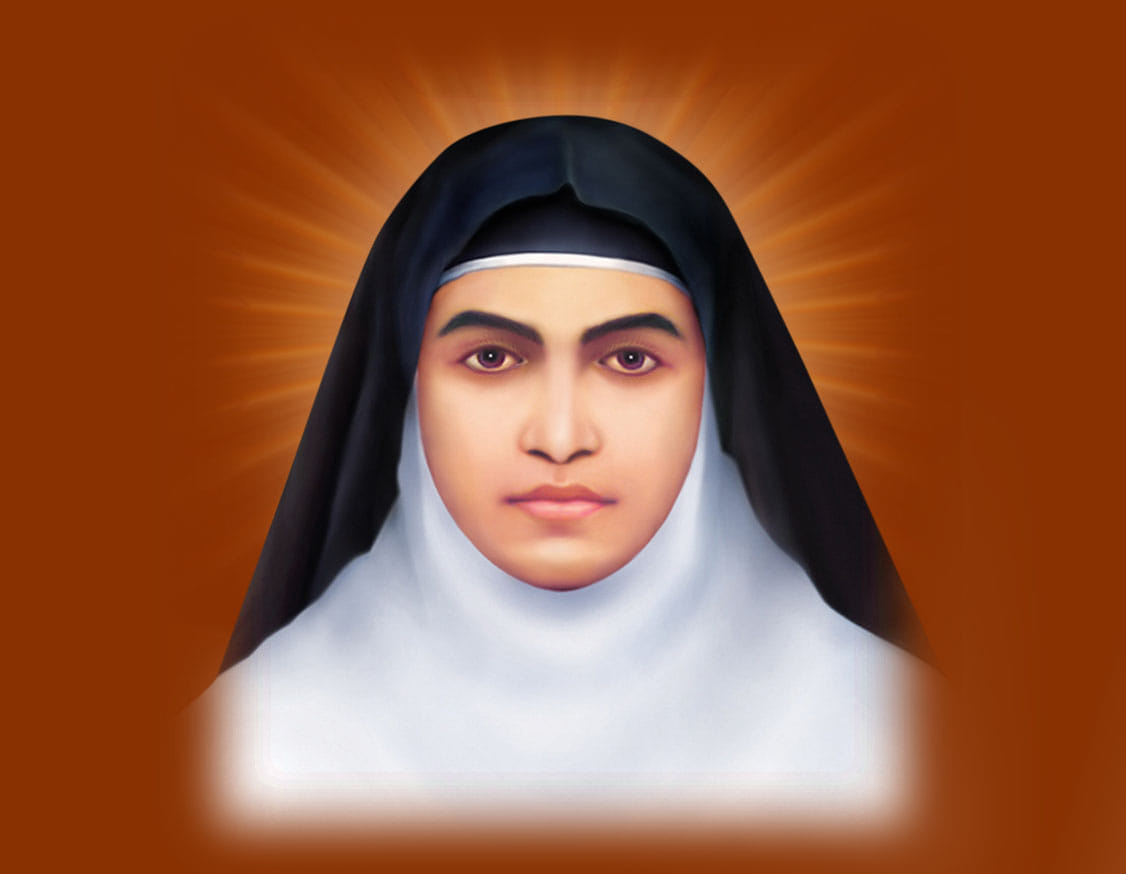
Part V – Humility, Obedience, and Hidden Holiness: The Quiet Path to Sainthood
“If it pleases God, let Him do with me as He wills.”
— Faithful English rendering from Saint Alphonsa’s correspondence (wording varies among published translations).
Introduction
In every age, the world admires extraordinary achievements. We celebrate leaders, innovators, athletes, scholars, and public figures whose accomplishments are visible to all. Yet the Gospel presents a very different vision of greatness.
Jesus declared:
“Whoever wishes to be great among you must be your servant.” (Matthew 20:26)
Saint Alphonsa understood this paradox better than most. She never sought prominence, influence, or recognition. Her path to holiness was not paved with public achievements but with humility, obedience, and hidden fidelity. She believed that the surest way to Christ was through quiet submission to God’s will and loving service in ordinary life.
Her example is especially relevant today, when success is often measured by popularity, influence, and public recognition. Saint Alphonsa reminds us that in God’s Kingdom, greatness is measured not by visibility but by faithfulness.
Humility: The Foundation of Holiness
Among the virtues that characterized Saint Alphonsa, humility shines with remarkable clarity.
Humility is often misunderstood as weakness or low self-esteem. In Christian spirituality, humility is something much deeper. It is the virtue that enables us to recognize both our dependence on God and the dignity He has given us as His children.
Saint Alphonsa never considered herself extraordinary. Despite the deep respect many sisters had for her holiness, she preferred to remain unnoticed. She did not seek praise, nor did she defend herself when misunderstood. Instead, she entrusted her reputation to God.
Her attitude reflects the words of the Blessed Virgin Mary:
“He has looked with favor on the lowliness of His servant.” (Luke 1:48)
Like Mary, Saint Alphonsa found greatness in being God’s humble servant.
Humility in Everyday Life
Saint Alphonsa’s humility was not limited to spiritual thoughts or private prayers. It was evident in her daily conduct.
She accepted ordinary tasks without complaint.
She welcomed correction from her superiors.
She willingly performed unnoticed duties.
She rejoiced when others were praised.
She accepted misunderstanding without bitterness.
These hidden acts of humility formed the foundation of her sanctity.
Unlike the world, which often seeks applause, Saint Alphonsa desired only God’s approval.
Jesus taught:
“Learn from Me; for I am gentle and humble in heart.” (Matthew 11:29)
She made these words the pattern of her life.
Obedience as an Act of Love
For Saint Alphonsa, obedience was not merely a religious obligation.
It was an expression of love.
She obeyed because she believed that God worked through legitimate authority, particularly within religious life.
Whether the task was pleasant or difficult, she accepted it with generosity.
Her obedience was modeled after Christ Himself:
“He humbled Himself and became obedient unto death—even death on a cross.” (Philippians 2:8)
This obedience did not suppress her freedom.
Rather, it perfected it.
She freely chose to trust God even when she did not fully understand His plans.
The Hidden Life of Nazareth
Much of Jesus’ earthly life was hidden.
The Gospels tell us very little about the thirty years He spent in Nazareth.
Those ordinary years remind Christians that holiness is cultivated not only through dramatic events but through daily faithfulness.
Saint Alphonsa embraced this “hidden life.”
Most of her days were spent in prayer, work, illness, and community life.
No crowds gathered around her.
No books recorded her sermons.
No public ministry made her famous.
Yet heaven saw everything.
Jesus Himself taught:
“Your Father who sees in secret will reward you.” (Matthew 6:6)
Saint Alphonsa lived for that reward alone.
Silence and Interior Peace
One striking characteristic of Saint Alphonsa was her ability to remain peaceful amid misunderstanding.
Like every religious community, convent life included moments of tension and misunderstanding.
She occasionally experienced criticism and false judgments.
Instead of responding with anger, she chose silence.
Her silence was not passive.
It was prayerful.
She trusted God to defend her if necessary.
This recalls the example of Christ before His accusers:
“He did not open His mouth.” (Isaiah 53:7; cf. Matthew 27:12–14)
Such silence requires extraordinary spiritual maturity.
Joy in Hidden Service
Saint Alphonsa never believed that holiness depended upon doing great things.
Rather, she believed in doing ordinary things with extraordinary love.
Whether caring for community responsibilities, praying quietly in the chapel, or patiently enduring illness, she transformed ordinary moments into acts of worship.
Her life beautifully illustrates the teaching of Saint Paul:
“Whatever you do, do everything for the glory of God.” (1 Corinthians 10:31)
This perspective changed every task into an opportunity for holiness.
Freedom from Self-Importance
One of humility’s greatest fruits is freedom.
People who constantly seek recognition become prisoners of public opinion.
Saint Alphonsa was free because she sought only God’s approval.
Praise did not inflate her.
Criticism did not destroy her.
She measured her life according to God’s love rather than human applause.
This freedom enabled her to remain peaceful even when misunderstood.
It also protected her from discouragement during illness.
Hidden Holiness in the Franciscan Clarist Tradition
The Franciscan Clarist Congregation emphasizes simplicity, poverty, humility, and joyful service.
Saint Alphonsa embraced these values wholeheartedly.
She understood that religious life was not about personal fulfillment but about conforming oneself to Christ.
Her hidden holiness reflected the spirit of Saint Francis of Assisi and Saint Clare of Assisi, who both taught that true greatness lies in humble service and joyful poverty.
Although Saint Alphonsa lived in Kerala, her spirituality resonated with the universal Franciscan tradition of simplicity and love.
Humility and the Cross
Humility enabled Saint Alphonsa to accept suffering without resentment.
Pride often asks,
“Why should this happen to me?”
Humility asks,
“Lord, how may I glorify You through this?”
This difference transformed every trial into an opportunity for grace.
Her humility did not remove suffering.
It changed her response to suffering.
That is one of the deepest lessons she offers modern Christians.
Lessons for Christians Today
Saint Alphonsa’s witness speaks powerfully in an age shaped by competition, self-promotion, and constant comparison.
1. Seek God’s Approval More Than Human Praise
Lasting peace comes when our identity is rooted in God’s love rather than public opinion.
2. Embrace Ordinary Duties with Love
Holiness grows through daily faithfulness.
Small acts performed with great love have eternal value.
3. Accept Correction with Humility
Constructive correction can become an instrument of spiritual growth.
A humble heart is always teachable.
4. Choose Silence Over Anger
Not every criticism requires a response.
Sometimes the most powerful witness is quiet trust in God.
5. Remember That God Sees Hidden Sacrifices
Many acts of generosity go unnoticed by the world.
None are forgotten by God.
As Jesus promised:
“Your Father who sees in secret will reward you.” (Matthew 6:4)
Reflection Questions
- Do I seek recognition more than faithfulness?
- How do I respond when I am misunderstood?
- Am I willing to perform unnoticed acts of service?
- Is my obedience motivated by love or merely by obligation?
- What hidden sacrifice can I offer to God today?
Prayer Inspired by Saint Alphonsa
Lord Jesus,
You chose the hidden life of Nazareth before the public ministry of Galilee.
Teach us, through the example of Saint Alphonsa, to love the ordinary duties You place before us.
Free us from pride, selfish ambition, and the desire for human praise.
Grant us humble hearts that rejoice in serving others quietly and faithfully.
Help us to accept correction with gratitude, to remain peaceful when misunderstood, and to trust that nothing done for love of You is ever forgotten.
May our hidden acts of charity become pleasing offerings before Your throne.
Through the prayers of Saint Alphonsa, lead us along the humble path that ends in everlasting glory.
Amen.
Saint Alphonsa’s Wisdom for Daily Living
The life of Saint Alphonsa teaches us that:
- Humility is strength under God’s guidance.
- Obedience is an act of love, not merely duty.
- Hidden sacrifices have eternal value.
- Silence can be a powerful expression of faith.
- God measures greatness by fidelity rather than fame.
As Pope Francis has often reminded the Church, holiness is lived not only by famous saints but also by the countless faithful who quietly follow Christ in everyday life. Saint Alphonsa is a radiant example of this “hidden holiness.”
Key Takeaways
- Humility was the cornerstone of Saint Alphonsa’s character.
- She viewed obedience as a loving response to God’s will.
- Hidden fidelity, rather than public recognition, marked her path to sainthood.
- Her life reflects the hidden years of Christ at Nazareth.
- She teaches every Christian that ordinary life can become extraordinary when lived for God’s glory.
Preview of Part VI
In Part VI, we will explore Saint Alphonsa’s life of prayer, silence, and absolute trust in Divine Providence. We will examine how prayer sustained her through suffering, how silence deepened her union with God, and why her unwavering confidence in God’s providence continues to inspire believers throughout the world.
References
- Holy Bible (NRSV Catholic Edition or another approved Catholic translation): Matthew 20:26; Luke 1:48; Matthew 11:29; Philippians 2:8; Matthew 6:4–6; Isaiah 53:7; Matthew 27:12–14; 1 Corinthians 10:31.
- Catechism of the Catholic Church, §§2546–2557 (Humility, Poverty of Spirit, and the Beatitudes).
- Pope Benedict XVI, Homily at the Canonization of Saint Alphonsa, 12 October 2008.
- Pope Francis, Gaudete et Exsultate (2018), especially on holiness in everyday life.
- Congregation for the Causes of Saints, Positio super Vita, Virtutibus et Fama Sanctitatis Servae Dei Alphonsae Muttathupadathu.
- Franciscan Clarist Congregation (FCC), official biographies and archival materials on Saint Alphonsa.
- Syro-Malabar Church, official liturgical and historical publications on Saint Alphonsa.
Leave a Reply