
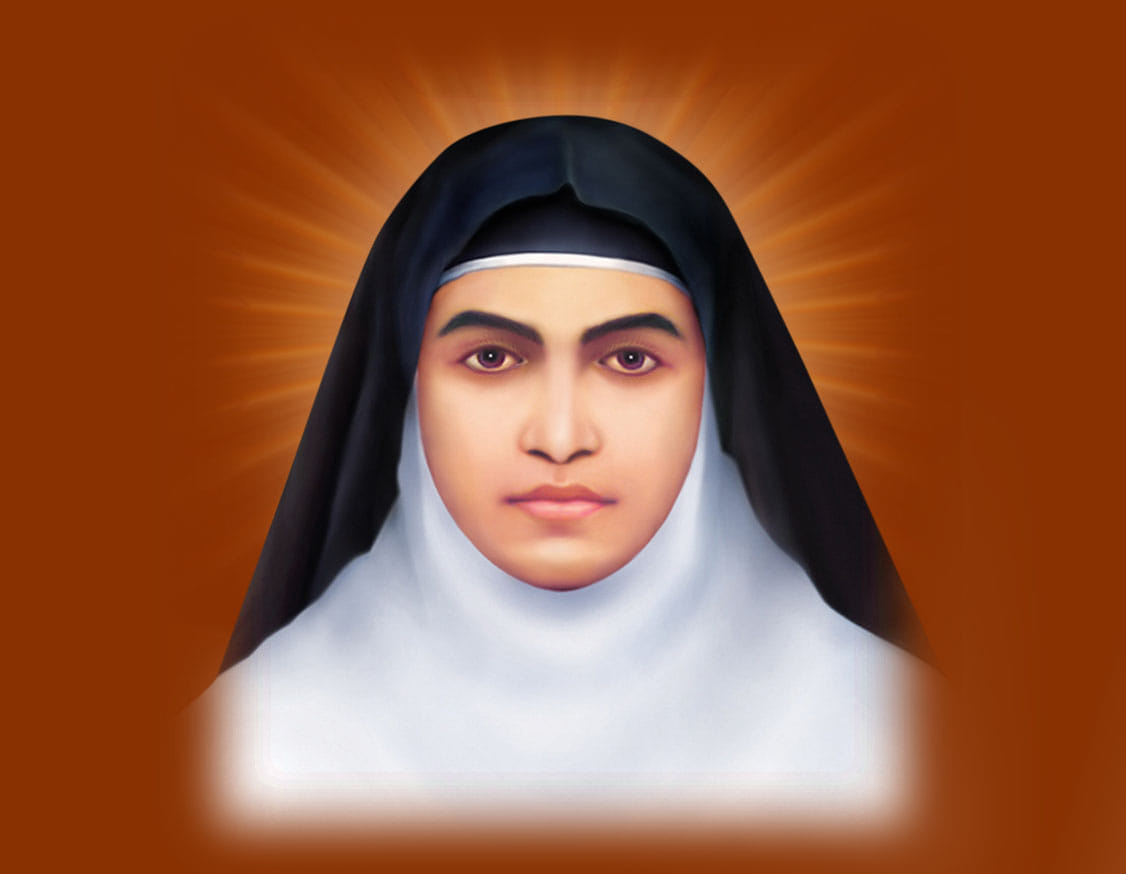
Part VII – Charity, Forgiveness, and Love for the Church: Living the Gospel Through Selfless Love
“Love one another for the sake of Jesus.”
— A faithful English rendering of the spirit expressed in Saint Alphonsa’s letters and instructions to others (the exact wording varies among published translations).
Introduction
The Christian life reaches its highest expression not merely in prayer or sacrifice, but in love. Jesus declared that the greatest commandment is to love God with one’s whole heart and to love one’s neighbor as oneself (Matthew 22:37–39). Every virtue ultimately finds its fulfillment in charity.
The life of Saint Alphonsa demonstrates this truth with remarkable clarity. While she is often remembered for her extraordinary patience in suffering, her sanctity cannot be understood apart from her love for others. Her prayer was never isolated from charity. Her sacrifices were never merely personal acts of devotion. Everything she endured was offered out of love—for Christ, for the Church, and for every soul entrusted to God’s mercy.
Her surviving letters reveal a woman whose heart had been transformed by divine love. Even when illness confined her, she continued to serve the Church through prayer, forgiveness, encouragement, and intercession.
In an age often marked by division, resentment, and individualism, Saint Alphonsa offers a timeless lesson: holiness is measured by love.
Charity: The Greatest Christian Virtue
Saint Paul writes:
“And now faith, hope, and love abide, these three; and the greatest of these is love.” (1 Corinthians 13:13)
Saint Alphonsa understood this deeply.
For her, charity was not simply kindness or generosity.
It was participation in the very love of Christ.
Every prayer, every sacrifice, every hidden act of obedience became meaningful because it flowed from love.
Without charity, suffering becomes mere endurance.
Without charity, prayer becomes routine.
Without charity, religious observance loses its soul.
Love gave unity to every aspect of her spiritual life.
Loving Others Through Prayer
Physical illness prevented Saint Alphonsa from engaging in many active forms of ministry.
Yet she never believed that her usefulness had ended.
Instead, she embraced one of the Church’s most powerful ministries:
intercessory prayer.
Her letters frequently assure others of her prayers.
She remembered:
- priests,
- bishops,
- religious communities,
- family members,
- benefactors,
- friends,
- those who were ill,
- people struggling in faith,
- sinners in need of conversion.
She recognized that hidden prayer often accomplishes more than visible activity.
Saint James reminds believers:
“The prayer of the righteous is powerful and effective.” (James 5:16)
Saint Alphonsa believed this wholeheartedly.
Love Expressed Through Small Acts
One of the defining characteristics of Saint Alphonsa’s charity was its simplicity.
She did not perform spectacular public works.
Instead, she expressed love through ordinary gestures.
A kind word.
A patient smile.
A willingness to listen.
A prayer for someone in difficulty.
A quiet sacrifice offered for another person.
These small acts reflected the teaching of Jesus:
“Whoever gives even a cup of cold water… will certainly not lose his reward.” (Matthew 10:42)
She reminds modern Christians that holiness is built upon countless unnoticed acts of love.
Forgiveness: The Measure of Christian Maturity
Perhaps the most demanding aspect of Christian charity is forgiveness.
Saint Alphonsa experienced misunderstanding during her religious life.
There were occasions when others misjudged her motives or questioned her sincerity.
Such experiences naturally cause pain.
Yet there is no evidence that she nurtured resentment.
Instead, she chose forgiveness.
She understood that to refuse forgiveness would contradict the very Gospel she sought to live.
Jesus taught:
“Forgive, and you will be forgiven.” (Luke 6:37)
He also prayed from the Cross:
“Father, forgive them, for they know not what they do.” (Luke 23:34)
Saint Alphonsa sought to imitate this spirit.
Forgiveness Is Not Forgetfulness
Modern culture sometimes misunderstands forgiveness.
Forgiveness does not mean pretending that hurt never occurred.
Nor does it require approving injustice.
Rather, forgiveness is the decision to release bitterness into God’s hands.
Saint Alphonsa did not deny her suffering.
She entrusted it to Christ.
Her example teaches that forgiveness is an act of faith before it becomes a feeling.
Charity Within Community Life
Religious life places men and women in close daily relationships.
Like every human community, convents experience differences of personality, opinion, and temperament.
Saint Alphonsa recognized that charity begins at home.
She sought to cultivate:
- patience,
- gentleness,
- mutual respect,
- cooperation,
- understanding.
These virtues sustained community life.
Saint Paul encouraged the early Christians:
“Bear with one another in love.” (Ephesians 4:2)
Saint Alphonsa practiced this quietly every day.
A Heart for Priests
One recurring theme in Saint Alphonsa’s writings is her deep concern for priests.
She frequently offered prayers and sufferings for them.
She understood that priests carry enormous spiritual responsibilities.
By praying for priests, she participated in the Church’s mission.
This concern reflects the teaching of the New Testament.
Saint Paul repeatedly asked Christian communities:
“Pray also for us.” (Ephesians 6:19)
Saint Alphonsa answered this invitation generously.
Her example remains especially relevant today.
Every Catholic family can support priests not only through appreciation but also through faithful prayer.
Love for Religious Vocations
Having dedicated her own life to Christ, Saint Alphonsa deeply cherished religious vocations.
She prayed that young men and women would courageously respond to God’s call.
She believed that every authentic vocation is a gift to the Church.
Even amid her own suffering, she rejoiced whenever others embraced religious life.
Her generosity reveals freedom from jealousy and genuine love for God’s Kingdom.
Love for the Church
Saint Alphonsa’s spirituality was profoundly ecclesial.
She loved Christ by loving His Church.
Her devotion was never individualistic.
She participated faithfully in:
- the Holy Qurbana,
- community prayer,
- sacramental life,
- obedience to Church authority,
- liturgical celebrations.
She understood that Christians grow in holiness within the communion of the Church.
This reflects the teaching of Saint Cyprian:
“No one can have God as Father who does not have the Church as Mother.”
Her fidelity reminds believers that love for Christ and love for His Church cannot be separated.
Charity During Suffering
One of the remarkable aspects of Saint Alphonsa’s life is that suffering did not make her self-centered.
Many people understandably become preoccupied with their own pain.
Saint Alphonsa chose another path.
She continued thinking about others.
She prayed for them.
She encouraged them.
She offered her sufferings on their behalf.
Her illness became an expression of charity rather than isolation.
This reflects Saint Paul’s exhortation:
“Bear one another’s burdens, and in this way you will fulfill the law of Christ.” (Galatians 6:2)
Mercy: The Face of Charity
Pope Francis has frequently reminded the Church that mercy lies at the heart of the Gospel.
Saint Alphonsa lived this long before the term became widely emphasized.
She did not judge harshly.
She sought to understand.
She did not repay injury with resentment.
She responded with compassion.
Mercy became the natural fruit of her intimate union with Christ.
As Jesus taught:
“Be merciful, just as your Father is merciful.” (Luke 6:36)
Lessons for Christians Today
Saint Alphonsa’s witness offers practical guidance for everyday Christian living.
1. Make Prayer an Expression of Love
Do not pray only for yourself.
Intercede daily for others.
Especially remember:
- priests,
- families,
- the sick,
- persecuted Christians,
- those who have no one to pray for them.
2. Practice Small Acts of Kindness
Great charity often begins with simple gestures:
- a smile,
- encouragement,
- patience,
- listening,
- forgiveness.
These ordinary actions build God’s Kingdom.
3. Forgive Promptly
Bitterness imprisons the heart.
Forgiveness sets it free.
Choose mercy even when reconciliation takes time.
4. Love the Church
Support your parish.
Participate faithfully in the sacraments.
Pray for your pastors.
Serve your community with generosity.
5. Let Suffering Become Love
When difficulties arise, consciously offer them for someone else.
Pain united with Christ becomes prayer.
Reflection Questions
- Is my prayer focused mainly on myself or also on others?
- Whom do I need to forgive today?
- How can I show greater charity within my family or parish?
- Do I regularly pray for priests and religious vocations?
- In what ways can my present struggles become acts of love?
Prayer Inspired by Saint Alphonsa
Merciful Father,
You revealed Your perfect love through Your Son, Jesus Christ.
Through the example of Saint Alphonsa, teach us to love without counting the cost.
Fill our hearts with genuine charity, patient forgiveness, and compassionate concern for every person we meet.
Help us to pray faithfully for Your Church, especially for the Holy Father, bishops, priests, deacons, religious, missionaries, and all who serve Your people.
When we are hurt, grant us the grace to forgive.
When we are misunderstood, grant us patience.
When we suffer, help us to transform our pain into prayer for others.
May our lives reflect the love of Christ so clearly that others may come to know Him through us.
Through the intercession of Saint Alphonsa, strengthen us to become instruments of Your peace and mercy.
Amen.
Saint Alphonsa’s Wisdom for Today’s World
In a world increasingly divided by anger, resentment, and isolation, Saint Alphonsa reminds us that authentic Christian witness begins with love.
She teaches us:
- Pray more than you criticize.
- Forgive more than you condemn.
- Serve more than you seek recognition.
- Encourage more than you discourage.
- Love the Church by praying for her shepherds and serving her mission faithfully.
Her hidden life demonstrates that charity is not measured by the size of our achievements but by the depth of our love.
Key Takeaways
- Charity was the guiding principle of Saint Alphonsa’s spiritual life.
- She expressed love through prayer, sacrifice, forgiveness, and hidden acts of kindness.
- She had a profound devotion to the Church and regularly offered prayers and sufferings for priests and religious vocations.
- Her example shows that forgiveness is an act of faith and love, even when wounds remain.
- Her life encourages every Christian to transform daily experiences into opportunities for charity.
Preview of Part VIII
In Part VIII, we will explore Saint Alphonsa’s deep devotion to the Blessed Virgin Mary, her longing for Heaven, and the Christian virtue of hope. We will examine how Marian spirituality shaped her religious life, how the promise of eternal life sustained her during suffering, and why hope remains one of her greatest gifts to Christians today.
References
- Holy Bible (NRSV Catholic Edition or another approved Catholic translation): Matthew 22:37–39; 1 Corinthians 13; James 5:16; Matthew 10:42; Luke 6:36–37; Luke 23:34; Ephesians 4:2; Ephesians 6:19; Galatians 6:2.
- Catechism of the Catholic Church, §§1822–1829 (Charity), §§2840–2845 (Forgiveness).
- Pope Benedict XVI, Homily at the Canonization of Saint Alphonsa, 12 October 2008.
- Pope Francis, Misericordiae Vultus (2015), on the mercy of God.
- Congregation for the Causes of Saints, Positio super Vita, Virtutibus et Fama Sanctitatis Servae Dei Alphonsae Muttathupadathu.
- Franciscan Clarist Congregation (FCC), official letters, biographies, and archival documents of Saint Alphonsa.
- Syro-Malabar Church, official liturgical and historical publications on Saint Alphonsa.
Leave a Reply